





Archive for the 'People we like' Category
JCC
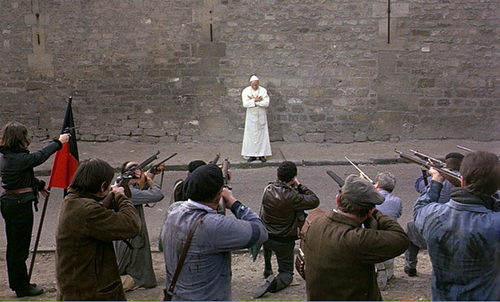
The Milky Way (La Voie lactée, 1969)
DB here, writing from a gray Brussels:
All the problems of a film are in the script.
When a film is made, the screenplay disappears.
When you consider what a scene needs to express, ask: How can the actor act it?
When you’re writing a scene, try to act it out yourself.
Rather than letting dialogue explain the action, let the action explain the dialogue.
It will always be possible to make films. Don’t forget to make cinema.
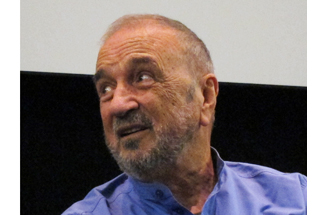
These and other epigrammatic insights flowed easily from Jean-Claude Carrière during his visit to the Cinematek of Belgium and the annual conference of the Screenwriting Research Network. I hope to devote a later blog to other attractions of this stimulating get-together. For now, a brief tribute to the volcanic charm of the legend known as JCC.
JCC entered cinema under the aegis of Jacques Tati. Tati wanted someone to turn M. Hulot’s Holiday and Mon Oncle into novels, and the very young writer seemed the right candidate. But Tati quickly learned that JCC didn’t know how a film was made. So he assigned Pierre Etaix and the editor Suzan Baron to tutor the lad in the ways of cinema. First lesson: Go through M. Hulot on a flatbed viewer, examining the script line by line while watching shot by shot. As a result, JCC says, he began to understand “the film that you don’t see.”
In the course of his career, JCC has written novels, plays, essays, screenplays, even a scenario for a graphic novel. In the process he became one of the most distinguished and respected screenwriters of the last fifty years. His most famous collaborations were probably with Buñuel, from Belle de Jour (1967) to the master’s last film, That Obscure Object of Desire (1977). He worked with Etaix (The Suitor, 1962), Forman (Taking Off, 1971), Schlöndorff (The Tin Drum, 1979), Godard (Every Man for Himself, 1980), Wajda (Danton, 1983), Oshima (Max mon amour, 1986), Kaufman (The Unbearable Lightness of Being, 1988), Peter Brook (The Mahabarata, 1989), Malle (Milou en Mai, 1990), and Haneke (The White Ribbon, 2007). He has also become known for his work on major French costume pictures and adaptations, such as Cyrano de Bergerac (1990) and The Horseman on the Roof (1995), as well as work with younger directors, including Wayne Wang (Chinese Box, 1997) and Jonathan Glazer (Birth, 2005). His TV scripts are numberless.
Directors both young and old come to him for the unique forms of collaboration that he offers. Instead of going off to write the screenplay, JCC meets frequently with the director. (Sometimes the director stays in his house.) He might ask the director to write the script for him, and they go over the result. Through these methods, JCC tries to help the director “find the film that he wants to make.” But his methods are flexible, tailored to the director’s temperament. When he was working with Buñuel, the men met daily to tell each other their dreams, some of which wound up in The Discreet Charm of the Bourgeoisie (1972). Similarly, JCC prefers to meet with the actors before production, letting them try out the parts so that he can revise things for each one’s habits of speaking. For Cyrano, Depardieu read the entire play aloud, taking all the parts, and then listened to it over and over on cassettes to refine his interpretation.
Brussels gave JCC a busy twenty-four hours. In conversation with the critic Louis Danvers he introduced a Cinematek screening of The Milky Way. He gave a keynote address for the Screenplay Network conference, and he participated in a panel discussion with members of the Flemish Screenwriters Guild at the film school RITS. These sessions ranged freely over his career and his conceptions of filmmaking. He believes that there is a language of film that sets it apart from other arts. That language is grounded in the play of meaning and emotion that comes from putting one shot after another.
He explained the point through an example that seems at first to be a restatement of the classic Kuleshov effect. In Shot 1, a man in his apartment looks out the window. Shot 2: The street. A woman is walking with another man. We’ll assume that our man is seeing them. Shot 3: Our man reacts.
But contrary to Kuleshov’s dictum, his facial expression should not be neutral. In fact, his expression tells us how to understand the scene. If the man looks upset, we surmise that he’s jealous. If he’s benevolent, we assume that the woman is a friend, his daughter—or a flirt. The filmmaker needs not only techniques like framing and cutting, but also the performances of actors.
Now cut to the woman in her bedroom brushing her hair. We need to make sure the audience understands that it’s the same woman, so maybe we have to go back and add a shot to the earlier scene, a closer view of her in the street. This constant flow and readjustment of images is based on guiding the spectator discreetly but firmly through the action. The audience isn’t aware of this “secret film,” but it governs everything the viewer thinks and feels.
 For this reason, the young screenwriter needs to learn everything about how a film is made. When JCC was acting in The Wedding Ring (1971), a film starring Anna Karina, he learned that simply getting up from a couch can be a complicated matter. When he stood up spontaneously, dipping forward to lift his body, the cinematographer had to correct him: It looked awkward on film. JCC learned that he had to stand up in an unnatural way, with his feet spaced and his back rigid, so that it looked smooth on film. The screenwriter must know that even the smallest moment of action, easy to write in the comfort of a study or a café, is subject to the contingencies of production.
Where to get ideas for films? From the classics, of course. (“Balzac is the greatest screenwriter—every character is vivid.”) But above all you must observe reality. Tati taught JCC to sit vigilantly in a café. Study everyone who passes. Notice details. Imagine the person as a character in a story. Give him or her some motivations. What you must do is “find the fiction in the reality.” When JCC presided over the French film school La FEMIS, he promoted an exercise that required students to move out into a public space, like a market, and come back with stories about the people they saw. JCC praised Tati’s genius for spinning gags and situations out of passing life—“as if God had created the world so that it could furnish a film by Jacques Tati.”
JCC must be one of the few screenwriters who doesn’t gripe about his work being changed in its final incarnation onscreen. He sees the screenplay as ephemeral, the chrysalis for the butterfly. Once you accept the fact that your text must be sloughed off on its way to becoming cinema, you can take joy in your work. For young people, JCC advised the same relaxed, exploratory attitude. Conceive of yourself as a writer, able to move across media. The venues for your writing are constantly changing, so be prepared to write for television as well as film, to write comics and documentaries and plays. Above all, “Don’t despair of the future of cinema. It’s wide open.”
Jean-Claude Carrière turns eighty next week.
The best introduction to Carrière’s career and ideas that I know is his book The Secret Language of Film (Faber, 1995). Some of this text overlaps with Exercice du scénario (FEMIS, 1990), coauthored with Pascal Bonitzer. That book is worth reading too, but it hasn’t to my knowledge found English translation. An illuminating interview is here.
P.S. 11 September 2011: Thanks to Jonathan Rosenbaum for correcting an error in JCC’s filmography, which I’ve rectified above. Jonathan also remarks:
I assume that you know, by the way, that Carrière appears in a scene of Certified Copy, playing something similar to the “wise old guru” role played by the Turkish taxidermist in Taste of Cherry and the doctor in The Wind Will Carry Us.
I did know and should have worked it in!
P.P.S 22 September 2011: A panel discussion with Jean-Claude Carrière held during the conference is available here. Although the site is in Dutch, the discussion is in English. Thanks to Ronald Geerts for the information.
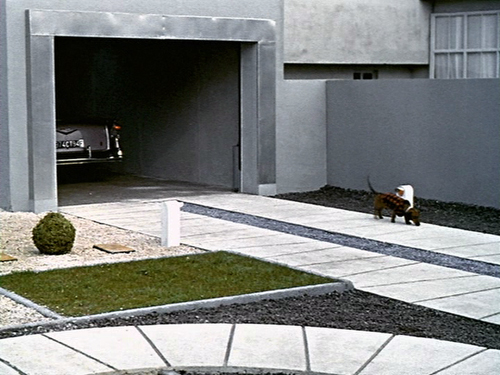
Mon Oncle (1958). “I followed Tati more or less everywhere, usually with Etaix, attending projections followed by long anxious discussions. (‘Can we clearly see the dog’s tail go past the electric eye that shuts the garage door? Yes? Clearly? You’re sure people will see it?’)
Robert Sklar, historian of film and culture
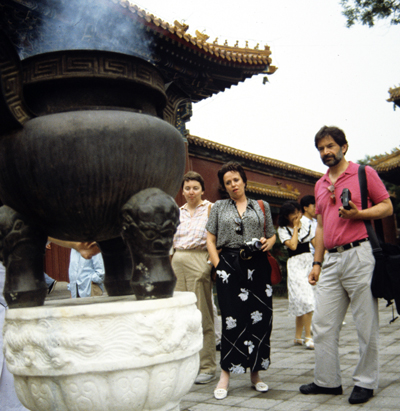
KT, Adrienne Harris, and Robert Sklar. Beijing, 1988.
We have just learned of the death of Professor Robert Sklar after a bicycling accident.
This is a great loss. Bob was a scholar of immense energy and keen intelligence. His books will endure for a very long time, built as they are on careful scholarship and imaginative interpretation. Bob’s background in American Studies made him a pungent cultural historian of cinema long before Cultural Studies became a subfield of film studies. A researcher of old-fashioned virtues, he wrote with a transparency and vivacity that scholars seldom muster. He also didn’t shrink from political criticism, as seen in some of his work for Cineaste, a journal with which he was identified for many years.
Bob was a down-to-earth, good-humored guy. When David taught for a semester at NYU in 1979, Bob was a great boss, warning that one had to know every department’s “folkways.” When we were invited to China to lecture, the genial presence of Bob and Adrienne made it a trip we’ll always remember–not least for Bob’s daily quest to find a Times so he could check on baseball scores. This remarkable man will be much missed.
Matt Singer’s tribute to Robert Sklar is at IFC here.
PS 6 July: See also Frances Guerin’s, Eric Kohn’s, and Jim Hoberman’s tributes to Bob.
PPS 8 July: See Richard Allen’s comprehensive tribute on the SCMS site, and the Variety story as well.
Time for a quick one: A miscellany from friends
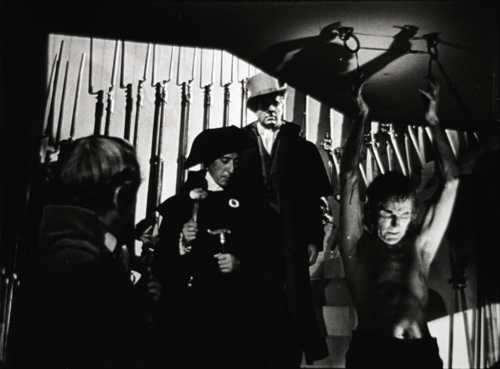
The Black Book (aka Reign of Terror).
DB here, catching up with books, videos, and events:
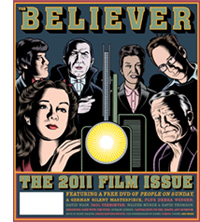 David Cairns has written a lively appreciation of William Cameron Menzies for the March/ April issue of The Believer. The essay bristles with rapid-fire aperçus, such as the suggestion that the great, demented Kings Row is something like the Twin Peaks of its day. David is particularly good at plotting the extent to which Menzies dominated the work of his directors. Directors without a visual style of their own, he points out, were easy for Menzies to overwhelm, but those with an already-developed signature could assimilate his contributions, as Hitchcock did in Foreign Correspondent.
In The Black Book (aka Reign of Terror) Menzies found soul mates in two other aggressive pictorialists, Anthony Mann and John Alton, the team becoming “a crazy triangle,” eager to indulge in “thrusting gargoyle faces in fish-eye distortion, clutching shadows, and funky, teetering compositons.” Bob Cummings never looked so bizarre, before or since. I didn’t talk about this wild movie in my online Menzies material here and here because I had such poor illustrations from it. Now things have changed, and a decent, or perhaps rather indecent, sample of the film’s delirium (above) can serve to back David’s point.
David’s “Dreams of a Creative Begetter” is one of several film-related pieces in this issue of The Believer. The issue includes a DVD of the seminal People on Sunday (Menschen am Sonntag, 1930), which gathered the talents of Billy Wilder, Curt Siodmak, Robert Siodmak, Edgar G. Ulmer, Fred Zinnemann, and Rochus Gliese. A helpful introductory essay is at the Believer site.
Speaking of David’s writing, don’t miss his superb shot-by-shot analysis of a key scene in Gilda at his Shadowplay site, an obligatory stop for all cinephiles.
Seldom does a monograph on a single film probe so deeply as Mette Hjort’s new book on Lone Scherfig’s Italian for Beginners. It’s easy to take this movie as Dogme Lite, since compared to the earliest, rather harrowing Dogme efforts, it’s an ingratiating romantic comedy-drama. Mette does justice to this side of Scherfig’s film, but she also shows that it’s an exercise in moral seriousness. Reconstructing the production process, she conducts in-depth analysis of performance and technique. She is sensitive to actors’ moments, such as simply laying down a knife and fork; aware that these gestures are developed through improvisation, she is able to trace how each character is built up through details.
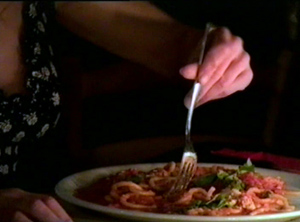
In her books and articles on the Dogme school Mette has shown that its innovations go beyond the vaunted technical “rules.” She always addresses them, of course; here she provides an illuminating typology of ways the rules have been followed or dodged. But she also stresses, as most writers don’t, that Dogme films engage with matters of political importance. For example, she has shown that The Idiots’ controversial display of “spazzing” triggered an important debate about Danish attitudes toward the disabled. In her new book Mette indicates that Scherfig’s efforts to endow her characters with the dignity to be found in everyday life offers viewers a chance “to re-connect with one of their culture’s most powerful moral commitments.” Mette talks about the project in this video.
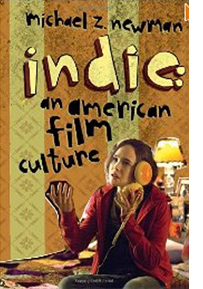 David Gordon Green directs Your Highness; Justin Lin signs his third Fast & Furious movie. With indie filmmakers eagerly joining the tentpole and franchise business, the whole phenomenon seems due for a rethink. This makes Michael Z. Newman’s Indie: An American Film Culture all the more necessary. Although I can’t be unbiased, because I served as Michael’s advisor on the dissertation that became the book, I think that any reader would find the result a fresh and vigorous exploration of the achievements of the Sundance/ Miramax generation.
Michael starts by looking closely at the audiences and marketing. He suggests that viewers engage with the films through particular viewing habits (e.g., “Characters are emblems”). He then shows how these habits were nourished and refined by distributors, promotion, and film festivals. The next two sections of the book consider what we might take to be the two poles of indie difference from Hollywood: greater realism, and more self-conscious artifice. The central chapters analyze realism in relation to “character-centered” filmmaking in the Indie trend. Michael turns a critical eye on characterization in films as different as Walking and Talking, Lost in Translation, and Welcome to the Dollhouse. The third batch of chapters considers the trend’s other major appeal, the sort of play with style and form we get in the Coens, Tarantino, Nolan, and others.
Michael shows how character-driven realism and gamelike artifice mesh well with the mandates of distribution and reception—how, in effect, “originality” becomes something that can be calculated and branded. The book concludes with thoughts on the evolution of the trend, comparing Happiness with Juno and raising the inevitable question: How artistically independent is independent film? Newman leaves us pondering: “Indie cinema has become Hollywood’s most prominent alternative to itself.”
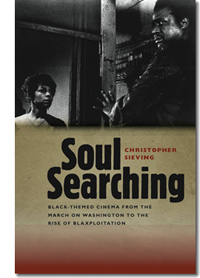 One of the hallmarks of the Wisconsin program in film studies is its nuanced refusal of the art/ commerce duality that supposedly rules filmmaking. From many angles, researchers here have shown that creative impulses and business mandates mix in complicated ways, and the results are often fascinating. Indie is one example of this sort of research project, and so is another dissertation-become-book, Christopher Sieving’s Soul Searching: Black-Themed Cinema from the March on Washington to the Rise of Blaxploitation. (Again, I was involved, serving on the committee chaired by Tino Balio.)
Chris concentrates on 1960s black-themed films from A Raisin in the Sun onward, because he wants to trace how filmmakers tried out a variety of ways to represent and comment on black life. It was a transitional era, but as he puts it “because of the insights they reveal about the periods that bracket them, transitional periods are among the most fascinating and significant in all of film history.”
For Chris, Gone Are the Days (1963), The Cool World (1964), Uptight (1968), The Landlord (1970), and the unproduced Confessions of Nat Turner provide case studies of alternatives to what became the crime-and-comedy product of blaxploitation. Why did decision-makers believe that black-themed films would sell broadly enough to repay investment? What choices and compromises were necessary to “universalize” material (for white viewers) while also retaining “authentic” blackness? Or was it better simply aim the films at white liberals?
Chris tackles such questions through a painstaking study of the film industry’s efforts to find, or create, an audience for films that took great risks. Written with verve (on the screen handling of the Black Panthers, Chris talks about Hollywood’s “Black Power outage”), Soul Searching revives films that are all but forgotten and shows how their efforts to create one variety of independent cinema failed for particular social and industrial reasons.
Someone I’ve been meaning to spotlight for a while: Frédéric Ambroisine is a multitalented critic, filmmaker, stuntman, and collector based in Paris. One of his careers is making supplements for French DVD releases of Hong Kong films, both classic and current. If you have even a smattering of French, you can follow his supplements with ease. He gets precious interviews with screen legends like Kara Hui Ying-hung and Ku Feng (below), master villain of the great New One-Armed Swordsman.
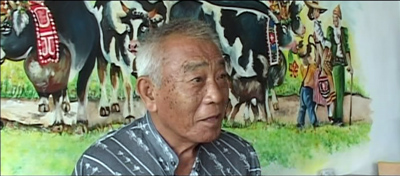
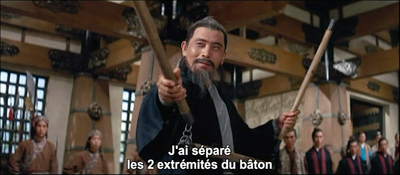
The videos from Wild Side often include Fred’s featurettes. You can follow Fred’s activities at actionqueens.com and alivenotdead. Much of the material in both places is in English.
Finally, if you’re in Los Angeles this week, why not visit the celebration of Orphan Films playing at UCLA 13 and 14 May? While I was in New York in February, I met NYU’s Dan Streible, moving spirit of the Orphan Films movement. Dan and his colleagues work with archives, collectors, and filmmakers to save films that fall through the cracks, digging up everything from home movies to news clips and experimental cinema. Dan curated a program of orphans at our local festival earlier this spring. At UCLA he will be a guest for screenings and discussions of many orphan titles, including the mysterious Madison Newsreel (Madison, Maine alas, not Wisconsin). Go here for Sean Savage’s discussion of the orphan oddity that has become a cult movie, and here for background on Northeast Historic Film, which found the footage.
PS: Speaking of friends, I should thank the solicitous people who wrote me during my recent illness. I appreciate your get-well notes, and I’m happy to report that I’m on the mend.
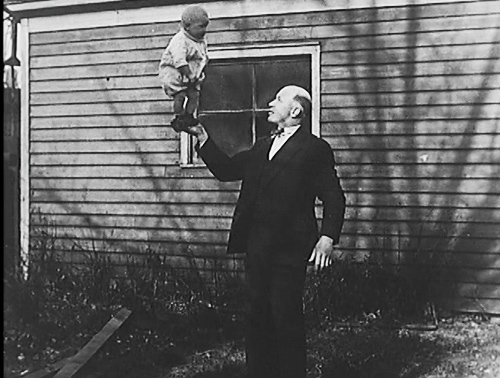
“World’s Youngest Acrobat” (Hearst Metrotone/ Fox Movietone 1929). From Orphans 7: A Film Symposium.
DIY dumplings

DB here in Madison, homebound from pneumonia, pining for Kristin and Ebertfest in Illinois:
The energetic Kevin Lee (when does he sleep?) has prepared a very nice video essay on Liu Jiayin’s Oxhide II at Moving Image Source.
The text is based partly on my blog entry on the movie from 2009. Kevin’s is something of an experimental piece, because it presents extracts from the entry in different voices and languages. I wasn’t able to narrate it because I’ve lost my voice, but the readers did better than I could have. Thanks to Evan Davis and Yuqian Yan, as well as the translators involved.
You can buy Liu’s first two Oxhide films on DVD at dGenerate Films, along with other important recent Chinese titles. Every university film department, and every serious lover of cinema, needs to own these movies. Liu shows what you can do with very few means but a lot of imagination. And Oxhide III is in the works.
And don’t forget to visit the videos of introductions and Q & A’s from this year’s Ebertfest here. Some are streaming, some are archived, all are interesting. As I typed this, Paul Fierlinger was talking about the background to My Dog Tulip.