






Archive for March 2026
John Ford in a whole new light
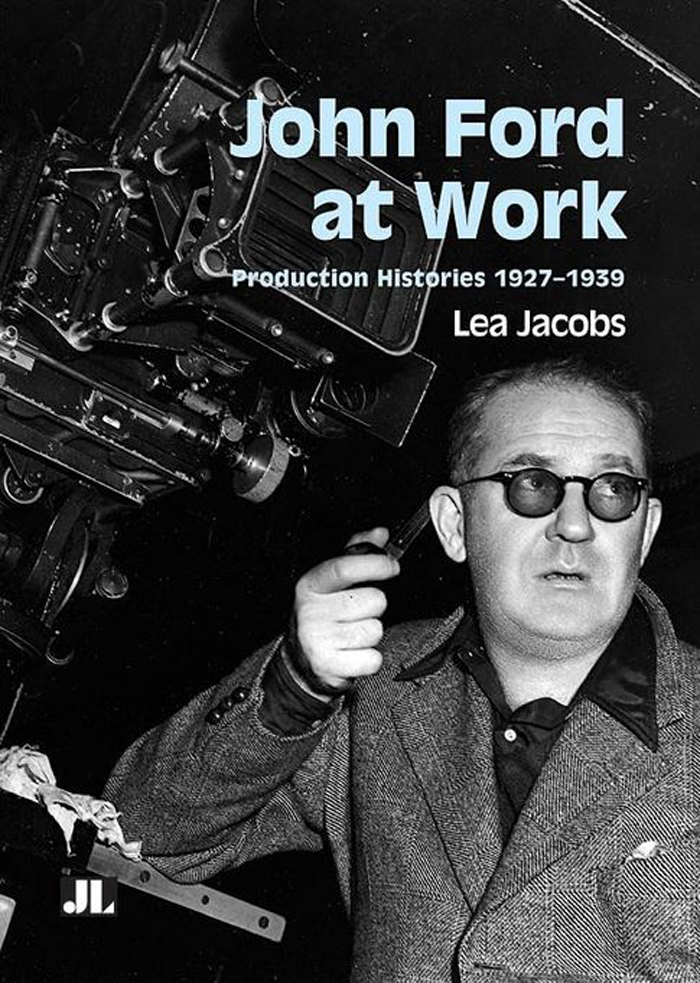
Kristin here
Last year at the Le Giornate del Cinema Muto film festival in Pordenone, Italy, attendees had the first opportunity to purchase Lea Jacobs’ fresh-off-the-presses book, John Ford at Work: Production Histories from 1927 to 1939. It was also given away as one of the perks for higher-level donors.
The title says “Production Histories,” but Jacobs covers more than that phrase might seem to suggest. She has drawn on the strengths of the film-studies area of the Department of Communication Arts here at the University of Wisconsin-Madison. One of those is the academic study of the film industry, established by Prof. Tino Balio with his United Artists: The Studio Built by the Stars (University of Wisconsin Press, 1976), the first of his string of books on the industry. I think it’s safe to say that David and his colleagues favored an aesthetic approach to film analysis, as in David’s books The Films of Carl-Theodor Dreyer (University of California Press, 1981) and Narration in the Fiction Film (University of Wisconsin Press, 1985 and still in print), followed by many others. Another area that is studied here is technology, such as books on the introductions of Technicolor and of stereophonic sound.
These three approaches were combined in The Classical Hollywood Cinema: Film Style and Mode of Production, by David, Janet Staiger, and me (Routledge & Kegan Paul and Columbia, 1985, still in print). In it we examined how the mode of production in Hollywood and the development of new technologies affected the norms of style and narrative established across the history of Hollywood cinema.
Jacobs has carried forward this approach, though rather then surveying the entire industry, she focuses in on one filmmaker in a period when substantial changes were happening in both the studio system and the technology of filmmaking. Most of the chapters follow a pattern that makes the three topics clear. First a summary of the various studios Ford worked for in this period and how the different producers and crews affected his style. Next is an explanation of changing technology–not just the obvious introductions of sound and color, but a more nuanced account with the important development of sound re-recording and the rapid improvements of faster black-and-white film stocks. Finally, Jacobs analyzes the films to show the effects of these changes on their style.
In the Introduction she lays out this approach in relation to faster negative stocks:
This study will not only explore the way in which Ford’s lighting schemes developed across the 1930s, but also the impact of these innovations on other aspects of his style, particularly his use of the long take, and the way in which the predilection for deep space compositions, evident from his very first silent films, becomes one of the defining features of his style in the late 1930s films. (pp. 3-4)
I found that this book needs to be read slowly and carefully. As Ford moves around among studios, different cinematographers, producers, script writers, and actors work with him from film to film, all having their influences. Gradually some of these people work more consistently with Ford and become a loose but important team. Chief among these are Darryl F. Zanuck on the producing side and cinematographer Bert Glennon on the filmmaking side. Glennon was so crucial that the cover photo wraps around the book, with Ford on the front and Glennon on the back. Keeping track of all the people and studios requires close attention.
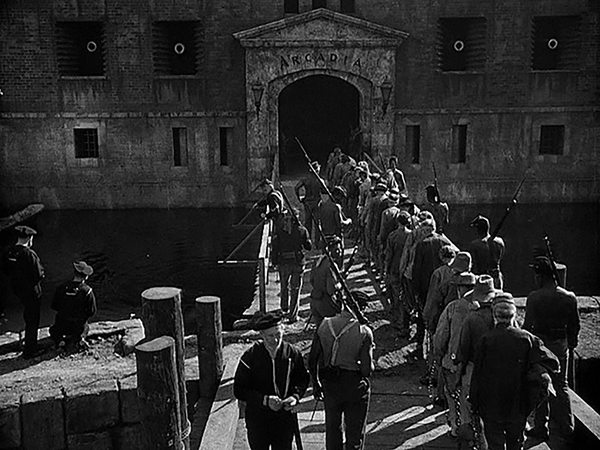
Jacobs accomplishes what most authors hope for: that the reader finishes by wanting to re-watch again films seen before, sometimes confident that her analyses will reveal them as much better than one had thought. I, for example, saw The Prisoner of Shark Island, one of the films she examines in detail, long ago and wasn’t impressed. So long that I don’t remember the exact circumstances, but I was probably still in grad school, and I probably saw it on a worn 16mm print at one of the ubiquitous film societies that flourished at the university in the 1970s and 1980s. Lea’s frame enlargements for this and other films of the era were gorgeous and revealed a vastly different film than I had seen.
Fortunately our departmental Cinematheque film series celebrated the book’s arrival with a brief Ford series, one of which was a gorgeous 35mm print of Shark Island. Between the set design by William Darling and lighting by Glennon, the visuals were dramatic and beautiful. I don’t know if it will make this year’s list of The Ten Best Films of … 1936; there’s some pretty stiff competition. Still, although I wouldn’t quite put the film among Ford’s masterpieces of the decade, for me it has climbed quite close to that status.
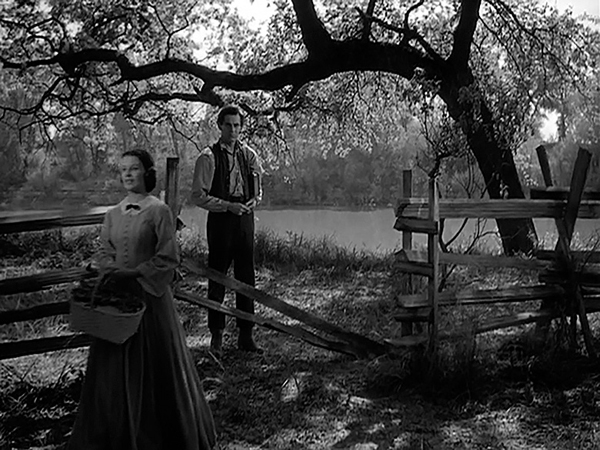
Few would deny that Ford’s masterpieces of this period were Stagecoach and Young Mr. Lincoln (below), both made, alongside Drums Along the Mohawk, in what Jacobs rightly terms his annus mirabilis, 1939. Jacobs provides detailed analyses of both, again stressing the importance of Glennon’s cinematography.
The thoroughness and complexity of Jacobs’ book reflects an enormous amount of research in archives, trade papers, and published interviews and studies. (Do not miss the bibliography!) The process took years, and David and I heard about it as it inched forward, awaiting the results impatiently. The wait was worth it, and now I look forward to the next volume, mostly covering the post-war years when Ford had his own production company. Undoubtedly the result will again be an urge to re-watch familiar films and see them in a different light.
John Ford at Work was published by John Libbey and is distributed through Indiana University Press. In this day of soaring prices for academic books, this one is available in paperback for $32.00, with an ebook costing a whole penny less. The physical copy may look relatively short at first, but picking it up reveals a surprisingly heavy tome resulting from the fine coated paper that makes the illustrations come out superbly. Double columns and small print squeeze a lot of information into a small book.
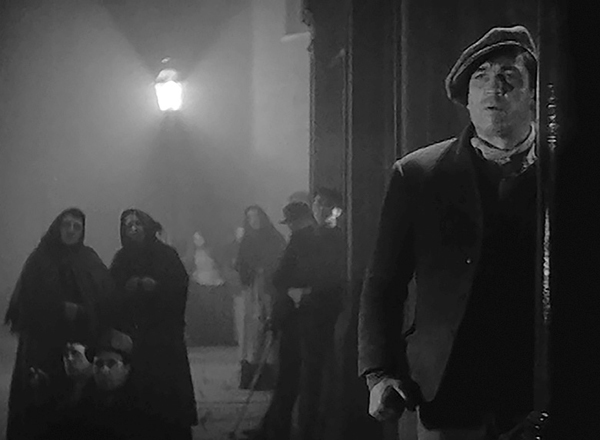
The Informer (1935)
Criterion Takes Us to Romania
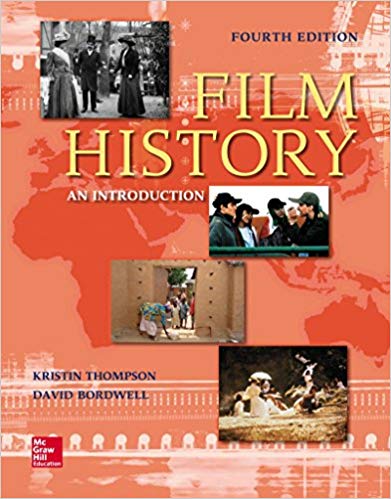
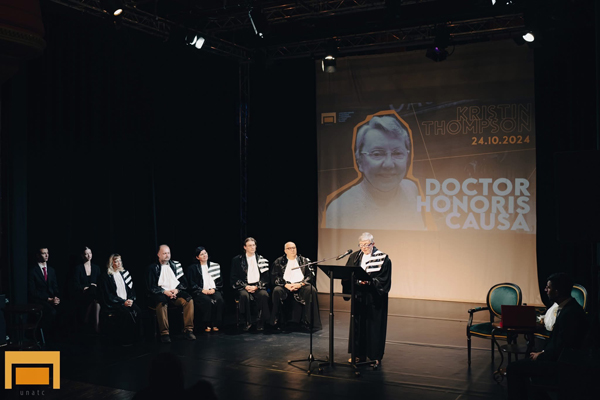
Back in 2024, I was contacted by two Romanian film professors, Andrei Rus and Doru Nitescu of the Universitatea Nationala de Arta Teatrala si Cinematografica “I.L.Caragiale.” They had translated David’s and my textbook, Film History: an Introduction, the first of our books to appear in Romanian. As part of the activities around its release, they kindly offered me a Doctor Honoris Causa from their university. Of course I accepted, and my sister Karen and I headed for Bucharest. It was a moving ceremony (me giving my acceptance speech below) and a lovely visit to Bucharest.
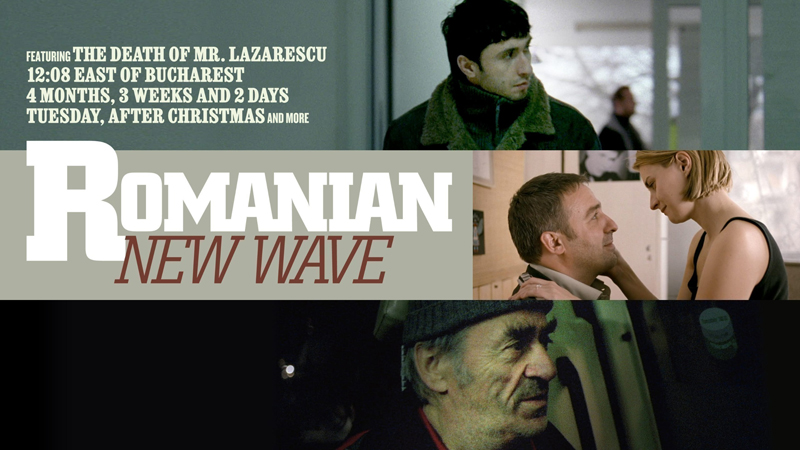
That visit helped lead to the Criterion Channel’s new March program of Romanian New Wave cinema. The lineup of films which became available on March 1 is:
The Death of Mr. Lazarescu (Cristi Puiu, 2005), 12:08 East of Bucharest (Corneliu Porumboiu, 2006), 4 Months, 3 Weeks and 2 Days (Christian Mungui, 2007), Police, Adjective (Corneliu Porumboiu, 2009), Aurora (Cristi Puiu, 2010), Tuesday, After Christmas (Radu Muntean, 2010), and Sieranevada (Cristi Puiu, 2016)
Naturally I prepared for the trip by watching as many Romanian films as I could find, in part because it was hinted that I could meet some of the most prominent of the New Wave directors during my visit, which proved to be the case. We had all too short a conversation with Christian Mungiu, who runs a film festival and had to dash off to introduce someone after the starter course. Andrei and I dined with Radu Jude. Doru, Karen (on the right below), and I had a very pleasant and lengthy dinner with Cristi Puiu and Anca Puiu, his wife and producer. She played a considerable role in helping organize the Criterion series.

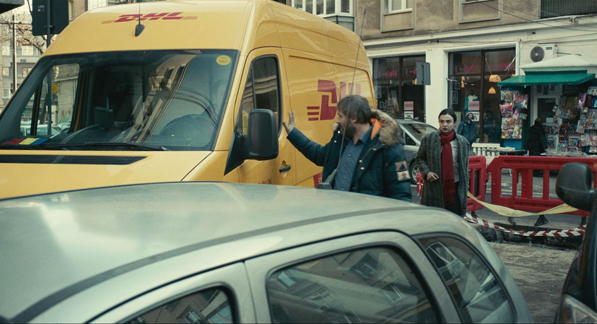
After I returned to the USA, I contacted my friends at Criterion and asked whether Puiu’s Sieranevada, which I blogged about from the 2016 Vancouver International Film Festival, might be a candidate for release on DVD/Blu-ray. It was unavailable in the US in any format. In my entry I wrote, “Watching the lengthy opening shot, which largely involves the main character’s car being double parked and blocking a DHL truck, I did quickly realize that I was seeing a terrific film.” Finally seeing it again, I could appreciate the elaborate staging as the characters move in and out among the crowded group of vehicles.
It turned out that Criterion’s schedule of disc releases was already planned for years ahead. The option of a program of Romanian New Wave cinema, however, was a possibility. Soon it became a reality, and the Head of Programming for the Criterion Channel, Aliza Ma, made it happen. It didn’t quite make into the 2025 schedule, which would have coincided with other celebrations for the twentieth anniversary of The Death of Mister Lazarescu‘s release. It won numerous prizes, most notably the Un Certain Regard Award at Cannes. It is considered to have launched the Romanian New Wave.
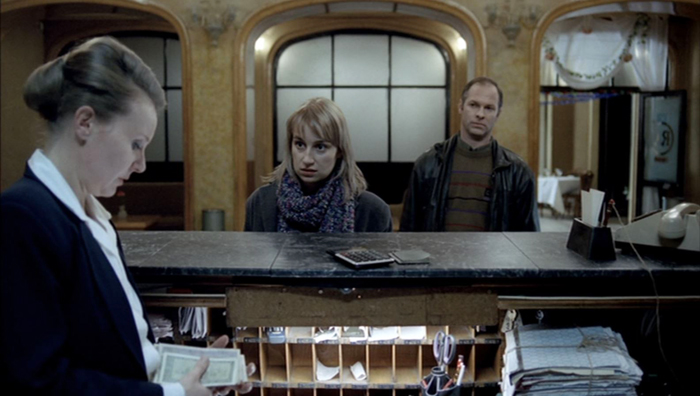
Shortly thereafter Christian Mungui’s 4 Months, 3 Weeks, 2 Days (2007) won the Palme d’Or at Cannes. It dealt with the harsh punishments for those who had or performed abortions under the Communist Regime, as the woman trying to help her friend end her pregnancy encounters suspicious hotel staff and a very reluctant abortionist (see bottom). It cemented worldwide awareness of important films coming from Romania. These directors and others have continued to make films that show up at international festivals and win or are nominated for awards. I particularly like Police, Adjective (2009), which also won the Un Certain Regard Award, as well as the FIPRESCI prize.
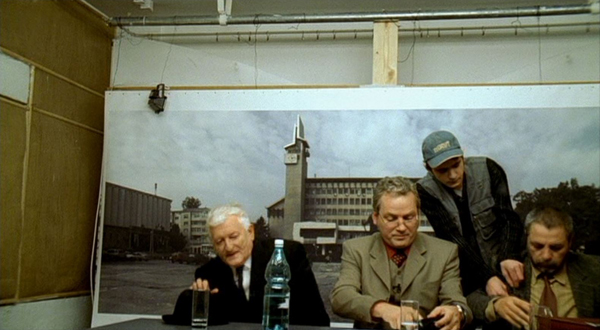
Some of the films are grim, others have a surprising amount of humor mixed in. The most overt comedy in this group is Porumboiu’s 12:03 East of Bucharest. It takes place on the sixteenth anniversary of the rebellion that toppled the Communist reign and Nicolae Ceausescu. Three men in a provincial city form a panel in a rather makeshift television studio to discuss what acts of rebellious heroism they or anyone else in their city accomplished on that fateful day.
The Channel’s series is an excellent opportunity for people unfamiliar with the movement to get an introduction to some of its most important films. Those who saw some or all of them when they came out can watch those unavailable on home video to see them again.
For anyone who enjoys this series, here are some suggestions for a further exploration of the Romanian New Wave.
You may wonder why there is only one Christian Mungui film in this series, given that he’s one of the most widely known of these filmmakers. It’s probably because Criterion already offers access to two excellent films by him. Beyond the Hills (2013) which David blogged about from the Vancouver Film Festival, will remain available on the Channel and on a Criterion Collection disc DVD or Blu-ray. Mungui’s Graduation (2016), which David blogged about, also from Vancouver, is available on Criterion discs.
I’d like particularly to recommend Mungui’s R.M.N. (2022), an excellent film about immigrants working in a small town and encountering resistance from the locals. It doesn’t seem to have had a release in the USA, but a British Blu-ray by Picture House is available through Amazon America and UK.
Those who enjoy the two films by Corneliu Porumboiu might want to check out his 2019 film The Whistlers (La Gomera, 2019), which David blogged about from the Torino Film Festival. It’s available from a number of streaming services for a fee and free for subscribers to Apple TV+.
I unfortunately did not see all of Radu Muntean’s Tuesday, After Christmas. I could only find it via a used DVD on eBay. It froze halfway through, and nothing could coax it to proceed. So I shall finally find out what happened in the end by watching it on the Channel. I have seen his suspenseful later film Întregalde (2021), available on a Grasshopper DVD.
Recently Radu Jude has become a highly popular and prolific Romanian director. One might ask why he is not represented in this series. Possibly there were rights problem, but one could argue that his distinctive style places him outside or at least on the fringes of the New Wave. I have only seen three of his films, the relatively early and more conventional The Happiest Girl in the World (2009) and somewhat more eccentric Everybody in Our Family (2012), as well as the definitely eccentric Do Not Expect Too Much from the End of the World (2023) at the Wisconsin Film Festival.
Speaking of which, for those in Madison and surrounding towns who plan to attend this year’s Wisconsin Film Festival, Jude’s KONTINENTAL ’25 will be on the program. Variety‘s review says it retains his “dark absurdist edge.” (The schedule will be available online on March 5.) It’s playing at many other festivals as well.
The Channel’s Romanian program will remain online for a year.
_____________________________________________________________________________________________________________________________________
Thanks to Cristi and Anca Puiu for help with this entry.