




Archive for the 'Books' Category
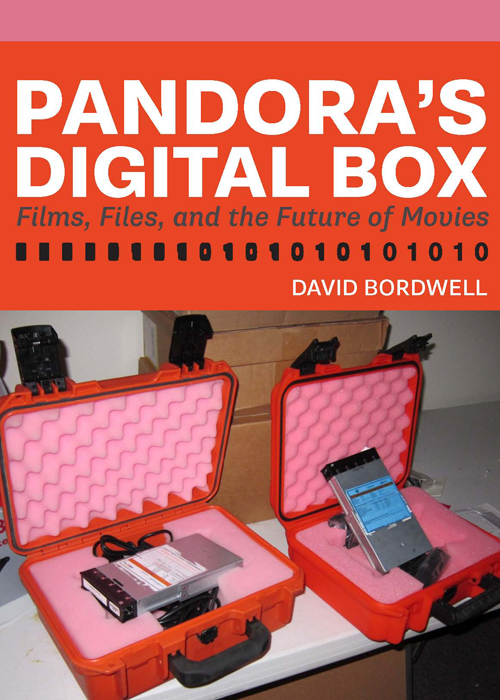
PANDORA’s digital book
DB here:
Looking back at Kristin’s and my ventures online, I see a gradually expanding series of experiments. Step by step, maybe too cautiously, we’ve moved toward what you might call “para-academic” film writing–a way of getting ideas, information, and opinions out to a film-enthusiast readership whom we hadn’t reached with our earlier work. (Although we’re happy when academics take note of what we do.)
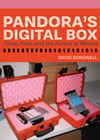
Today we have a new experiment to try. Pandora’s Digital Box: Films, Files, and the Future of Movies is now available here. Backstory follows.
Baby steps, then longer ones
To take another metaphor, we’ve been gradually exploring various niches in the online ecosystem. At first, back in 2000, knowing almost nothing about cyberculture, I dumped my vitae and a little essay onto my brand-new Geocities site. Later I saw the site mainly as a supplement to print publication, a way to add and correct things I’d written in my books Figures Traced in Light (2004) and The Way Hollywood Tells It (2005), along with material we’d included in our textbooks Film Art and Film History. By then I had retired from teaching.
I started to write more online. I began posting long, stand-alone pieces that I couldn’t imagine any journal or anthology publishing. (They’re in the list on the left-hand column of this page.) Somewhere around 2007, after finishing the collection Poetics of Cinema, I made Web publishing my primary expressive vehicle. So when I was asked to write pieces for various occasions, I tried to secure permission to publish them here as well. They too have wound up in the line-up on the left– a little essay on Paolo Gioli, one on Shaw Brothers’ widescreen cinema, and a liner note about The Mad Detective for the Masters of Cinema DVD line. There are more to come in this vein, including a historical survey of how film theorists have drawn ideas from psychological research.
While moving to fill the essayistic niche, we saw archival and revival opportunities as well. Thanks to Markus Nornes, I was able to republish the out-of-print Ozu and the Poetics of Cinema in a downloadable pdf version, with color illustrations. That’s on the University of Michigan Press site. Vito Adiraensens, who made a pdf of Kristin’s Exporting Entertainment, allowed us to post that on our site.
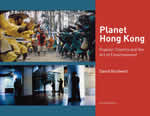
At this point, whole books we’ve done were available online. But those were straight reprints. The next logical step was to offer a revised edition. After the rights to Planet Hong Kong (2000) reverted to me, I decided to update and expand it and add color illustrations. I also decided to ask for money, making PHK 2.0 the only item on the site that wasn’t free. That was an experiment too, to see if the year I spent reshaping it might yield some payback. It did; so far, the sales have covered the costs of design and yielded me a little for my efforts.
Meanwhile we’ve explored the blog niche. Started in 2006, refreshed once or twice a week, our blog has become greatly satisfying to us. This entry is number 499. We’ve treated the blog wing of the site as a sort of magazine, with each entry as a feature or column or festival report or book notes. We write about anything cinematic, old or new, that interests us. The freedom is exhilarating, and we don’t lack ideas. I have a desk drawer’s worth of folders on topics I want to explore.
Nearly all of these are long-form endeavors. Some run to 6000 words. Even our festival reports, which could have been emitted in a flurry of communiqués, are blended into spacious pieces that permit us to compare films or develop a common theme. At a time when everyone declares that attention spans have shrunk to pinpoints, readers have been very patient with us. People still visit our blog, recommend it to others, and even Facebook and Tweet about it. Roger Ebert has been an especially generous supporter. Thanks to the efforts of Rodney Powell of the University of Chicago Press, we gathered some of our entries into a book, a “real” one called Minding Movies, and I’d hope that the length and contextual depth of the pieces gave them some bookish solidity.
Another niche coming up: As virtual books have found a public, I’ve made a book designed primarily for an e-reader.
Not bloviation, blogiation
Last fall, after realizing the scope of the digital conversion of movie theatres, I decided to write a series of blogs about it. I had no fixed number in mind, but I didn’t expect it to run as long as it did. I kept learning more, so the series, called Pandora’s Digital Box, stretched from December through March. I was encouraged by people who praised it in blogs and on social media. I decided to try to build a book out of the pieces.
Some people think that this is silly. One reviewer of our blog book, Minding Movies, wondered why anyone would buy something that’s available for free. More alert reviewers, like Scott Foundas of Film Comment (May/June 2011), understood that some readers don’t like to read long-form prose online, or don’t like zigzagging through the labyrinth that is our site, or want some guidance in selecting what to pay attention to. Moreover, by gathering items topically, the book suggested recurring themes and an overall frame of reference governing what we do. The broad aims of our enterprise aren’t apparent in a daily skim of each entry.
Still, Minding Movies was a varied mixture. Pandora was from the start a more focused series. And we added no new essays for our collection, but I had quite a bit more to say about the digital conversion. So I cooked up new rules for my latest experiment.
1. The original entries wouldn’t be taken down. As with Minding Movies, the entries will remain available online.
2. The book wouldn’t be simply a blog sandwich. I’ve rewritten, rearranged, and merged entries for smoother reading. The topics are more logically ordered, and the whole thing hangs together organically. The blogs formed a kaleidoscope; the book is a narrative.
3. The book would have lots of new material. It includes things I didn’t know when I wrote the blog, ideas that have come to me since, and as much background and context as I could supply. The original blogs amounted to about 35,000 words (enough for a Kindle single). The finished book runs over 57,000 words.
4. It wouldn’t be an academic book. It’s written in the same conversational tenor as the blog. I try not to make anybody’s head hurt. No footnotes, but….
5. The book would exploit online access. The text is unsullied by links, to promote continuity of reading. But a section of references in the back contains citations and hyperlinks to documents, interviews, sources, and sites of interest. This section tells you where I got my information and, if that information is online, takes you there.
6. The book would have to be for sale… Part of this experiment is to see whether I can make back what I’ve spent on the project. I reckon that my travel to theatres and events like the Art House Convergence in Utah, along with other expenses like paying our Web tsarina Meg to polish up my self-designed Word book, comes to about $1200. In addition, I’d like something for my extra time and effort.
7. …but not cost too much. Planet Hong Kong 2.0 runs $15, which I think is a fair price given the cost of designing a book with hundreds of color pictures. But Pandora is a lot simpler and has only a few stills. So I’m offering it for much less: $3.99.
Another Whatsit, but only $3.99
Pandora’s Digital Box: Films, Files, and the Future of Movies traces how the digital conversion came about, how it affects different sorts of theatres, how it shapes the tasks of film archives, and what it portends for film culture, especially the culture of moviegoing.
A key concern was trying to go beyond what I’d already written. For one thing, I try to answer questions I didn’t pursue in the blog entries. How did the major distributors orchestrate the transition? How did they reconcile the interests of the various stakeholders—filmmakers, theatre owners, manufacturers? By 2005, the specifications for digital cinema were established, but the real uptake came five to six years later. What led to the delay? How was digital cinema deployed outside the US? And so on.
Second, I provide background and context for areas I surveyed quickly online. For example, instead of sketching how a movie file gets projected, I take you into a booth and we follow the process step by step. The chapter on small-town cinemas reviews the role of single-screen theatres in the industry. The chapter on art-house cinemas goes back to the 1920s and shows remarkable continuity of taste and business tactics up to the present. Throughout, I consider how the US exhibition system has worked since the rise of multiplexes.
Third, there are unexpected tidbits. How did celebrity directors like Lucas, Cameron, and Jackson spearhead the shift to digital and later innovations? (I touched on that in a couple of recent entries here and here, but there’s more in the book.) Who invented multiplexes? Cup holders? When did those annoying preshow displays start, and more important, who controls them? How do distributors decide whether to release a movie wide or to let it “platform”? Why do art-house theatres serve coffee? There are even a couple of jokes (maybe more unintentional ones).
I think it has worked out well. I’ve tested the text on Kindle, Nook, and the iPad, and it fits very snugly. You just have to import it as a pdf from your computer. On the iPad, it seems to work particularly well with the app GoodReader, which permits smooth searches, easy bookmarking, and quick shifts back and forth.
As I mentioned above, you can go here to order the book. On the same page you can examine the Table of Contents and a bit of the Introduction.
It’s possible that some people might want to make a bulk purchase. Pandora might be used in a class, or given to staff members working at a film festival, or presented to members or patrons of an art house. For such worthy purposes, I can make the bulk price quite low. If you’re interested, please write to me at the email address above.
Self-publication is a risk for both author and reader. If you decide to buy the book, I thank you.
The next logical steps? A new ecological niche? A completely original book online, maybe. Or PowerPoint lectures with voice-over. Who knows? As Jack Ryan says at the end of The Hunt for Red October: Welcome to the new world.
Thanks as usual to our Web tsarina Meg Hamel, who did her usual superb job turning Pandora the Blog into Pandora the Book, and who has set up the payment process to be quick and easy. Earlier helpmates were Vera Crowell and Jonathan Frome, whose efforts in creating this site are remembered and appreciated.
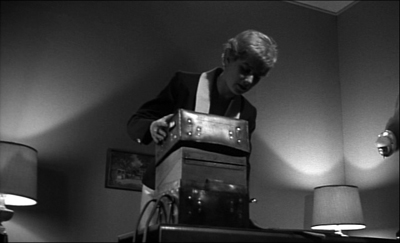
The illustrations are from Kiss Me Deadly and Pandora and the Flying Dutchman, but you knew that. Thanks to Jim Emerson for his suggestions.
The 50-50-50 split
Independencia (Raya Martin, 2009); set photo by Alexis Tioseco. Our comment here.
DB here:
I received the newest Cinema Scope after we had posted our book roundup last week. Awkward timing, but I can still alert you to this splendid effort. In the tradition of Cahiers du cinema (every film magazine wants to be Cahiers), this enterprising Canadian journal has celebrated a benchmark issue with a compendium–issue 50 devoted to 50 filmmakers (all under 50).
It’s a gimmick, but a good one, and of ancient lineage. Cahiers and other French journals established an admirable tradition of obsessively gathering brief entries on filmmakers under a thematic rubric. (The organizing principle: alphabetical order.) In this contribution to the tradition, Mark Peranson, Andrew Tracy, and the rest of the Cinema Scope équipe have outdone themselves.
We get, of course, critics aplenty, and they offer short, sharp takes: Kent Jones on Maren Ade, Scott Foundas on Wes Anderson, Andrea Picard on Liu Jiayin, Shelly Kraicer on Pema Tseden, Chuck Stephens on Apichatpong Weerasethakul, and many more admirable matchups.
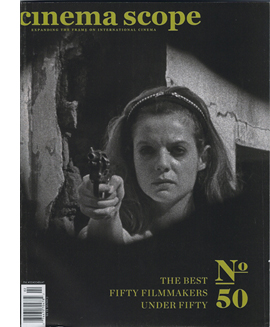 This sort of thumbnail catalogue works best when encapsulation is kept to the scale of American menu squibs, or even fortune-cookie apothegms. The phrases don’t have time to turn gently, so they careen. Tony Rayns on Jia Zhangke:
With a sensibility pitched at the exact mid-point between Robert Bresson and Arthur Freed….
Christoph Huber on Paul W. S. Anderson:
Brit-born Paul W. S. is the elder, least pretentious, and most consistently amusing Anderson of the current director trifecta: its termite artisan.
Michael Koresky on Kore-eda Hirokazu:
He’s at his best when there’s the least mess.
It’s not all praise, either. Adam Nayman contributes a vinegar-doused write-up of Paul Thomas Anderson, although he likes one cut in There Will Be Blood. Alex Ross Perry finds that Fincher’s latest work is uninspiring, but at least now “he can screw around all he wants.”
As if this weren’t enough, filmmakers (another Cahiers tradition) add their voices, and images, to the chorus. So there are Weerasethakul on Lucrecia Martel, Ben Rivers on Bertrand Bonello, James Benning on Sharon Lockhart, and Albert Serra on Zhao Liang, among others.
One purpose of such a Baedeker’s is to alert you to new work. I counted a dozen directors I hadn’t heard of, and another four or five whose films I hadn’t seen. But this kind of enterprise has long-range impact too, especially right now. Cinema Scope 50-50-50 is a bracing psychic antidote to the usual complaints about today’s empty, worthless cinema, and its inferiority to the dazzlement on view on HBO and AMC. For a recent example of this litany, see Wolcott, who yearns for the days of An Unmarried Woman. Projects like the Cinema Scope celebration lift your eyes to the horizon. You can start to believe in cinema’s future.
Are these directors marginal? Not really. The fretful, wayward margins can, when they hit critical mass, become a mighty phalanx. That’s what happened with auteurs in studio Hollywood, art-house movies in the 50s and 60s, new and young cinemas thereafter, etc. The future often lies on the periphery.
We get all this, along with the usual provocative columns by Cinema Scope regulars Peranson, Picard, Rosenbaum, Möller, and Stephens; a sort of storyboard for a new Benning project; Denis Côté musing on his Bestiaire; Hubler’s encyclopedic tribute to Sherlock Holmes movies; an interview with Hoberman (“The decline of the Voice has been going on longer than the death of cinephilia”), and much more. Even the ads are intriguing.
Sooner or later, you know you will obtain this. Why not now? A mere $5.95 Canadian, almost exactly the US price, at least today. This issue is so new that it apparently hasn’t been registered on the website yet, but go there anyway. You might as well subscribe.
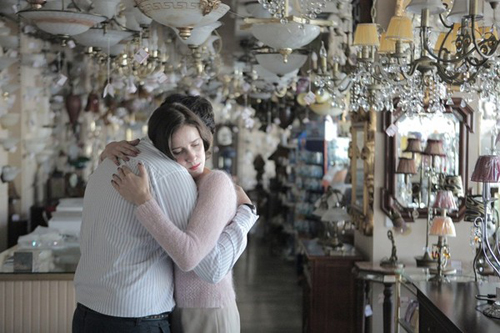
Alps (Yorgos Lanthimos, 2011).
Bringing to book
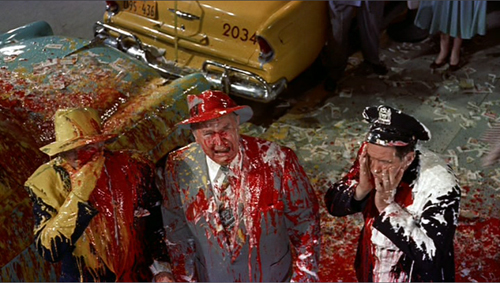
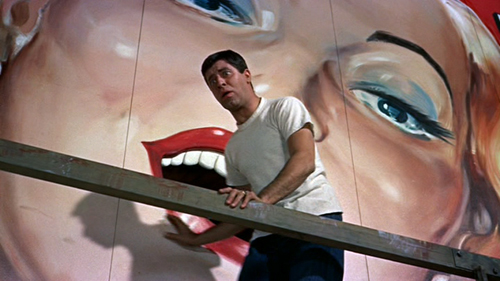
Artists and Models.
Blushing from Bryce Renninger’s generous article about us and the new edition of Film Art can’t keep us from offering another of our occasional entries devoted to new books we like. Get ready for lots of peekaboo links.
The rise of the Soviet Montage film movement of the 1920s and western countries’ knowledge of those films came about largely because of Germany. After pre-revolutionary film companies fled the Soviet Union, taking much of the country’s film equipment with
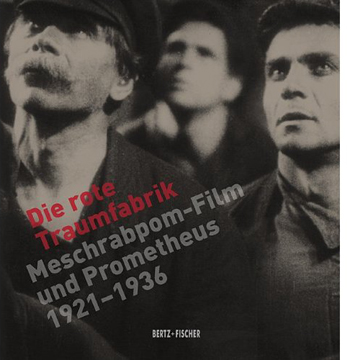 them, the re-equipment of studios with lighting equipment, cameras, and raw stock was made possible largely through imports from Germany. Once Eisenstein and other directors began making films, they were exported to Germany, where their theatrical success led to further circulation in France, the United Kingdom, the USA, and elsewhere.
There was a direct link between Soviet and German socialist film production and distribution that is too little-known today. In 1921, Willi Münzenberg forms the Internationalen Arbeiterhilfe (the IAH, known in Russia as Meschrabpom), based in Berlin. In 1924, the organization founded a film studio in Moscow, Rus. A year later, a sister company, Prometheus, was formed in Berlin. Both produced films, and they cooperated in distributing each other’s output.
Meschrabpom-Russ produced many of the familair Soviet classics: early on, Polikuschka and Aelita, and later the films of Pudovkin (including Mother and The End of St. Petersburg) and Boris Barnet (including Miss Mend and House on Trubnoya). Prometheus produced films highly influenced by the Soviet exports, both in terms of style and subject matter. These included Leo Mittler and Albrech V. Blum’s Jenseits der Strasse, Phil Jutzi’s Mutter Krausens Fahrt ins Glück, and, mostly famously, Bertolt Brecht and Ernst Ottwald’s Kuhle Wampe oder wem gehört die Welt.
Prometheus, not surprisingly, disappeared in 1933. Meschrabpom-Russ continued until 1936.
A retrospective at the Internationale Filmfestspiele in Berlin in 2012 has occasioned a comprehensive, beautifully designed catalogue, Die rote Traumfabrik: Meschrabpom-Film und Promethueus 1921-1936. With numerous expert essays and beautifully reproduced illustrations, both in color and black and white, of posters, production photos, film frames, and documents, this is the definitive publication on the subject. Even those who don’t read German will be able to use the extensive filmography and the biographical entries on the directors and other people involved in the making of the films. The illustrations make this the perfect combination of academic study and coffee-table art book. (KT)
Closer to home, our friends have been very busy. From Leger Grindon, a deeply knowledgeable specialist in American film, comes Knockout: The Boxer and Boxing in American Cinema. The prizefight movie isn’t usually discussed as a distinct genre, but after reading this comprehensive and subtle study, you’ll likely be convinced that it’s been remarkably important. While discussing movies as famous as Raging Bull and as little-known as Iron Man (no, not that one; this one comes from 1931), Leger also introduces you to the finer points of genre criticism. The way he traces basic plot structures, key iconography, and historical patterns of change is a model of how thinking in genre terms can illuminate individual films.
Then there’s Tashlinesque: The Hollywood Comedies of Frank Tashlin. Ethan de Seife goes beyond the usual recounting of peculiar, often lewd gag moments to treat Tashlin as not only a gifted director but a representative figure in 1940s-1950s American cinema. Ethan traces how Tashlin became a program-picture director who never acquired the status of auteur, at least in the eyes of the studio system. The book situates Tashlin in the context of the Hollywood industry, both the cartoon shops (Tashlin did animation work for both Disney and Warners, among others) and the live-action production units. There’s as well a fascinating chapter on Tashlin’s influence on directors as different as Joe Dante and Jean-Luc Godard, who coined the adjective “Tashlinesque.” A blend of critical analysis, cultural commentary, and industry history, Tashlinesque is surely the definitive book on this cheerfully dirty-minded moviemaker. Ethan maintains a lively blog here.
Not strictly about cinema, but a book that’s indispensible for film researchers, is James Cortada’s History Hunting: A Guide for Fellow Adventurers. A founding member of the Irvington Way Institute, Jim is at once an IT guru, a historian of computer technology, and a scholar of Spanish history, particularly of the Civil War. History Hunting, the fruit of forty years of spelunking in archives, museums, and the world at large, is an enjoyable handbook on doing historical research. It ranges from help with genealogy (case study: the colorful Cortadas, from Spain to the US) to suggestions about how to frame a doctoral thesis. Jim reminds us that the historian must turn into an archivist: the materials you collect are documents for future historians to use. You are, to use the new buzzword, a curator. Jim provides a welter of practical suggestions along with his own tales of the hunt. Jim devotes part of a chapter to Kristin and me, which just goes to show his impeccable taste in neighbors.
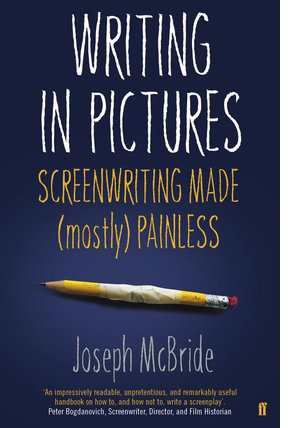 Joseph McBride is known as a film historian—his biographical books on Ford, Welles, and Spielberg are scrupulous and insightful—but he also teaches screenwriting. Why not? He wrote the cult classic Rock and Roll High School. Writing in Pictures: Screenwriting Made (Mostly) Painless is a unique manual in that it minimizes how-to instructions. Joe acknowledges the centrality of the three-act structure, but he takes a step back and asks what engages us about stories to begin with. His advice is clear-sighted. Don’t follow trends; don’t worry about “high-concept” ideas or “character arcs” or “plot points.” Closely study the masters of storytelling in fiction and drama and film, and absorb not formulas but a feeling for the flexibility of narrative technique.
One of the most original aspects of Writing in Pictures is Joe’s emphasis on adaptation. This is sensible because (a) a great many films are adapted from other sources (today, even comic books); (b) a professional screenwriter is often called upon to reshape an earlier script draft by another writer; and (c) adapting a preexisting source swiftly gets the novice screenwriter thinking about the relative strengths of verbal and visual storytelling. Joe takes us through the script-building process step by step, each time reworking London’s story “To Build a Fire.” Somewhat like the European “conservatory” approach to film education, McBride’s emphasis on organic interaction with classic traditions is something new, even radical, in the world of American screenplay education.
Then there’s Film and Risk, edited by the boundlessly prolific and enthusiastic Mette Hjort. Probably the most conceptually bold cinema book of the year, it assembles several scholars and filmmakers to assess how films and filmmakers deal with risk. The subject is of course broad. There’s risk in performance; risk in breaking stylistic boundaries; risk within film institutions (such as producing); risk in social and political contexts such as facing censorship; environmental risks, as in the costs that filmmaking exacts from the natural world; and even the risks of viewing movies—exposing yourself to horrifying or depressing stories and images. Film scholars like Hjort, Paisley Livingston, and Jinhee Choi mingle with film producers and industry observers to reflect on how cinema takes chances.
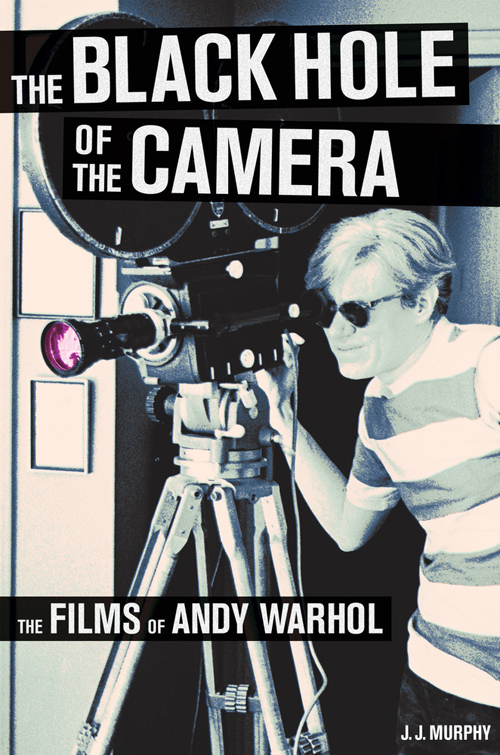
Our colleague J. J. Murphy has been researching and teaching the films of Andy Warhol for years, and today–literally, today–his monograph The Black Hole of the Camera: The Films of Andy Warhol comes out from the University of California Press. This is the most comprehensive, in-depth study of Warhol’s filmmaking that has ever been published, and of course a must-have for anyone interested in experimental film or the American art scene.
The ideas are fresh, especially the explorations of Warhol’s debt to psychodrama. At the same time, The Black Hole of the Camera clears away many misconceptions about Warhol (no, Sleep and Empire are not single-shot films) while also offering detailed information about and analysis of little-known stunners like Outer and Inner Space. There are several pages of color frames, which remind you that Warhol was as good at color as Tashlin was. JJ maintains a remarkable blog on independent cinema and is a leading figure in the Screenwriting Research Network.
Not a book, but a publication of great value: Three major researchers have collaborated on a cogent, nontechnical review of experimental investigations into film perception. All of the authors have had face time on this site. Dan Levin has executed breakthrough experiments on “change blindness”–how we miss discontinuities and anomalies in everyday life. (On another dimension, Dan’s film Filthy Theatre is coming up at our Wisconsin Film Festival.) James Cutting, a venerable figure in visual perception research, has ranged across many key areas in his consideration of cinema. He also wrote a wonderful book, available free here, on Impressionist painting. And Tim Smith, virtuoso eye-tracker, is author of one of our all-time most popular blog entries, “Watching you watch There Will Be Blood.”
With three top talents, you’d expect the collaborative paper to be a triumph of synthesis, and so it is. It supplies the best case I know for why we cinephiles should welcome psychologists who test the ways we watch movies. It should be required reading in every film theory course in the land. Access to the published paper requires a purchase or a library subscription, but you can read the preprint version here. Check in at Tim’s blog Continuity Boy for plenty of videos exploring his research (DB).
Finally, we’re sometimes asked why we don’t allow comments on our blog. The simple answer is that we’re not nearly as good at responding to comments as John Cleese is.
The cover of Joe McBride’s book pictured above is from the Faber & Faber edition, which makes a better still than the US edition from Vintage. Same good stuff inside, though.
PLANET HONG KONG 2.0 goes analog
Metade Fumaca (1999).
DB here:
In the Web age, physical books become e-books, and virtual books, often self-published, can mutate into tangible things of paper and glue. That’s what has happened to Planet Hong Kong 2.0.
The story so far: In 2011 I revised the old version. I updated the existing chapters and added four new ones. Our web tsarina Meg Hamel designed a very nice pdf version of it, with over 400 color pictures and an ingratiating layout. That is still available for $15 elsewhere this site.
I had pretty good luck with selling the e-book online, having earned enough to pay the costs of designing it. It would be nice to sell more and pay myself a little for my work. Did I mention that it’s still available for purchase here?
In the meantime, last spring I had Park Printing of Verona (Wisconsin) make some physical copies. We used high-grade paper, and the result is a very fine-looking book, measuring 11 x 8 ½ inches. I prepared them as presentation copies to the many people, particularly in Hong Kong, who had helped me in writing the 2000 edition and this one.
I’ve presented those copies to those people. I have a few copies left.
I could just hang on to them, but some people have told me they would a prefer print copy to the pdf. A few libraries have likewise expressed interest in a physical book.
So I’m making Planet Hong Kong 2nd ed. available for $60 plus postage Amazon and at Biblio. The vendor is 20th Century Books, an outstanding shop here in Madison specializing in comics, fantasy, s-f, and mysteries. (Thanks, Hank and Deb.)
The list price of PHK 2.0 analog reflects the costs of making a small print run of a heavily illustrated book. Here are a couple of sample pages. Illustrations were scanned from 35mm frames.
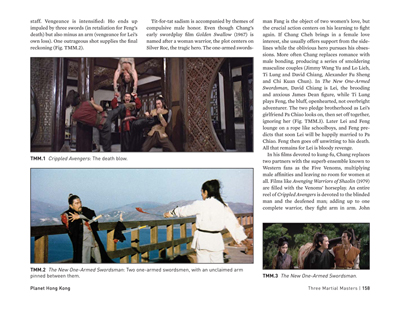
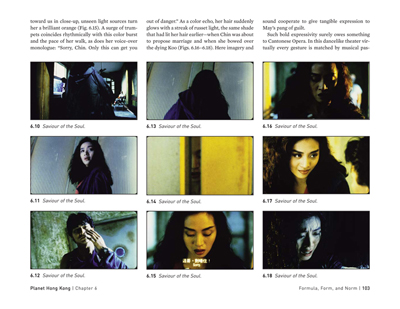
If I’d had my wits about me, I’d have done this before the holidays so I could advertise it as the perfect gift for that hard-to-please film fan on your list. In any case, if you’re a reader, collector, or librarian, you can acquire a hard copy of the book from Amazon or Biblio. And the e-edition remains available on this very site. . . .
Coming up later this week: Another entry in our series, Pandora’s digital box. This one is about how digital formats have affected film festivals. It’s not a pretty tale.
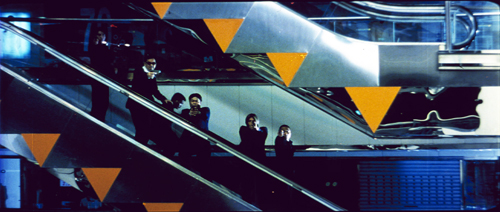
The Mission (1999).