









Archive for the 'National cinemas: Iran' Category
Repost of Vancouver: Three gems from Iran and India
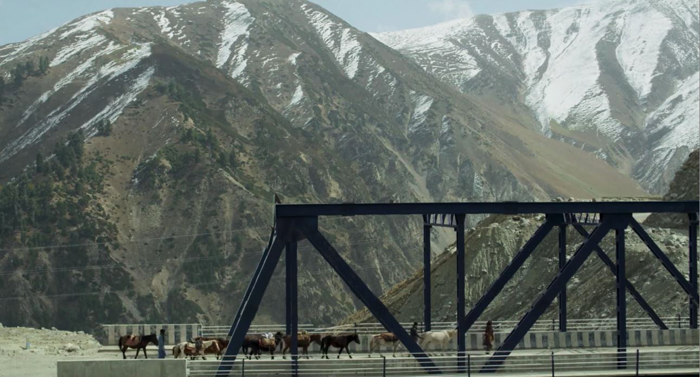
The Shepherdess and the Seven Songs (2020).
Since David’s death, this blog has not been updated. I do, however, plan to occasionally re-post old entries if they become relevant to current events in the world of film. I also hope to post new entries as the inspiration strikes me.
This entry deals with Mohammad Rasoulof’s There is No Evil (2020), including information on his troubles with the government at the time. Since he has now gone into exile and had a new film, The Seed of the Sacred Fig, showing at Cannes, I hope this entry serves as a reminder of his earlier films. (Links below lead to other posts on his films, including The White Meadow and Manuscripts Don’t Burn.)
Kristin here:
Among the always bounteous offerings of the Vancouver International Film Festival, my favorite section is “Panorama,” since I enjoy seeing new films from countries all around the globe. Often some of these are from Iran, and the two Iranian films featured this year did not disappoint. The sole Indian film turned out to be an engaging, imaginative tale from an area of the world seldom represented on the screen.
There Is No Evil (2020)
Vancouver is in part a festival of festivals, drawing upon international films already premiered in Berlin, Cannes, Rotterdam, and other earlier festivals. Of necessity, this year’s items come from the pre-Coronavirus festivals, with films from Berlin especially prominent in the schedule. Mohammad Rasoulof’s There Is No Evil, Golden Bear winner as best film, continued the director’s regular contributions to past Vancouver festivals. (For entries on other Rasoulof films we have seen at Vancouver, see here and here.) Christian Petzold’s Undine, discussed by David in the previous entry, won the Silver Bear as best actress for Paula Beer.
There Is No Evil is a deeply ironic title, since its four self-contained episodes deal with one of Iran’s notorious evils, its record for executing its citizens. As Peter DeBruge pointed out in his Variety review, “According to Amnesty Int’l statistics, Iran was responsible for more than half the world’s recorded executions in 2017. The number has since dropped, but the country continues to kill its citizens at alarming rates.”
Often the process of carrying through executions is assigned to hired civilians or is forced to be performed by soldiers. Rasoulof explores various ways in which such executions affect the willing or unwilling people who carry out the orders, as well as the effects on people they know and love. I don’t want to spoil the slow development of these consequences for the characters by describing the plots of each of the four episodes in too much detail. Suffice it to say that the revelation of those consequences are worked up to very slowly and occur dramatically.
The four episodes are shot in quite different styles. Those styles are to a considerable extent determined by the fact that the episodes move to increasingly remote locales.
The first begins in a bustling city and is shot in a bright, ordinary style befitting the depiction of a bourgeois lifestyle, with appointments to pick up spouses and children, shopping trips, and alternately bickering and affectionate conversation.
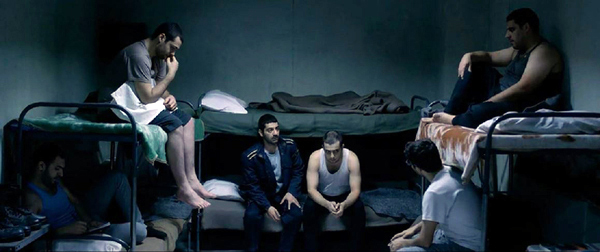
The second episode abruptly switches to a gloomy, desaturated color scheme of grays and muted browns and greens suited to a film noir (above). This segment begins with a military man assigned to perform an execution panicking because he cannot face killing anyone. During this episode, the tone and even the genre switch abruptly twice, from film noir to thriller to … something else.
The third story has a soldier on leave visiting a family of old friends, including the daughter whom he loves and hopes to become engaged to. Here the film is done in a lyrical, bright style, emphasizing scenes in the lush woods and in the happy rural home of a couple who foster a group opposing the government. Here the soldier talks with the mother of the family.
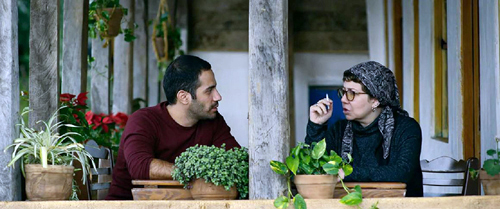
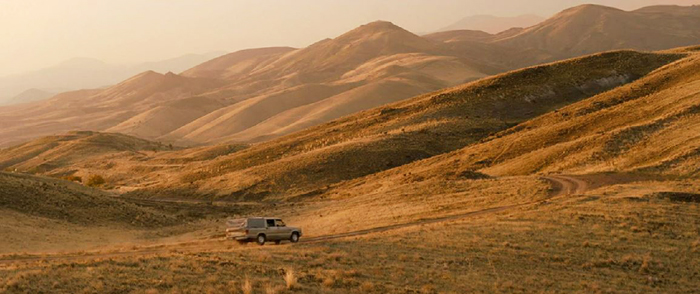
The fourth episode centers on a couple who have retired to a bee-keeping farm in a remote, mountainous area. They must contend with the visit of a niece, but neither is willing to answer her questions about the past.
I think the style in this part pays homage to Abbas Kiarostami, with numerous shots of the couple’s pickup on winding country roads (see bottom). There’s a specific echo of The Wind Will Carry Us in the motif of the girl’s repeated attempts to find cell-phone coverage to call her parents abroad.
Given the relatively large cast and considerable number of interior and exterior locales, one might wonder how Rasoulof, under an order to stop filmmaking, could make a two-and-a-half hour film critical of government policy. DeBruge’s review, linked above, also comments: “By subdividing the project like this, Rasoulof was able to direct the segments without being shut down by authorities — who are more carefully focused on features — and, in the process, he also builds a stronger argument.” In an earlier Vancouver report, we noted that Rakhshan Bani-Etemad’s Tales (2014) used a network-narrative structure because she could only get permission to make a series of shorts–which she then wove together into a feature.
As DeBruge writes, the reliance on episodic structure does not handicap Rasoulof. The slow accumulation of indifference, regret, and guilt demonstrates that executions have unnoticed, unforeseen, and undeserved effects. The stylistic shifts emphasize the differences in those effects and maintain interest across a long film.
The effectiveness of Rasoulof’s film has not gone unnoticed, however, and a Golden Bear is clearly not enough to protect him. On March 4, he was summoned to begin serving his long-delayed prison term, despite the widespread incidence of COVID-19 in Iranian prisons. (On March 1, three days before the summons, Indiewire published a history of government strictures on Rasoulof.) Many official protests have been launched, and one can only hope that once again the result will be yet another suspension of the enforcement of the sentences against him.
Yalda, a Night for Forgiveness (2019)
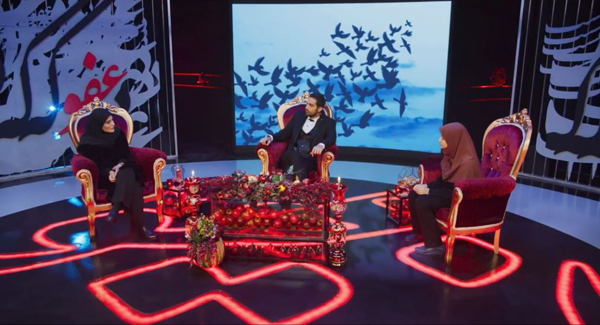
Yalda is the second feature by Iranian director Massoud Bakhshi, whose first, A Respectable Family, we recommended as “an unexpected gem” when it played in Vancouver in 2012. Yalda is another film that comes to Vancouver via this year’s Berlin International Film Festival, where it was nominated for a Crystal Bear. It also played at the Sundance Film Festival, where it won the Grand Jury prize in the “World Cinema – Dramatic” category.
The film centers around one episode of a television series, “Joy of Forgiveness,” based on the premise that each week someone convicted of a crime seeks to be forgiven by the victim or a relative of the victim. Although not an actual law, such forgiveness is encouraged in Iran under Islamic law. If forgiveness can be obtained, the criminal is typically absolved of the crime. There are now charities, celebrities (including film director Asghar Farhadi), and other forces working informally to foster forgiveness and free guilty people, though this may include a payment of “blood money” given to the person doing the forgiving. (A real TV show based on this premise, “Honey Moon,” was the inspiration for Yalda.)
In this case, a young, shy working-class woman, Maryam, who had been married to a wealthy older man, has been convicted of killing her husband. She insists, however, that it was an accident. As the film begins, Maryam’s mother brings her to the television station. The young woman is terrified and declares she does not want to participate. But since this would mean a death sentence being carried out, her mother and the production team of the show ignore her protestations and hurry her through the preparations.
Representing the victim is Mona, his daughter, who, as the title of the TV series suggests, is expected to provide the standard happy ending to the show by forgiving Maryam. Mona seems to have reasons to do so, since she would receive the blood money proffered by “Joy of Forgiving” and is planning to emigrate from Iran in the near future.
So far we seem to have a situation familiar from the films of Asghar Farhadi, with two or more people at odds who are gradually revealed to be flawed and to some degree at fault. The situation then typically ends in reluctant understanding between or among the opponents.
As the host interviews the two women, however, he shows a distinct bias toward Mona’s viewpoint. Rather than pleading her case humbly, as the television crew expects, Maryam becomes desperate and accusatory. Her exchanges with Mona grow more heated.
The producers begin to panic. As one points out, this show is occurring on Yalda, a festival held on the day of the winter solstice. The longest night of the year is believed to be unlucky, and traditionally Iranian families gather to eat, tell stories, read poetry, and generally cheer each other up through the night. Seeing a sad ending to the program would badly disappoint the audience.
Telling his story in what is essentially continuous time and at a brisk pace, Bakhshi starts out by sticking closely to Maryam, building up considerable sympathy for her as everyone ignores her pleas and bosses her around. Once the program begins, the increasing hostility of Mona generates a suspense that is well maintained up to the final twists of the ending–twists showing that Bakhshi is not going for a Farhadi-style resolution.
The script is tightly constructed and engrossing, so much so that one could imagine a Hollywood remake–if a plausible legal situation could be devised as the premise.
The Shepherdess and the Seven Songs (2020)
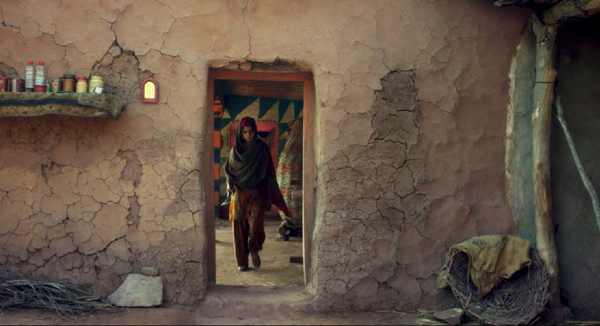
The Shepherdess and the Seven Songs (director Pushpendra Singh) also was shown at the Berlin festival, in its Encounters section. It also won best director in the “Young Cinema Competition (World)” at the online competition for this year’s cancelled Hong Kong International Film Festival.
The film begins with a young man, Tanvir, struggling to lift and shoulder a heavy stone, a traditional test for a prospective husband among a tribe to which whom the beautiful shepherdess of the title, Laila, belongs. Soon a title is superimposed: “Song of Marriage,” the first of the seven songs. These songs are sung over the action–unsubtitled, unfortunately–and give a sense of the story taking place in some old folk tale. (Indeed, a title in the credits declares that the film is “Based on a Rajasthani folk-tale by Vijaydan Detha,” a well-known twentieth-century author of numerous such short stories.)
The fact that the tribes cook over open fires and follow what seem to be old traditions reinforces this impression, until a night scene where some of the men wield LED flashlights. Another title, “Song of Migration,” leads to a the journey of the nomadic tribe into which Laila has married herding their large flock toward the village that is their home base. They pass along modern highways, moving aside for traffic to pass, through landscapes that provide beautiful shots (see the top of this entry). This stretch of the film is lyrical and captivating, thoroughly drawing the spectator into the film.
Abruptly another modern touch, a radio carried by one of the men, thrusts the action into the troubled politics of the present. A newscaster declares, “In the Kashmir Valley protests against Article 5A have escalated.” Two protestors, he says, have been killed. The reference is to Pakistan and India’s dispute over control of Kashmir, and the Kashmiri struggle for independence from both. Laila, it later is revealed, is Kashmiri, while Tanvir’s tribe lives in an area controlled by India.
Laila’s beauty soon attracts the attention of the local Station-master and his subordinate, Mushtaq. They hint that as a Kashmiri she might possibly be a terrorist. This accusation comes to nothing, and Mushtaq’s clumsy attempts to seduce Laila lead to a switch in tone. A series of episodes, each a separate “song,” follow Laila promising trysts with him and then bringing her husband along on a pretext. Mushtaq’s continued gullibility in trusting that each new assignation is made in earnest lends a farcical comic touch to this lengthy passage of the film. At the same time, however, Laila is testing whether her husband, strong enough to lift the stone and win her as his bride, has the moral power to defend her rather than currying favor with Mushtaq by turning a blind eye to his designs on Laila.
I felt that the last portion of the film ran out of the energy it had sustained so well, since Laila is strong enough to turn her back on two unacceptable men but has no apparent sense of where to turn once she has done so. Still, overall The Shepherdess is beautifully filmed, as the frames at the top of this section and of the entry demonstrate. It also tells a thoroughly absorbing story.
So far David and I have reported on six films from this year’s Vancouver festival. Already it has become clear that our accumulated experiences from past years have allowed us to trace the development of promising young filmmakers into great ones and to discover promising new ones whom we hope to encounter at future festivals.
Thanks to Alan Franey, PoChu AuYeung, Jane Harrison, and their colleagues for their help during the festival.
There Is No Evil (2020).
Wisconsin Film Festival 2022: A return to the theaters
Hit the Road (2021).
KT here:
The Wisconsin Film Festival ended last week. This was the first in-person festival after one cancelled (2020) and one presented through streaming (2021). Given David’s health situation, I was not able to attend many films, but here are some of the highlights that I caught.
Wisconsinite David Koepp visited the festival, bringing two films he scripted, Kimi (Steven Soderbergh, 2022) and Death Becomes Her (Robert Zemeckis, 1992), as well as one that inspired the former, Sorry, Wrong Number (Anatole Litvak, 1948). David and I had already seen Kimi on streaming, but I jumped at the chance to see it on the big screen. The sell-out crowd was utterly enthralled throughout, and David K. charmed them during an all-too-short Q&A session. I won’t say anything more about it, since David B. has blogged about it. I did enjoy two Middle Eastern films and the new Claire Denis. (Not the one about to be in competition at Cannes. The woman is certainly cranking them out.
Amira (2021)
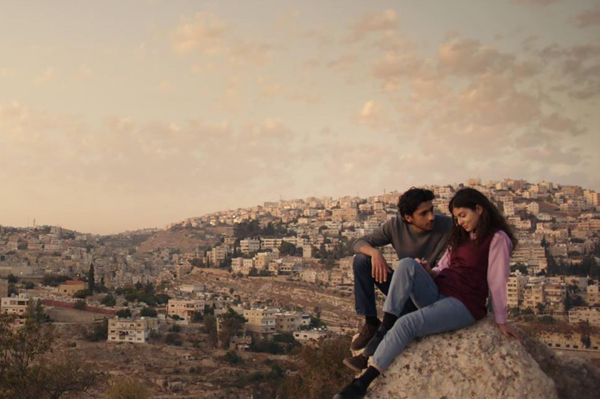
In 2017, the Wisconsin Film Festival showed Mohamed Diab’s extraordinary Clash (2016), an epic restaging of the 2013 riots that brought down the Muslim Brotherhood government, all observed by a group of prisoners in a police paddy-wagon. I was excited to see that this year’s festival included Diab’s next film, Amira.
The new film is quite different from Clash. While that showed a cross-section of Cairo participants in the riots or simply bystanders swept up by the police, Amira centers on a personal drama of an extended family living in an unidentified occupied Palestinian area of Israel. (The film was shot in Jordan, so local landmarks would be no help in figuring out exactly where the family lives.) Amira’s parents have never consummated their marriage, since the husband, Nawar, is imprisoned for life, and his wife Warda became pregnant through semen smuggled out of the prison. Amira is officially the daughter of Nawar’s brother, but she is fiercely devoted to Nawar, going through elaborate security procedures to visit him in prison.
The plot gets going when it is revealed that Nawar has a genetic abnormality that rendered him sterile from birth. The close-knit family descends into vicious arguments and accusations, with Warda being suspected of infidelity, the men on both sides of the family indignantly refusing to take DNA tests, and Amira concocting wild schemes to protect both her parents and ultimately take revenge on the person deemed guilty of bringing disgrace on the family.
Despite the impressive shot of Amira and her boyfriend against the city (above, a cropped image from the widescreen film), the film opts for crowded interiors most of the time–though not as limited as the paddy-wagon of Clash. Small apartments, narrow alleyways, and above all the visits to the prison create a claustrophobic atmosphere where nature and the bustle of society in the city are largely eliminated.
The prison scenes involve extended shot/reverse-shot conversations between Nawar and his family members through a glass barrier.
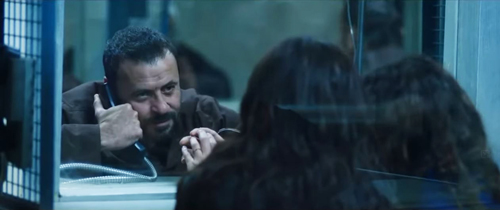
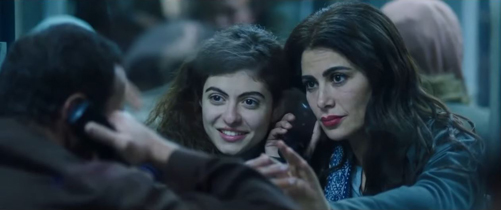
Shot with telephoto lenses, the scenes use shallow focus to concentrate our attention on the central characters. At the same time, though, reflections and planes of action out of focus create a sense of cramped space and similar conversations going on in a cramped room. Here Nawar suggests that he and Warda have a second child, since an opportunity to smuggle out some of his semen again. Amira’s delight at the idea and Warda’s doubtful expression set up the disastrous revelation to come: that Nawar cannot in fact be Amira’s father.
Checking Diab’s filmography on IMDb, I was surprised to learn that he is the main director on the current Marvel streaming series, Moon Knight. I had been completely ignoring this show, since I have little to no interest in the MCU. I did notice some comments by Egyptological friends on Facebook that the hieroglyphic texts were authentic (an important chapter from the so-called Book of the Dead), as attested by actual Egyptologists. One reviewer commented, “Hollywood has had a problem with how Egypt is represented in both film and TV. ‘Moon Knight’ has done a superb job with episode three, showing Egypt as an actual modern civilization as opposed to a barren wasteland of only sand with a yellow tinted filter over it.” He does not seem to have noticed that this might be due to the fact that an actual Egyptian director was chosen.
I suppose this is not terribly surprising, since for years there has been a trend toward Hollywood producers suddenly elevating talented foreign and indie directors into the ranks of makers of big franchise films. Taika Waititi went from What We Do in the Shadows and Boy to Thor: Ragnarok and Chloe Zhao from Nomadland to Eternals. (I list a considerable number of similar leaps from the festival scene to the world of blockbusters in my entry on Waititi’s rise to international fame.) Still, Diab seems a strange choice. Maybe Clash was sufficient demonstration that he could do epic scenes of violence. I suppose I shall have to give Moon Knight a look.
Hit the Road (2021)
For years now we’ve been blogging about Panahi films (click on Directors: Panahi in the Categories at the right). Now we have another, but it’s not by Jafar. Panah Panahi is his son, and this is his feature debut. Panah began by making shorts, worked as a set photographer, and later as an editor, most notably on his father’s latest feature, Three Faces.
Hit the Road (the Farsi title is more literally translated as “Dirt Road”) reminded me more of the films of Abbas Kiarostami than of the elder Panahi. Jafar worked as an assistant director on Kiarostami’s Through the Olive Trees (1994). Panah was only ten years old at that point, having been born in 1984, the year of Kiarostami’s early feature documentary, First Graders. The New Iranian Cinema came to world prominence later in the 1980s and into the 1990s. Jafar moved into directing features in 1995 with The White Balloon.
Growing up, Panah must have become familiar with the now-classic films of Kiarostami and Mohsen Makhmalbaf, as well as those of his father in the years before the latter’s arrest in 2010.
Hit the Road is reminiscent of the “child quest” films of the early years of the movement. In this case, though, the child in question is not the center of the plot, even though the rambunctious kid steals every scene he’s in. He’s accompanying his parents and older son on a road trip that occupies the entire length of the film. The older son is as quiet as his brother is noisy, but it gradually comes out that he is heading for a spot where he will join others being smuggled out of the country in search of better lives. The parents keep this a secret from the little boy, fearing that he will blurt out something that will draw attention to their goal.
The film is a skillful blend of suspense on that account, of a poignant if quarrelsome love among the family, and a good deal of comedy supplied by the little boy. Amid all the raucous exchanges there are quiet moments, as when during a rest stop the unnamed mother nags her older son about smoking too much while sharing a cigarette with him and asking what his favorite movie is. By this point we suspect that she fears that she will never see him again once they reach the border. (Richard Brody’s insightful review captures this mixture of tones.)
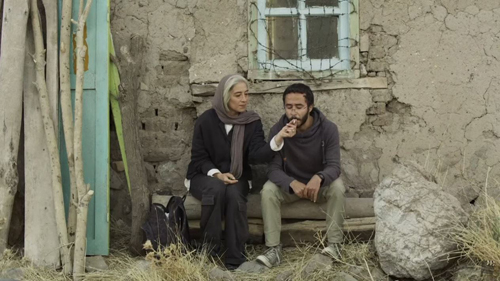
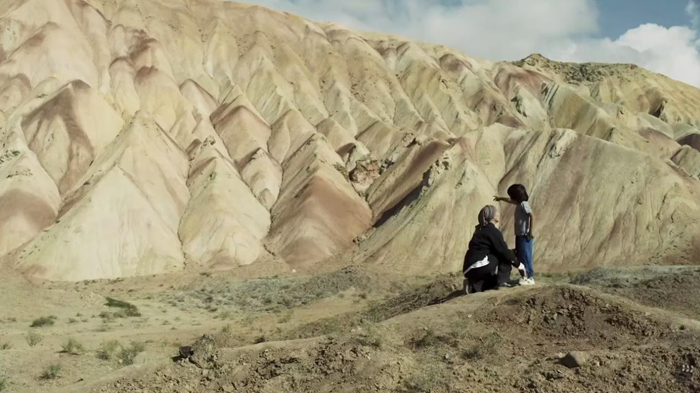
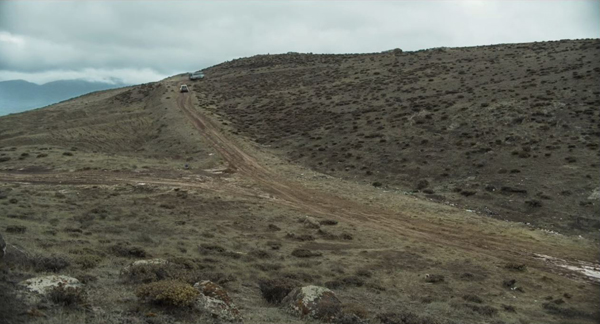
Unlike Amira, Hit the Road is shot entirely out of doors, and often in beautiful, bleak Iranian landscapes (top of entry and below).
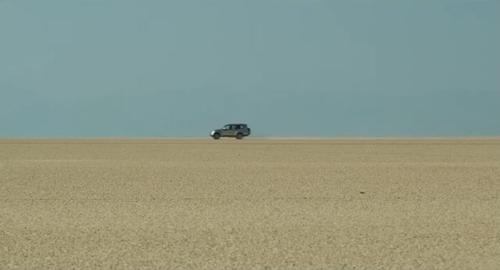
At times the family’s SUV climbs hills in shots that recall those of Kiarostami’s films,especially And Life Goes On and The Taste of Cherries, as in the frame at the top of this section. (The literal translation of the Farsi title, Jaddah Khaki, is “Dirt Road.”)
The film has been critically acclaimed and successful on the festival circuit, winner Best Film at the London and Mar del Plata festivals. It seems likely that we will now have two Panahis to report on from future festivals.
Avec amour et acharnement (aka Fire, 2022)

I found Denis’s latest a frustrating and puzzling film for almost its entire length. It reminded me of a similar experience I had with Pablo Larraín’s Ema at the 2019 Venice International Film Festival. I described my initial reaction to that film at the time: “While watching it, I could not discern much of a plot or even a coherent character study.”
Denis’s film, shown outside France under the rather baffling title Fire, starts out innocently enough with a scene of lovers, played by Juliette Binoche and Vincent Lindon, enjoying a blissful, solitary, wordless swim in the ocean. This sets up the “amour” part of the original title. Surprisingly enough, this idyllic sequence, the most visually attractive of the film (above and at the bottom of the entry) was shot during the pandemic on a phone with just the two actors, the director, and the cinematographer present.
Sara and Jean are long-time lovers, and their happiness together continues as they return to their Parisian flat. Soon, however, Sara’s previous lover, François, re-enters their life. He has asked Jean, who has in the past been in prison for some unspecified crime, probably financial, to join him in a athletic scouting agency. Coincidentally, Sara has spotted François in the street, an encounter that seemingly stirs up her old passion for him. She mentions the encounter to Jean, but treats it as a minor thing, expressing pleasure that Jean has been given an opportunity to go into business with his old friend.
From that point the film becomes largely a series of increasingly fraught arguments, as Sara seems to pledge her devotion to both men while resenting the jealousy that they both increasingly feel. All three are revealed to be unpleasant characters acting unwisely, and I, at least, wondered what the point of it all was. The plot seemed to be the classic love triangle, with the question being which man Sara should end up with and whether she will make the right decision–and the issue seeming not to make a great deal of difference for the viewer.
I don’t want to say any more about the plot, since the point of it is to figure out at the very end what Denis had been up to all along. I realized that she was undercutting our expecations about the very clichés that she had presented to us. Apparently I was right. In an interview with Denis, Joseph Cronk mentions that “In an interview in the press notes for the film, you mentioned that the film’s simplicity was ‘a way of foiling clichés.'” Indeed. I’m not sure that many people in the audience with whom I saw the film got the point. I heard some grumbling among the spectators as we left the theater.
It is rather odd to make a film where the audience can “enjoy” it only in retrospect.
I should add that the title Fire does not help a bit.I don’t know who came up with it, but it’s misleading. As Denis has pointed out in interviews, there is no equivalent word to acharnement in English. In the interview mentioned above, Cronk suggests that “With Love and Fury” might be a better title. Denis responds:
No, archarnement doesn’t mean fury. There’s no direct translation, but it means something–from our body, something from your flesh. A sort of tension in the flesh. Fury is something different than acharnement. When I tried translating Avec amour et acharnement, I found no English word I liked that could convey what acharnement means. But Stuart [Staples, the composer] had written the song “Both Sides of the Blade,” and I thought this would be the perfect English title.”
Actually I don’t think “Both Sides of the Blade” would give the spectator much of a clue as to what’s going on in the film. Keeping in mind Denis’s explanation of the French title, however, would.
The quotations from Joseph Cronk’s interview appear in the latest issue of cinema scope, #90 (July 31, 2022), “Not on the Lips: Claire Denis on Avec amour et acharnement.”
Thanks as always to Jim Healy, Ben Reiser, Mike King, and all the staff and volunteers of the Wisconsin Film Festival.

Avec amour et acharnement (aka Fire).
Wisconsin Film Festival 2021 visits the Middle East
Sun Children (2020)
Kristin here:
The Wisconsin Film Festival, online this year, continues through this coming Thursday. Films for which audience members buy tickets are all available to watch until 11:59 that night. So far our experiences have been that the streaming system works quite smoothly, with easy access to your chosen titles. Despite geo-blocking (dictated by distributors) in some cases, many films can be watched from outside Wisconsin and the Midwest.
Now, let’s visit the Middle East.
Iran: Sun Children and There Is No Evil
Despite the tragic death of Abbas Kiarostami and the exile into relative obscurity of the Makhmalbaf family, the Iranian cinema continues to produce important films by a small number of auteurs, most prominently Oscar-winner Asghar Farhadi (whose A Hero was recently acquired by Amazon for release later this year), Majid Majidi, the irrepressible Jafar Panahi, and his equally irrepressible colleague Mohammad Rasoulof.
The latter’s There Is No Evil (2020), which won last year’s Golden Bear as best film at the Berlin Film Festival, is on the current WFF program. I wrote about it last year from the Vancouver International Film Festival.
Also on the program is Majidi’s latest, Sun Children, which we saw for the first time. Those who think of Iranian festival-oriented films as developing slowly and subtly will be surprised by this one. It is jam-packed with a multi-strand dramatic plot, suspense, fast cutting, and many characters, all handled very skillfully by Majidi.
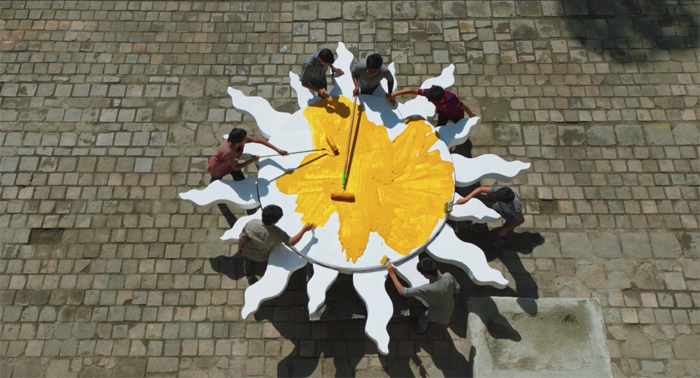
The film begins with a dedication to the “the 152 million children forced into child labor and those who fight for their rights.” That child labor, as the exciting opening scene emphasizes, often involves small crimes. Four boys set out to steal a tire from a car in the parking garage of a luxurious, multi-storied shopping mall. The suspense begins right away as a guard confronts them. Two of them flee in a classic chase scene, going up through the levels of the mall, past high-end shops that they could never dream of entering. They escape, and it is revealed that the four friends work at a large repair shop, full of stacks of tires, presumably acquired in the same fashion.
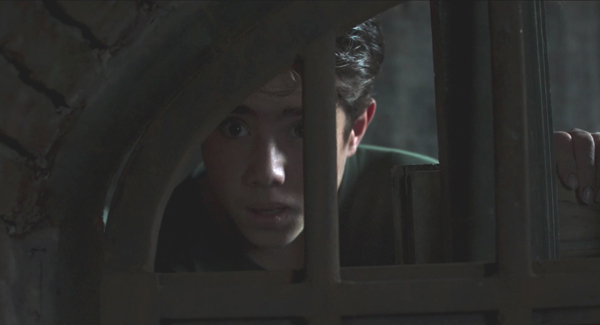
Soon Ali emerges as our point-of-view character, desperate to rescue his mother from a mental-health facility. There she lies strapped to a bed after a presumed suicide attempt. Eventually it emerges that the family home recently burned, killing Ali’s sister, whose death drove his mother mad. His father is an addict, and Ali has become the breadwinner. A small-time crime boss sets him a task: enroll in a local school and explore the basement and tunnels under it (above), where a treasure is hidden.
Much of the rest of the film generates more suspense, as Ali diligently makes his way around various obstacles and crawls through branching tunnels day after day, always risking expulsion from the school if he is discovered. His three friends help him at first, but eventually he is left to traverse the seemingly endless tunnels (which are in fact the city’s storm drains).
This part of the film introduces another major plotline, since the school, dependent on private donations, is located in the slums of Tehran. Its aim is to teach young, desperate, potentially criminal boys skills that they can use to get honest jobs. The school is far behind on its rent and in danger of being closed. This adds further suspense as the school officials, particularly a sympathetic vice principal, struggle to find donors. The schools debts lead to one of the film’s big action scenes, as, finding the gates locked one morning, the principal urges the boys to scale the fence. They do this with a determination that reveals their realization that their only hope for a decent life lies in the education they have been receiving.
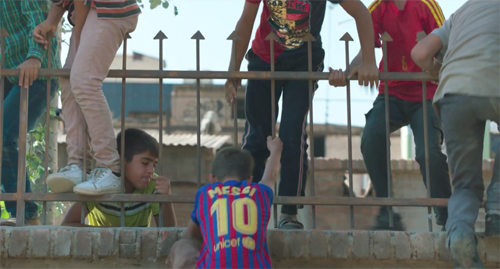
They eagerly participate in a festival and pageant put on for potential donors (top).
In an interview, Majidi said that the “Sun School” that gives the film its name is based on an actual school in the Tehran slums, the “Sobhe Rooyesh” (“Morning of Growth”). The non-professional child actors, whose performances are all completely natural and affecting, were recruited from the school and surrounding slums. Roolholloh Zammi, who plays Ali, won the Marcello Mastrioanni Award at Venice last year. (I wish we could have been there to see him win!) Only the adults are played by [professional actors.
Israel: Here We Are (2020)
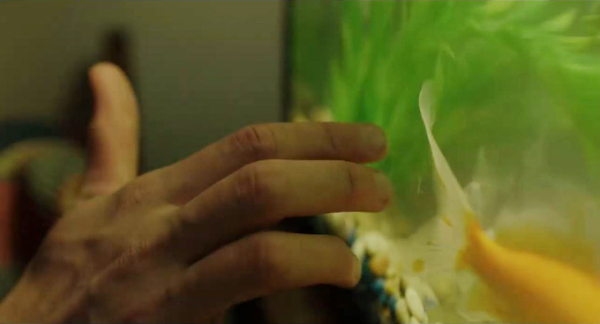
Given the current situation in Israel, it is just as well that Nir Bergman’s gentle psychological study Here We Are (a sadly unmemorable title) has no reference at all to politics, the military, or ethnic tensions. It’s a simple story of a man who has given up his career to care for his severely autistic son and is having difficulties facing the fact that the boy is nearly a man.
The early scenes set up Uri’s disabilities, as well as his obsessions (including pet goldfish–above–and dogs) and phobias (snails). They also establish Aharon’s utter devotion and patience as he cooks yet again Uri’s favorite pasta stars and uses an obviously well-established imitation game to coax his son past imagined snails on a biking route.
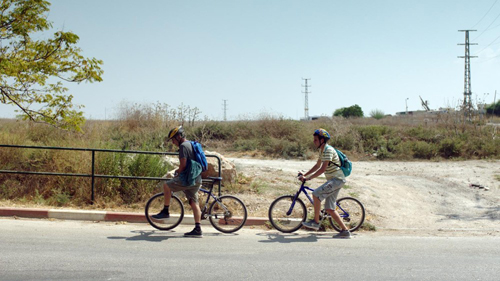
The plot action kicks in when Ahron’s estranged wife Tamara shows up, determined to arrange Uri’s transfer to a group home for young people with disabilities. Ahron angrily resists, claiming that Uri is happy at home and that he can care for his son himself.
We seem to be set up to view Ahron as the noble, self-sacrificing father and his wife as the shrewish woman who wants to dictate her son’s life. Eventually, however, Tamara obtains the legal papers requiring Ahron to bring Uri to his new home. Ahron sets out, but along the way he decides to go on the run with Uri, despite having little money.
Along the way there are growing hints that Ahron is stifling both Uri and himself. Twice he simply ignores Uri’s budding sexuality during encounters with young women.
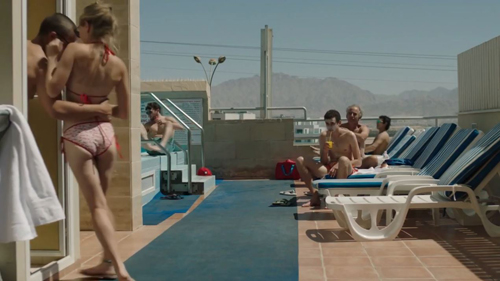
The two seek shelter with an old friend of Ahron’s, Effi, an art teacher who reveals that Ahron had had a prominent and lucrative career as an artist and designer, which he had given up to care for Uri. Her attitude toward Ahron suggests her openness to a romantic relationship with him. Eventually we begin to doubt that he is acting in the best interests of himself and Uri, especially during a scene in which they are forced to dine on ice-cream sandwiches in a bus-station waiting-room.
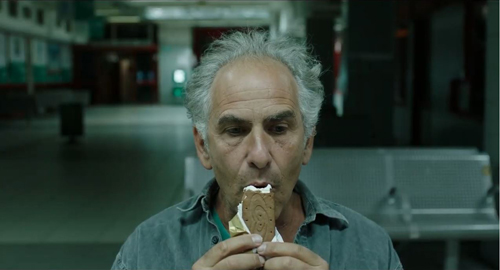
Here We Are is a film that unfolds gradually and overturns your expectations slowly but thoroughly.
France-Lebanon: Skies of Lebanon (2020)
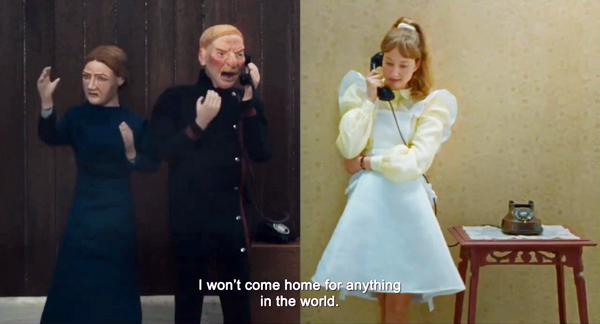
Chloe Mazlo is a French animator and artist who has previously made shorts (including The Little Stones, which won the 2015 César for Best Animated Short). Inspired by her grandparents’ life in Lebanon (he was Lebanese, she Swedish) during the lengthy civil war, she has made a feature that combines occasional animation with live action.
The film starts out in a stylized, fantastical world that inevitably has led critics to compare Skies of Lebanon to Amélie (2001). Alice, the heroine, is alienated from her parents and her home country, Switzerland, and take a job as a nanny in Beirut. The city as it was in the 1950s is represented by matte shots of actors presumably filmed against a green-screen, with backgrounds filled in by blow-ups of tinted postcards of the period. Such shots have a charming effect.
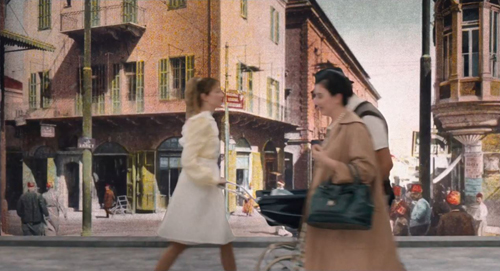
Alice meets cute with a handsome physicist whose goal is to invent a rocket to put the first Lebanese astronaut into space. Their romance develops in a fantasy landscape of patently artificial rocks and stars (bottom). They settle down together, raise children, and pursue their careers, with Alice becoming a watercolorist.
The fantasy strain in the film is most obvious in the brief animated scenes, as when a split-screen telephone conversation juxtaposes the real Alice with puppets representing her angry parents, who demand that she return home (top of section).
About a third of the way into the film, the tone switches abruptly as the Lebanese civil war breaks out. The animations and postcard background disappear. As characters flee and disappear mysteriously, a shot of a wall with “have you seen” photos pasted up emphasizes the danger that Alice is trying to ignore.
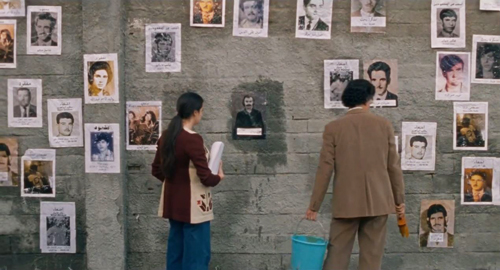
Even during the lengthy wartime portion of the film, there remains a faint underlying humor. Yet the abrupt shift of tone when the war starts is unsettling, given that we had settled down for a whimsical romance and end up with a war story. Presumably the idea is to emphasize how war breaks into the calm of ordinary life and banishes it. Whether audiences will take it that way is another matter. On the whole, however, the film is an imaginative and promising first feature.
The Festival’s Film Guide page links you to free trailers, podcasts, and Q &A sessions for each film.
Thanks as ever to the untiring efforts of Kelley Conway, Ben Reiser, Jim Healy, Mike King, Pauline Lampert, and all their many colleagues, plus the University and the donors and sponsors that make this event possible.

Skies of Lebanon (2020)
Rotterdam surprises
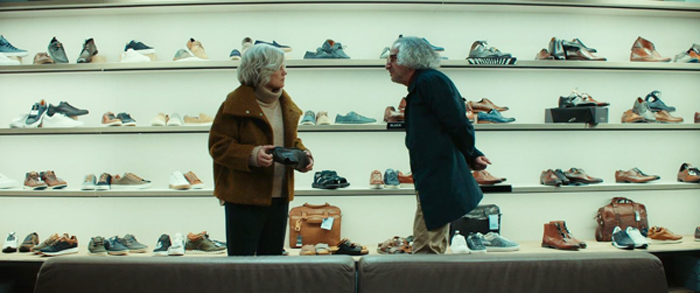
Mitra (2021)
Kristin here:
On Saturday morning (8:30 am our time), the International Film Festival Rotterdam will be screening its annual Surprise Film. We’re naturally curious to learn what it is. But Rotterdam comes so early in the year that often we go into its other offerings knowing almost nothing about them. Here are two of the very pleasant surprises from recent days.
Iranian cinema from the Netherlands
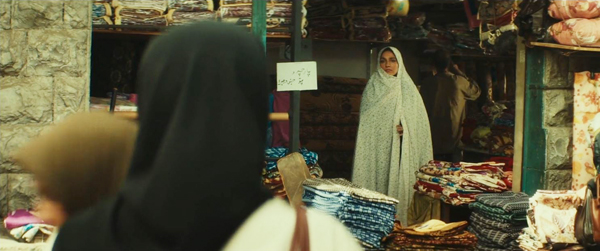
Kaweh Modiri, the director of Mitra, was born in Iran but has lived in the Netherlands since he was six years old. Still, he remains concerned with Iranian issues and clearly has been influenced by the flourishing Iranian art cinema of recent decades.
Asghar Farhadi’s success in international festivals and territories has been the most influential instance recently, at least outside of Iran. His plots are often built around conflicts, not between good and bad people, but behind people who clash because of cross-purposes. Late revelations and tortured discussions lead to reconciliations that are not the happy endings of Hollywood films but instead are resigned agreements to admit mistakes and make compromises.
Mitra is such a film, but it is based around more politically based conflicts than Farhadi has used–ones that have life and death consequences for those involved.
The film moves between two settings and eras: Tehran in 1981-82, the years shortly after the ouster of the Shah, and the Netherlands in 2019, the fortieth anniversary of that revolution. The opening is set in 1982, when the heroine, Haleh, receives an abrupt, unexpected telephone calls announcing that her daughter Mitra has been executed. We move then to 2019, when Haleh, now an academic in the Netherlands, addresses a conference on “The Islamic Revolution at Forty.” Soon she is visited by members of “The Organization,” a group aimed at bringing down the current government of Iran. They tell Haleh that Leyla, whose betrayal of Mitra caused her death, has arrived with her daughter in the Netherlands. She goes under the name Sale, having appealed for refuge status. The Organization wants Haleh’s confirmation that Sale is indeed Leyla.
The rest of the plot centers around a shifting relationship, as Haleh vows revenge on Leyla. Her goal is complicated by the fact that she has never actually seen Leyla, having only heard her voice. Nevertheless, she calls Sale and is convinced that she recognizes the woman’s voice, even after nearly forty years. Once they meet, however, Haleh seemingly bonds with Sale and her endearing daughter Nilu. Indeed, Haleh’s attraction to Nilu hints at her possible acceptance of Sale as a substitute daughter and Nilu as a granddaughter.
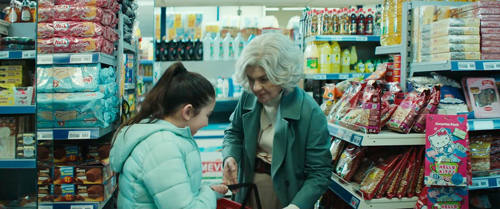
Interspersed with this story are flashbacks to the younger Haleh’s 1981 experiences, when Mitra, who has joined the resistance in Iran, is still alive. Scenes like a clandestine meeting with Mitra at a crowded market emphasize Haleh’s love for her daughter (top of section).
Modiri expertly lures us into sympathizing with all the characters involved. To the end we remain uncertain as to whether Sale, who after some doubts accepts Haleh as a friend and even as a substitute mother in a new land, is actually the treacherous Leyla. Even if she is, is it worth ruining young Nilu’s life to turn Sale in to the ruthless Organization?
Supporting all this is Haleh’s relationship with her brother Mohsen, who at first seems a somewhat comic, eccentric sidekick but is later revealed to be suffering the effects of torture and lengthy imprisonment in Iran. His exchanges with Haleh initially seem like sibling bickering, but he becomes the moral compass that holds her together as she pursues revenge (see top).
Mitra starts out seeming to be a conventional revenge story, but its moral and personal shifts and surprises lead to a moving and not-quite-resolved ending.
The film has had its world premiere at the IFFR and is due for a May 20 release in the Netherlands. I hope it plays other festivals and travels further, because it is a definite contribution to the continuation of world interest in Iranian cinema. Like other such Iranian films, it had to be made elsewhere (the scenes set in Iran were shot in Jordan), but it carries forward what we have loved about Iranian films.
An Australian surveillance-cam thriller

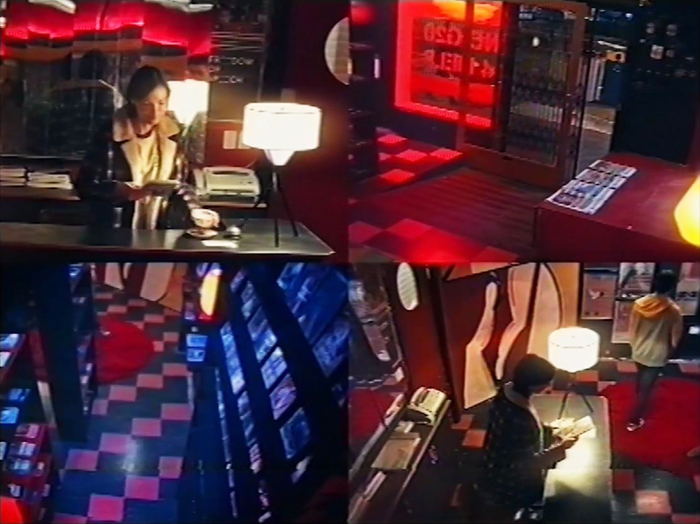
Jonathan Ogilvie’s Lone Wolf (2021) adopts the new convention of creating a story based largely on surveillance and cell-phone footage. In a frame story Kylie, a Special Crimes Sergeant, bursts into the office of an unnamed Police Commissioner and demands that he watch a video she has secretly compiled from a mass of such footage.
The inner story is seemingly set more-or-less in the present day, but it’s a slightly alternative world in which surveillance has become even more pervasive than it already is. The read-outs in the images reveal that cameras are spying on the characters from such household devices as TVs and smoke detectors. One of these is, ironically, in a bathroom where Winnie sneaks the occasional cigarette by an open window (above). How Kylie gets access to all of these is never explained, and the premise is implausible–especially in scenes built around extensive, undamaged footage which she has somehow managed to extract from a phone that has been through a bomb explosion.
If one stifles such doubts, however, the tale Kylie’s film tells is an absorbing one, full of twists and turns. It centers on Conrad and Winnie, a couple who run a book/video-rental/sex shop and do occasional jobs for underground political groups. They are not the most appealing characters, but they gain our sympathy through their devotion to Winnie’s charming little brother Stevie, who has Down’s Syndrome and an insatiable curiosity about the world.
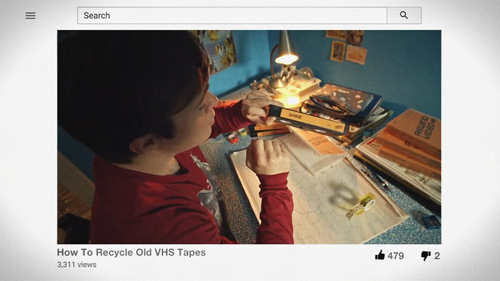
Australia is soon to host a G20 meeting, and a man from a radical group asks Conrad to set up a “victimless atrocity” in the form of a bomb explosion in a deserted area. At first Conrad refuses, but when offered a large sum, he gives in. Despite the grimness of this plot thread, there is quite a bit of humor in the film, provided by Stevie and by a group of Conrad’s misfit friends who gather to play cards above the shop. The combination of found footage also creates occasionally amusing moments, as when the film-within-a-film includes an instructional YouTube-style video that Stevie has posted or poor-quality footage from an old security camera in the shop that Winnie and Conrad think has been turned off (bottom).
The consequences of the bomb plot introduce a grim twist, but the return to the frame story creates a more gratifying one as Kylie reveals why she has pressed her video upon the Commissioner.
While Rotterdam provided Lone Wolf‘s world premiere, it has a distributor in Australia, though its August, 2020 release was postponed by the pandemic. Ogilvie hopes it will have wide theatrical play after a possible in-person premiere at the Melbourne International Film Festival this coming August.
Again, thanks to Gerwin Tamsma, Monika Hyatt, Frédérique Nijman, and their colleagues at the International Film Festival Rotterdam for allowing us to discover these surprises!
Lone Wolf (2021)