DB here:
Elsewhere I’ve sung the glories of Turner Classic Movies. Would that the other basic-cable staple, the Fox Movie Channel, were as committed to classic cinema. It’s curious that a studio with a magnificent DVD publishing program (the Ford boxed set, the Murnau/ Borzage one) is so lackluster in its broadcast offerings. Fox was one of the greatest and most distinctive studios, and its vaults harbor many treasures, including glossy program pictures that would still be of interest to historians and fans. Where, for instance, is Caravan (1934), by the émigré director Erik Charell who made The Congress Dances (1931)? Caravan‘s elaborate long takes would be eye candy for Ophuls-besotted cinephiles.
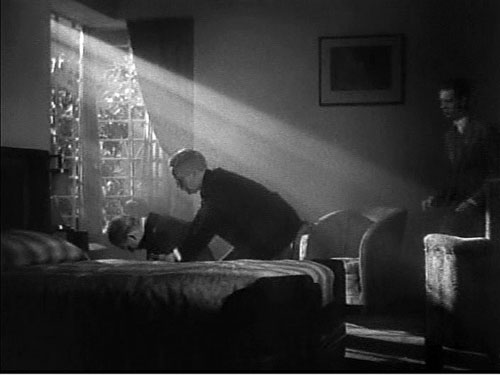
Occasionally, though, the Fox schedulers bring out an unexpected treat, such as the sci-fi musical comedy Just Imagine (1930). Last month, the main attraction for me was The Power and the Glory (1933), directed by William K. Howard from a script by Preston Sturges.
This was an elusive rarity in my salad days. As a teenager I read that it prefigured Citizen Kane, presenting the life of a tycoon in a series of daring flashbacks. I think I first saw it in the late 1960s at a William K. Everson screening at the New School for Social Research. I caught up with it again in 1979, at the Thalia in New York City, on a double bill with The Great McGinty (1940). In my files, along with my scrawls on ring-binder paper, is James Harvey’s brisk program note, which includes lines like this: “One of Sturges’ achievements was to make movies about ordinary people that never ever make us think of the word ‘ordinary.’” I was finally able to look closely at The Power and the Glory while doing research for The Classical Hollywood Cinema (1985). The UCLA archive kindly let me see a 16mm print on a flatbed viewer.
So after a lapse of twenty-eight years I revisited P & G on the Fox channel last month. It does indeed prefigure Kane, but I now realize that for all its innovations it belongs to a rich tradition of flashback movies, and it can be correlated with a shorter-term cycle of them. Rewatching it also teased me to think about flashbacks in general, and to research them a little. You see, I am very fond of what contemporary practitioners like to call broken timelines.
A trick, an old story
 On our subject for today, the indispensible book, which ought to be brought back into print or archived online, is Maureen Turim’s Flashbacks in Film: Memory and History (Routledge, 1989). We may think of the flashback as a modern technique, but Turim shows that flashbacks have been a mainstay of filmic storytelling since the 1910s.
Although the term flashback can be found as early as 1916, for some years it had multiple meanings. Some 1920s writers used it to refer to any interruption of one strand of action by another. At a horse race, after a shot of the horses, the film might “flash back” to the crowd watching. (See “Jargon of the Studio,” New York Times for 21 October 1923, X5.) In this sense, the term took on the same meaning as then-current terms like “cut-back” and “switch-back.” There was also the connotation of speed, as “flash” was commonly used to denote any short shot.
But around 1920 we also find the term being used in our modern sense. You can find it in popular fiction; one short story has its female protagonist remembering something “in a confused flashback.” F. Scott Fitzgerald writes in The Beautiful and Damned of 1922:
Anthony had a start of memory, so vivid that before his closed eyes there formed a picture, distinct as a flashback on a screen.
At about the same time writers on theatre start to adopt the term and credit it to film. A historian of drama writes in 1921 of a play that rearranges story order:
The movies had not yet invented the flashback, whereby a thing past may be repeated as a story or a dream in the present.
Within film circles, there were signs of an exasperation with the device. One 1921 writer calls the flashback a “murderous assault on the imagination.” Turim quotes a New York Times review of His Children’s Children (1923):
For once a flash-back, as it is made in this photoplay, is interesting. It was put on to show how the older Kayne came to say his prayers.
In the same year, a critic discusses Elmer Rice’s On Trial, an influential 1911 stage play. Rice employs
a dramatic technique which up to its time was probably unique, though since then the ever recurrent “flash back” of the movies has made the trick an old story.
During the 1930s, although some critics and filmmakers employed older terms like “switch back” and “retrospect,” flashback seems to have become the standard label. It denoted any shot or scene that breaks into present-time action to show us something that happened in the past. It probably speaks to the intuitive and informal nature of filmmaking that writers and directors didn’t feel a need to name a technique that they were using confidently for two decades.
The early flashback films pretty much set the pattern for what would come later. Turim shows that all the sorts we find today have their precedents in the 1910s and 1920s. Adapting her typology a little bit, we can distinguish between character-based flashbacks and “external” ones.
A character-based flashback may be presented as purely subjective, a person’s private memory, as in Letter to Three Wives or The Pawnbroker or Across the Universe. There’s also the flashback that represents one character’s recounting of past events to another character, a sort of visual illustration of what is told. This flashback is often based on testimony in a trial or investigation (Mortal Thoughts, The Usual Suspects), but it may simply involve a conversation, as in Leave Her to Heaven, Titanic, or Slumdog Millionaire. It can also be triggered by a letter or diary, as happens with the doubly-embedded journals in The Prestige.
An alternative is to break with character altogether and present a purely objective or “external” flashback. Here an impersonal narrating authority simply takes us back in time, without justifying the new scene as character memory or as illustration of dialogue. The external flashback is uncommon in classic studio cinema (although see A Man to Remember, 1938) but was common in the 1900s and 1910s and has returned in contemporary cinema. Typically the film begins at a point of crisis before a title appears signaling the shift to an earlier period. Recent examples are Michael Clayton (“Three days earlier”), Iron Man (“36 Hours Before”), and Vantage Point (“23 Minutes Earlier”).
In current movies, flashbacks can fall between these two possibilities. Are the flashbacks in The Good Shepherd the hero’s recollections (cued by him staring blankly into space) or more objective and external, simply juxtaposing his numb, colorless life with the past disintegration of his family? The point would be relevant if we are trying to assess how much self-knowledge he gains across the present-time action of the film.
Rationales for the flashback
What purposes does a flashback fulfill? Why would any storyteller want to arrange events out of chronological order? Structurally, the answers come down to our old friends causality and parallelism.
Most obviously, a flashback can explain why one character acts as she or he does. Classic instances would be Hitchcock’s trauma films like Spellbound and Marnie. A flashback can also provide information about events that were suppressed or obscured; this is the usual function of the climactic flashback in a detective story, filling in the gaps in our knowledge of a crime.
By juxtaposing two incidents or characters, flashbacks can enhance parallels as well. The flashbacks in The Godfather Part II are positioned to highlight the contrasts between Michael Corleone’s plotting and his father’s rise to power in the community. Citizen Kane’s flashbacks are famous for juxtaposing events in the hero’s life to bring out ironies or dramatic contrasts.
Of course, flashbacks need not explain or clarify things; they can make things more complicated too. We tend to think of the “lying flashback” as a modern invention (a certain Hitchcock film has become the prototype), but Turim shows that The Goose Woman (1925) and Footloose Widows (1926) did the same thing, although not with the same surprise effect. Kristin points out to me that an even earlier example is The Confession (1920), in which a witness at a trial supplies two different versions of a killing we have already (sort of) seen.
At the limit, flashbacks can block our ability to understand characters and plot actions. This is perhaps best illustrated by Last Year at Marienbad, but the dynamic is already there in Jean Epstein’s La Glace à trois faces (“The Three-Sided Mirror,” 1927).
I argue in Poetics of Cinema that, at bottom, flashbacks are tactics fulfilling a broader strategy: breaking up the story’s chronological order. You can begin the film at a climactic moment; once the viewers are hooked, they will wait for you to move back to set things up. You can create mystery about an event that the plot has skipped over, then answer the question through a flashback. You can establish parallels between past and present that might not emerge so clearly if the events were presented in 1-2-3 order. Consequently, you can justify the switch in time by setting up characters as recalling the past, or as recounting it to others.
Having a character remember or recount the past might seem to make the flashback more “realistic,” but flashbacks usually violate plausibility. Even “subjective” flashbacks usually present objective (and reliable) information. More oddly, both memory-flashbacks and telling-flashbacks usually show things that the character didn’t, and couldn’t, witness.
I don’t suggest that recollections and recountings are merely alibis for time-juggling. They bring other appeals into the storytelling mix, such as allegiance with characters, pretexts for point-of-view experimentation, and so on. Still, the basic purpose of nonchronological plotting, I think, is to pattern information across the film’s unfolding so as to shape our state of knowledge and our emotional response in particular ways. Scene by scene and moment by moment, flashbacks play a role in pricking our curiosity about what came before, promoting suspense about what will happen next, and enhancing surprise at any moment.
A trend becomes a tradition
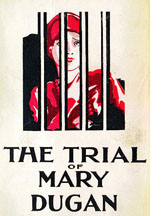 When The Power and the Glory was released in August 1933, it was part of a cycle of flashback films. The Trial of Mary Dugan (1929), The Trial of Vivienne Ware (1932), and other courtroom films rendered testimony in flashbacks. A film might also wedge a brief or extended flashback into an ongoing plot. The most influential instance was probably Smilin’ Through (1931), which is notable for using a crane shot through a garden to link present and past.
Also well-established was the extended insert model. Here we start with a critical situation that triggers a flashback (either subjective or external), and this occupies most of the movie. Digging around, I found these instances, but I haven’t seen all of them; some don’t apparently survive.
- Behind the Door (1919): An old sea salt recalls life in World War I and, back in the present, punishes the man responsible for his wife’s death. A ripoff of Victor Sjöström’s Terje Vigen (1917)?
- An Old Sweetheart of Mine (1923): A husband goes through a trunk in an attic and finds a memento that reminds him of childhood sweetheart. The pair grow up and marry, facing tribulations. At the end, back in the present, she comes to the attic with their kids.
- His Master’s Voice (1925): Rex the dog is welcomed home from the war. An extended flashback shows his heroic service for the cause, and back in the present he is rewarded with a parade.
- Silence (1926): A condemned man explains the events that led up to the crime. Back in the present, on his way to be executed, he is saved.
- Forever After (1926): On a World War I battlefield, a soldier recalls what brought him there.
- The Woman on Trial (1927): A defendant recalls her past.
- The Last Command (1928): One of the most famous flashback films of the period. An old movie extra recalls his life in service of the tsar.
- Mammy (1930): A bum reflects on the circumstances leading him to a life on the road.
- Such is Life (1931): A ghoulish item. A fiendish scientist confronts a young man with the corpse of the woman he loves. A flashback to their romance ensues.
- The Sin of Madelon Claudet (1931; often cablecast on TCM): A young wife bored with her husband is told the story of a neighbor woman who couldn’t settle down.
- Two Seconds (1932): A man about to be executed remembers, in the two seconds before death, what led him here. A more mainstream reworking of a premise of Paul Fejos’s experimental Last Moment (1928), which is evidently lost.
An interesting variant of this format is Beyond Victory, a 1931 RKO release. The plot presents four soldiers on the battlefield, each one recalling his courtship of the woman he loves back home. The principle of assembling flashbacks from several characters was at this point prised free of the courtroom setting, and multiple-viewpoint flashbacks became important for investigation plots like Affairs of a Gentleman (1934), Through Different Eyes (1942), The Grand Central Murder (1942), and of course Citizen Kane, itself a sort of mystery tale.
Why this burst of flashback movies? It’s a good question for research. One place to look would be literary culture. The technique of flashback goes back to Homer, and it recurs throughout the history of both oral and written narrative. Literary modernism, however, made writers highly conscious of the possibility of scrambling the order of events. From middlebrow items like The Bridge of San Luis Rey (1927) to high-cultural works by Dos Passos and Faulkner, elaborate flashbacks became organizing principles for entire novels. It’s likely that Sturges, a Manhattanite of wide literary culture, was keenly aware of this trend.
It’s just as likely that he noticed similar developments in another medium. By 1931, when Katharine Seymour and J. T. W. Martin published How to Write for Radio (New York: Longmans, Green), they could devote considerable discussion to frame stories and flashbacks in radio drama (pp. 115-137). Especially interesting for Sturges’ film, radio programs were letting the voice of the announcer or the storyteller drift in and out of the action that was taking place in the past.
For whatever reasons, the technique became more common. The year 1933 saw several flashback films besides The Power and the Glory. In the didactic exploitation item Suspicious Mothers, a woman recounts her wayward path to redemption. Mr. Broadway offers an extensive embedded story using footage from another film (a common practice in the earliest days). Terror Aboard begins with the discovery of corpses on a foundering yacht, followed by an extensive flashback tracing what led up the calamity. A borderline case is the what-if movie Turn Back the Clock (1933). Ever-annoying Lee Tracy plays a small businessman run down by a car. Under anesthesia, he reimagines his life as it might have been had he married the girl he once courted. Call it a rough draft for the “hypothetical flashbacks” that Resnais was to exploit in his great La Guerre est finie.
The point of this cascade of titles is that in writing The Power and the Glory, Sturges was working with a set of conventions already in wide circulation. His inventiveness stands out in two respects: the handling of voice-over and the ordering of the flashbacks.
Now I’m about to divulge details of The Power and the Glory.
Narratage, anyone?
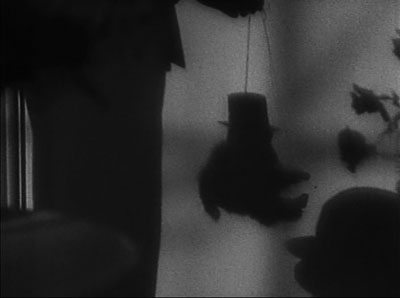
The film begins with what became a commonplace opening gesture of film, fiction, and nonfiction biography: the death of the protagonist. We are at the funeral of Thomas Garner, railroad tycoon. His best friend and assistant Henry slips out of the service. After visiting the company office, Henry returns home. Sitting in the parlor with him, his wife castigates Garner as a wicked man. “It’s a good thing he killed himself.” So we have the classic setup of retrospective suspense: We know the outcome but become curious about what led up to it.
Henry’s defense of Garner launches a series of flashbacks. As a boyhood friend, Henry can take us to three stages of the great man’s life: adolescence, young manhood, and late middle age. Scenes from these time periods are linked by returns to the narrating situation, when Henry’s wife will break in with further criticisms of Garner.
Sturges boasted in a letter to his father: “I have invented an entirely new method of telling stories,” explaining that it combines silent film, sound film, and “the storytelling economy and the richness of characterization of a novel.” At the time, the Paramount publicists trumpeted that the film employed a new storytelling technique labeled narratage, a wedding of “narrating” and “montage.” One publicity item called it “the greatest advance in film entertainment since talking pictures were introduced.” Hyperbole aside, what did Sturges have in mind?
There is evidence that some screenwriters were rethinking their craft after the arrival of sound filming. Exhibit A is Tamar Lane’s book, The New Technique of Screen Writing (McGraw-Hill, 1936). Lane suggests that the talking picture’s promise will be fulfilled best by a “composite” construction blending various media. From the stage comes dialogue technique and sharp compression of action building to a strong climax. From the novel comes a sense of spaciousness, the proliferation of characters, a wider time frame, and multiple lines of action. Cinema contributes its own unique qualities as well, such as the control of tempo and a “pictorial charm” (p. 28) unattainable on the stage or page.
Vague as Lane’s proposal is, it suggests a way to think about the development of Hollywood screenwriting at the time. Many critics and theorists believed that the solution to the problem of talkies was to minimize speech; this is still a common conception of how creative directors dealt with sound. But Lane acknowledged that most films would probably rely on dialogue. The task was to find engaging ways to present it. Several films had already explored some possibilities, the most notorious probably being Strange Interlude (1932). In this MGM prestige product, the soliloquys spoken by characters in O’Neill’s play are rendered as subjective voice-over. The result, unfortunately, creates a broken tempo and overstressed acting. A conversation will halt, and through changes of facial expression the performer signals that what we’re now hearing is purely mental.
The Power and the Glory responds to the challenge of making talk interesting in a more innovative way. For one thing, there is the sheer pervasiveness of the voice-over narration. We’re so used to seeing films in which the voice-over commentary weaves in and out of a scene’s dialogue that we forget that this was once a rarity. Most flashback films in the early sound era had used the voice-over to lead into a past scene, but in The Power and the Glory, Henry describes what we see as we see it.
Most daringly, in one scene Henry’s voice-over substitutes for the dialogue entirely. Young Tom and Sally are striding up a mountainside, and he’s summoning up the nerve to propose marriage. What we hear, however, is Henry at once commenting on the action and speaking the lines spoken by the couple, whose voices are never heard.
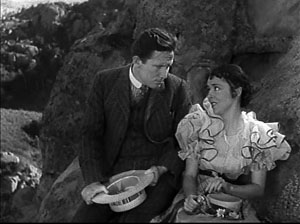
This scene, often commented upon by critics then and now, seems have exemplified what Sturges late in life recalled “narratage” to be. Describing that technique in his autobiography, he wrote: “The narrator’s, or author’s, voice spoke the dialogue while the actors only moved their lips” (p. 272).
So one of Sturges’ innovations was to use the voice-over not only to link scenes but to comment on the action as it played out. In her pioneering book Invisible Storytellers: Voice-Over Narration in American Fiction Film (Univesity of California Press, 1988), Sarah Kozloff has argued that the pervasiveness of Henry’s narration has no real precedent in Hollywood, and few successors until 1939 (pp. 31-33). (There’s one successor in Sacha Guitry’s Roman d’un tricheur.) The novelty of the device may have led Sturges and Howard toward redundancies that we find a little labored today. The transitions into the past from the frame story are given rather emphatically, with Henry’s voice-over aided by camera movements that drift away from the couple. (Compare the crisp shifts in Midnight Mary, below.) Henry’s comments during the action are sometimes accentuated by diagonal veils that drift briefly over the shot, as if assuring us that this speech isn’t coming from the scene we see.
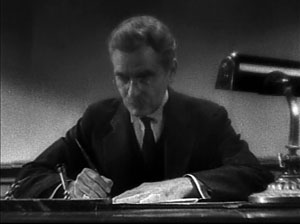
The “montage” bit of “narratage” also invokes the idea of a series of sequences guided by the voice-over narrator. The concept might also have encompassed the most famous innovation of The Power and the Glory: Sturges’ decision to make Henry’s flashbacks non-chronological.
Even today, most flashback films adhere to 1-2-3 order in presenting their embedded, past-tense action. But Sturges noticed that in real life people often recount events out of order, backing and filling or free-associating. So he organized The Power and the Glory as a series of blocks. Each block contains several scenes from either boyhood, youth, or middle age. Within each block, the scenes proceed chronologically, but the narration skips around among the blocks.
For example, a block of boyhood scenes gives way to a set showing Garner, now in middle age, ordering around his board of directors. The next cluster of flashbacks returns to Garner’s youth and his courtship of his first wife, Sally. Then we are carried back to his middle age, with scenes showing Garner alienated from Sally and his son Tommy but also attracted to the young woman Eve. And from there we return to Garner’s early married life with Eve.
To keep things straight, Sturges respects chronology along another dimension. Not only do the scenes within each block follow normal order, but the plotlines developing across the three phases of Garner’s life are given 1-2-3 treatment. In one block of flashbacks, we see Tom and Sally courting. When we return to that stage of their lives in another block, they are happily married. The next time we see Garner as a young man, he is improving himself by attending college. The later romance with Eve develops in a similar step-by-step fashion across the blocks devoted to middle age.
A major effect of the shuffling of periods is ironic contrast. Maureen Turim points out that seeing different phases of Garner’s life side by side points up changes and disparities. In his youth, Tom watches the birth of his son with awe; in the next scene, we are reminded what a wastrel young Tommy turned out to be.
The juxtaposition of time frames also nuances character development. As Sally ages, she turns into something of a nag, quarreling with her husband and pampering Tommy. But in the next sequence we see her young, ambitiously pushing Tom to succeed and willing to undergo sacrifice by taking up his job as a railroad track-walker. The next scenes show Tom in class and in a bar while Sally walks the desolate tracks in a blizzard. She has given up a lot for her husband. In the next scene, set in middle age, Garner confesses his love to Eve but says he could never leave Sally, and the juxtaposition with Sally’s solitary track-walking suggests that he recognizes her sacrifice. And in the following scene, when Sally comes to Garner’s office, she admits that she has become disagreeable and asks if they couldn’t take a trip to reignite their love. The juxtaposition of scenes has turned a caricatural shrew into a woman who is a more complex mixture of devotion, disenchantment, and self-awareness.
Other characters aren’t given this degree of shading—Tommy is pretty much a wastrel, Eve a vamp—but another married couple deepens the central parallel. Meek Henry is dominated by his wife, but by the end she is chastened by what she learns of Garner’s real motives. Critic Andy Horton, in his helpful introduction to Sturges’ published screenplay, indicates that this couple adds a note of contentment to what is otherwise a pretty sordid melodrama of adultery and quasi-incest.
The innovative flashbacks and voice-overs are an important part of the film’s appeal, but director William K. Howard supplied some craftsmanship of his own. Particularly striking are some silhouette effects, low angles, and deep-focus compositions that underscore the parallels between Sally’s suicide and Garner’s impending death.
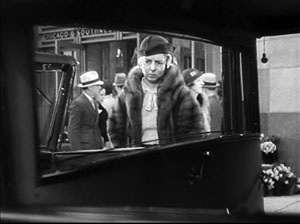
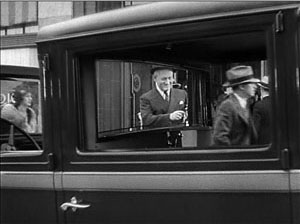
The original screenplay suggests that Sturges intended to push his innovations further. About halfway through, he starts to break down the time-blocks. In the script, Sally visits Garner while he’s working on a bridge. The next scene shows their son Tommy already grown and spoiled, being taken back into his father’s good graces. Then the script returns to the bridge, where Sally tells Tom she’s pregnant. The interruption of the bridge scene reminds us of how badly their child turned out.
The script jumps back to the birth of the baby. In the film the birth scene plays out in its entirety, but in the screenplay Sturges cuts it off by the scene (retained in the film) showing Garner’s marriage to Eve. The final moments of the birth scene, when Garner prays (“Thou art the power and the glory”), become in the script the very end of the film. Coming after Tom’s death at the hand of his son, this epilogue is a bitter pill, rendered all the harder to take by providing no return to Henry and his wife.
The greater fragmentation of the second part of the script, along with Garner’s death as a sort of murder-suicide and the failure to return to the narrating frame, is striking. It’s as if Sturges felt he could take more chances, counting on his viewers’ familiarity with current flashback conventions and on his film’s firmly established time-shuttling method. But if, as sources report, Sturges’ script was initially filmed exactly as written, then it seems likely that the film’s June 1933 preview provoked the changes we find in the finished product. “The first half of the picture,” he remarked in a letter, “went magnificently, but the storytelling method was a little too wild for the average audience to grasp and the latter half of the picture went wrong in several spots. We have been busy correcting this and the arguments and conferences have been endless.”
Even the compromised film proved difficult for audiences. Tamar Lane, proponent of the “composite” form suitable for the sound cinema, felt that the “retrospects” in The Power and the Glory were too numerous and protracted. Nonetheless, he praised it for its “radical and original cinema handling” (p.34). That handling rested upon tradition—a tradition that in turn encouraged innovations. Once flashbacks had become solid conventions, Sturges could risk pushing them in fresh directions.
Mary remembers
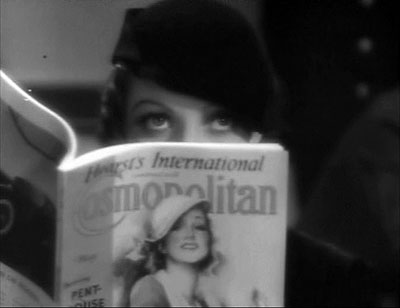
Finally, two more flashy flashback movies from 1933. Some spoilers.
Midnight Mary (MGM, William Wellman) works a twist on the courtroom template. The defendant Mary Martin is introduced jauntily reading a magazine while the prosecutor demands that the jury find her guilty of murder. This also sets up a nice little motif of shots highlighting Loretta Young’s lustrous eyes. The motif pays off with a soft-focus shot of her in jail just before the climax.
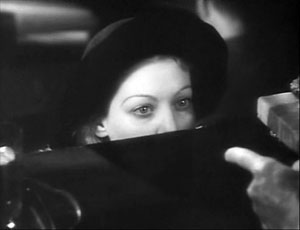
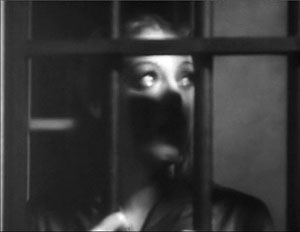
As the opening scene ends, Mary is led to a clerk’s office to wait for the verdict. There’s an automatic dose of suspense (Will she be found guilty?) but there’s also considerable curiosity: Whom has she killed? How was she caught?
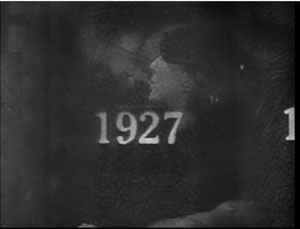
These questions won’t be answered for some time. Lounging in the clerk’s office, Mary runs her eye runs across the annual reports filling his shelves. The flashbacks, which comprise most of the film, are introduced as close-ups of the volumes’ spines—1919, 1923, 1926, 1927, and so on up to the present. They serve as neatly motivated equivalents of those clichéd calendar pages that ripple through montage sequences of the 1930s.
The flashbacks are motivated as subjective; Mary doesn’t recount her life to the clerk but simply reviews it in her mind. Unlike the flashbacks in The Power and the Glory, they are chronological and without gaps. Nothing is skipped over to be revealed later. As usual, though, once Mary’s recollections have triggered the rearrangement of story order, the flashbacks are filmed as any ordinary scenes would be, including bits of action that she isn’t present to witness. The film is a good example of using the extended-flashback convention chiefly to delay the resolution of the climactic action. Told in chronological order, Mary’s tale of woe would have had much less suspense.
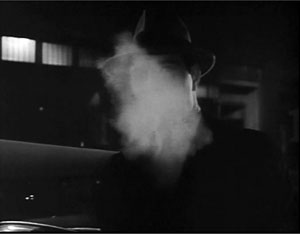
Transitions between present and past are areas open to innovation, and early sound filmmakers took advantage of them. In Midnight Mary, the long flashback closes with gangsters pounding on the door of Mary’s boudoir; this sound continues across the dissolve to the present, with Mary roused from her reverie by a knock on the clerk’s office door. Earlier, one transition into the past begins with Mary blowing cigarette smoke toward the bound volumes on the shelf.
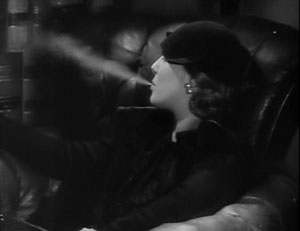
Dissolve to a close-up of one book as smoke wafts over it, and then to a shot of Mary’s gangster boyfriend blowing cigarette smoke out before he sets up a robbery..
At one point the narration supplies a surprise by abruptly shifting into the present. Once Mary has become a prostitute, she is slumped over a barroom table in sorrow, while her pal Bunny consoles her. In a tight shot, Bunny (Una Merkel, always welcome), leans over and says: “Oh, what’s the diff, Mary? A girl’s gotta live, ain’t she?”
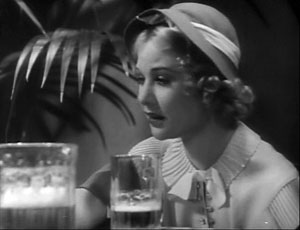
Cut directly to the present, with Mary murmuring: “Not necessarily, Bunny. The jury’s still out on that.”
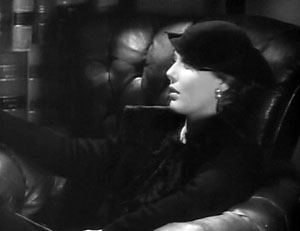
Mary’s reply casts Bunny’s question about needing to live in a new light, since Mary is facing execution, and the use of the stereotyped phrase, “The jury’s still out,” now with a double meaning, reminds us of the present-tense crisis. It is a more crisp and concise link than the transitions we get in The Power and the Glory. But then, Wellman has no need for continuous voice-over, which gives the Sturges/ Howard film its more measured pace.
Filmmakers were concerned with finding storytelling techniques appropriate to the sound film, and these unpredictable links between sequences became characteristic of the new medium. Similar links had appeared in silent films, but they gained smoothness and extra dimensions of meaning when the images were blended with dialogue or music. For more on transitional hooks, go here.
Nora and narratage
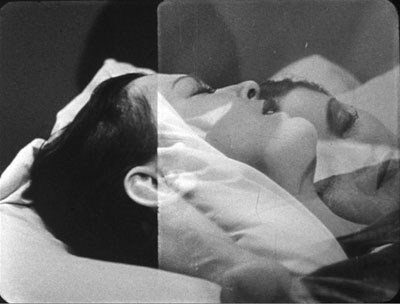
The hooks between scenes are perhaps the least outrageous stretches of The Sin of Nora Moran, a Majestic release that, thanks to a gorgeous restoration and a DVD release, has rightly earned a reputation as the nuttiest B-film of the 1930s.
It is a flashback frenzy, boxes within boxes. A District Attorney tells the governor’s wife to burn the apparently incriminating love letters she’s found. In explaining why, the D. A. introduces a flashback (or is it a cutaway?) to Nora in prison. We then move into Nora’s mind and see her hard life, the low point occurring when she’s raped by a lion tamer.
Now we start shuttling between the D. A. telling us about Nora and Nora remembering, or dreaming up, traumatic events. At some points, characters in her flashbacks tell her that what she’s experiencing is not real. In one hazy sequence, her circus pal Sadie materializes in her cell to remind Nora that she killed a man. (Actually, she didn’t.) At other moments Nora’s flashbacks include moments in which she says that if she does something differently, it will change—it being the outcome of the story. At this point another character will point out that they can’t change the outcome because it has already happened . . . of course, since this is a flashback.
By the end, after the governor has had his own flashback to the end of his affair with Nora and after she appears as a floating head, things have gotten out of hand. The rules, if there are any, keep changing. And the whole farrago is propelled by furious montage sequences built out of footage scavenged from other films.
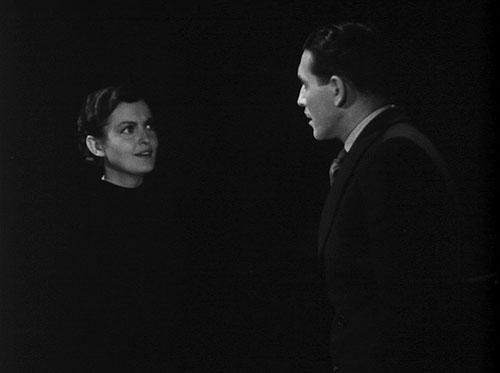
Publicity and critical response around The Sin of Nora Moran implied that the movie followed the “narratage” method. There was surely some influence. Scenes contain fairly continuous voice-over commentary, and director Phil Goldstone occasionally drops in the diagonal veil used in The Power and the Glory. But on the whole this delirious Poverty Row item falls outside the strict contours of Sturges’ experiment. Nora Moran blurs the line separating flashbacks and fantasy scenes, and it illustrates how easily we can lose track of what time zone we’re in. Watching it, I had a flashback of my own—to Joseph Cornell’s Rose Hobart, another compilation revealing that Hollywood conventions are only a few steps from phantasmagorias.
Unwittingly, Nora Moran’s peculiarities point forward to the flashback’s golden age, the 1940s and early 1950s. Then we got contradictory flashbacks, flashbacks within flashbacks within flashbacks, flashbacks from the point of view of a corpse (Sunset Boulevard) or an Oscar statuette (Susan Slept Here). Filmmakers knew they had found a good thing, and they weren’t going to let it go.
The original screenplay of The Power and the Glory is included in Andrew Horton, ed., Three More Screenplays by Preston Sturges (Berkeley: University of California Press, 1998). Sturges’ reflections from the late 1950s are to be found in Preston Sturges by Preston Sturges: His Life in His Words, ed. Sandy Sturges (New York: Simon and Schuster, 1990). The quotations from Sturges’ letters and from publicity about “narratage” can be found in Diane Jacobs, Christmas in July: The Life and Art of Preston Sturges (Berkeley: University of California Press, 1992), 123-129 and James Curtis, Between Flops: A Biography of Preston Sturges (New York: Harcourt Brace Jovanovich, 1982), 87.
My citatations of literary uses of the term come from Elliott Field, “A Philistine in Arcady,” The Black Cat 24, 10 (July 1919), 33; Fitzgerald’s The Beautiful and Damned (1922), available here, 433; Samuel A. Eliot, Jr., ed., Little Theater Classics vol. 3 (Boston: Little, Brown, 1921), 120; The Outlook (11 May 1921), 49, available here; review of His Children’s Children, quoted in Turim p. 29; commentary on On Trial, in The New York Times (25 March, 1923), X2.
For more on the history of flashback construction, apart from Maureen Turim’s Flashbacks in Film, see Barry Salt’s Film Style and Technology: History and Analysis, 2nd ed. (London: Starword, 1992), especially 101-102, 139-141. There are discussions of the technique throughout David Bordwell, Janet Staiger, and Kristin Thompson, The Classical Hollywood Cinema: Film Style and Mode of Production to 1960 (New York: Columbia University Press, 1985), especially 42-44.
P.S. 15 November 2015: 1940s flashback technique is surveyed in my Reinventing Hollywood: How 1940s Filmmakers Changed Movie Storytelling.







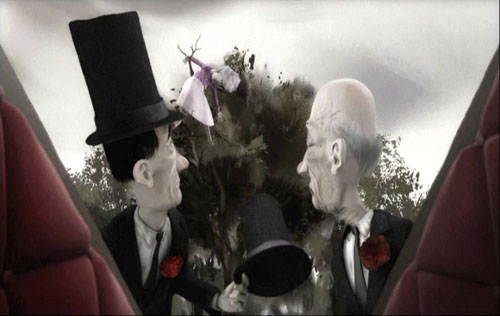
 Lavatory Lovestory, dir. Konstantin Bronzit, Russia, 2006, 10 minutes. Bronzit has gone for minimalism, with black and white line drawings and no dialogue. A lavatory attendent in a men’s room suddenly starts finding bouquets in her tips jar and searches for her secret admirer. The flowers are the only touches of color. It’s well animated, contains many clever, amusing bits, and without getting mawkish about it, makes the point that love can come to anyone.
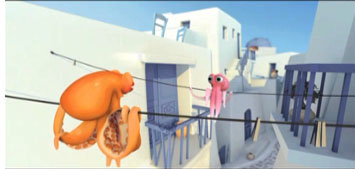 restaurant. The other gamely gives chase, freeing his? her? mate. More chasing ensues. All of this goes at a break-neck pace; note the length. I was glad to be watching on DVD, so I could go back and observe details that had whisked by almost imperceptibly. The expressions of the octopi are rendered vividly, despite the lack of mouths. Again, no dialogue, though the creatures occasionally make little peeping noises. The whole thing has the look of an earlier Pixar film, though one playing fast-forward. It would almost be plausible as an alternative to Presto, but I find it difficult to imagine the Academy membership voting for a two-minute film that it took six directors to make! (Only the first two listed above were nominated.)
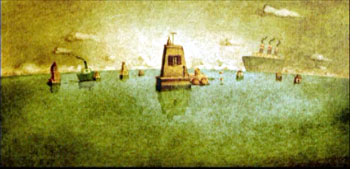 what appears to be watercolor painting based on the style of Lyonel Feininger. (His paintings, not his comic strips.) The premise is that the hero, an old sailor, and his neighbors live in houses built gradually upward with added cube-like rooms as the ocean that surrounds them rises.
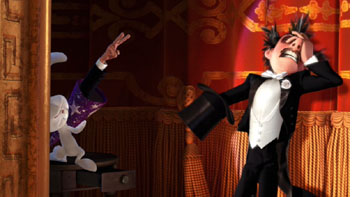 Presto. Directed by Doug Sweetland, USA, 5 minutes, 2008. Do I need to say anything about this? The vast majority of you presumably saw it when it was shown in front of WALL-E. It’s also on the WALL-E DVD. Presto is a pastiche of Warner Bros. cartoons of the golden era, though not one that looks merely derivative. Set in a vaudeville theater, it deals with a wascally, hungry rabbit punishing a magician who withholds his carrot. Not a wise-cracking Bugs Bunny type though, since there’s no dialogue. It proceeds at a breakneck pace and jams an absurd number of gags into its short running time.
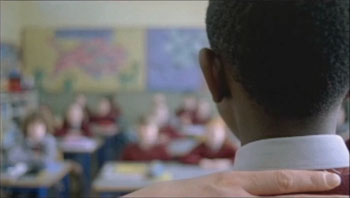 act out of racism, though the ending suggests that the problem is just boyish belligerence. The main sympathy for Joseph comes from a series of brief flashbacks to him at school in his original homeland, where his father is the teacher; one day some soldiers arrive and take him away to some unknown fate. The Irish teacher’s strict behavior with a boy who has endured such traumatic events ends up being key to the surprise ending—one which I found too optimistic to be plausible but definitely narratively satisfying.
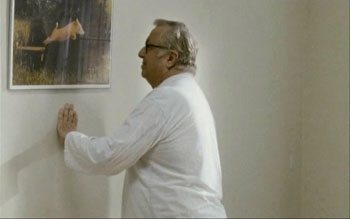 sneaks up on you. An elderly man checks into a hospital for a rectal operation and is then told he has polyps that may be cancerous. In the sterile environment, he battens onto a humorous painting of a pig, treating it as a sort of friend. It mysteriously disappears, and we suspect callous treatment by the hospital until we realize that the other patient in the room is Muslim. So no, the staff were being thoughtful toward that man’s family. Tensions rise as the protagonist insists on having his pig back, and the other patient’s son resists this on religious grounds. What to do if either side being tolerant means the other side is intolerant? Another surprise ending solves the matter pleasantly, which seems to be a common ploy in short films, as in short stories. I would probably vote for this film, though I suspect it will be seen as less hard-hitting than some of the others.
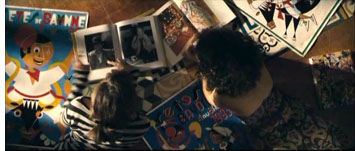 woman struck by a car lies on the asphalt, surrounded by onlookers. We hear her voice, speculating on what her friends will do after her death. As we see the scenes she imagines, we wonder if these are flashforwards or imaged scenes. Is she really dying? A very polished item which manages to cut among her various friends going about their work or meeting to mourn her and allows us to keep track of who they are. Very, very French.