





Archive for the 'People we like' Category
Propinquities
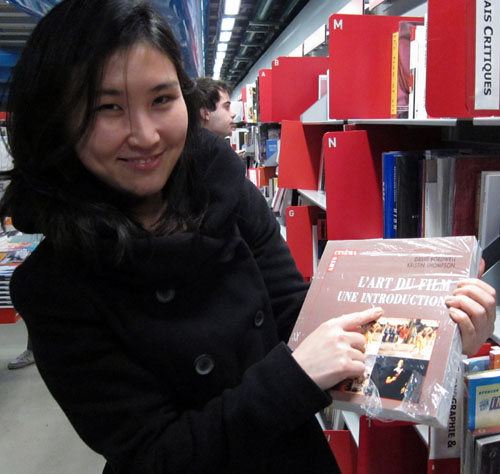
Jinhee Choi, Centre Pompidou, January 2010.
Propinquity: Nearness, closeness, proximity: a. in space: Neighborhood 1460. b. in blood or relationship: Near or close kinship, late ME. c. in nature, belief, etc.: Similarity, affinity 1586. In time: Near approach, nearness 1646. —Oxford Universal Dictionary
DB here:
In any art, tools and tasks matter. From the first edition of Film Art (1979) to the present, our introduction to film aesthetics starts with an overview of film production. How is production organized within the commercial industry, or within a more artisanal mode? What freedom and constraints are afforded within the institutions of filmmaking? How does current technology support or limit what the filmmaker can do? And how do filmmakers explain what they’re doing—not just as personal proclivities but as rhetorical “framings” that lead us to think of their work in a particular way?
Some would call this approach “formalism,” but that label doesn’t capture it. Traditionally formalism refers to studying an artwork intrinsically, as a self-sufficient object. In this sense, our perspective is anti-formalist: We look outside the movie to the proximate conditions that shape its form, style, subjects, and themes.
More literary-minded film scholars have sometimes been impatient with this perspective. Yet in the history of painting and music, it has yielded real advances in our knowledge. It continues to do so in film studies too, as I learned when we came back from Yurrrp to find some books awaiting us. (Kristin has already remarked on the stacks of DVDs that had accumulated.) Among these were books that illustrate the continuing value of situating film artistry in its most immediate context: the creative circumstances, the norms and preferred practices operating within traditions, the rationales that artists offer for their choices. Even better, the books were written by friends, so we have both intellectual and personal propinquity. I have always wanted to use the word propinquity in a piece of writing.
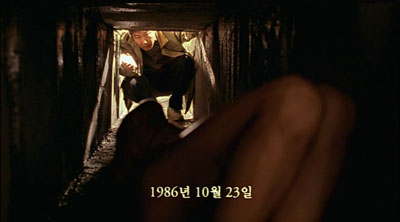
Memories of Murder (Bong Joon-ho).
Jinhee Choi’s The South Korean Film Renaissance: Local Hitmakers, Gobal Provocateurs is a wide-ranging survey of what some have called the “next Hong Kong”–a popular cinema of brash impact and technical polish, on display in JSA, Beat, Dirty Carnival, My Sassy Girl, and the like. But unlike Hong Kong, South Korea has a strong arthouse presence too, typified by Hong Sang-soo’s exercises in parallel narratives and thirtysomething social awkwardness. Between these poles stands what local critics called the “well-made” commercial film, as exemplified by Bong Joon-ho’s Memories of Murder.
Choi, a professor at the University of Kent, mixes analysis of cultural and industrial trends with consideration of crucial genres (notably the “high school film”) and major auteurs. She is the first scholar I know to explain changes in the Korean film industry as emerging from a dynamic among critics, filmmakers, private funding, and government sponsorship. A must, I would say, for anyone interested in current Asian film.
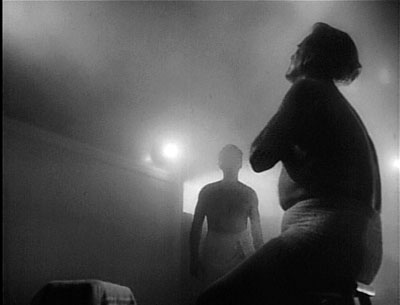
T-Men (Anthony Mann, cinematographer John Alton).
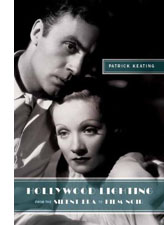 The South Korean Film Renaissance is matched by a work of equal subtlety, Patrick Keating’s Hollywood Lighting: From the Silent Era to Film Noir. Keating has an MFA in cinematography from USC, and his Ph. D. work concentrated on classical American cinema. His book captures the craft of the great studio cameramen, following not only what they said they were doing (in interviews and in the trade papers) but also what they actually did. He homes in on the contradictory demands facing artists who, they claimed over and over, had to serve the story. How do you claim artistry if your contribution is unnoticeable? This problem becomes acute with film noir, where the style is expected to come forward to a significant degree.
Keating scrutinizes the films with unprecedented care, tracing not only cameramen’s distinctive styles but showing that originality was always in tension with the conventional lighting demands of various genres and situtations. Many big names are here—John Seitz, Gregg Toland, John Alton—but the book also examines innovations coming from solid craftsmen like Arthur Lundin, who lit Girl Shy and other Harold Lloyd films. You won’t look at a studio movie the same way after you’ve digested Keating’s richly illustrated analyses.
Both Jinhee and Patrick were students here, and I directed the dissertations that eventually became these books. So of course I’m biased. But I think that any outside observer would agree that these monographs show the value of studying how film artistry and the film industry intertwine.
Blue (Krzysztof Kieslowski).
No less sensitive to the interplay of art and business is Patrick McGilligan’s Backstory 5: Interviews with Screenwriters of the 1990s. The collection is as illuminating as earlier installments have been. How could it not be, with career ruminations from Nora Ephron, John Hughes, David Koepp, Barry Levinson, John Sayles, et al.?
I’ve long found Pat’s Backstory volumes a treasury of information about Hollywood’s craft practices. Every conversation yields ideas about structure, style, and working methods. In this volume, for instance, Richard Lagravanese points out that scenes have become very short; with slower pacing in the studio days, scenes had time to breathe. And after claiming over and over that cinematic narration comes down to patterning story information, I was happy to read Tom Stoppard:
The whole art of movies and in plays is in the control of the flow of information to the audience. . . . how much information, when, how fast it comes. Certain things maybe have to be there three times.
In the studio days this last condition was called the Rule of Three: Say it once for the smart people, once for the average people, and once more for Slow Joe in the Back Row. Some things don’t change.
 Pat McGilligan is also a Wisconsin alumnus, so to keep these notes from getting too incestuous, I’ll just mention that I know the distinguished musicologist David Neumeyer chiefly from his writing (though I have to confess I first met him when he visited . . . Madison). Along with coauthors James Buhler and Rob Deemer, David has published an excellent introduction to film sound. Hearing the Movies: Music and Sound in Film History is designed as a textbook, but it’s so well written that every movie lover would find it a pleasure to read.
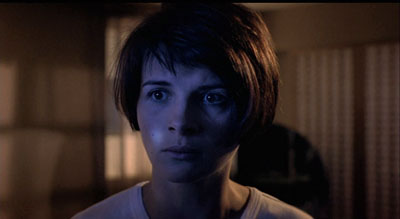
The examples run from the silent era (including Lady Windermere’s Fan, a favorite of this site) to Shadowlands, and while music is at the center of concern, speech and effects aren’t neglected. There’s a powerful analysis of the noises during one sequence of The Birds, and the authors pick a vivid example from Kieslowski’s Blue (above), in which Julie is shown listening to a man running through her apartment building; we never see the action that triggers her apprehension.
The authors provide a compact history of sound film technology, including many seldom-discussed topics. For instance, 1950s stereophonic film demanded bigger orchestras and more swelling scores, while separation among channels permitted scoring to be heavier, without muffling dialogue. Throughout, Neumayer and his coauthors balance concerns of form and style with business initiatives, such as the growth of the market for soundtrack albums and CDs (a topic first explored by another Wisconsite, Jeff Smith, in his dissertation book). Once more we can arrive at fine-grained explanations of why films look and sound as they do by examining the craft practices and industrial trends that bring movies into being.
Watching back episodes of the American version of The Office recently, I’ve been struck by the premise it takes over from the UK original. This comedy of humors in Cubicle World is supposedly recorded in its entirety by an unseen film crew. I enjoy the clever way in which the show bends documentary techniques to the benefit of traditional fictional storytelling. The slightly rough handheld framings suggest authenticity, and the to-camera interviews permit maximal exposition by giving backstory or developing character or filling in missing action. The premise that an A and a B camera are capturing the doings at the Dunder Mifflin paper company permits classic shot/ reverse-shot cutting and matches on action.
The camera is uncannily prescient, always catching every gag and reaction shot; even private moments, like employees having sex, are glimpsed by these agile filmmakers. Above all, the camera coverage is more comprehensive than we can usually find in fly-on-the-wall filming. For instance, Dwight is preparing Michael for childbirth by mimicking a pregnant woman and Andy, behind him, tries to compete. Here are four successive shots, each one pretty funny.
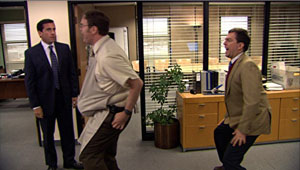
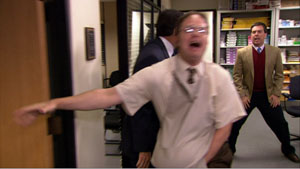
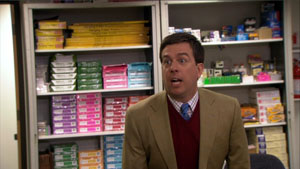
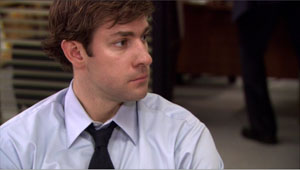
Somehow the cameramen manage to supply a smooth cut-in to Andy, and that’s followed by a reaction shot, from a fresh angle, showing Jim watching. The range of viewpoints, implausible in a real filming situations, is often smoothed over by sound that overlaps the cuts, as in both documentary and fictional moviemaking. (See our essay on High School here to see how a genuine documentary uses these techniques.)
Of course I’m not faulting the makers of The Office for not rigidly imitating documentary conditions. Any such blend of fictional and nonfictional techniques will involve judgments about how far to go, as I indicate in an earlier post on Cloverfield. It’s just to acknowledge that TV visuals have their own conventions, and these can be creatively shaped for particular effects. We ought to expect that those conventions would encourage close analysis as easily as film traditions do. Jeremy Butler’s new book Television Style offers the best case I know for the claim that there is a distinct, and valuable, aesthetic of television.
Following his own study Television: Critical Methods and Applications (third edition, 2007) and paying homage to John Caldwell’s pioneering Televisuality, Butler gets down to the details of how various TV genres use sound and image. Butler’s conception of genres is admirably broad, considering dramas, sitcoms, soap operas, and commercials, each with its own range of audiovisual conventions and production practices. His discussion of types of television lighting complements Keating’s analysis; put these together and you have some real advances in our understanding of key differences and overlaps between film and video.
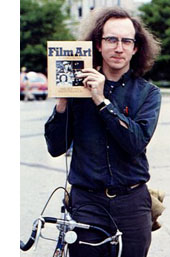 Kristin has met Jeremy, but I haven’t yet. In any case, Television Style shows that he’s a kindred spirit who’s made original contributions to this research tradition. Like Jinhee, Patrick, Pat, and David, he demonstrates that we can better grasp how media work if we study, patiently and in detail, the creative options open to film artists at specific points in history. He began thinking about these matters in 1979, as the photo attests.
None of this is to say that artistic norms or industrial processes are cut off from the wider culture. Rather, as becomes very clear in all of these books, cultural developments are often filtered through just those norms and institutions.
For example, everybody knows that in classical studio cinema, women were usually lit differently from men. But Keating notices that often women’s lighting varies across a movie, depending on story situations. He goes on to make a subtler point: there was a greater range in lighting men’s faces. Men could be lit in more varied ways according to the changing mood of the action, while lighting on women was a compromise between two craft norms: let the lighting suit the story’s mood, and endow women with a glamorous look. The fluctuations in the imagery stem from adjusting cultural stereotypes to the demands of Hollywood’s stylistic conventions.
Careful studies like these, alert to fine-grained qualities in the films and the conditions that create them, can advance our understanding of how movies work. Pursuing these matters takes us beyond both the movie in isolation and generalizations about the broader culture; we’re led to examine the filmmaker’s tasks and tools.
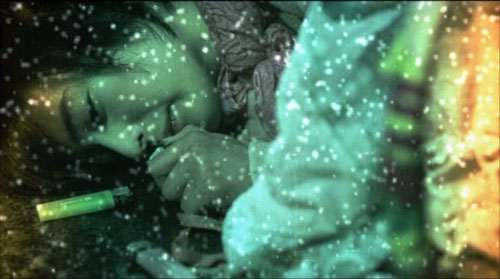
Resurrection of the Little Match Girl (Jang Sun-woo, 2002).
Paris fun, in at least three dimensions
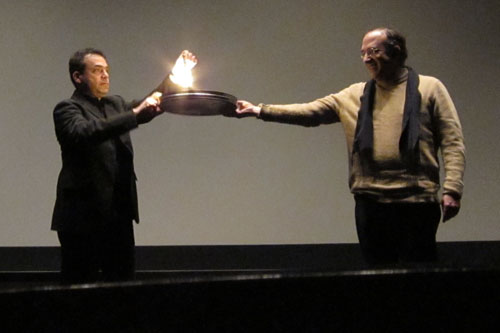
What he saves films from: Serge Bromberg faces down the flames.
We’re ending the first week of three in Paris. At the invitation of Jean-Loup Bourget and Françoise Zamour, David is giving three weekly lectures at the École Normale Superieure. He’s introducing some ideas about the development of film style in the 1910s and early 1920s, updated with new material from his summer research in Denmark and Brussels. Jean-Loup and Françoise have proven excellent hosts, and the first lecture seemed to go well.
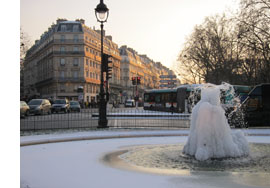 We thought that Paris in January might be chilly and rainy, but we figured it had to be warmer than Madison. It turned out that Paris is experiencing unusually cold weather—about what would be normal in Wisconsin. There was light snow yesterday and last night, and the wind-chill factor was enough to turn our fingers numb if we stayed out long enough. The fountain in the center of the intersection at the northeast corner of the Jardin de Luxembourg has gradually become an iceberg.
Turns out, though, that it is still warmer than Madison, which is having highs in the single digits, as the weather forecasters say, and lows below zero. We’re better off here, though we wish we had brought our parkas.
It’s like Avatar, but much shorter
KT here:
The cold has driven us indoors, to museums and movies. As always seems to be the case, the Cinémathèque Française is hosting retrospectives of American films—in this case works by Laurel and Hardy and Gordon Douglas. There’s also a 3D series, which caught our attention right away. It’s not just your standard Kiss Me Kate and Dial M for Murder programming. In addition to such classics, there are many obscure films. We happened to arrive in time for the final two programs of the series, which ran from December 16 to January 3.
Our first full day in Paris ended with an evening of shorts presented by Serge Bromberg, who in 1985 founded Lobster Films. Lobster has put out many DVDs by now, some of which we have reported on previously, here and here. In July, one of our entries on Il Cinema Ritrovato in Bologna mentioned that Serge presented a program of Georges Méliès films, in conjunction with the French release of Lobster’s huge DVD set of the great magician’s films.
Serge is quite a showman and obviously a popular figure, since there was a large crowd, including many families with children. On Saturday he chose and introduced a set of short 3D films in his series of programs usually titled “Retour de Flamme,” or “Saved from the Flames.” To begin the evening’s entertainment, he explained how, unlike modern celluloid 35mm film, the nitrate variety used up until the early 1950s ignites and burns easily. With the help of a rightly apprehensive volunteer holding up a film-can lid, Serge showed how modern celluloid catches fire only briefly and then dies out. The few inches of nitrate, however, flared up quickly.
Serge introduced each film thereafter, playing the piano to accompany the silents. The audience had been given both anaglyph (red-green) and polarized glasses, and Serge’s introductions to the films gave us time to switch between systems.
Many of the shorts shown on the program are available on DVD or YouTube, but the 3D effect plays best on the big screen. The evening began with an unannounced item, Three Dimensional Murder, a “Metroskopics” comedy short from 1942. A nervous detective visits a mysterious house and encounters Frankenstein, creeping hands, skeletons, and other ghouls and beasties, all of which find some occasion to throw things or hurl themselves toward the camera. The humor is, as a contemporary audience member might have said, pure corn and the 3D effects repetitive, but it was certainly a rare item.
Next came one of the Fleischer brothers’ cartoon shorts, Musical Memories. It was made with a patented system that used three-dimensional models as settings against which 2D cartoon figures drawn on cels moved about. (Such models can be seen fairly often in Popeye and other Fleischer cartoons of the 1930s.) There is some sense of depth. Still, the effect is strange, since the models have shading and the flat-looking figures do not. The cartoons are not 3D in the sense we typically think of, since there are no glasses involved.
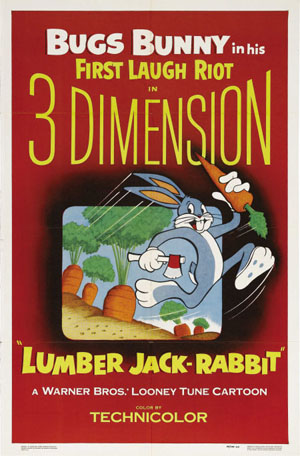
More cartoons followed, from the two main competing animation studios. Disney’s contribution was Working for Peanuts, a story set in a zoo with Chip and Dale stealing peanuts from an elephant and Donald Duck trying to foil them. Many a peanut seemed to fly out toward the spectator. Chuck Jones directed Lumber Jack-Rabbit (1954), a film that mixed size gags and spatial ones, with Bugs wandering into the domain of the gigantic Paul Bunyan. Perhaps not one of Jones’s best, but distinctly more interesting in 3D.
As Serge pointed out, most 3D technology was pioneered in the U.S. He included some exceptions, however, with a series of Soviet “Parade of Attractions” shorts shown at intervals during the evening. Experiments with underwater 3D photography and a garden of plants lacked soundtracks, but the final item, a vaudeville act with jugglers, had music and lots of bowling pins flying at the camera.
Unbelievably, there were efforts toward 3D as early as 1900. Serge showed some 3D experiments from that period by inventor Rene Bunzli. These were only about 10 seconds long and included a mildly risqué scene of a man arriving to visit his mistress and another discovering his wife in bed with her lover. The first color 3D film was shown: Motor Rhythm, made by Charley Bowers in 1940 for the Chicago Exposition and distributed by RKO. Using a combination of pixilation and 3D, the film shows a car jauntily assembling itself to a musical accompaniment, with many of the parts moving out toward the camera before attaching themselves in their proper places.
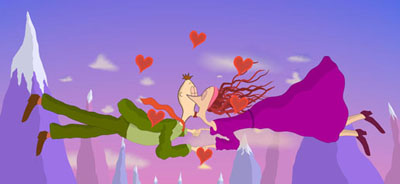
The National Film Board of Canada contributed Munro Ferguson’s Falling in Love Again, with characters wafted into the sky by road accidents and, while falling, falling in love. To watch it in high-quality 3D, go here. Pixar was represented by John Lasseter and Eben Ostby’s early digital experiment in 3D, Knick Knack, as a snowman trapped in a snow globe tries to break free to join a bathing beauty.
The evening ended with a surprise, two films that had never been meant to appear in 3D.
Méliès’s early shorts were often pirated abroad, and a lot of money was being lost in the American market in particular. After the Lubin company flooded that market with bootleg copies of a 1902 film, Méliès struck back by opening his own American distribution office. Separate negatives for the domestic and foreign markets were made by the simple expedient of placing two cameras side by side. The folks at Lobster realized that those cameras’ lenses happened to be about the same distance apart as 3D camera lenses. By taking prints from the two separate versions of a film, today’s restorers could create a simulated 3D copy!
Two 1903 titles–I think that they were The Infernal Cauldron and The Oracle of Delphi–triumphantly showed that the experiment worked. Oracle survived in both French and American copies, and the effect of 3D was delightful. For Cauldron only the second half of the American print has been preserved. Watching the film through red-and-green glasses, you initially saw nothing in your right eye, while the left one saw the image in 2D. Abruptly, though, the second print materialized, and the depth effect kicked in. The films as synchronized by Lobster looked exactly as if Méliès had designed them for 3D.
Film scholars gone wild
DB here:
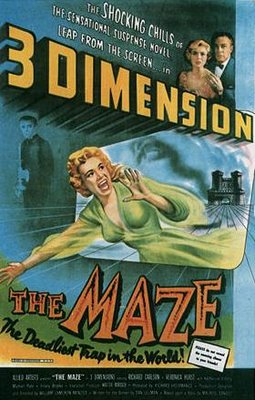
William Cameron Menzies is most famous as an art director on films like The Thief of Baghdad (1924) and Gone with the Wind. He was one of the most visually daring artists to work in classic Hollywood; his eccentric framings and looming foregrounds may have influenced Orson Welles. (The Gothic distortions of Our Town and Kings Row are unlikely to be the creation of director Sam Wood.) Menzies also directed a few films, most notably the slightly nutty anti-Commie film The Whip Hand (1951).
So Kristin and I had to go back to the Cinémathèque for Menzies’ rarely-seen 3D feature The Maze (1953). Alas, it was a washout. The feeble story concerns an heir returning to a castle to confront a giant frog, who may be his relative. I’d expected bravura deep-focus, with planes jutting out at me, but the film was dramatically and visually flat–no wordplay intended. The trailer, complete with fake bats on strings, is here.
We have other incidents to chronicle, but this dispatch can end with a quick list of some of the film friends we’ve encountered. We’ve already mentioned Professor Bourget, whose book on Fritz Lang came out recently (below left). We also ran into Cindi Rowell, an old friend from Pordenone and The Griffith Project, who had the excellent idea that we go to Chinatown–here hidden behind the facades of tower blocks. Cindi has vast experience in many aspects of film culture–preservation, programming, publication, web design, and the like–and is currently affiliated with the Middle East International Film Festival in Abu Dhabi.
Another old friend, Yuri Tsivian, is in Paris teaching during our visit, so we had a chance for a good dinner and lots of talk about editing in the 1910s. Below, he and Kristin pay homage to one of the shrines of Parisian cinephilia, the Studio des Ursulines movie theatre.
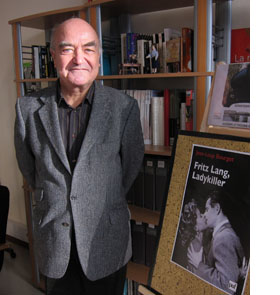
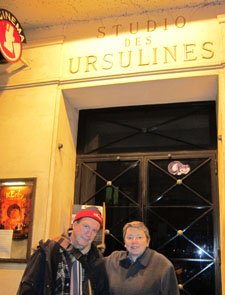
Left: Jean-Loup Bourget and his new book on Lang. Right: Yuri and Kristin at the Urselines.
Last night, with Kristin away in Berlin, I went to a dinner hosted by Jacques Aumont and Lyang Kim. Jacques is a major film theorist, whose many books and essays probe into the artistic qualities of cinema. His book on Eisenstein is available in English translation, as is his far-ranging study of the history and functions of images. Lyang is an outstanding photographer, whose book of haunting Christmas images Dans l’ombre de noël was just published in December. Among her pictures here are some gorgeous “fusion” images that recall our recent 3D experiences.
Then who should turn up but Marc Vernet and Rick Altman? It was an Iowa-Wisconsin reunion in the 10th. Marc is an expert on film noir, on cinematic images of absence, and on the American film company Triangle–associated with both Griffith and Ince. (Again, the 1910s.) Marc has set up a beautiful webpage full of information about early American cinema, and he blogs there frequently. Rick is known for his in-depth studies of film genre (especially the musical), film sound, and narrative theory. His most recent books, Silent Film Sound and A Theory of Narrative, are splendid contributions. Below, all four toast what turned out to be Rick’s birthday.
Today: More preparations for my lecture tomorrow, and of course at least one movie. Agora? Wiseman’s La Danse? Kinatay? The new Eugène Green, La religieuse portugaise? Or a rerelease (new print) of Minnelli’s Four Horsemen of the Apocalypse? Or….? The usual Parisian problem, but a good problem to have.
P. S. March 2010: After this Paris trip, I wrote an essay on William Cameron Menzies for this site.
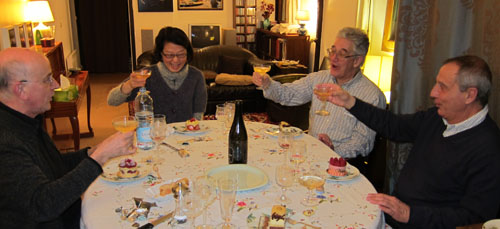
Jacques Aumont, Lyang Kim, Rick Altman, and Marc Vernet, 9 January 2010.
Get well soon, Richie-san
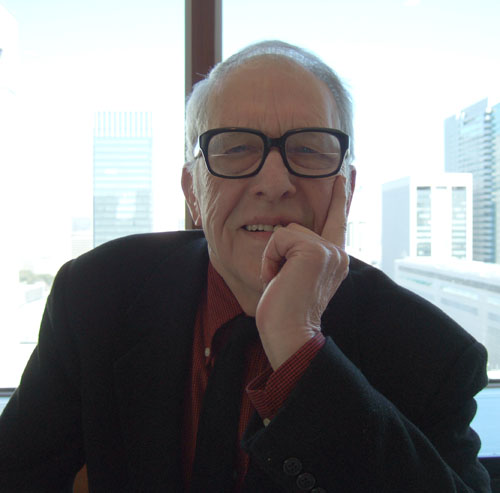
Donald Richie is in a Tokyo hospital recuperating from pneumonia.
If you’ve read a book on Japanese cinema or listened to a Criterion commentary, you probably know his voice. And if you admire Ozu or Kurosawa or Mizoguchi or Kinoshita or Oshima or virtually any other Japanese director, you have Donald to thank. Many of the films we consider classics would not have been seen in the west had Donald not convinced Japanese companies that there was a worldwide audience eager to know this country and its cinema. Gatekeeper, tastemaker, public intellectual, and memoirist, this exuberant 85-year-old has given us so much pleasure and wisdom that we should remind him how much he means to us.
You can send cards, letters, and well wishes to Donald Richie, c/o KiSMet, 1-2-7-8E Meguro, Meguro-ku, Tokyo Japan 153-0063.
Wrapping up the ROW
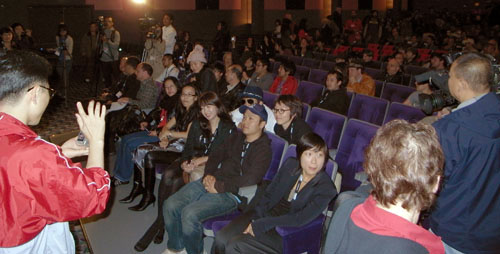
Paparazzi swarm over the nominees for the Dragons and Tigers Award at the Vancouver International Film Festival.
Kristin here:
Some final films from VIFF
So far Central American countries have produced fewer films than their neighbors to the north and south. So I couldn’t pass up The Wind and the Water, the first fiction feature made in Panama. Made by a collective of fifteen young indigenous people from the Kuna Yala archipelego under the leadership of MIT graduate and first-time director Vero Bollow, it’s a tale of threats to the paradisiacal island by developers who want to build a giant hotel there. It also reflects temptations for young people to desert their traditional lives on the islands for the attractions of nearby Panama City.
The contrast between the islands emerges through a simple tale. Machi, a young man from the islands, goes to the city for schooling and finds it grim and threatening. Rosy, a transplanted native who grew up there, aspires to be a model.
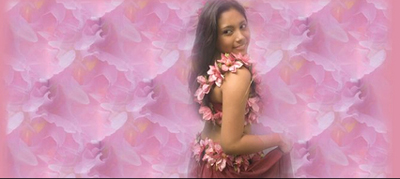
She returns to the islands for her grandfather’s funeral. Confronted with crude latrines and fish-head stews, she is initially miserable but gradually falls under the spell of the area’s beauty. Meanwhile her father works for the group planning to move the islands’ population to a new suburb and build their resort.
The plot is based loosely on that population’s vigorous efforts—successful so far—to fend off efforts of outsiders to gain control of the islands. I was reminded while watching it of the many classic documentaries of the 1930s and 1940s, like Song of Ceylon, shot by Americans and Europeans in exotic locales. For decades film scholars deplored the fact that the people who formed the subjects of such films were being portrayed by outsiders. The Wind and the Water, though a fiction film, has a strongly documentary thread running through it, but this time it is the local population making a film about their own situation.
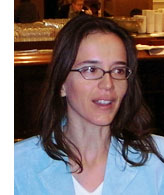 Bollow (right), who initially left MIT to live in Panama and bring digital technology to indigenous people, wrote the script along with the fifteen team members. She attended Vancouver and answered questions, but members of the team will be traveling with the film to other festivals.
In some ways, Ozcan Alper’s debut feature, Autumn, is a classic art-house film. Yusuf, a student radical, is released after ten years in prison because he has a fatal lung disease. He returns to his home. He returns to his rural home in the eastern Turkish mountains and settles in with his widowed mother, keeping his illness secret. He tutors a local boy in math and perhaps falls in love with a melancholy prostitute struggling to support her child.
Many of the scenes consist of the hero lying or sitting in the yard, contemplating the surrounding mountains as autumn slowly changes them. David found the lack of dramatic action and the slow pace of the scenes to be overly familiar conventions of art cinema. No doubt the hero’s goals are de-dramatized, as when he promises a bicycle to the student should he succeed in mother or when very late in the film he decides to help the prostitute. There is one central motif that becomes overly emphatic. When Yusuf first notices the prostitute, she is buying a Russian novel; they simultaneously sit alone watching the same broadcast of Uncle Vanya; eventually she tells Yusuf that he’s like a character out of Russian literature. The film’s tone successfully suggests this comparison without our needing to have it made explicit.
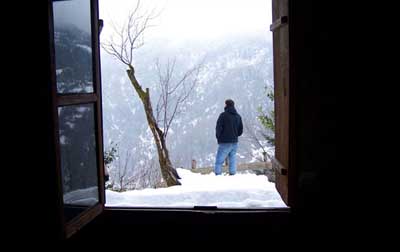
To me, the success of the film arises from the director’s integration of the landscape into the story. The prominence of the rugged landscape and the care with which the story is linked to the fall of leaves and the creeping of snow down the mountainsides lifts this above standard art-house fare. In this case, the fading of the year, beautifully brought into a central role by the cinematography, becomes linked more subtly to the hero’s plight.
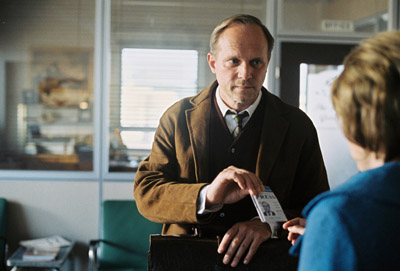
Kill Daddy Goodnight, an Austrian film by veteran director Michael Glawogger, starts with a promising premise. The protagonist Ratz hates his father, a cold and critical government minister, and creates a videogame, “Kill Daddy Goodnight,” to wreak a fantasy revenge. Summoned by Mimi, a friend with whom he may or may not be in love, he abruptly flies to New York. She wants him to renovate the basement hideaway of her grandfather, a fugitive Nazi war criminal. Initially revolted, over the course of his work he comes to like the old man. Ratz also manages to find a sleazy internet entrepreneur willing to offer “Kill Daddy Goodnight” on his website, where it becomes an immediate success. Interspersed with this plot are scenes of an unidentified man (below) recording testimony against and visiting his childhood friend, who had worked for the Nazis during the war and killed his father.
So far, so good. But the film’s already complex plot is overburdened by strong hints of Ratz’s incestuous desire for his sister, a thread that comes to little. Mimi’s motivations are confusing, and it’s hard to sympathize with any of the characters. Perhaps that was the intention, but my sense was that the two intriguing plotlines, which could have fit neatly together, were diffused by distractions and uncertainties.
I didn’t get to many documentaries, but being a lover of Vivaldi’s vocal music, I had to see Argippo Resurrected. It’s the fascinating tale of how Czech conductor and musicologist Ondrej Macek ingeniously tracked down the lost 1730 opera, which had originally been composed for Prague. He then staged the piece in one of the two perfectly preserved court theaters of the era, the Castle Theatre at Cesky Krumlov, two hours outside of Prague, near the Austrian border.
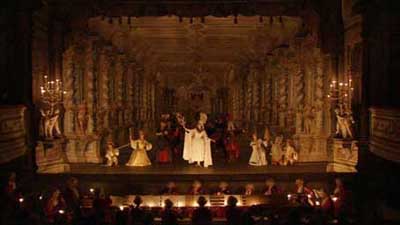
The other is at Drottningholm, outside Stockholm, where in 1999 David and I had the privilege of seeing The Garden, a new opera about Linnaeus. (It was the first premiere at the theater since it was sealed in the 18th century.) The original candles have prudently been replaced by electric replicas of one candlepower each, flickering realistically. The Cesky Krumlov theater still uses real candles to light both the stage and the musicians’ stands. I guess this says something about fire codes in Eastern Europe. I for one would be happy to risk it in order to have a thoroughly authentic experience, especially if a Vivaldi opera was playing.
It’s a complicated story to fit into 62 minutes. Director Dan Krames took a clever and effective approach, starting backwards. He shows the theater first, with its wooden framework, sets, and stage machinery. He then goes on to introduce some of the musicians and singers, in the process explaining the concept of authentic performance style to those who may not be familiar with it. We also get to see some short excerpts from rehearsals, so that we come to know the opera a little. Only then does Krames proceed to the tale of Macek’s search for the original manuscript and his laborious piecing-together of the individual arias. Macek makes an engaging subject, though he is so self-deprecating about his discovery that the film has to include another musicologist to explain just how extraordinary the accomplishment was.
Finally Macek takes us on a tour of Venice, showing the few surviving places associated with Vivaldi, whose life is little documented. Along the way, there are further excerpts from rehearsal for the production shown, featuring a collection of excellent singers. Krames told me that Argippo Resurrected should be released on DVD in about a year. In the meantime, a live recording of Macek’s production is available as a 2-CD set.
Some final photos
Film festivals aren’t just for watching movies, of course. They’re for seeing old friends, meeting new ones, and sharing meals—including the festival’s wonderful hand-made waffles—to talk about what we’ve seen. As usual, David had his camera in hand nearly all the time, as the accompanying images show.
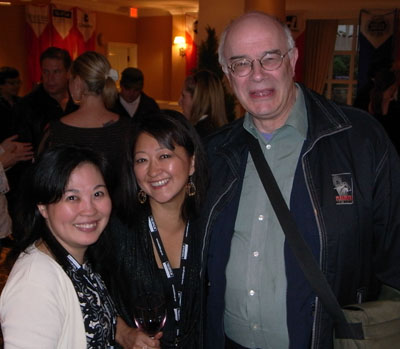
Theresa Ho, Eunhee Cha, and Tony Rayns: Three key players in the Vancouver Festival.

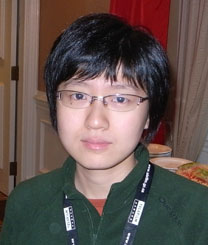
Chris Chong (director of Karaoke) and Liu Jiayin (Oxhide II).

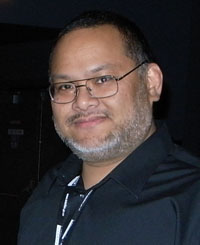
Bob Davis, of American Cinematographer, and Noel Vera, Critic after Dark.
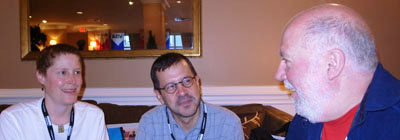
Canadian corner: Lisa Roosen-Runge, Shelly Kraicer, and Peter Rist.
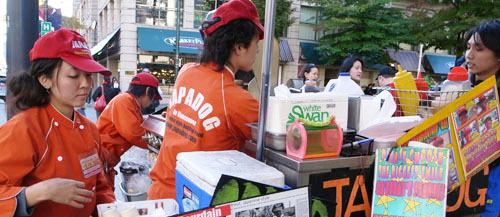
Get your Terimayo, Oroshi, and Okonomi here: Japadog, a Vancouver Institution.