




Archive for the 'People we like' Category
Snapshots and soundbites
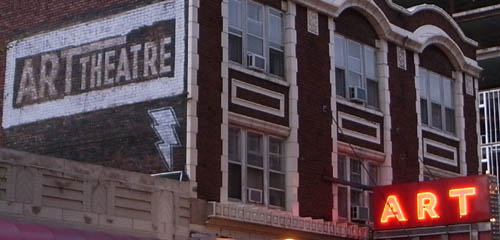
Boardman’s Art Theatre, two blocks from the Virginia Theatre, Champaign, Illinois.
DB here:
As you may surmise, a hell of a time was had by all at last week’s Ebertfest. In the sessions I moderated, I was often so busy listening and thinking about my next question that I didn’t have time to write down all the aperçus that spilled forth from the guests. But here are some soundbites, mixed with pix.
Jeff Nichols, director of Shotgun Stories: “I managed to make a 90-minute movie that feels 2 ½ hours long.”
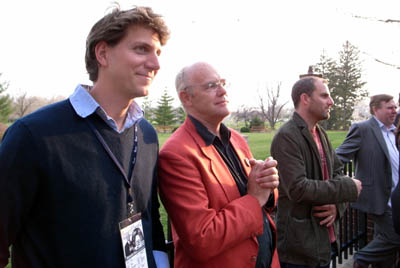
Jeff Nichols, John Peterson (The Real Dirt on Farmer John), Eran Kolirin (The Band’s Visit), Timothy Spall (Hamlet).
Bill Forsyth on his early work: “I made films about teenagers because they were cheap to hire.”
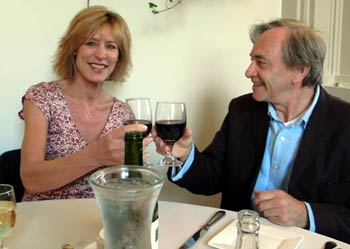
Christine Lahti (Swing Shift, Running on Empty, Jack & Bobby, Amerika) and Bill Forsyth, reunited for the screening of Housekeeping.
Why so much multiframe imagery in Hulk? “In those notes you get from studio people,” Ang Lee explained, “they always want more and faster. So I decided to give it to them.”
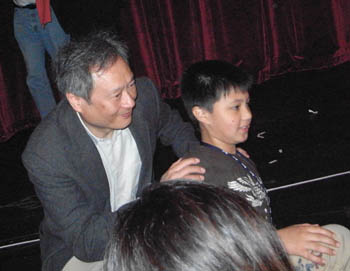
Ang Lee (Hulk) and unidentified admirer.
Barry Avrich asked Suzanne Pleshette how she had survived so long in the industry. Suzanne: “I don’t have a gag reflex.”
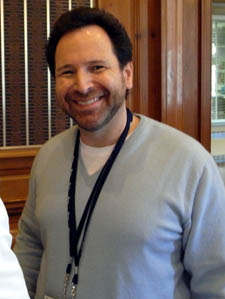
Barry Avrich (The Last Mogul, Satisfaction, Citizen Cohl: The Untold Story, and the book Selling the Sizzle).
Paul Schrader: Theatrical screening is dead. “The multiplexes look like mortuaries.”
Tom DiCillo: “Going to a film is a religious experience. . . . When you see it on a computer screen, fuck it.”
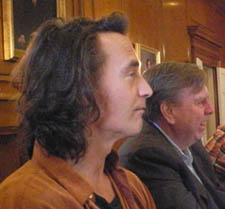
Tom DiCillo (Delirious) and Timothy Spall.
Paul Schrader: “When I started, there was a crisis of content. Nobody knew what a movie should be about. So we had films with sex and violence and anti-heroes. But now we have a crisis of form. How long should a movie be? How big should the screen be? What is this thing called movies?”
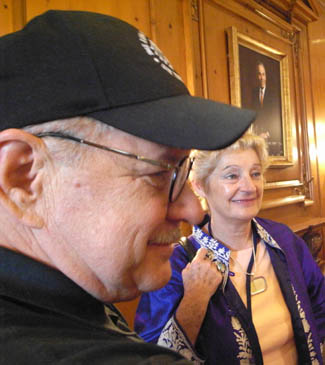
Paul Schrader (Mishima) and Hannah Fisher (Dubai International Film Festival).
“What part of this is directing?” Tom DiCillo, reflecting on the fact that it took six years to set up Delirious and he spent only 25 days behind the camera.
Tarsem Singh: “I’ve been an atheist since I was nine. I’ve never used any intoxicant—drugs or liquor or whatever. But I don’t like to associate with nondrinkers: they’re either religious or reformed alcoholics.”
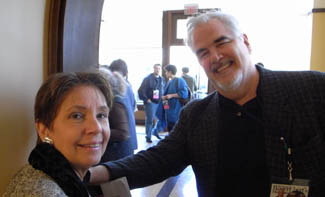
Mary Corliss (Film Comment) and Richard Corliss (Time).
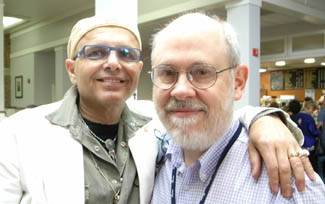
Joey Pantoliano (The Matrix, Memento, The Sopranos, Canvas, and book Who’s Sorry Now) with unidentified admirer.
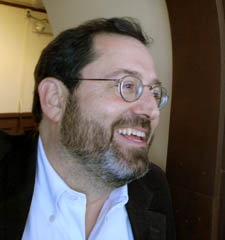
Michael Barker (Sony Pictures Classics).
Eiko Ishioka: “When Paul asked me what I thought about Mishima, I said, ‘I don’t like him.’ He said, ‘Perfect!'”
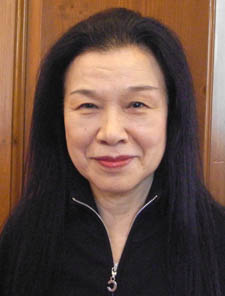
Eiko Ishioka (Mishima, The Cell, The Fall), multimedia artist.
The Ebertfest Team
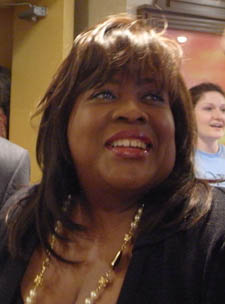
Chaz Ebert.
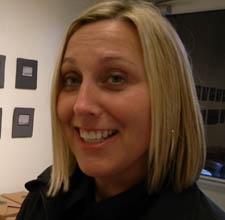
Mary Susan Britt.
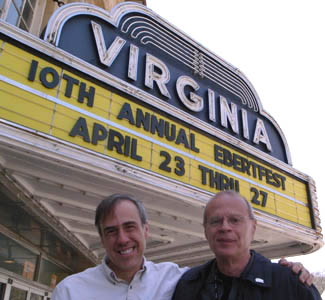
James Bond, projectionist, and Nate Kohn, Festival Director.
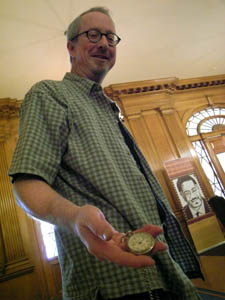
See you here next year? Jim Emerson (scanners, Rogerebert.com) is counting the hours.
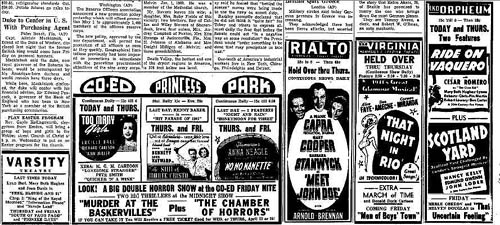
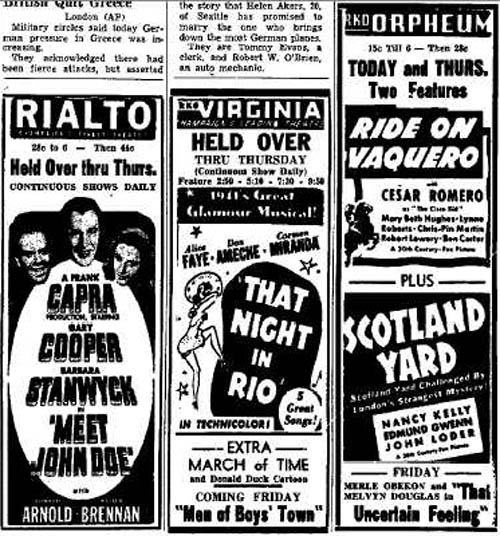
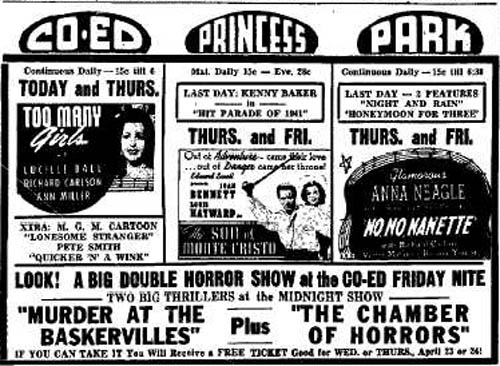
Bonus feature: What you would have been able to see in Urbana-Champaign 16 April 1941.
Goodbye to Hong Kong for another year
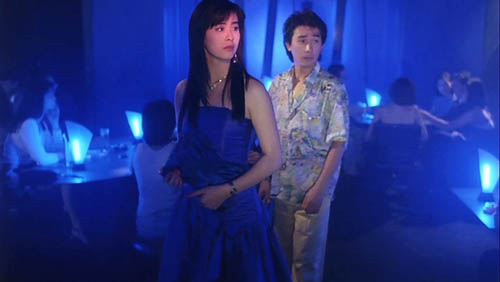
My Heart Is That Eternal Rose.
DB here, yet again:
Back nearly a week from Hong Kong, I’ve been swamped by backlog and made logy by jetlag. But I wanted to offer last-minute notes from this year’s film festival. I won’t comment on the films that disappointed me or that weren’t in finished form. Instead, upbeat reports, some pictures, and a trio of DVD delights.
On the big screen
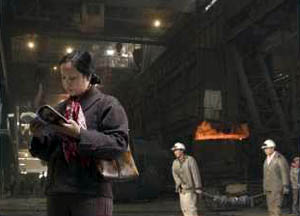
Little Cop (1989) starring and directed by Eric Tsang, was part of the festival’s tribute to him. It’s a silly but ingratiating item that anticipates Stephen Chiau’s mo lei tau nonsense comedy. The opening credits are burned onto Tsang’s pudgy body, and thereafter a series of episodes takes him to the anti-prostitution squad (cue the condom jokes) and then the drugs detail. There are engaging gags around a funeral, with a song in praise of death set to the Colonel Bogey march, and lots of intrigue with a master criminal who can steal other people’s faces. Needless to say, since this is Hong Kong, we get many food gags too. Eric called in his bets and got a flurry of walk-ons from top stars like Andy Lau and Maggie Cheung. The only tedious stretch is the last scene, an uninspired clone of Steve Martin’s Absent-Minded Waiter routine. Otherwise, good dirty fun.
Paranoid Park (2007) seemed to me Gus van Sant’s best film in a long time, after the somewhat arid exercises of Gerry and Last Days. Here he’s got a genuine, gripping story that he can render in his detached but lyrical style. The shot of Alex in the shower is particularly gorgeous, and the tracking shot of his tormented walk through town is enhanced by swarms of subvocal recriminations that spurt out from all three channels. My friend J. J. Murphy has provided further commentary on his blog here and here.
If movies about moviemaking risk narcissism, movies about film school must be narcissism squared. The Early Years: Erik Nietzsche Part 1 (2007) centers on a young filmmaker who is transparently Lars von Trier. In-jokes about Danish film culture pile up, and the plot takes almost every easy way out, but Jakob Thuesen keeps the proceedings moving briskly enough. The caricatures are fun, although I think the all-night frenzy of film school life is better captured in Yanagimachi Mitsuo’s Who’s Camus Anyway?
A real revelation: And the Spring Comes (2007, above), by Gu Changwei. A somewhat homely woman with a crystalline singing voice imagines herself headed straight for the Beijing opera. Instead, broken love affairs and unwillingness to lower her ambitions keep her sequestered teaching music in a small town. A tough but touching melodrama rendered in a tactful style, with female lead Jiang Wenlei willing to be unsympathetic.
Many art movies can seem inert in their storytelling—over-under-dramatized, we might say. Carlos Reygados’s Silent Light (2007) escapes this trap. Slow and static, it is suffused with a stark calm that gives gravity to a love affair between a stolid farmer and a woman who runs a café. Planimetric compositions are used imaginatively, and the soundtrack makes daring use of offscreen noises. As an old Dreyer fan, however, I have to worry about the film’s relation to Ordet. Dreyer’s film isn’t exactly ripped off or cited, but it floats behind this one like a spectre before materializing at the climax, perhaps in overbearing fashion. Ordet, suffused with religious debate, earns its miraculous finale, while Silent Light, for all its austerity, is a film of the flesh, and its spiritual coda seems to me somewhat forced. But I’m willing to be convinced otherwise.
Because another guest didn’t appear, I was asked to introduce programs of films by or related to Maya Deren. I enjoyed the chance to see them again, and to reread her writings in the excellent collection Essential Deren. Her work remains stimulating—especially Meshes of the Afternoon and Ritual in Transfigured Time. Her writings blend a stringent formalism, echoing Rudolf Arnheim‘s views of cinematic specificity, and a fascination with myth and non-Western cultures. The boys’ Trance movies (Fragment of Seeking, The Cage, The Potted Psalm) are of historical interest, but hers remain lively. I was happy to see how many young people stayed after the screenings to discuss films that are sixty years old.
On the small screen
In my shopping, I discovered three fine movies on DVD.
*Do Over, a Taiwanese network narrative I liked in Vancouver back in 2006, now available with English subtitles in a so-so transfer (good color and contrast, blurry frame-by-frame pickup). A strong debut film from Cheng Yu-chieh.
*My Heart Is That Eternal Rose, an important 1989 Hong Kong film by New-Wave talent Patrick Tam. This mix of romance and crime stars Kenny Bee, Joey Wang, and a shockingly young Tony Leung Chiu-wai, and Christopher Doyle is listed as one of two cinematographers. The film’s daring stylization marks it as belonging to Hong Kong’s late-80s burst of creativity, and many moments look forward to the luxuriant melancholy of Wong Kar-wai. Clearly Tam (who edited Days of Being Wild and Ashes of Time) was an important influence on Wong. For a long time, I had access to My Heart only on an ugly pan-and-scan laserdisc, but now a widescreen transfer of a worn but bright print offers a considerable improvement. It’s far from perfect, with somewhat slurred movement, but better than nothing.
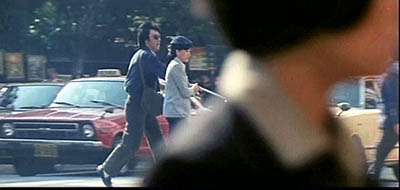
*Play while You Play, usually known as Cheerful Wind (1981), is Hou Hsiao-hsien’s second film, a romantic drama about a blind man and a somewhat self-indulgent television producer. It’s one of his three commercial “musicals,” and seldom seen, let alone discussed. I think that stylistically these films lay the groundwork for his Taiwanese New Wave films from The Sandwich Man onward. (Go here for more.)
I don’t enjoy this quite as much as his first film, Cute Girl, or his third, The Green, Green Grass of Home, which seems to me nearly a masterpiece. Still, there are lovely moments in Cheerful Wind, including the music montages and a surprisingly offhand ending. Hou films almost casually in the open air, letting passersby drift in and out of the frame (above). The disc, from something called Hoker Records, claims on its package to be 4:3, but it actually preserves the 2.35 format. Unfortunately, it does so through letterboxing, yielding only so-so resolution. No English subtitles. Rumor has it that the irresistable Cute Girl is available in a similar package.
In the point-and-shoot LCD
Four of the brains behind the festival: Ivy Ho, Bede Chang, Li Cheuk-to, and Albert Lee.

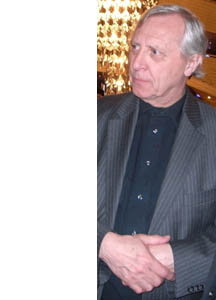
Shan Ding, man of all work at Milkyway Image, and the magisterial Peter Greenaway.

Mrs. Johnnie To, Johnnie To, Amy Lau, and Lau Ching-wan, who normally eats nicely.

Joanna Lee, translator extraordinaire and music facilitator to the world.

Jupiter Wong, ace photographer, and Bela Tarr after the enthusiastic reception of The Man from London. My takes on Tarr are here and here and here.

Peter Chan, whose Warlords just won a slew of prizes at the Hong Kong Film Awards.

Jacob Wong, Festival programmer, and Raymond Phathanavirangoon, lately of Fortissimo. I praised Raymond’s presskits last year.

Shu Kei and Michael Campi, just before the premiere of Coffee or Tea, which Shu Kei directed with Kwan Man-hin.

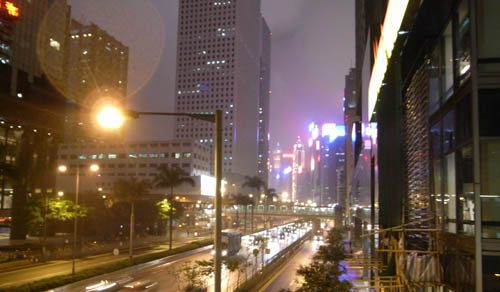
Tourist snap no. 1: Wherever you turn in Wanchai, there’s something interesting to see. Even air conditioners start to look like public sculpture.

Tourist snaps 2 and 3: I often took the Wanchai ferry to screenings on Kowloon.


Tourist snap 4: Coming back late from a screening on the Kowloon side, I would walk past the old clock tower.

. . . A walk fortified by a late-night sample of the Sweet Dynasty’s almond and walnut soup.

In all, as I said at the start of my 3 1/2 weeks here: This will always be the place.
Party time in Hong Kong
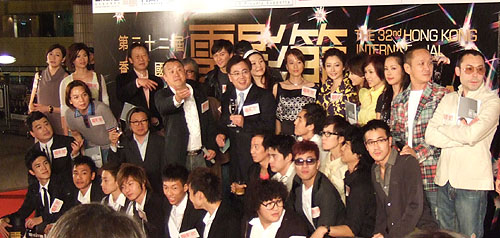
Today, pix from two get-togethers during the Hong Kong International Film Festival.
Johnnie’s dinner
Johnnie To gave another of his legendary dinners, this time to a crowd of filmmakers, distributors, festival directors and programmers, and hangers-on like me. The meal was old-school HK fusion, mixing Brit colonial food (boiled tongue, boiled potatoes, boiled veggies) with unique local variations (pigeon, a puffy vanilla soufflé). I think it’s akin to what Maggie Cheung and Tony Leung scarf down so elegantly in In the Mood for Love. Very tasty.
Among those present: Director Kirk Wong.
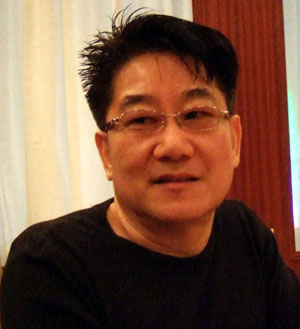
Kirk made The Club (1981), Health Warning (1982), Gunmen (1988), and other classics, including the 1994 double-header Organized Crime and Triad Bureau and Rock ‘n’ Roll Cop. These are terrific movies, admired by every fan of action cinema.
Festival consultants consult: Mike Walsh (Melbourne, Adelaide); Stephen Cremin (Far East Film Festival of Udine, Screen International); and Todd Brown (S x S W, FantAsia, Twitchfilm).
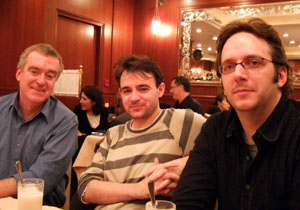
Cameron Bailey, Co-Director of the Toronto International Film Festival, lets me try an Ozu-style composition.
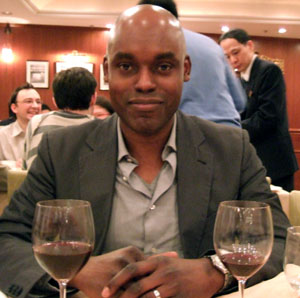
A small bolt of lightning
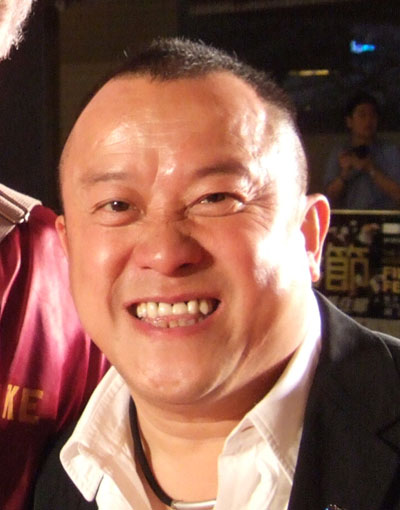
One of the most appealing things about Hong Kong film is that character actors, as we call them in America, go on and on, becoming not only stars but directors and producers. As Leslie Cheung pointed out, the local audience is loyal to its favorites and encourages them to try many things.
Eric Tsang, the short, cherubic guy with the perpetually hoarse voice and blinding smile, began, surprisingly, as a soccer player. In 1974 he became a bit player and stuntman in Shaws’ martial-arts releases. He directed two of the movies in the top-grossing Aces Go Places cycle (1982, 1983), and rose to become a screen personality. He’s so familiar to Hong Kong movie lovers that we couldn’t call him Tsang; he’s just Eric, and he’s irreplaceable.
He worked steadily and hard, appearing in nine films in 1985 and an astounding seventeen in 1988. Several of his performances are superb: playing a small-time loser in Final Victory (1987), a flamboyantly gay music coach in He’s a Woman, She’s a Man (1994), a philandering policeman in the exhilarating and little-known Task Force (1997), a wistful romantic in Metade Fumaca (1999), and of course an implacable triad boss in the Infernal Affairs trilogy (2002-2003). He perks up every movie he graces, rescuing routine projects with his beaming ordinariness. In a fairly ordinary policier like Cop on a Mission (2001), he starts out as a thuggish menace and becomes not only sympathetic but heroic in his devotion to his errant wife.
Cop on a Mission is one of several of Eric’s films screened in the HKIFF tribute. The event also emphasizes his role as a producer. Thanks to him, we have The Outlaw Brothers (1990), Dr. Mack (1995), Men Suddenly in Black (2003), Jiang Hu (2004), and several films he coproduced with Peter Chan Ho-sum. Most recently, Eric has launched a project to support young directors. He launched Winds of September, a feature trilogy about coming of age in the “three Chinas”—the mainland, Hong Kong, and Taiwan.
For the premiere of Tom Lin Shu-yu‘s Taiwan entry on Friday night, the festival held a little party for several hundred of Eric’s closest friends. For once, that last phrase is no joke; everybody feels close to him.
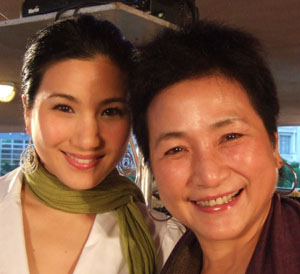
Glamor to spare: Cheng Pei-pei, of Shaws’ glory days and since, with her daughter Marsha Yuan Zi-hui.
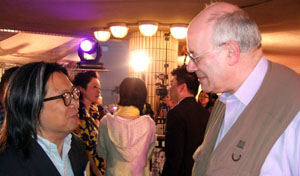
Peter Chan, fresh from the success of The Warlords, chats with Tony Rayns.
Michelle Carey, Festival Editor of the encyclopedic online journal Senses of Cinema and scout for several film festivals. Alongside, Cheung Tat-ming, idiosyncratic young actor; check out his laid-back performance in Once Upon a Time in Triad Society 2 (1996).
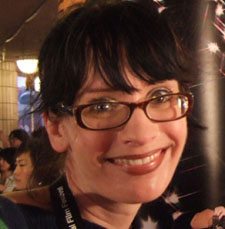
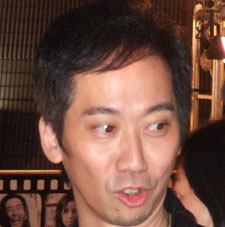
Also there were Teddy Robin Kwan, a wonderful actor and pop singer who first made his mark with movies from Cinema City, and Albert Lee, this year’s Executive Director of the festival.
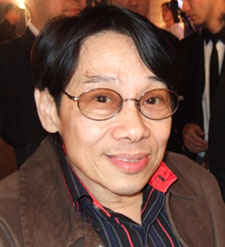

And Eric was as entertaining from the back as from the front.

Next time, I promise more on the movies. I close with two items:
Strangest line of the last twenty-four hours: From inside a hotel room I was passing: “Mom, I haven’t mentioned a threesome until now.”
Johnnie To shows himself a man of outstanding taste.
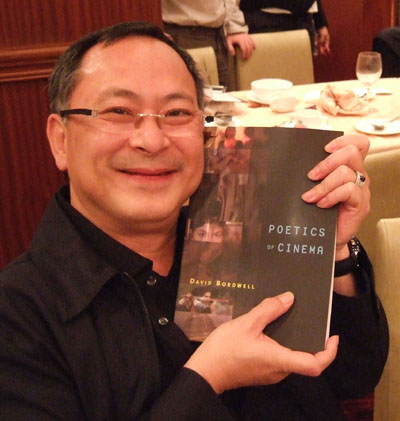
And I show myself a man of no shame. But you knew that already.
THE place
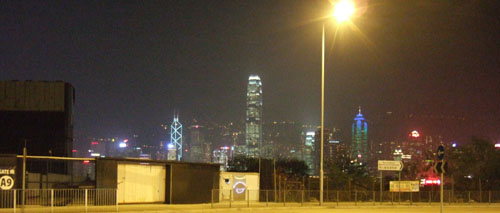
“For us, Hong Kong will always be the place.”
Chuck Norris, The Octagon (1980)
DB here:
Hong Kong’s Entertainment Expo, including the Hong Kong International Film Festival, the Asian Film Finance Forum, and the Hong Kong Filmart, runs for nearly a month, and it has drawn me back to the fragrant harbor. For refreshers, you can visit last year’s posts here.
Biz
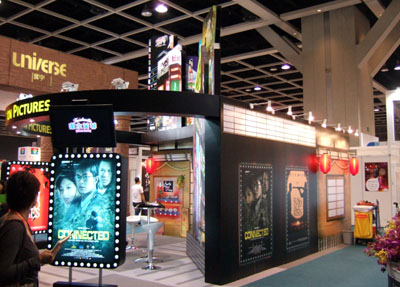
The Filmart has become Asia’s biggest spring media event, with hundreds of companies crowding into a pavilion of the Convention Centre. Here people traffic in movies and TV shows, buying and selling distribution rights, seeking funds for production and partners in movie ventures. I wandered through it last year, and you can track this year’s activities at Variety’s site here.
The last figures I saw indicate that the world pumps out about 4800 features each year. Coming to a market like Filmart, you get to peek below the waterline and see the iceberg that’s underneath.
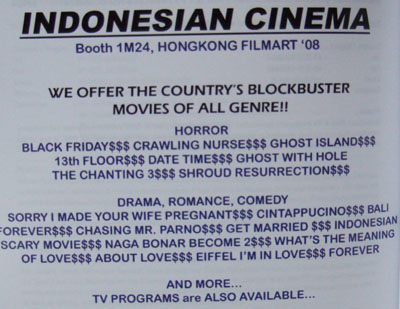
There are, for instance, the bulk genre items from secondary, or tertiary, producing countries.
There are the films that seem somewhat derivative.
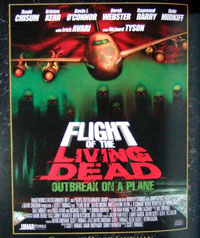
Then there’s the vehicle with the midrange star that just might make it to late-night cable.
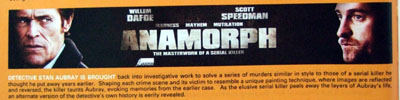
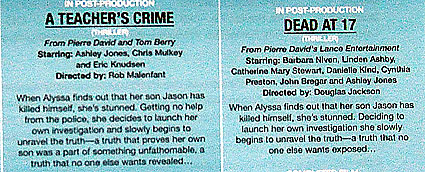
Finally, there are the films that acknowledge themselves to be identical. These descriptions come from Imagination Worldwide’s catalogue ad.
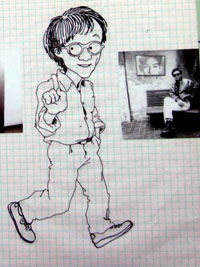
By contrast Filmart mounted a respectful display devoted to Edward Yang, who died last summer. Edward made idiosyncratic, powerful films that would, even today, be very hard to sell at a market. He was a skilled cartoonist, and the display includes some of his perky storyboards and a self-portrait.
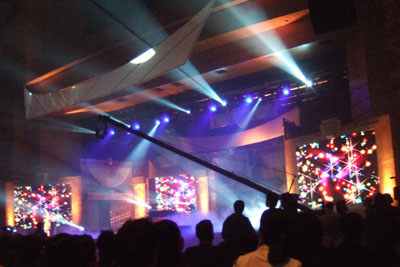
The Asian Film Awards, which I covered last year, started things off with a midsize bang Monday night.
The full results can be found here. I was pleased that Secret Sunshine, quite a good film, won three top awards (film, director, actress). Milkyway, a favorite company of mine, garnered a couple of prizes, and The Sun Also Rises, one of my favorites from last year, did pick up the Production Design prize.
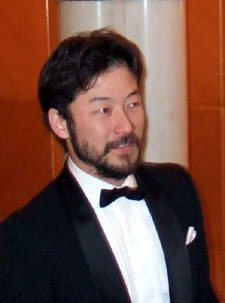
Some Big Stars were visible at both the show and the after-party. Heartthrob Tadanabu Asano arrives.
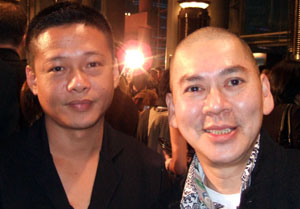
Lee Kang-sheng and Tsai Ming-liang mingle before the awards.
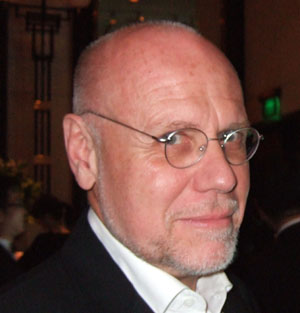
Marco Muller, Director of the Venice Film Festival, at the after-party.
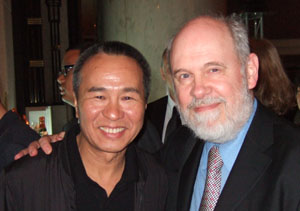
I got to talk briefly with one of my heroes, Hou Hsiao-hsien.
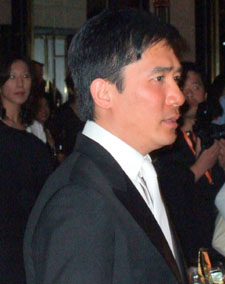
And of course Tony Leung Chiu-wai, emblem of the Entertainment Expo and winner of the Best Actor Award (Lust, Caution), was everywhere, and always looking good.
Flix
Within 36 or so hours, I saw quite a lot of movies. With friends Paisley Livingston and Mette Hjort and their kids I caught Enchanted, which pleased me with its schmaltzy cleverness. As part of the Festival, I re-watched on 35mm two movies I’d seen and commented upon last year: Jiang Wen’s The Sun Also Rises and the Tsui/ Lam/ To Triangle. These were shown at the shock-and-awe auditorium of a new cinema in a spanking new mall, Elements. The seats vibrate at the lowest frequencies, creating what is marketed as “4-D.”
At Filmart I saw the Luc Besson production Taken, another satisfying dose of formulaic filmmaking. Altogether different was Manuel de Oliveira’s Christopher Columbus, The Enigma. The title suits this apparently slight film about a historian’s earnest pursuit of Portugal’s influence on North American history. Haunting images of 1940s Manhattan swathed in fog, along with touching scenes of Mr. and Mrs. Oliveira visiting historic sites, linger.
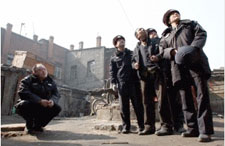 Two films struck me as excellent. Gao Qunshun’s Old Fish (2008) centers on a simple idea. Somebody is planting bombs throughout Harbin, and an aging police officer is the only person remotely qualified to dismantle them. Over a leisurely half hour, we’re introduced to Old Fish, his wife, and his colleagues. Then the first bomb is found, and the suspense kicks in. The apparently clumsy codger, who in an early scene fumbles a World War II grenade, summons up wiliness and delicacy when he has to defuse the mysterious packages.
I don’t think I’ve ever seen more tension-filled sequences of this sort. The film made me realize that in any bomb-disposal scene, when close-ups of a sweating face and a knifeblade hovering over a wire are followed by an extreme long-shot of the scene—that’s when we expect an explosion. Conventionally, the long shot announces the bang. But here, Gao gives us the long shot, and we have to wait, and wait some more. When the explosion does come, it is genuinely surprising.
Shot by shot and sound by sound, this is a very well-crafted, humane film. If anybody tells you that “foreign films” are digressive and boring, show them Old Fish.
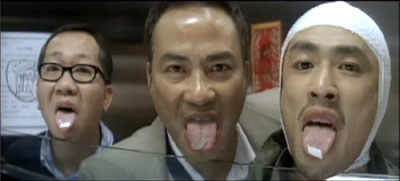
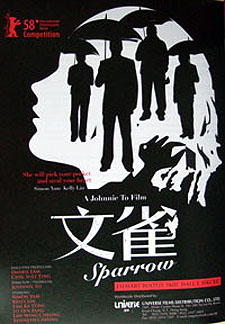
Just as fine, but more unclassifiable, was Johnnie To Kei-fung’s The Sparrow (2008), premiered at Berlin. A gang of pickpockets led by Simon Yam is beguiled by a mysterious lady on the run (Kelly Lin), and their schemes start to fall apart. As often with To, the conception of the film is slim, but the execution is rich. There are the games and competitions, the symmetries and repetitions, the offhand motifs (here, cigarettes, cigars, and pipes), the geometrical and arithmetical plot mechanics. Johnnie To has become perhaps the world’s most unpretentiously, unapologetically formalist director.
It’s a procession of twists and set-pieces. There are the funny one-off shots, like the two grifters with symmetrically broken legs and the gang flashing the razor blades they hide in their mouths. Some sequences are unpredictable miniatures, like the scenes that show how many camera angles you can find in an elevator car, even with a fishtank squeezed in. There’s also a delirious bit with a lipstick-stained cigarette.
Other set-pieces unfold more majestically. There’s a sweeping crane shot of the gang vacuuming up wallets of passersby, and an elaborate theft of a pendant during massage therapy. The climax is an exuberant pocket-picking competition with all contestants stalking through a downpour, their umbrellas forcing them to work with only one hand.
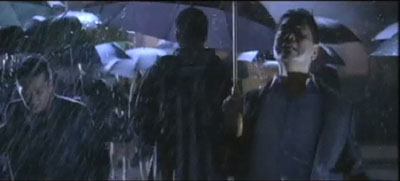
The Sparrow is at once a loving tribute to old Hong Kong island (Simon’s hobby is black-and-white photography), an unpredictable genre piece, and an exercise in light-fingered filmmaking. Like Old Fish, it offers lessons to Hollywood directors, if they have the wit to learn them.
Bits
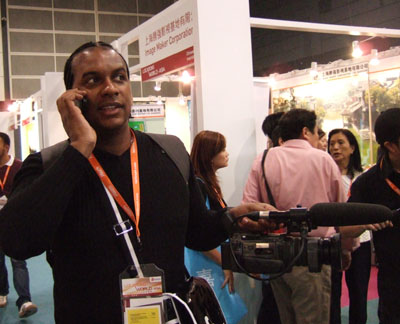
At Filmart, Fred Ambroisine multitasks, taking cellphone calls and shooting docu footage at the same time.
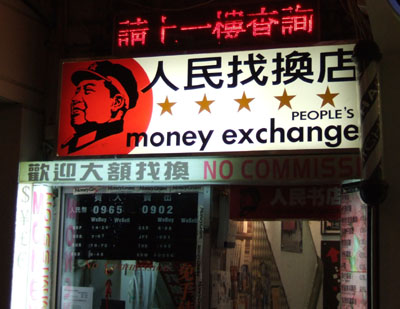
Deng said “To get rich is glorious,” and now Mao agrees.
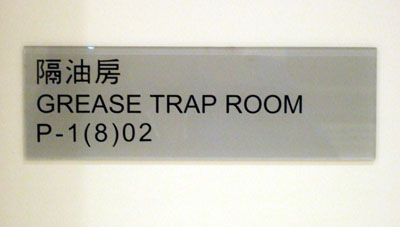
And in the spanking new, gargantuan mall known simply as Elements, an entire room is devoted to one essential Element.
More to come, soon I hope, from The Place.