















Archive for 2009
A quick note
We are delighted to learn that we were selected “Critics of the Naughts” by IFC.com. “Naughts” doesn’t mean naughty, or that our efforts are for naught; it just refers to the decade of the 00s, now ending. So our thanks to Matt Zoller Seitz, filmmaker and film critic extraordinary, for his generous essay about our work. He has high standards for film writing, and we’ll try to live up to them.
The other expanded Oscar category

Two Jell-o lovers share a romantic interlude in Cloudy with a Chance of Meatballs
Kristin here:
Back in early 2007, I posted an entry about the supposed over-supply of animated films due for release that year. I realize that journalists have to find topics to fill pages. That year one topic making the rounds was speculation about whether audiences would tire of so many cartoons.
Now that worry has gone, and writers rejoice over the fact that there are enough animated features from 2009 qualifying for Oscar nominations to create a field of five rather than three. There are no fewer than twenty qualifiers: Alvin and the Chipmunks: The Squeakquel, Astro Boy, Battle for Terra, Cloudy with a Chance of Meatballs, Coraline, Disney’s A Christmas Carol, The Dolphin – Story of a Dreamer, Fantastic Mr. Fox, Ice Age: Dawn of the Dinosaurs, Mary and Max, The Missing Lynx, Monsters vs. Aliens, 9, Planet 51, Ponyo, The Princess and the Frog, The Secret of Kells, Tinker Bell and the Lost Treasure, A Town Called Panic, and Up.
The six nominees for the Annie Award for best feature have already been announced: Cloudy With a Chance of Meatballs, Coraline, Fantastic Mr. Fox, The Princess and the Frog, The Secret of Kells, and Up (below).
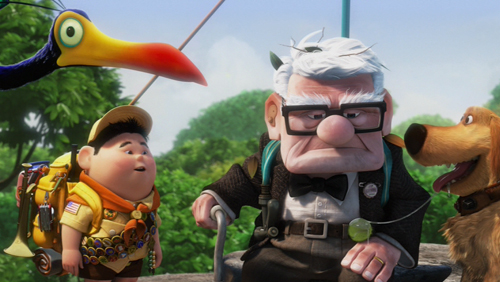
The Annies are no guaranteed predictor of Oscars. Far from it, given the famous, even notorious top award to Kung Fu Panda rather than WALL-E last year. But I’m not trying to predict awards here. I just want to comment on what seems something of a watershed year for animation.
I’ve seen only six of the above films. Some of them haven’t been released yet, and others are being platformed before going wide. The Princess and the Frog is being showcased in only two theaters so far before going wide on December 11. The Secret of Kells, which seems to be the one of the more lauded of the unknown films, won’t open in the U.S. until March 6. Judging from the trailer, it’s made in a simple, somewhat abstract style that recalls the UPA alternative to Disney and Warner animation that appeared in the 1950s. (The Incredibles pays homage to that style.)
Some of these films haven’t played in Madison or, like Astro Boy, came and went quickly. I passed up other the eligible films deliberately. The first Ice Age movie struck me as mildly pleasant but one of those small-kids’ movies with little entertainment aimed at the parents. After Beowulf, I wasn’t about to see A Christmas Carol. The fifth animated item I saw was Monsters vs. Aliens, which was more entertaining than the reviews would suggest, but it’s not Oscar bait.
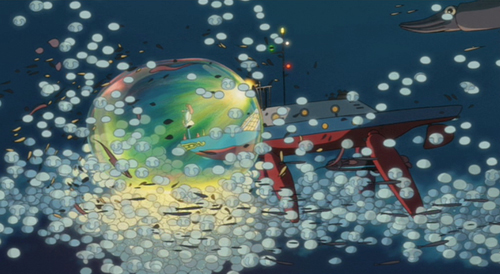
Ponyo on a Cliff by the Sea
In the past, any Pixar film was automatically the obvious choice as best animated feature. I think that Monsters, Inc. was better than Shrek and Cars better than Happy Feet, but perhaps Academy members felt a little guilty not sharing the wealth. It’s lucky that there was no Pixar film in 2002, so that Hayao Miyazaki could get the Oscar for his masterpiece, Spirited Away, and in 2005, when Nick Park could take home his fourth for Wallace & Gromit: The Curse of the Were-Rabbit. (The only Nick Park film that didn’t win an Oscar was the first Wallace and Gromit film, A Grand Day Out, which lost out to . . . Nick Park’s Creature Comforts.)
Now there are more companies producing animated films, not only in the U.S., which once used to dominate this form, but internationally as well. The Secret of Kells, for example, is a French-Belgian-Irish co-production (originally called Brendan and the Secret of Kells). Up to now, foreign animated films have had a better chance in the shorts category, but representation of films from abroad among the features will no doubt increase.
Wonderful though it is, Up is less the obvious choice than previous Pixar films have been. Coraline has earned great respect from critics and industry insiders. Witness its receipt of the largest number of Annie nominations, ten, with Up right behind it at nine. Add in Ponyo (original title, Ponyo on a Cliff by the Sea) and Fantastic Mr. Fox (below), and you have at least four credible contenders for top honors. I suspect Ponyo will be hampered by its English dubbing, including the substitution of another song for the charming final-credits one. Plus Ponyo is aimed at much smaller children than most of Miyazaki’s recent films. It does have the director’s typical focus on the environment, this time humanity’s pollution of the oceans; but it has less of the gravitas that has endeared the filmmaker’s last few films to arthouse audiences.
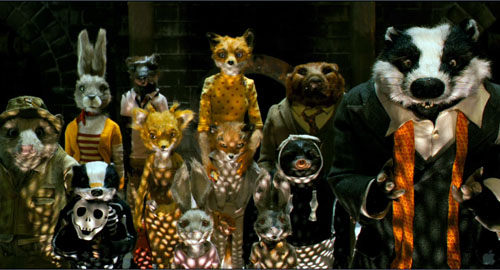
For what it’s worth, Fantastic Mr. Fox has a very rare 100% fresh rating at Rotten Tomatoes among the “Top Critics,” with Up at 95%, Ponyo 91%, The Princess and the Frog at 83%, and Coraline, surprisingly, at a mere 78%. The critics’ opinions don’t correlate with those of Academy voters, so those figures are probably not a good guide when it comes to your office Oscar pool.
I’d like to put in a good word for Cloudy with a Chance of Meatballs. It’s not likely to beat out the four powerhouses mentioned above, but it would be nice to see it nominated. It has a fast-paced, extraordinarily well-constructed script and makes for a thoroughly entertaining 90 minutes. It’s a pleasure to see a whole group of motifs, some in pretty funny but throwaway moments, coming back again and again, and just when you think they’ve been wrung for all they’re worth, they return one last time with a twist. Like Up, Meatballs‘ 3D version has some strong moments without the special effects seeming gratuitous, as when the hero has to slither down a long rope that seems to go on forever into the distance. Cloudy seems currently to be transitioning from first to second run. If you’ve got a cheap-seats theater near you, it’s worth seeing on the big screen, whether in 2D or 3.
Speaking of which, I should point out that Up, Coraline, and Cloudy were all conceived and executed in 3D (as opposed to the early digital features that retooled in-progress films for 3D). So far it’s still easier to make animated 3D films than life-action ones. All three use the technology well, though I’m sure they all look good in 2D.
Ever since the creation of the best-animated feature Oscar category in 2001, there have been complaints that it prevents outstanding animated work from being nominated for the best film of the year. Now people writing about the Oscars are complaining that there aren’t a lot of obvious live-action candidates for best film—in the very year that the Academy has to find ten of them. Maybe this year the best animated features will provide more excitement than the main event. Maybe they will also make it more evident that at this point in the history of mainstream filmmaking, the best animated films are better than any but the very best live-action films. I doubt that the animated-features category will drop back to only three nominees very often in future years.
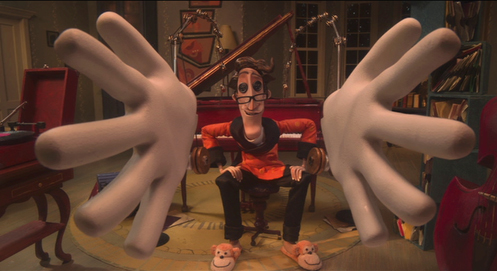
Coraline
Seed-beds of style
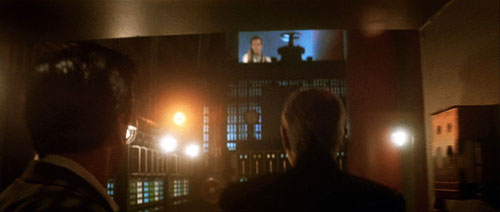
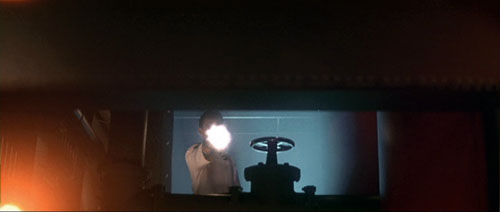
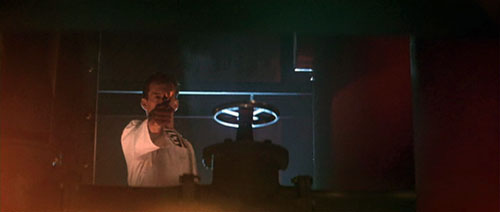
The Hunt for Red October.
DB here:
Seminar, orig. German (1889): A class that meets for systematic study under the direction of a teacher. From Latin seminarium, “seed-plot.”
I retired from full-time teaching in July of 2005. Since then, while writing and traveling (both chronicled on this website), I’ve done occasional lectures. But this fall I tried something else. At the invitation of Lea Jacobs here at Madison, I collaborated with her on a graduate seminar called Film Stylistics.
It was a good opportunity for me. I had a chance to learn from Lea, Ben Brewster, and the students and sitters-in. The class also enabled me to test and revise some ideas I’d already explored, while garnering new ideas and information. I helped plan the sessions and pick the films, but I had no responsibilities about grading. I hope, though, to read the students’ papers at some point after the term is over.
Our goal was to introduce students to studying style historically and conceptually. We focused on group styles rather than “authorial” ones because we wanted to explore particular concepts. How useful is the concept of group norms in understanding broad stylistic trends? Can we explain stylistic change through conceptions of progress toward some norm? Does the model of problem and solution help explain not only a particular innovation but also the group’s acceptance of it? How viable are notions of influence in explaining change? How much power should we assign to individual innovation? Can we think of filmmaking institutions as not only constraining style (through tradition and conformity) but also enabling certain possibilities—nudging filmmakers in certain directions? Does stylistic study favor a comparative method, one that encourages us to range across major and minor films, as well as different countries and periods?
These are pretty abstract questions, so we wanted some particular cases. Lea and I picked three areas of broad stylistic change: the emergence of widescreen cinema in the 1950s, the arrival of sync-sound filming in the late 1920s, and the development of analytical editing or “scene dissection” in the 1910s and 1920s. We tackled these areas in this order, violating chronology because we wanted to move from somewhat hard problems to the hardest of all: Why did filmmakers in the US, and soon in other countries, move toward what has become the lingua franca of film technique, continuity editing?
The results of our research on these matters will emerge over the next few years, I expect. In the short term, during my final lecture Tuesday I went off on what I hope wasn’t too much of a tangent. I got interested in one particular kind of cut, and it led me to see, once more, how different filmmaking traditions can make varying uses of apparently similar techniques.
More cutting remarks
My concern was the axial cut. That’s a cut that shifts the framing straight along the lens axis. Usually, the cut carries us “straight in” from a long shot to a closer view, but it can also cut “straight back” from a detail. What could be simpler? Yet such an almost primitive device harbors intriguing expressive possibilities.
Axial cuts aren’t all that common nowadays, I think. Today’s filmmakers prefer to change the angle when they cut to a closer or more distant setup. But such wasn’t the case in the cinema of the 1910s and 1920s.
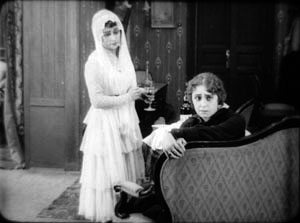
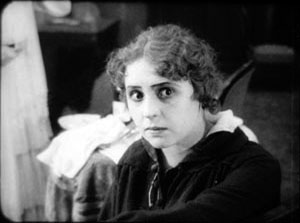
In the heyday of tableau-based staging, 1908-1918 or so, filmmakers seldom cut into the scene at all. European directors especially tended to shape the development of the action by moving actors around the set, shifting them closer to the camera or farther away. The most common cuts were “inserts” of details, mostly printed matter (letters, telegrams) or a photograph. But when tableau scenes did cut into the players, the cuts tended to be axial: the framing moved straight in to enlarge a moment of performance. Here’s an instance from the 1916 Russian film Nelly Raintseva.
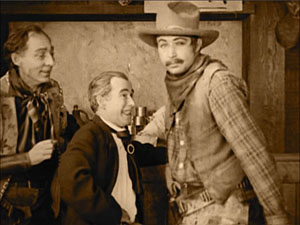
During the mid-1910s, American films moved away from the tableau style toward a more editing-driven technique. This approach often relied on more angled framing and a greater penetration of the playing space, of the kind we’re familiar with today. But axial cuts hung on in American films, even in quickly-cut scenes. Lea pointed out some nice examples in Wild and Woolly (1917), especially those involving movement. In the example below, the first cut carries us backward rather than forward, and the second is a cut-in, but both are along the lens axis.
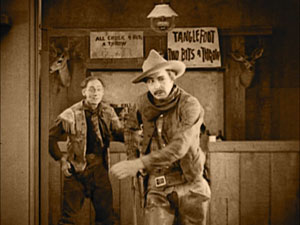
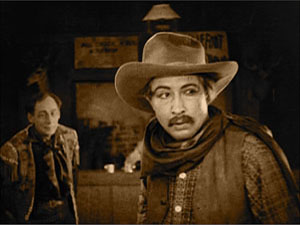
During the 1920s, axial cuts become a secondary tool of the American filmmaker, who now had many other camera setups available. But Soviet filmmakers of the 1920s, who adopted many American techniques in the name of modernizing their cinema, seemed to see fresh possibilities in the axial cut. For instance, in Dovzhenko’s Arsenal (1929), it becomes a percussive accent. The astonishment of a bureaucrat under siege is conveyed by a string of very fast enlargements.
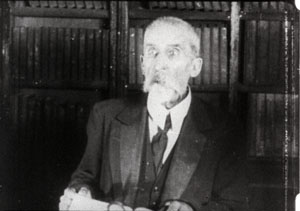
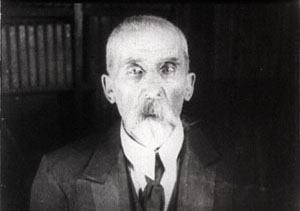
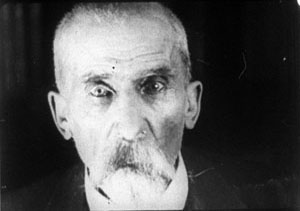
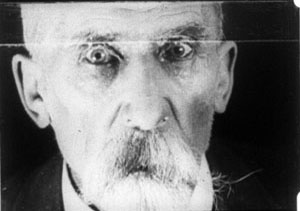
The Soviets called such cuts “concentration cuts,” a good term for the way they make a figure seem to pop out at us. From being a simple enlargement (in tableau cinema) or one among many methods of penetrating the scene’s space (in Hollywood continuity), the axial cut has been given a new force, thanks to adding more shots and making them quite brief.
This aggressive method for seizing our eye—Notice this now!—has appeared in modern filmmaking too, as in this passage from Die Hard (1988).
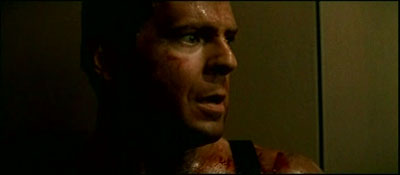
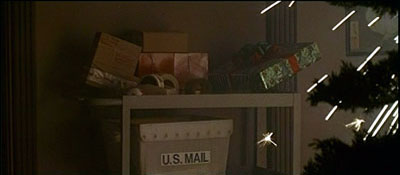
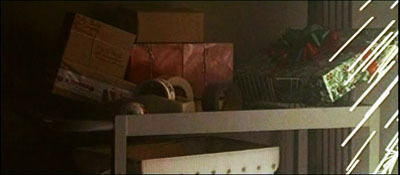
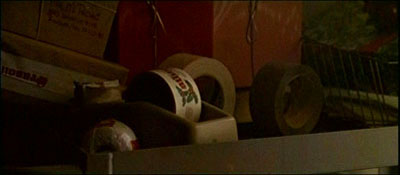
Here the axial cut is clearly subjective, rendering John McClane’s realization that he can use the Christmas wrapping tape in his combat with the thieves. Director John McTiernan employed the device again in The Hunt for Red October (1990). The frames surmounting this entry show the heroes suddenly being fired upon.
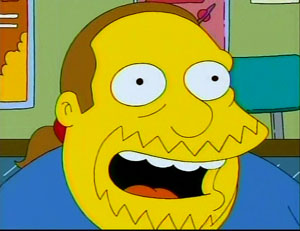
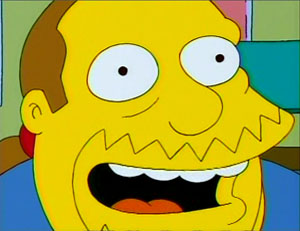
It seems likely that many modern directors became aware of this device from seeing Lydia’s discovery of the pecked-up body of farmer Dan in The Birds (1963). Hitchcock knew Soviet montage techniques, so maybe we have a chain of influence here. In any case, the somewhat overbearing aggressiveness of the concentration cut has often been parodied on The Simpsons. Here’s a recent example.

By the law of the camera axis
Axial cutting can be used more pervasively, as a structuring element for an entire scene. This is what Lev Kuleshov does in a climactic moment of By the Law (1926). Edith and her husband have kept the murderer at rifle point for days, and the strain is starting to show. She becomes hysterical, and Kuleshov uses a ragged rhythm of stasis and movement to convey it. First he cuts straight in from a master shot to a medium shot of her. I reproduce the frames from the film strip, for reasons that will become obvious.
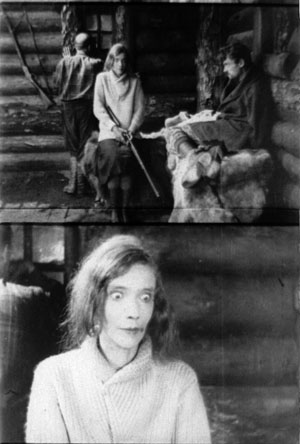
Then Kuleshov cuts straight back to the master setup. Again he cuts in, but to a closer view of Edith as she becomes more frenzied.
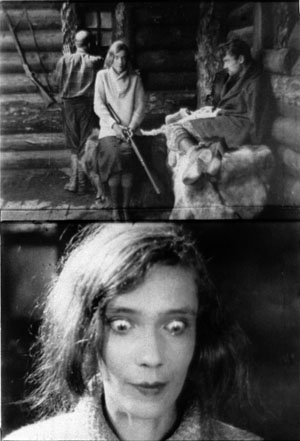
Cut back once more to the long shot, but only for fourteen frames. That shot is interrupted by a shot of Edith already laughing crazily, her head tipped back.
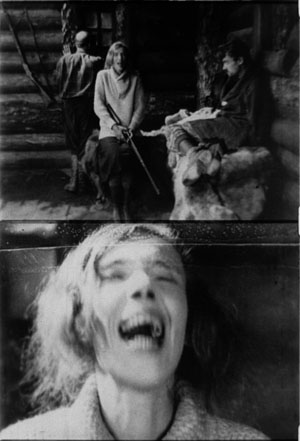
The shot of her laugh lasts only five frames, and this mere glimpse, combined with the blatant mismatch of movement, makes the onset of her spell all the more startling. When we cut back to the long shot her face and position now match.
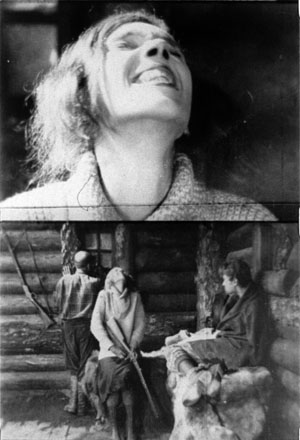
The abrupt quality of her outburst would not have been as striking if Kuleshov had varied his angle. As the earlier examples show, when only shot scale changes and angle remains the same, the cuts can be very harsh, and Kuleshov accentuates this quality with a flagrant mismatch.
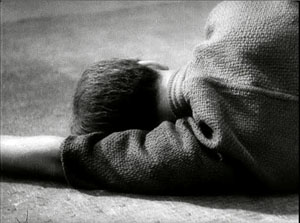
Akira Kurosawa likewise used the concentration cut to provide salient moments throughout his work; it almost became a stylistic fingerprint. At several points in Sugata Sanshiro (1943) he uses the device in the usual popping-forward way. But he varies it during Sanshiro’s combat with old Murai. He reserves dynamic, often elliptical cuts for moments of rapid action, and then he uses axial cuts for moments of stasis or highly repetitive maneuvers. In effect, the moments of peak action happen almost too quickly, while the moments of waiting are emphasized by cut-ins.
So at the start of the match, a series of axial cuts, linked by dissolves, present the fighters in a slow dance. But the ensuing throws are editing briskly. When old Murai is thrown and lies gasping on the mat, axial cuts accentuate his immobility. Kurosawa adds a rhythmic urgency on the soundtrack. After each cut-in, we hear the voice of Murai’s daughter, either offscreen or in his thoughts: “Father will win.” “Father will win.” “Father will surely win.”
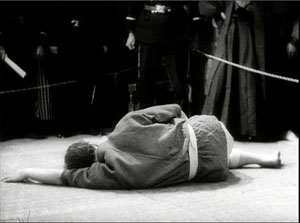
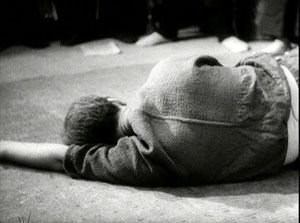
The matching of lines to the editing is at work in the Simpsons parody too, in which the Comic Book Guy’s words are heard in tempo with the concentration cuts. “You. Are. Acceptable.”
Montage and the axial cut
By now it’s easy for us to see that one scene from Alexander Nevsky (1938) opens with a series of axial cuts, out and in.
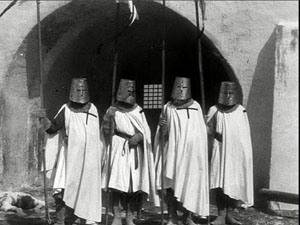
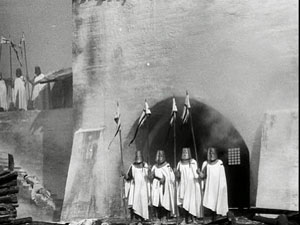
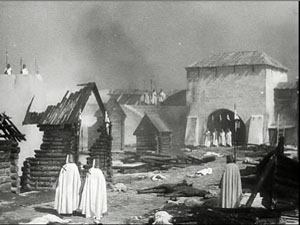
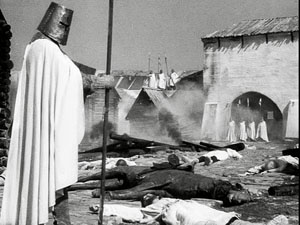
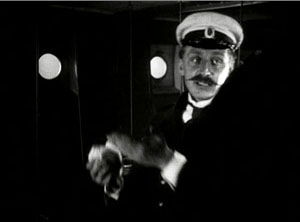
But why would Eisenstein, master of montage, regress to such a primitive device? He had occasionally used axial cuts in his silent films, as when we see Kerensky brooding in the Winter Palace in October (1928).
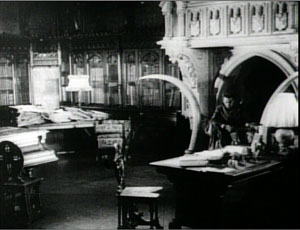
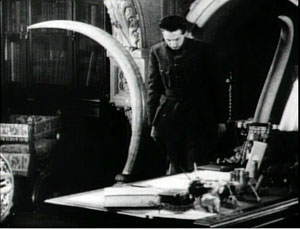
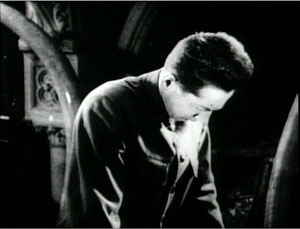
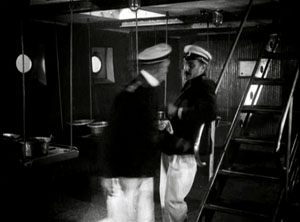
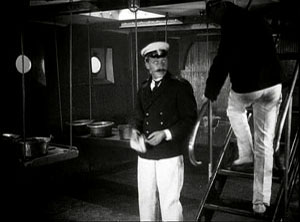
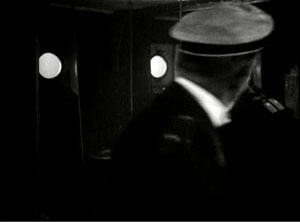
And Potemkin‘s famous cuts in to the Cossack slashing at the camera (that is, the baby, the old lady) are axial. (These cuts are pastiched by Eli Roth and Tarantino in Inglourious Basterds.) At the limit, Eisenstein toyed with the axial cut by moving the figures around during the shot change. In Potemkin, the ship’s officer reports to the captain that the crew has refused to eat. The captain leaves one shot and climbs the stair before Eisenstein cuts in to show him leaving again. The repetition would not be so perceptible if Eisenstein had varied the angle.
In the 1930s, Eisenstein began thinking about the axial cut as a basic structural element of a scene. In both his theory and practice, he promoted the axial cut to a level of prominence it hadn’t seen since the days of the tableau. Usually the cuts involve static subjects, like most of Kurosawa’s, but he still exploits the cut-ins to create vivid, if spatially impossible effects. At one point our popping in closer to Ivan the Terrible is doubled by him majestically and magically popping out of his tent to meet us, like a thrusting chess piece.
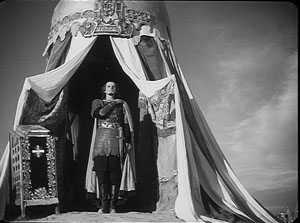
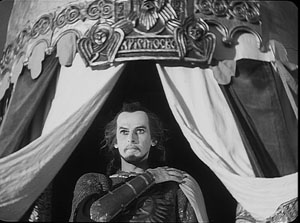
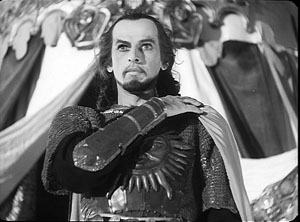
The new primacy of axial cutting comes from Eisenstein’s idea that “montage units” could powerfully organize the space of a scene. He thought that you could imagine filming a scene from only a few general positions, but then varying camera setups within each of these orientations. The montage unit was a cluster of framings taken from roughly the same orientation, as in the Pskov and Ivan scenes.
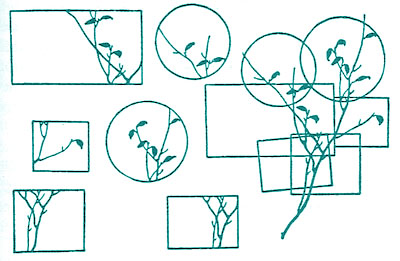
The idea may derive from his study of Japanese art, shown further above, in which he explored how a single image of a cherry branch could be chopped up into a great variety of compositions. In his course at the Soviet film school, he illustrated with a hypothetical scene of the Haitian revolutionary Dessalines holding his enemies at bay at a banquet. After imagining a master shot from the farthest-back position in the montage unit, Eisenstein proposes a series of dynamic closer views.
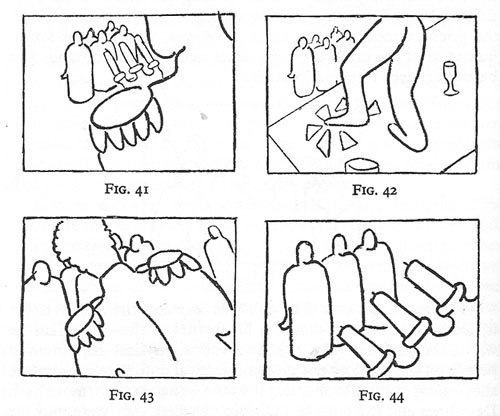
Eisenstein didn’t think that each scene had to be handled in a single montage unit. You could create two or three predominant orientations, with shots from each woven together. Or you could gain a sudden accent when a stream of setups from the same unit was interrupted by one from a very different angle. These ideas he put into practice throughout Nevsky and Ivan the Terrible.
Why? Eisenstein thought that combining shots taken from roughly the same orientation yielded a musical play between constant elements and variation. Each shot shows us something we’ve seen before but also something new, the way a bass line or sustained chords can continue underneath a changing melody. Eisenstein was convinced that this flowing weave of visual elements gave the spectator a deeper involvement in the film as it unfolded—an involvement akin to that found in Wagnerian opera.
The axial cut is a good example of how even a simple stylistic choice harbors rich creative possibilities. It also shows how a technique can change its impact in different filmmaking traditions. In the tableau tradition the axial cut was for the most part an abrupt enlargement heightening a moment of strong acting. In the early days of Hollywood continuity it became one editing option among many, and its power was somewhat muted. For the Soviets, concentration cuts could be multiplied and joined with fast cutting and big close-ups. The result could jolt the viewer by italicizing a face or an object–a purpose that has been taken up by contemporary Hollywood. For Kurosawa, the technique offered a way to contrast extreme movement and extreme stillness. And for Eisenstein, it suggested a global strategy for weaving visual elements into an immersive whole.
The protean functions assumed by this simple device remind us of how much there is yet to discover about film style. Despite all our discoveries over the last three decades, we have only begun. The name is apt: A seminar is where things start.
For more on the staging strategies of the tableau style, see On the History of Film Style and Figures Traced in Light: On Cinematic Staging, as well as blog entries here and here and here and here. You can find examples of emerging Hollywood continuity techniques in this entry on 1917 and this one on William S. Hart and this one on Doug Fairbanks. Sugata Sanshiro is at last available in a good DVD version from Criterion as part of its big Kurosawa box. Eisenstein’s ideas about the axial cut are explained in Vladimir Nizhny, Lessons with Eisenstein, trans. and ed. Ivor Montagu and Jay Leyda (New York: Hill and Wang, 1962), Chapters II and III. In The Cinema of Eisenstein I try to show how these ideas are employed in the Old Man’s late films.
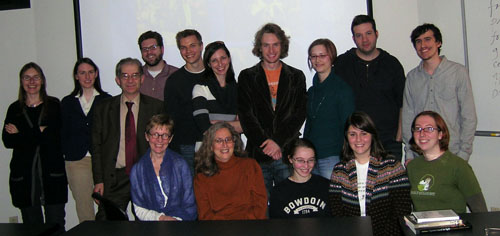
Seated: Leslie Debauche, Lea Jacobs, Rebecca Genauer, Pam Reisel, Amanda McQueen. Standing: Karin Kolb, Andrea Comiskey, Ben Brewster, John Powers, Tristan Mentz, Heather Heckman, Aaron Granat, Jenny Oyallon-Koloski, Jonah Horwitz, and Booth Wilson. Evan Davis had to leave early.
“I am not Carl Dreyer, and I should shut up”
Kristin here:
So says director Guillermo del Toro in his self-deprecating lead-in to his audio commentary on the great Danish filmmaker’s 1932 classic, Vampyr. Fortunately he did not act on his words but goes on to give an erudite, often personal series of insights into the film.
Owners of the Criterion boxed-set edition of Vampyr (2008) may be wondering if their memories are playing them tricks, since its audio commentary was done by our good friend Tony Rayns. Tony’s comments are on the Eureka! edition of the film (also 2008), too, but the British label got del Toro to sit down and record an exclusive second commentary. British websites reviewed the disc, but I suspect that many film fans in other countries are not aware of the existence of del Toro’s commentary.
Early in that commentary, the modest, humorous tone continues, as del Toro says his remarks are “The equivalent of inviting a fat Mexican to your house and feeding him, and then you have to listen, for mercifully a short time, and then disagree, agree, insult, or share any of my opinions.”
From that point on, though, del Toro gets serious. He has worked in the vampire genre himself. His first feature, Cronos, is a vampire tale of sorts, and in June he and co-author Chuck Hogan released The Strain, the first novel of a trilogy that treats vampirism as a fast-spreading virus. Beyond these works, however, del Toro knows an enormous amount about the history of the vampire genre.
For the most part, his comments don’t follow the action on the screen. He begins with a lengthy disquisition on the skull imagery and its creation of a memento mori motif. At times the subject under discussion syncs up briefly with the unfolding narrative. As the protagonist, Allan Gray, watches reflections in a pond that have no visible cause, del Toro discusses the nature of Dreyer’s take on the genre:
In strict terms, it is perhaps one of the few vampire films that have actually gone to the root of the mythos and made the vampire a spirit, not a physical creature. Most of the time you get a living corpse . . . And in the oldest European tradition, in the most antique manuscripts in Eastern Europe and Greek manuscripts about vampirism and so forth, in reality it is a spiritual infection. The vampire is a hungry spirit that will drain the living and will of choice materialize partially and selectively if it needs it, if it serves him so. But essentially a vampire is a shadow and the father or the mother of shadows. It is this hungry shadow that haunts the living and drains them.
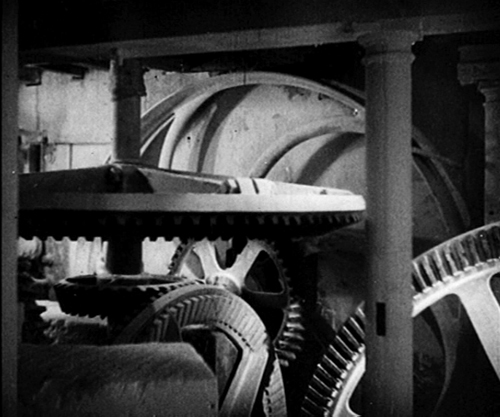
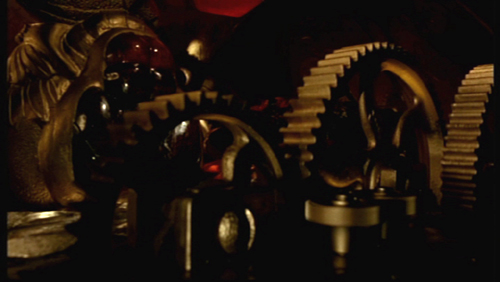
Del Toro clearly loves Vampyr and stresses its influence on him. Seeing Gray as a Christ figure, he named the protagonist of Cronos Jesus Gris (Spanish for “gray”) as an homage. He copied the cracked gravestone of the vampire in Hellboy. In discussing the shots of the gears of the milling machine that kills the villainous doctor at the end of Vampyr (above), he remarks, “I have myself tried to reproduce the beauty of those gears, incessantly and not very fruitfully I may add, but I try for sure.” (See below.)
Del Toro also remarks that there is no reason that characters in vampire stories—or other kinds of stories—must be nuanced. The Academy of Motion Picture Arts and Sciences may prefer to reward actors who play complex characters. Still, he sees no reason why in Vampyr the doctor needs to be anything other than evil, the hero anything other than spiritually pure.
Del Toro refuses to try and interpret the film’s symbolism, saying that decoded symbols become “ciphers.” He continues:
It is foolish to try to decode the symbols in Vampyr. It is important to understand the rhythm and the repetition of them. And it is important to try and talk about them in the most general sense, but one should not foolishly try to assign specific value to them, because in doing that you would asphyxiate the poem, you would asphyxiate the film.
There is relatively little discussion of film style, but at about 49 minutes in del Toro talks about camera movement and how it creates mood rather than strictly serving the narrative. He challenges his auditors to examine films shot at the same time (in 1931-32) and find three or four other films that were experimenting with camerawork in this way. He even gives one of his email addresses so people can write and give him lists of titles that might contradict him. (With The Hobbit script in progress and pre-production already begun, I suspect that del Toro is not checking that particular address—which he reserves for fans—as often as he used to.)
There are other interesting points, as when del Toro suggests that Dreyer was influenced by Un chien andalou. Not that he created a surrealist vampire film but that he felt freed from the necessity to follow a narrative closely. To del Toro, the underlying plot of the film is simple and easily comprehensible, leaving Dreyer free to devote much of his film to a more poetic, evocative style.
The Criterion and Eureka! versions share several of the same supplements, including a 1966 documentary on Dreyer’s career, a “visual essay” by Casper Tybjerg on Vampyr, as well as the original Sheridan Le Fanu story on which the film was loosely based (in pdf form on the disc in the Eureka! version and in a booklet also containing the original screenplay in the Criterion one), and improved English translations. Criterion has included a 1958 radio broadcast of Dreyer reading an essay on filmmaking, while Eureka! provides two deleted scenes that were removed by the German censor before the film’s premiere. These scenes are not entirely unfamiliar, since they remained in the French version. The Criterion rendering of the film seems to have boosted the contrast, perhaps too much. The Eureka! version’s gray, misty visuals look more like those that I’m familiar with from reasonably good 35mm copies.
For a detailed comparison of these two releases and the older Image edition (1998), see DVD Beaver. For a review of the Eureka! disc, supplement by supplement, see DVD Outsider.
As with other Eureka! DVDs, this one is region 2 coded.
Cronos



