Archive for the 'People we like' Category
Errol Morris, boy detective
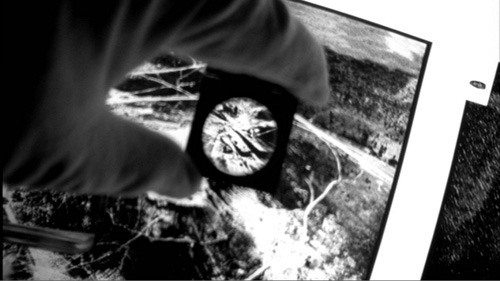
The Fog of War: Eleven Lessons from the Life of Robert S. McNamara.
DB here:
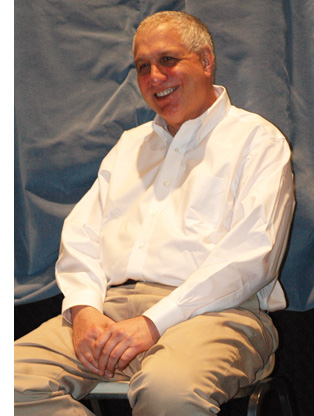
Over a couple of sunny days in late October Errol Morris visited the University of Wisconsin—Madison. It was something of a homecoming. Morris took his BA in history here, and was inspired by two legendary teachers, Harvey Goldberg and George L. Mosse. (“The UW saved my life.”) After a few years in graduate schools (Princeton, Berkeley), he went into filmmaking, working with Werner Herzog on Stroszek while it was shooting in Wisconsin.
 Morris’s first film, Gates of Heaven (1978), examined pets, their owners, and the cemeteries that cater to both. Vernon, Florida (1981) reinforced Morris’s reputation as an aficionado of the backwoods bizarre. His reputation widened with The Thin Blue Line (1988), a true-crime story that cast doubt on whether an innocent man had been imprisoned for a murder. I’d argue that this film, along with Roger and Me, played a crucial role in opening theatrical markets to documentary film. From then on, Morris has been acclaimed as one of our finest filmmakers, finally receiving an Academy Award for The Fog of War (2003), a study of Robert McNamara’s prosecution of the war in Vietnam.
Morris’ visit was the culmination of months of screenings in several Madison venues. The big weekend was ushered in by a lecture by Carl Plantinga, one of our most distinguished scholars of documentary film. He’s a professor at Calvin College, and like Morris, he’s a Wisconsin graduate (my Ph. D. student, ahem). Dave Resha, who wrote a dissertation on Morris, and Bill Brown, our accomplished documentarist, were on hand to join our guest on a panel. Perky and boyish, Morris offered a public lecture at the Student Union. Next day, the Madison Museum of Contemporary Art hosted a screening of his new movie Tabloid and a Q & A.
Morris is an exuberant presence, onstage and off. I could fill this entry with one-liners and anecdotes.
My high-school guidance counselor told me, “You should go to Wisconsin. They take anybody.”
I sometimes think of myself as someone who should be beaten up a lot.
Just because he’s a victim doesn’t mean he isn’t an asshole.
The electric chair is a very scary thing.
My wife says I should give up Twitter and start writing for fortune cookies.
Fred Leuchter, electric-chair repairman and Holocaust denier, smokes constantly but won’t be filmed with a cigarette. He explains, “You have to understand, Errol. I’m a role model for children.”
I don’t think anybody knows how crazy they are. I include myself and the persons in this room.
Morris’s visit was so stimulating that it got me thinking afresh about his career. While many documentaries engage in fact-finding, Morris’s films recall for me the figure of the classic detective, the nosy fellow drawn to secrets high and low. Morris is a fan of film noir (he thinks that Detour is at least as good as Citizen Kane) and he worked for a time as an investigator. His only fictional film, The Dark Wind (1991), is adapted from a Tony Hillerman mystery. It’s useful to think of Morris’s documentaries as private investigations—not illustrating an argument but exploring the mysteries around a situation or a personality. Like any investigation, his may lead nowhere or create more puzzles than it solves. Morris shines his penlight in some dark places, finding not only clues but some embarrassing items in the drawer or the back of the closet. The truth often has a sordid side, but that can harbor its own pleasures.
The filmmaker and the murderer
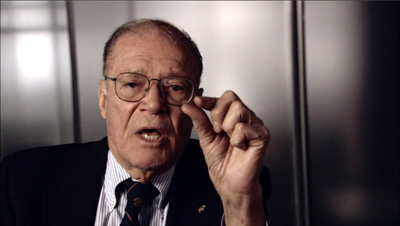
The Fog of War: “Rational individuals came that close to total destruction of their societies.”
History is a crime scene, and you’re the detective. Film can be a tool to solve the mystery.
Errol Morris
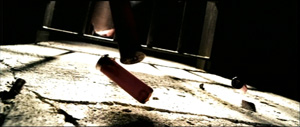
Morris’s recent films on the Vietnam War and on the abuses at Abu Ghraib prison (S. O. P.: Standard Operating Procedure, 2008) are somber inquiries into the mechanics of power and bureaucracy. Balzac said that behind every great fortune lies a great crime; for Morris behind every war lies many such crimes. Early on McNamara admits that his misjudgments cost thousands of lives. Morris’s reconstructions of prisoner treatment at Abu Ghraib are chilling neo-noir, filmed in chiaroscuro and featuring agonizing slowed-down imagery, as when a shotgun is fired into a cell and shells tumble out of the chamber.
He’s particularly interested in the photos snapped by the Abu Ghraib guards, and they provoked him to his lengthy New York Times blog essays on the philosophy of photography. S.O.P. and his writings ask how reliable a photograph is, how we can so easily miss what’s before us, and how what’s really happening–the chain of command, the war crimes that aren’t photographed, even another witness–can be hidden by the images we make. He often invokes a soldier’s remark about the Abu Ghraib pictures: “When you see a picture, you never see what’s outside the frame.”
The philosophical quests in Morris’s work lay at the center of Carl Plantinga’s presentation, “Errol Morris and the Anosognosic’s Guide to Documentary Film.” Carl trained as a philosopher, and his lecture teased out many concerns that weave through Morris’s work. On his website, Morris has written about anosognosia, the condition of not knowing that you don’t know something. It’s the realm of Donald Rumsfeld’s “unknown unknowns.” Anosognosia, Morris claims, is “a universal condition of the human race.”
Carl’s talk developed this idea along several lines. Morris, he suggested, is a critical realist who believes that reliable knowledge is in principle attainable, even though we seldom attain it. Accordingly, Carl suggested, the films expose the mistaken beliefs of his subjects, their “epistemic distortions” revealed in behavior and, especially, language.
But the pathway to truth can’t be the cinéma-vérité methods of straightforward recording, if only because simply turning on the camera won’t give us access to the “mental landscapes” his speakers inhabit. For Carl, Morris deals in tragicomedy—sometimes bleak, sometimes absurdist, sometimes tinged with “fellow feeling.” His films can seem denunciatory, but they pause for moments of sympathy: a trial lawyer quits practice when justice is outrageously miscarried, the grunts at Abu Ghraib are scapegoated.
Carl invoked a controversy that has played out in academic circles but that Morris obviously feels passionate about. It centers on The Thin Blue Line. That film, some scholars argued, was a “postmodern” documentary. The conflicting testimony, rambling digressions, and incompatible replays seemed to display a corrosive skepticism about what really happened on the night that Officer Robert Wood was shot on a lonely Texas highway. Morris had apparently made a film about the impossibility of finding truth. Perhaps Morris encouraged that interpretation by remarks like this:
I like the irrelevant, the tangential, the sidebar excursion to nowhere that suddenly becomes revelatory. That’s what all my movies are about. That and the idea that we’re in a position of certainty, truth, infallible knowledge, when actually we’re just a bunch of apes running around.
Since then, though, Morris has been at pains to insist that The Thin Blue Line doesn’t say that arriving at a truth is impossible, only that it’s damnably difficult. Unlike the preformatted rhetorical documentary, a Morris film starts out from an uncertain place and moves into unknown territory. We may not arrive at certain truth or infallible knowledge, but that doesn’t mean that we’re forever floating in a realm in which belief in ghosts is as valid as belief in atoms. Randall Adams did not shoot Officer Wood, and David Harris probably did. Approximate but reliable truths are likely as close as we’ll get, and even those are very hard won. This is one reason Carl calls Morris a “critical realist”: There is a real world and there are true things to be said about it, but there are never any guarantees that we’ll find them.
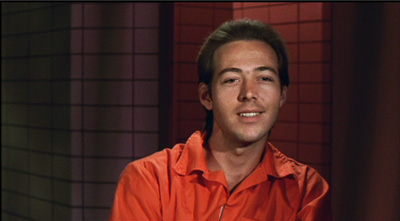
Hence, again, the figure of the detective. The P. I. searches for the truth. The result may be partial, or vague, or so thickly wrapped in falsehood that it seems a pitiful thing. The trail is cluttered with distractions. With The Thin Blue Line, Morris developed a story line, starting with Randall Adams’ arrival in Dallas and ending with David Harris’s chillingly casual suggestion, captured on tape, that he was the guilty party.
The interviews provided the spine of Morris’s tale. But he embellished the interviews with inserts of documents (newspapers, police records), reenactments, and other images, some of them apparently irrelevant to the case: road maps, a drive-in’s popcorn machine, clips from Boston Blackie movies. In the terms we propose in Film Art, he gave his narrative form doses of associational form.
One function of this vagrant material is to remind us what any private dick knows: You have to sift through a lot of detritus to get to the important facts. (This idea seems literalized in the floating feathers and clumps of dust that irradiate the cell block in S. O. P.) Sometimes the detritus buries the facts, and you miss out. But some inquiries make progress. “It’s not just about constructing stories,” Morris says, “but finding things out.”
Morris’s films aren’t necessarily full records of an investigation but rather soundings and probes. The movies assemble, in provocative form, promising leads, false trails, and clues that are striking but still inscrutable. Sometimes what’s out of the frame is crucial. The viewer of The Thin Blue Line is likely to think that Harris’s climactic half-confession is what won Adams’ reprieve. In fact the decisive material was footage not in the final movie, drawn from interviews with Emily Miller and Michael Randell, along with proof that evidence was suppressed at Adams’ trial. As Morris is fond of saying, “What freed him was not the movie but the investigation.”
The lure of the lurid
Fast, Cheap, and Out of Control.
What amazed me was the number of murderers who’d come from Plainfield and the surrounding areas, so I started interviewing them, too . . . . At the time I remember my mother asking me why I didn’t spend time with people my own age. I said, “But mom, the murderers are my own age.”
Errol Morris
Emphasizing Morris’s search for truths may make him seem a more genteel filmmaker than he actually is. Another side of his work is an unabashed sensationalism. When I said to him, “You’re preoccupied with the weirdness of things,” he corrected me: “No, the profound weirdness of things.” The world is just plain strange (that’s part of what makes truth hard to get to) and it’s strange all the way down.
Morris has an appetite for free-range surrealism. Vernon, Florida began as an inquiry into a town whose citizens displayed a penchant for hacking off their arms and legs. (Pitching a fictional version, Morris proposed the one-sheet tagline: “If they would do this to themselves, think of what they would do to you.”) He has been intrigued by spontaneous human combustion, people struck by lightning, the search for Einstein’s brain, the breeding of giant chickens, and the efforts of a Minnesota man to build his own interstate highway.
At the limit stand figures preoccupied with end-of-life concerns—that is, the ending of other people’s lives. Morris’s time in Wisconsin with Herzog led him to Ed Gein, our state’s most famous grave-robber and the prototype for Norman Bates. Pretending to be psychiatrists, Morris and Herzog interviewed a serial murderer in California. Later, after working as a P. I., Morris heard of “Dr. Death,” a psychiatrist who specialized in testifying to the sanity of convicts on Death Row. A perfect subject for a movie, Morris thought, and checking into Dr. Death’s record he found Randall Adams’ case.
Morris’s cheerfully morbid curiosity, which puts him in the company of Dr. Hunter S. Thompson, Ed Regis, and, of course, Herzog, is channeled into subjects that a high schooler might choose for a book report. Baby-boomer men, brought up on the Hardy Boys and Popular Science, are perpetual kids. Anything to do with magic, mystery, snooping, and weird science holds us fascinated. I’d bet that Morris has a set of William Poundstone’s wondrous Big Secrets books. How did he miss tackling UFOs?
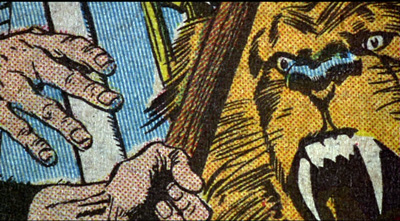
So Morris is a connoisseur of weird science and lethal battiness. But it’s all in a day’s work for a P. I. The detective is inevitably drawn to seaminess, curiosities, and compulsions. Things that shock or disgust or baffle us can be clues to something we’d rather not face. In Morris’s hands, material that would shriek at us from supermarket racks can turn grotesquely comic (the early films), ominous (Thin Blue Line, Mr. Death), or strangely poetic (A Brief History of Time; Fast, Cheap, and Out of Control).
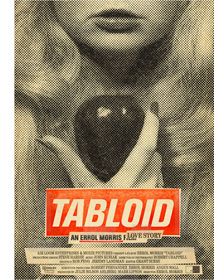 Come to think of it, Fast, Cheap, and Out of Control would also be a good title for Tabloid. Joyce McKinney’s saga has enough spice for a full issue of Weekly World News: beauty contests, religious mania, kidnapping, bondage, flight from the law, cloned puppies, and Joan Collins. There are moments that demand blunderbuss typeface. I still want my Mormon! He was a doo-doo dipper! Booger gave me five black jellyrolls! And no reenactments now, just interviews enhanced by found footage, snapshots and headlines hurled into the frame. Once we’re dizzied from the bombardment of alluring phrases (Manacled Mormon Sex Slave!), we’re yanked into a circulation battle. The Mirror and the Express are deploying operatives to buy stories that will undercut each other.
At some point we’re engulfed, and the tabloids become an alternative reality of magical transformations. An innocent girl, radiant in her own home movie, becomes a felon, and then her real transgressions come to light. The tabs’ endless escalation of sordidness, with each week’s scandal trumped by the next, gives the movie its pounding rhythm, the tempo of the rotary presses pumping out—what else?—stories that bury truth under trivia.
Except that this time around, the trivia are all we have, and the obsessiveness of the young McKinney is matched by that of the reporters pursuing her. Captured in pitiless high-definition, the men’s seamed faces glow with self-satisfaction and the thrill of the hunt. True, they’re investigators like Morris, and one journalist elicits some actual conversation with our offscreen filmmaker. (They discuss the phrase “barking mad,” which Morris wishes Americans used more often.) After a while, though, we can add these Grub Streeters to Morris’s gallery of people who talk and talk without any sense of what they’re giving away.
The great mystery
The Thin Blue Line.
Even as [the writer] is worriedly striving to keep the subject talking, the subject is worriedly striving to keep the writer listening. The subject is Scheherazade. He lives in fear of being found uninteresting, and many of the strange things that subjects say to writers—things of almost suicidal rashness—they say out of their desperate need to keep the writer’s attention riveted.
Janet Malcolm
The detective, by vocation, asks questions. A detective-story plot consists largely of following the investigator pounding the path, interrogating witnesses, suspects, and experts. (With time out for occasional pistol ambushes, seductions, and whacks on the back of the head.) What people say and how they say it can lead you to truth, or to the profound weirdness that informs the human condition, or both.
Hence the very special conditions for a Morris interview. Complex lighting, and in the later films artificial backdrops, create the aura of a special occasion. Hair and make-up are attended to. Up to twenty crew members are at work. Looming in front is the Interrotron, that mad-scientist rig of mirrors that lets the interviewee look at Morris while also looking into the camera. In a later development, several cameras are trained on the speaker. In all, it’s not quite like being dragged to sit in the hot seat at Headquarters, but there is an almost ceremonial surrender of autonomy. All the subject can do is talk, and aim it directly at us.
Morris does not provide questions in advance. He starts by saying, “I don’t know where to start.” He doesn’t pounce on his subjects (he calls them his “characters”). He speaks as little as possible, regarding it as best to let the people gabble on. Thanks to videotape, they can talk uninterrupted for hours. We seldom hear his questions. He never comes on camera to make himself the protagonist or star (à la Moore), nor does he provide a stream of voice-over narration (à la Curtis). We have simply to look at these people and listen to what they say.
During his stay in Madison, Morris referred often to the case of Scott MacDonald, the convicted murderer whose case journalist Joe McGinnis turned into a bestseller. Of particular interest to Morris was Janet Malcolm’s book about the case, The Journalist and the Murderer. MacDonald sued McGinnis for seeming to support his case during the trial, then publishing a damning account declaring MacDonald guilty as charged. Analyzing MacDonald’s litigation, Malcolm reflects on the betrayal at the heart of journalistic inquiry. The subject interviewed wants the story told his or her way; the writer, at least the writer of conscience, can never fulfill that pledge. The naivete of the subject is always shattered when the story is published, for the writer had another agenda.
Malcolm’s book intersects Morris’s concerns at several points: a tabloid murder, a man perhaps wrongly convicted, a subject sueing the writer (as Randall Adams eventually sued Morris). In particular, I think that Morris is taken with the idea that interviewees have a kind of compulsion to keep talking. They want to explain themselves fully, of course, and to justify what they’ve done. But they also want to prove themselves worthy of someone else’s interest. Compulsive confessors, they want to be caught and are always startled when they are.
Morris’s ultimate interest, Carl Plantinga noted, lies in people’s “mindscapes,” their private construals of reality. Morris seemed to agree. The great mystery, he said, is “human personality, who we are.” That includes all the madness and dirt. The surprises that pop out, Interrotron or no Interrotron, remind us that we’ll never completely crack the case.
For much more on Morris, visit his website. He tweets here. His New York Times essays on photography are now evidently behind a paywall, but an all-out search will reveal some of them. Here is a pdf of what I think is the first one. A more recent cycle starts here. A book of Morris essays is planned for publication.
The best compendium of Morris’s evolving ideas is Livia Bloom’s collection Errol Morris Interviews (University of Mississippi Press, 2010). From this book, I’ve quoted Morris’s remarks in Chris Chang’s 1997 Film Comment article “Planet of the Apes,” p. 56, and in Paul Cronin’s wide-ranging “It Could All Be Wrong: An Unfinished Interview with Errol Morris,” p. 165. My quotation from Janet Malcolm’s The Journalist and the Murderer is from pp. 19-20.
Carl Plantinga’s Rhetoric and Representation in Nonfiction Film has recently come back into print, and I discuss it briefly in a recent entry.
I wrote an analysis of The Thin Blue Line in Film Art, ninth edition, pp. 425-431. We contrast Morris with Michael Moore and other documentarists in Film History: An Introduction, third edition, pp. 544-548.
The Wisconsin symposium, Elusive Truths: The Cinema of Errol Morris, was a model of campus cooperation. Thanks to the Wisconsin Union, and especially the dedicated students of the WUD Distinguished Lecture Series, the Madison Museum of Contemporary Art, our Cinematheque, the University of Wisconsin Foundation, the UW Arts Institute, and other agencies, not least my home Department of Communication Arts. We owe a special debt to Professor Vance Kepley who orchestrated the event with aplomb. A full record of events, sponsoring bodies, and people to be grateful to can be found here.

Vance Kepley and Errol Morris discuss the once-top-secret Norden bombsight.
Vancouver: Final freeze-frames
DB here:
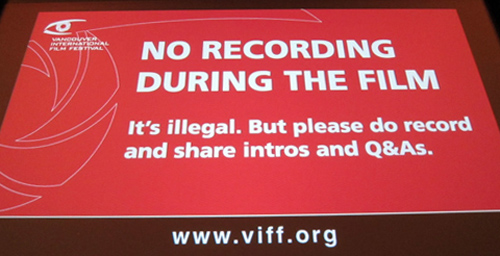
This slide, which appeared briefly before every screening at the Vancouver International Film Festival, epitomizes one of the event’s virtues: quiet sanity. Of course we must discourage people from recording the movie. But just as surely, we want people to photograph the filmmakers and record their comments and get the word out. Spreading the news benefits everybody, particularly the filmmakers.
Indeed, the whole VIFF clambake is run as efficiently as anyone can imagine. Want to get into a film? Very likely you will. A movie is getting buzz? Likely as not, extra screenings will be mounted. Annoyed by mobile devices in the throngs around you? House managers firmly ask people to shut them off. Now. Yet there’s nothing aggressive here. This is a city in which the buses preface the flashing notice “Out of Service” with an apologetic “Sorry.” A Manhattan bus would say, “You’re outta luck, pal.”
Now that Kristin and I are back, we know whom to thank: the organizers, the programmers, the office staff, and the inexhaustibly cheerful volunteers (700 strong). Below are Alan Franey, Festival Director, and PoChu AuYeung, Program Manager and Senior Programmer.
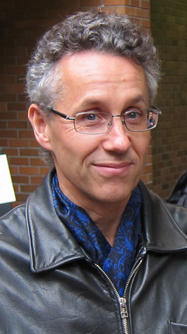

Come down for breakfast and you’re likely to run into Foreign Guest Coordinator Theresa Ho and Hospitality Suite Manager Eunhee Cha Brown. Dreyfus is usually not far away.

Then there’s the multi-talented Lillooet Fox, Food and Beverage Coordinator, waffle wrangler, and music supervisor for Amazon Falls, playing in the festival.

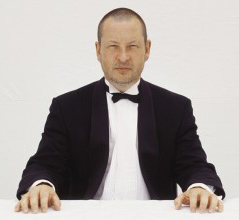
Ever notice how film people are always “on,” always subtly copping stances and looks from movies? Shelly Kraicer, Dragons & Tigers programmer, does his dressed-down version of Lars von Trier.
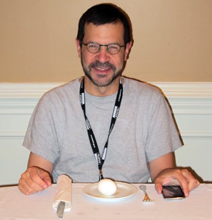
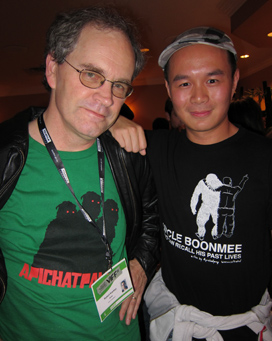
Speaking of T-shirts, nothing beats telling a story with your thorax. Consider Sean Axmaker (Parallax View) and Robert Koehler (Anaheim International Film Festival) and Raymond Phathanavirangoon (Hong Kong International Film Festival).
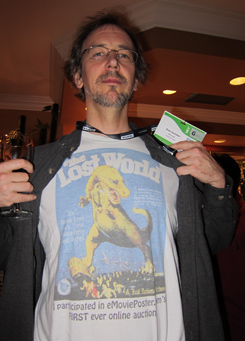
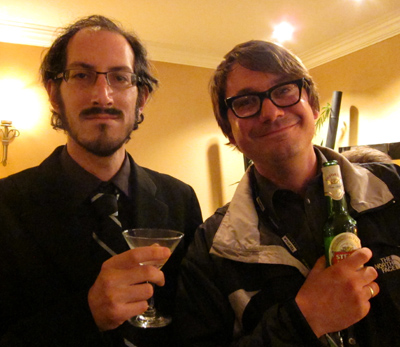
At happy hour, the waffles vanish and adult beverages come into their own. VIFF programmer and editor of Cinema Scope Mark Peranson hoists one with Variety critic (and University of Wisconsin alum) Rob Nelson.
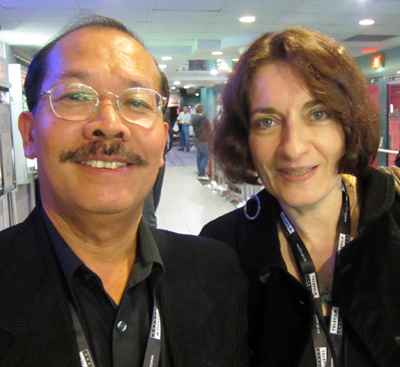
Of course everyone mingles with filmmakers. Freddie Wong, director of The Drunkard, is reunited with Bérénice Reynaud, Cal Arts professor and author of a book on City of Sadness.
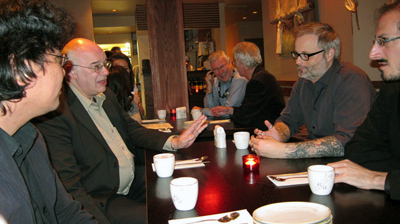
Tony Rayns, veteran Dragons and Tigers programmer, is flanked by Bong Joon-ho on the left, Denis Côté (Curling) across the table, and Mark Peranson on the right. Geoff Gardner and Jack Vermee are in the distance. Again, the cinephiles pay homage to a shot, in this case from Hong Sangsoo’s Oki’s Movie.
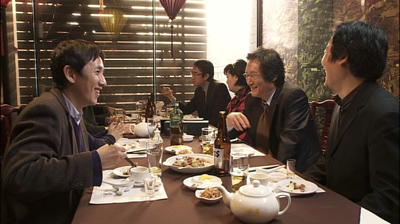
Jim Udden, another Badger and Professor at Gettysburg College (and author of a book on Hou Hsiao-hsien), talks Taiwanese film with director David Verbeek (R U There?).
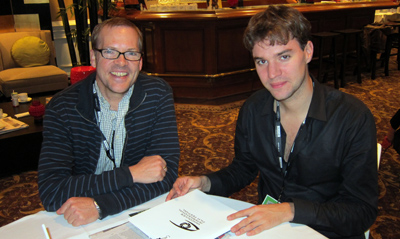
Trustworthy translator Alex Fu and director Zhu Wen (Thomas Mao).
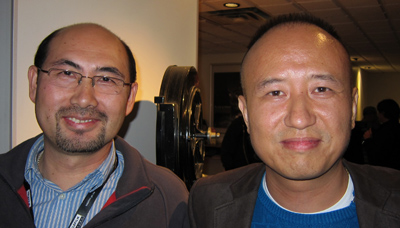
Takahashi Nazuki and Abe Saori celebrate after their screening of Icarus Under the Sun.

Meanwhile, Geoff Gardner (watch for his VIFF coverage in Urban Cinefile) finds that a rival venue has conjured up a star from another era.

And although we left Vancouver all too soon, we’ll always have Japadog. Not everything in Vancouver is quiet sanity, but even the nuttiness is quite easygoing.

I recommend no. 4, Spicy Cheese Terimayo.
The buddy system
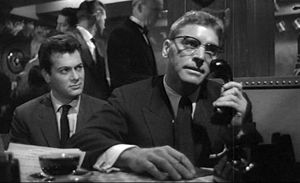
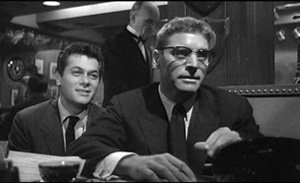
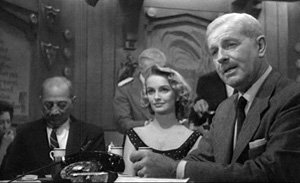
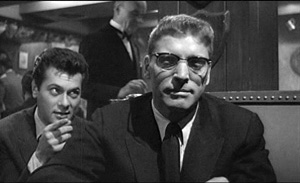
Sweet Smell of Success.
DB here:
Many of our friends write books, and what are friends for if not occasionally to promote each other’s books? Here’s an armload of titles, most of them recently published. They’re so good that even if the authors weren’t our friends and colleagues, I’d still recommend them.
James Naremore has made major contributions to film studies since his fine monograph on Psycho, published way back in 1973. That book remains one of the most sensitive analyses of this much-discussed movie. Now he has another monograph, on the stealth classic Sweet Smell of Success. When I was coming up, Alexander Mackendrick wasn’t much appreciated, and this movie slipped under the radar. More recently it has emerged as one of the model films of the 1950s, and not just for James Wong Howe’s spectacular location cinematography. It’s a very brutal story, with Tony Curtis playing against type as venal press agent Sidney Falco and Burt Lancaster as J. J. Hunsecker, a monstrously vindictive newspaper columnist.
Jim’s book provides a scene-by-scene commentary but also more general analysis of production circumstances and directorial technique. An enlightening instance is what Mackendrick called “the ricochet”—when character A talks to character B but is aiming at character C. This allows the filmmaker great flexibility in framing and cutting, often showing C’s reactions while we hear the dialogue offscreen. In the shots surmounting this blog, Sidney is needling J. J. by asking the Senator if he approves of capital punishment. Jim’s book joins his work on Welles, Kubrick, and film noir as part of a subtle reassessment of American postwar cinema.
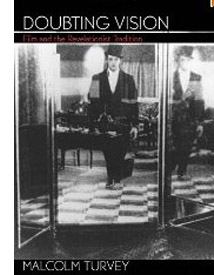 With the current revival of interest in André Bazin’s film theory, it’s fruitful to look again at the “classical” theoretical tradition in which he participated. “Classical” here refers to the very long period before the emergence of semiotic and psychoanalytic theories of cinema in the 1960s. The newer theories have somewhat beclouded our recognition of how imaginative and wide-ranging the old folks were. In Doubting Vision: Film and the Revelationist Tradition, Malcolm Turvey scrutinizes four thinkers who saw film as having the power to show us things beyond (or above, or below) surface reality. In the spirit of analytic philosophy, Turvey carefully lays out the positions of Béla Balázs, Jean Epstein, Siegfried Kracauer, and Dziga Vertov before asking whether their claims hold up.
I’m not giving much away by revealing that Malcolm thinks the revelationist tendency has its problems. But his purpose isn’t simply to reject the position. He treats it as an instance of what he calls “visual skepticism,” the idea that we ought to treat our ordinary intake of the world as something suspect. This idea, Malcolm argues, is central to modernism in the visual arts. He extends his critique of visual skepticism to more recent theorists as well, notably Gilles Deleuze, and he shows how his own ideas apply to films by Hitchcock, Brakhage, and other directors. Malcolm’s book is a model of theoretical clarity and probity, and a stimulating read as well.
Skepticism of another sort is central to Carl Plantinga’s Rhetoric and Representation in Nonfiction Film. One result of semiotic theory was to question whether a film could ever adequately represent reality. If a movie is only an assembly, however complex, of conventional signs, it can’t give us access to something out there. Even a documentary, some theorists argued, had no privileged access to the real world, let alone to general truths. “Every film is a fiction film” was a refrain often heard at the time. Carl tackles this assumption head-on by carefully arguing that just because a documentary is selective, or biased, or rhetorical, that doesn’t mean that it can’t affirm true propositions about our social lives.
Like Malcolm, Carl brings a philosopher’s training in conceptual analysis to debates about the ultimate objectivity of any documentary. In adopting a position of “critical realism” opposed to skepticism, Carl examines the realistic status of images and sounds, the way documentaries are structured, and filmmakers’ use of technique. He shows, convincingly to my mind, that a documentary may offer an opinion and still be objective and reliable to a significant degree. Carl’s 1997 book went out of print before it could be published in paperback. He has enterprisingly reissued it as a print-on-demand volume, and it’s available here.
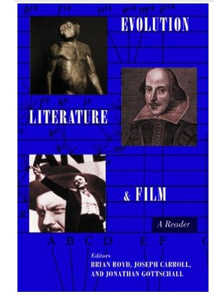 To take film theory in another direction, there’s Evolution, Literature, and Film, edited by Brian Boyd, Joseph Carroll, and Jonathan Gottschall. As a wider audience has become aware of the power of neo-Darwinian thinking, more and more scholars have been arguing that evolutionary theory can shed light on aesthetics. The most visible effort recently is Denis Dutton’s The Art Instinct.
For some years Brian, Joe, and Jonathan have been in the forefront of this trend, with many books and articles to their credit. Their anthology pulls together broad essays on biology, evolutionary psychology, and cultural evolution before turning to art as a whole and then focusing on literature and cinema. There are also pieces displaying evolutionary interpretations of particular works, and a finale that provides examples of quantitative studies of genre, gender variation, and sexuality, including an article called “Slash Fiction and Human Mating Psychology.”
Among the film contributors are other friends like Joe Anderson, a pioneer in this domain with his 1996 book The Reality of Illusion, and Murray Smith, who provides an acute piece called “Darwin and the Directors: Film, Emotion, and the Face in the Age of Evolution.” There are also essays of mine, drawn from Poetics of Cinema. In all, this book presents a persuasive case for an empirical, broadly naturalistic approach to the arts.
By the way, the same team is involved with an annual, The Evolutionary Review, edited by Alice Andrews and Joe Carroll. Its first issue offers articles on Facebook, musical chills, women as erotic objects in film, and Art Spigelman’s In the Shadow of No Towers (by Brian Boyd).
Some books emerge from conferences, and Tom Paulus and Rob King’s Slapstick Comedy is a good instance. Based on “(Another) Slapstick Symposium,” held at the Royal Film Archive of Belgium in 2006, the anthology brings together a host of experts who look back at madcap comedy in American silent film. There are essays on particular creators—Griffith, Sennett, Fatty, and Chaplin, inevitably—as well as pieces on slapstick parodies of other movies and the genre’s relation to modernity, also inevitably. Tom Gunning offers a fine analysis of Lloyd’s Get Out and Get Under (1920), concentrating on a complex string of gags around an automobile. The collection gathers work by some of the outstanding scholars of silent film while also, of course, making you want to see these crazy movies again.
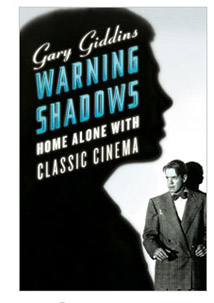 You also want to see all the movies lovingly evoked by Gary Giddins in Warning Shadows: Home Alone with Classic Cinema. As indicated in another blog entry, I find Giddins one of the best appreciative critics we’ve ever had. Any essay, indeed almost any sentence, cries out to be quoted. Here he is on Edward G. Robinson:
His round, thick-lipped, putty face could brighten like paternal sunshine or shut down in implacable contempt or stall with crafty desperation or pontificate with ingenuous wisdom; his short, stumpy, erect frame could sport a tailor-made as smartly as Cary Grant.
Some of the pieces in Giddins’ latest collection were designed to accompany DVDs, but they will outlast this evaporation-prone genre. Other reviews come from the New York Sun, which gave him freedom to mix and match his subjects: Young Mr. Lincoln and Lust for Life (both biopics), Lady and the Tramp and Miyazaki movies. The collection opens with Giddins’ thoughts on how changes in film exhibition, from nickelodeons to digital screens, have altered our relationship with the movies. This isn’t just nostalgia, because his survey allows him to celebrate the power of DVD to exhume forgotten titles. The standards for a film classic, he notes, “are gentler and more flexible” than those in appraising other arts. “The passing decades are a boon to the appreciation of stylistic nuance that gives certain melodramas and genre pieces the heft of individuality.”
Who was Segundo de Chomón? In the 1970s, I kept finding that films I thought were by Méliès turned out to bear this mysterious signature. You imagine a man in a cape and a floppy hat. Photographs show someone a little less operatic, but with a superb mustache. Today he’s far from a mystery, although many of his movies can’t be fully identified. Several scholars have followed his trail, none more thoroughly than Joan M. Minguet Batllori in Segundo de Chomón: The Cinema of Fascination.
Chomón started as a cinema man-of-all-work in Barcelona, translating film titles, distributing copies, and producing films for Pathé. After moving to Paris in 1905, he continued working for the company and established his fame with trick films. He returned to Barcelona to create a production company, but that failed. On he went to Italy, where he specialized in visual effects, most famously for Cabiria (1914).
In his Parisian Pathé years, he was in charge of all the studio’s trick films, which included not only stop-motion, superimpositions, and other effects but also marionettes and animation. Joan argues that he was a prime exponent of the “cinema of attractions,” Tom Gunning’s term for that early mode of filmmaking which aims to startle and enchant the audience. A famous instance is Kiriki, acrobats japonais (1907), which shows gravity-defying stunts.
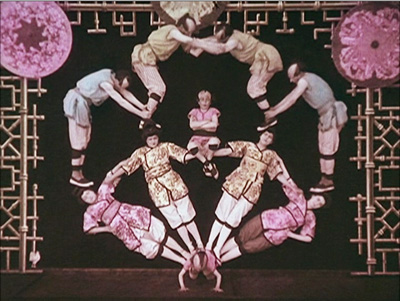
Chomón accomplished this by shooting from straight down, filming the performers on the floor. They had to simulate leaps and flips as they rolled along each other’s bodies, and then they had to slip perfectly into position. This English edition of Joan’s book on Chomón, full of information and providing a “provisional filmography” along with many pages of gorgeous color images, will be available soon here.
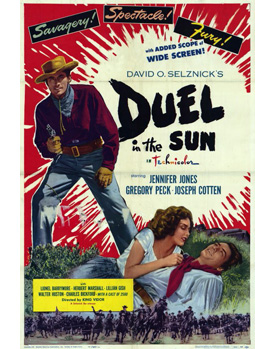 We recently noted the anniversary of our book on classic studio cinema, a 1985 project in which we bypassed talking about exhibition. That part of the industry has been a scholarly growth area in the years since, and one of the newest yields is Epics, Spectacles, and Blockbusters: A Hollywood History, by Sheldon Hall and Steve Neale. It’s a chronological account of Big Movies, from the earliest features to the digital era, and it concentrates on how such films have been marketed and shown. It explains how exhibition changed across the decades, and how we got the phenomenon of the “roadshow” movie, the film shown selectively (only certain cities), at intervals (perhaps only one matinee and one evening screening), and at more or less fixed prices. My middle-aged readers will remember roadshow releases like The Sound of Music (1965), although there were many before and even a few since.
Sheldon and Steve trace in unprecedented detail the cycles of blockbusters that have run throughout American cinema. In the process they refreshingly redefine the very idea. We don’t usually think of The Best Years of Our Lives as a Big Movie, but it runs three hours and was considered a “special” production, comparable to the more obvious sprawl of Duel in the Sun. The authors bring the story up to date by considering today’s event movies as a “Cinema of Spectacular Situations.” Yes, that category includes comic-book films, Inception, and, of course, the 3D sagas that may finally be wearing out their welcome. (My editorializing, not theirs.)
Japanese cinema is endlessly fascinating in all its eras; I’d argue that in toto it’s one of the three greatest national cinemas in film history. The postwar period is exceptionally interesting because of the American occupation (1945-1951) and its effects on Japanese film culture. This period has already provoked one of the best books we have on Japanese cinema, Kyoko Hirano’s Mr. Smith Goes to Tokyo, and it finds a worthy accompaniment in Hiroshi Kitamura’s Screening Enlightenment: Hollywood and the Cultural Reconstruction of Defeated Japan. Kyoko focused on how US policy shaped domestic filmmaking, while Hiroshi asks how the Occupation helped American studios penetrate the local market.
Over six hundred Hollywood movies poured into Japan during the period, and Hiroshi traces how local tastemakers as well as U.S. policymakers drew audiences to them. Young Japanese learned about the Academy Awards, assembled in movie-study clubs to discuss what they were seeing, and were urged to consider even a gangster tale like Cry of the City (1950) as demonstrating the humanistic side of democracy. A center of this activity was Eiga no tomo (“Friends of the Movies”), a magazine that went beyond entertainment news and tried to reshape the tastes of young people. In sharp prose and vivid evidence, Hiroshi captures the ways in which American cinema promised to help heal a devastated country.
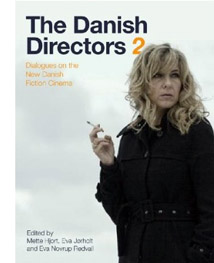 The Danish Directors, by Mette Hjort and Ib Bondebjerg, has become a standard companion to the most successful “small cinema” on the European scene. Now it has a successor in The Danish Directors 2: Dialogues on the New Danish Fictional Cinema, edited by Mette, Eva Jorholt, and Eva Novrup Redvall. Once again, we get lengthy, in-depth interviews covering the value of film education, the vagaries of funding, and filmmakers’ creative decision-making. Lone Scherfig, Christoffer Boe, Per Fly, Paprika Steen, and many other major figures are included. (Disclosure: The editors were kind enough to dedicate the book to me.)
While the first volume is a rich storehouse of information on Danish film in “the Dogma era,” the newest volume shows how directors (some of whom made Dogma projects) have gone beyond it. In preparing 1:1, a film about Danes and Arab immigrants living in a housing project, Annette K. Olesen had a full script but concealed it from the non-professional cast. After getting the performers comfortable with ordinary situations, she began staging scenes while encouraging improvisation. Screenwriter Kim Fupz Aakeson incorporated the improvised material into revisions of the script.
By contrast, the prolific director-screenwriter Anders Thomas Jensen (Adam’s Apples, The Green Butchers), relies on strong structure, with lean expositions and sharply defined climaxes. He appreciates clean filming technique too.
It’s easy to make something that’s ugly and handheld, but you have to take telling stories with images seriously. You have to take the language of film seriously. Many Danish directors have started doing this in recent years and it’s wonderful, because there was a time when everything looked Dogma-like and I found myself thinking, “It’s got to stop now.”
To those who think that Danish cinema is at risk of becoming a cinema of cozy liberal reassurance, this collection offers many salutary signs. Every director speaks of the need to keep innovating, to push ahead provocatively. Simon Staho, whose Day and Night seems to me one of the most adventurous Danish films of recent years, aims at utter purity: “My task is to figure out how to add as little as possible to the black screen. The damned problem is that you have to add image and sound!”
What makes all these books exciting to me is a willingness to test ideas–sometimes very general ones–about cinema and the wider world by examining film as a distinctive art form. Even the most conceptual books on this week’s shelf are firmly rooted in the particular choices that creators make and the concrete ways that viewers respond.
Next stop: Vancouver International Film Festival. Whoopee!
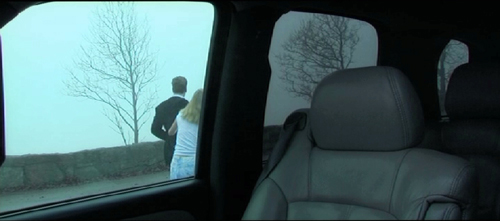
Day and Night.
More cinema Bolognese
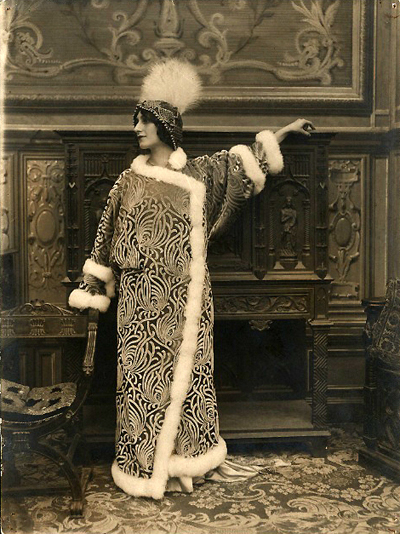
Josette Andriot, decked out for Protéa.
Kristin here, with more from Cinema Ritrovato in Bologna:
When one thinks of female masters of disguise and action in the silent cinema, Musidora as Irma Vep in Feuillade’s Les Vampyrs probably springs first to mind. But for the historian, hovering always in the background was the legendary film by Victorin-Hippolyte Jasset, Protéa (1913), with Josette Andriot in the lead role. We knew the film mainly from a frequently reproduced image of the heroine in a black outfit, one of many she wears in the film.
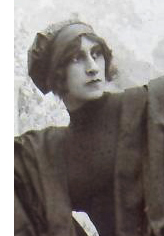 Andriot was unconventionally beautiful, with dark hair and eyes and strong rather than delicate features. She was a genuine athlete, hired initially by Jasset for her riding ability, though he later exploited her acrobatic abilities in chases and scrambles around buildings.
Protéa has now been restored, though there is still missing footage. The heroine’s partner is Lucien Bataille, looking rather like a particularly devious James Cagney in the role of L’Anguille (“The Eel”), whose quick-change abilities and athleticism match hers. The thin, episodic plot revolves around a classic Macguffin, a treaty between two imaginary, vaguely Eastern European countries. The pair must acquire the document and hold onto it through one danger after another, outnumbered and chased all the while by a ruthless gang of spies for the other side.
I was startled by how modern the film seemed. Critics today tend to claim, inaccurately, that big action films throw some big thrill at the audience every few minutes. Protéa really does. The underlying purpose of the plot is to have the two leads escape from one sticky situation and change disguises, only to land immediately in another sticky situation. It’s essentially a serial boiled down into a feature.
The term “cinema of attractions” was originally coined by Tom Gunning to describe very early films that depended on novelties rather than narratives. These days, many academics apply the phrase to almost any film, old or new, boasting a lot of action and big special effects. But I’m tempted to use it of Protéa anyway. Jasset usually doesn’t keep Protéa and L’Anguille in any one disguise or situation long enough to exploit the initial premise. One moment she’s pretending to be a man; next thing we know, she’s an elegant partygoer and L’Anguille is a servant. The basic problem is that whenever the characters get into trouble, they don’t rise to the occasion by exploiting their current roles more cleverly. They just flee and assume a new disguise to try again. As a result most of the individual episodes remain unmemorable.
One exception is a sustained sequence showing the couple as traveling animal trainers. At one point they crawl into the cage and play with a real lion, and they stay in these disguises long enough to actually use the big cats to fend off their pursuers. The final hectic chase, with Protéa on a bicycle fleeing toward a bridge set aflame by the villains, is the most impressive passage we can enjoy as sustained action. (I won’t reveal how it comes out, except to say that the climactic moment prefigures a modern action heroine driving a bus toward a gap in an unfinished freeway.)
Protéa is fun, in large part due to the talent of the two leads. It’s a pity that this was Jasset’s penultimate film. He died in hospital before it was released. (His last film, La Danseuse de Kali, also starring Andriot, was recently rediscovered by our friend Hiroshi Komatsu and was shown in this year’s festival.) Perhaps Jasset would have developed into one of the major directors of serials. Still, one can see why Feuillade, who knew how to build suspense by stretching out a scene’s action, became the French master of the form.
Etaix Refurbished
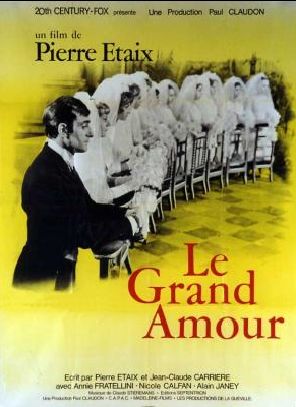
In an earlier entry, I mentioned that for some years French comic director and actor Pierre Etaix had not controlled the rights to his own films (two shorts and six fiction features). During that time, they were out of circulation and unavailable in any format. That situation has finally been rectified. Etaix has recovered the rights, and all the films have now been restored. They were re-premiered earlier this year at Cannes, and two were included in Il Cinema Ritrovato: the short Heureux anniversaire (1962) and the feature Le grand amour (1969).
Etaix’s early work in the cinema was during the 1950s as an assistant to Jacques Tati, and he is widely seen as having been greatly influenced by Tati. That’s true to some degree. In Le grand amour there are gags using sudden peculiar noises. Although the plot centers around the hero Pierre, his wife Florence, and his in-laws, there are nosy neighbors and waiters through whose eyes we are occasionally asked to view the action. When Pierre’s friend gives him instructions on how to behave on an upcoming date with his pretty secretary, bar patrons assume that they’re witnessing two gay men flirting.
Still, Etaix’s general approach is not particularly Tatian. He does not play a continuing character from film to film. In Le grand amour, as the young husband lured into managing his father-in-law’s factory, he dresses in conservative suits and casual wear; no Hush Puppies, striped socks, and too-short raincoat for him. Pierre succeeds in his dull job, unlike Hulot, who makes a mess of things when given a low-level job at his brother-in-law’s factory. The neighbors watch Pierre not because he is eccentric, but because they jump to wrong conclusions about his mundane behavior.
More importantly, though, Le grand amour creates a great deal of its humor with a technique that Tati would never use. He frequently shows hypothetical alternatives to the scene at hand. What if Pierre’s sophisticated friend were married to Florence? We see a scene played out with the friend in his place. There is a dream in which Pierre’s bed drives like a car along a country road, encountering other bed-cars and finally picking up the new secretary, hitchhiking by the road. When Pierre finally dares to take the secretary out to dinner, he launches into a nervous, boring monologue on business prospects, and we see him as she does, successively older and grayer with each reverse shot. When the gossipy neighbors pass along a story about Pierre, we see the successively exaggerated versions played out one by one, from the reality in which he merely tips his hat to a pretty woman he passes in a park through overt flirting to a passionate encounter behind a bush.
Le grand amour is not as funny as Tati’s films, but that probably results from an explicit melancholy that underlies this tale of disillusionment with marriage and final acceptance of the realities of life-long love. At times it reminded me more of the playful moments in Truffaut, especially in Shoot the Piano Player. Whether or not one wants to place Etaix in the New Wave, his play between reality and fantasy would seem to put him in the category of “ludic modernism” that Malcolm Turvey spoke about in his paper at the recent Society for the Cognitive Study of the Moving Image conference.
The restored print was beautiful, with the kinds of bright and pastel colors and high-key lighting that one seldom sees in the drab films of today. Presumably the new copies will show at other festivals and in art-houses with DVD releases to come.
Cinephiles’ corner
Bologna brings out a bevy of critics, historians, programmers, and unabashed film lovers of all stripes. Herewith, a sampling from DB.
Two critics for the ages: Kent Jones of Physical Evidence and the World Cinema Foundation, alongside Joe McBride, author of books on Ford, Capra, Welles, and Spielberg.
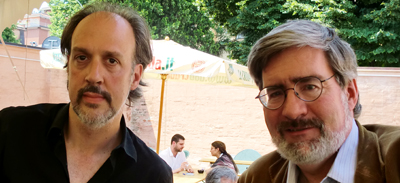
Dick Abel and Virginia Wright Wexman, both distinguished scholars, flank a copy of Dick’s book, French Cinema: The First Wave–presumably kept under glass like the rare specimen it is.
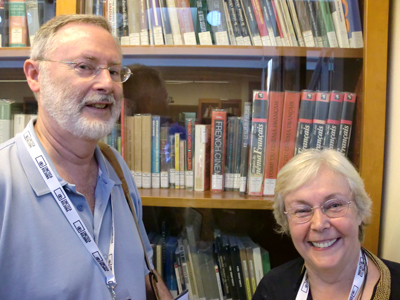
Curatorial cuddling: Haden Guest of the Harvard Film Archive, Adrienne Mancia retired from MoMA (and once a UW Badger).
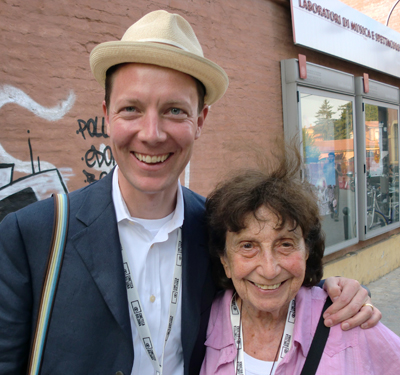
The Cottafavi Cult invictus: Critics and programmers Barbara Wurm, Olaf Möller, and Christoph Uber, always in the front row.
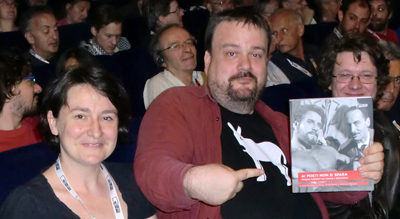
Camille Blot-Wellens, director of Film Collections at the Cinémathèque Française tells Danish historian Casper Tybjerg of her restoration of Albert Capellani’s Chevalier de Maison-Rouge (1914).
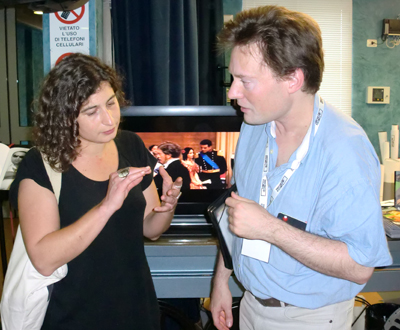
Two walking film encyclopedias sitting down: Kevin Brownlow, pioneer British historian, director, and collector, and Lee Tsiantis of Turner Classic Movies.
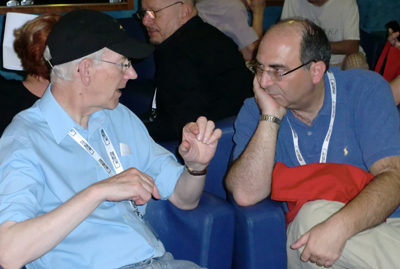
David Meeker, master of British cinema and jazz on the screen; Matthew Bernstein, author of Walter Wanger, a study of the Leo Frank lynching, and other studies of film history and culture.
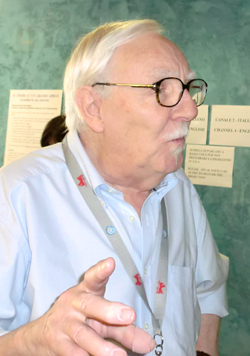
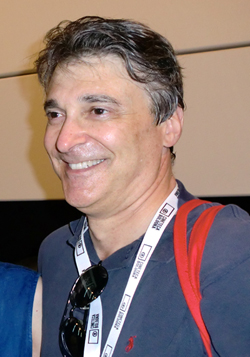
Mariann Lewinsky, heroic programmer of the 1910 series and the Capellani retrospective, introduces Nikolaus Wostry, of Filmarchiv Austria.
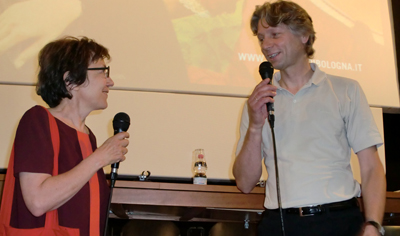
More to come in at least one more Bologna-based entry!