Saturday | October 9, 2010
Kristin here:
Surviving Life (Czech Republic; dir. Jan Švankmajer, 2010)
I became a fan of Švankmajer’s work back in 1988, when I saw Alice, his first feature. David and I gradually explored his shorts and discovered that some of them were among the great classics of the animation form, perhaps most notably Jabberwocky and Dimensions of Dialogue. Švankmajer mostly concentrated on object animation, often combining found objects like tools, stuffed animals, dentures, and food in bizarre ways to create figures.
But after Alice, Švankmajer continued to make features, and they contained less and less of what he was best at: animation. Faust was all right, but I suffered through Conspirators of Pleasure and skipped Lunacy altogether. The director has claimed that Surviving Life is to be his final film, so I thought I owed him a last chance. It’s lucky I did, since it’s a real comeback for him, and a return to what he does best.
Whether Švankmajer really wanted to eschew live-action filmmaking and take up animation again is a moot point. He appears in a prologue, not exactly as himself but as a pixillated cut-out photographic figure (apart from the same typical cut-ins to real speaking mouths that became rather tedious in Alice). He describes how he intended to make a live-action feature, but with a small budget could only afford cut-out animation. He demonstrates by hopping about the frame like a figure in a child’s TV show. At the end, he checks how much time the prologue has taken up–two and a half minutes–and mutters that it’s not very long. His mordantly amusing speech doesn’t suggest whether he really had tried to make the film with live action. Indeed, the actors who are represented by the cut-out photographs obviously had to act out their movements, in costume, and to provide their voices. How much cheaper all this could be is debatable.
The story is about dreams, and specifically about a man stuck in a dull desk job who dreams of an exotic woman in red. His doctor sends him to a psychiatrist whose office contains photos of Freud and Jung, each of whom listens and reacts with applause or contempt when his own or his rival’s theory is employed. The hero is horrified when he discovers that the psychiatrist is trying to rid him of his dreams when his own desire is to live within them.
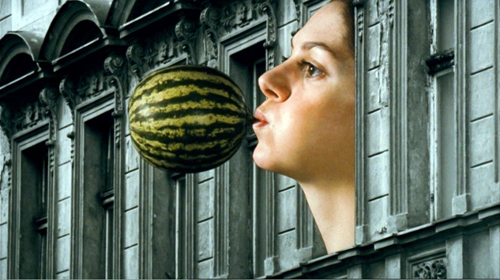
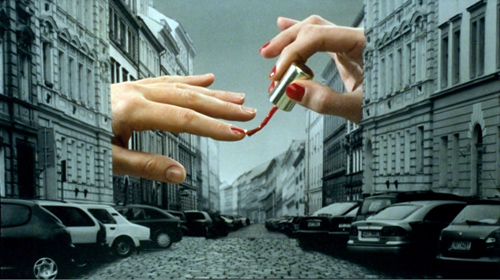
We tend not to think of cut-out animation when we think of Švankmajer, but predictably he proves a master of it. At times the technique resembles that of Terry Gilliam in the animated interludes of Monty Python’s Flying Circus, especially in scenes shot in a black-and-white cityscape with surrealist objects emerging from the windows (see above and below). The “actors” appear as smoothly animated photographs except for close shots, when the actual actors are shown. The technique works brilliantly, with the cuts between the image and the real person being smoother than most Hollywood matches on action.
If Švankmajer has chosen this as his swan song, he has gone out reminding us why we admired him in the first place.
The White Meadows (Iran; dir. Mohammad Rasoulof, 2009)
There are probably a lot of indirect comments on the political situation in Iran in films from that country. Some are obvious to all, others no doubt only to people who live that situation every day. Few, however, can be so overtly allegorical as The White Meadows. Oddly, the allegorical implications are so clear that they can be grasped immediately and do not impinge on the intriguing strangeness of the tale being told.
The central figure is a man who rows his small boat across a highly saline sea, stopping at islands and coastal villages in deserts caked with salt formations. (Yes, another Iranian journey film.) At each stop he gathers the tears of the local people, gradually accumulating a small bottleful. Each stop also yields a fable-like incident that reflects the plight of certain sectors of Iran’s population: a beautiful virgin is sent as a sacrifice to a sea god, an unconventional artist who refuses to paint naturalistically is tormented and sent into exile, and so on. The overall impression is of universal suffering, and the ending suggests that this suffering benefits only the rich and privileged.
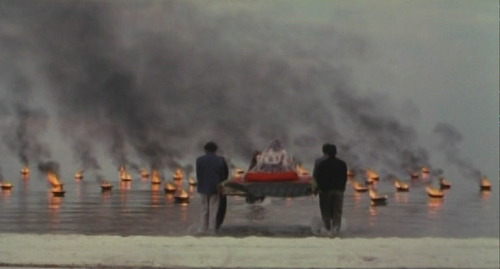
The white and tan landscapes and pale blue sky and sea provide stunning locales for this simple tale, shot around Lake Urmia in northeastern Iran.
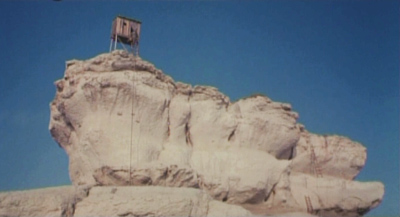
While watching The White Meadows, one wonders how Rasoulof could get away with such an overt criticism of religious and governmental repression in Iran. He couldn’t, quite. He was arrested alongside Jafar Panahi (who edited The White Meadows) and about a dozen others on March 2. Fortunately he was released fairly soon, on March 17. What his future as a director in Iran is remains to be seen. The government has long tolerated having one set of films for local popular consumption and another that will be confined largely to the international festival circuit. Not surprising, since these days Iran’s filmmaking is one of the few areas in which the country is seen internationally in a positive light. Still, such a bitter yet appealing film clearly stretches such tolerance.
Every year it seems more and more likely that the increasingly tenuous new Iranian cinema will finally be snuffed out, and every year–so far–we see bold and imaginative films coming from that country. We can only hope that with the arrests earlier this year, we are not seeing the long-expected end.
The Strange Case of Angelica (Portugal/Spain/France/Brazil; dir. Manoel de Oliveira, 2010)
The fact that Oliveira was 101 when he made this film, as well as the fact that he is still directing at least a film a year (for last year’s Eccentricities of a Blond Hair Girl, see here), is too extraordinary not to be remarked on. Yet we shouldn’t let it dominate our view of Angelica or tempt us to treat it as an old man’s film. Slowly paced and meditative it may be, but it is also imaginative and full of humor, despite being centered around a young man’s obsessive love for a dead woman.
The protagonist, Isaac, is a photographer living in a boarding house in a town in the Duoro Valley region of Portugal. (Oliveira’s first film was a beautiful city symphony, Douro, Faina Fluvial, a poetic study of the river in the same valley made in 1931.) Called upon to photograph a beautiful woman who has died shortly after her wedding, through his viewfinder he sees the corpse open her eyes and smile at him. The same thing happens when he gazes at photos of her hung up to dry:
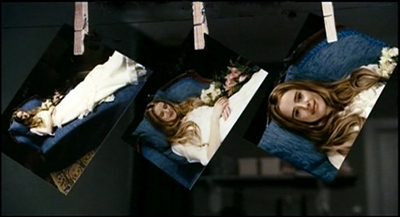
He falls in love with her, and her ghostly figure visits him at night, wafting him up into the air and flying over the river with him. Although he wakes from dreams several times, we are left in doubt as to whether Angelica really has been appearing to him.
The film seems to be set in contemporary times, and yet it has an old-fashioned look t it. The protagonist photographs men at work with hoes in a nearby vineyard, though his landlady remarks that no one does manual labor anymore. But most obviously, the film has the look and feel of a silent film. The shots of Angelica and the hero flying are superimposed ghostly figures straight out of Edwin S. Porter’s Dream of a Rarebit Fiend (1906). Camera movements are used sparingly, as in many silent films. Scenes often consist mostly of the hero taking his photographs or thinking of his phantom love, and his occasional cries of “Angelica!” could be rendered as intertitles. The use of solo piano music by Chopin reinforces the sense of watching a “silent” film. (1906). Camera movements are used sparingly, as in many silent films. Scenes often consist mostly of the hero taking his photographs or thinking of his phantom love, and his occasional cries of “Angelica!” could be rendered as intertitles. The use of solo piano music by Chopin reinforces the sense of watching a “silent” film.
Yet there are occasional scenes of dialogue. The best scene in the film may be the one where over the breakfast table the other boarders discuss their concerns about Isaac’s state of mind. The scene ends amusingly with the camera holding on the landlady’s bird jumping around its cage, watched with great attention by her cat.
Oliveira will turn 102 on December 11. He is listed on Wikipedia has being in pre-production for A Missa do Galo.
Kawasaki Rose (Czech Republic; dir. Jan Hrebejk, 2009)
(Note: Many reviews and the VIFF program give the title as Kawasaki’s Rose, but the title on the film is as given above.)
This film creeps up on you. At first it seems poised to be yet another study of a failed relationship among upper-middle-class characters. A documentary is to be made about Pavel Josek, a noted professor famous for his past resistance to the Communists. The sound-man on the shoot is his son-in-law Ludek. His daughter Lucie has been told that a large tumor just removed is benign. Ludek confronts her with the fact that he has been cheating on her during her illness, and he undermines her efforts at disciplining their daughter.
But this conventional soap-opera material gradually opens out as files discovered during research for the documentary seem to reveal that Josek had in fact cooperated with the Communist regime, apparently including his participating in the torture of prisoners. From that point, Ludek recedes into the background and further political and personal revelations give the film considerable depth and complexity.
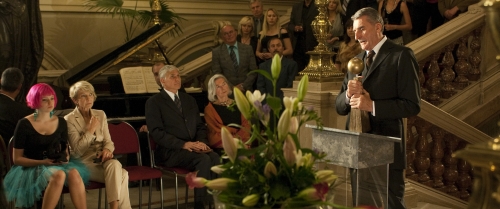
Kawasaki Rose was beautifully shot in full anamorphic widescreen, with images around the harbor in Göteborg, Sweden being particularly well composed.
While I was watching the film, I was reminded equally of Wajda’s Man of Marble and von Donnersmarck’s The Lives of Others. On the one hand, a film project that digs into the past of a heroic figure who turns out to be not quite so heroic, and on the other a study of the effects of interrogations into private lives under a totalitarian regime.
Kawasaki Rose (the title derives from an origami pattern and is given to a Japanese character in the film who paints flowers) is the Czech Republic’s entry for a foreign-film Oscar nomination. I wouldn’t be surprised if it gets one.
Posted in Animation, Directors: Oliveira, Festivals, Festivals: Vancouver, National cinemas: Eastern Europe, National cinemas: Iran, National cinemas: Spain and Portugal |  open printable version
| No Comments » open printable version
| No Comments »
Friday | October 8, 2010
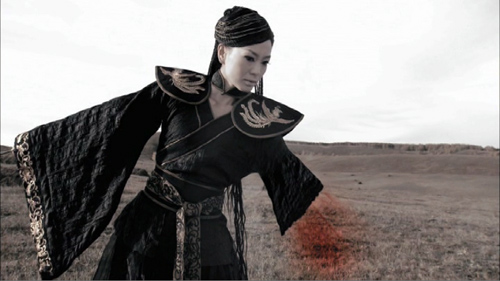
Thomas Mao.
DB here:
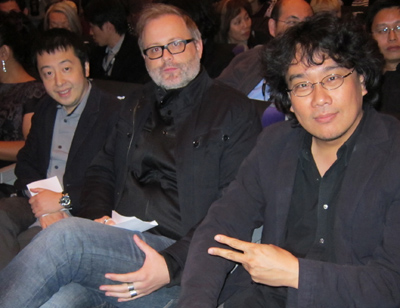
First, the news flash: Tonight was the awards ceremony for the Dragons & Tigers competition for young filmmakers here at Vancouver. A jury doesn’t get more distinguished: it consisted of (left to right) Jia Zhang-ke, Denis Côté, and Bong Joon-ho.
They awarded two special mentions, one to Phan Dang Di’s Don’t Be Afraid, Bi! (from Vietnam) and to Xu Ruotang’s Rumination (China). On the last-named, check the still at the end of this entry.
The grand prize went to the Japanese film Good Morning to the World!, by Hirohara Satoru.

More details here. Congratulations to the winners!
Beginners’ luck

My Film and My Story.
Vancouver is unusually hospitable to shorts and features by newcomers. Two of this year’s D & T offerings illustrate how talent, unlike youth, is not wasted on the young.
A cinémathèque featuring classic films is about to reopen, and the manager has hired some twentysomethings to help her get things into shape. The result a network narrative: romantic rivalries, coming-of-sexual-age crises, the race to set up the screening space, and even a ghost story are woven together as the big day approaches. The film is split into eight chapters, each given an emblematic movie title. Two petty thieves interview for a job under the aegis of “Stranger than Paradise,” and an apparent love triangle is christened “Jules and Jim.” The cinephilia shapes the plots too, as when one boy gets the courage to kiss another after watching Happy Together.
My Film and My Story was a group project of students at the Art and Design School of Konkuk University in Seoul. Their professor proposed that each student write a script about the opening of the cinematheque, and the results were integrated into a single feature-length story. There were seven student directors, one per episode; a producer contributed an extra chapter. Most directors were on the set all the time, making suggestions and trying to fit bits together. (“We fought a lot.”) The remarkable visual consistency—smooth cutting, tight framing, and well-modulated lighting—came from the single director of photography. As the title suggests, some of the tales are based on incidents in the lives of its makers.
The film, presented in Vancouver by two of the directors, Hong Youjin and Kim Taeho, is a lively charmer, with plenty of comedy and pathos. The characters are quickly introduced, and there are nice touches of movie-nut satire. One girl with big spectacles saves all her ticket stubs, takes notes on every movie (I can identify), and is annoyed when a boy drapes his leg over the seat in front of him. The episodes make tactful use of digital techniques, particularly in one shot that fuses past and present through the classic color/ black-and-white disparity.
My Film and My Story wasn’t in the official young-film competition, but Icarus Under the Sun was. For once the ragged style of handheld video justifies itself in a tale of a girl who quits school and heads for Tokyo to work in a seedy mahjong parlor. Haruo rooms with a flighty roommate and her boyfriend, but becomes more attached to the workers in the parlor and the owner, a nearly blind, taciturn man for whom she conceives an almost daughterly affection.
The plot barely rises above anecdote, but it’s continually engaging through its focus on the performance of Abe Saori, one of the two directors. Haruo explains that she is “addicted to walking,” and some of the best scenes involve conversations during late-night wanderings in the bitter cold.
Starting out fairly choppy, the narration accumulates weight and breadth as Haruo becomes engaged in her work. The shots throughout are held rather long, but about halfway through, the scenes start to be built out of exceptionally long takes. When another worker, the boy Aran, takes sick, Haruo calls on him and we get an almost suspenseful treatment of her arrival in his apartment, with him lying almost motionless in a heap in the foreground.
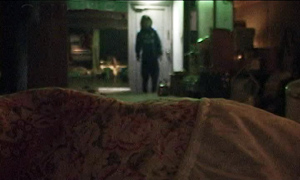
The shot lasts almost four minutes as she comes forward to talk with him. Their subsequent conversation is filmed in a tight, leisurely shot as they eat burgers and explain their backgrounds—virtually the only exposition we get about Haruo’s troubled past.

The dingy look of many scenes carries a documentary conviction that a more polished work would not. And the rough texture is actually the product of patient care. Abe and her codirector Takahashi Nazuki explained that they spent ten months in shooting and two to three months in editing. But it’s no mere technical exercise either, since Abe calls it both a fictional film and a documentary about her experiences. Like her protagonist she spurned conventional schooling and went to Tokyo to live on her own. Rooming with Takahashi, she decided to make the film “to know certain shadows” in her life. Icarus Under the Sun is actually the duo’s second film, and they have already finished a third, the more technically slick Soft-Boiled Egg (Hanjuku tamago.). Another thing about young directors: They have energy.
Expecting
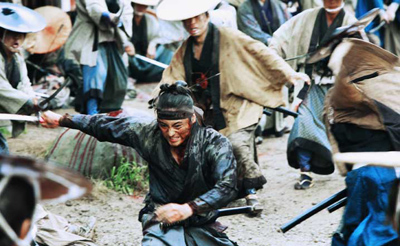
Takashi Miike’s 13 Assassins is not what you might expect. Unlike your typical Miike item, this one throws no curves. It is an old-fashioned, butt-stomping, gut-slashing swordplay movie, with swagger to spare. Adapted from a 1963 film, it’s Seven Samurai plus six, with explosives.
True, there’s a Miike signature moment early on that shows what Lord Noritsugu has done to a woman’s body in his quest for piquant entertainment. But this horrifying scene serves a very traditional purpose: To prove to swordmaster Shinzaemon Shimada (and us) that Noritsugu has failed his duty as a leader and must be assassinated. He isn’t merely brutal. He lives an aesthetic of exquisite savagery. He has turned droit de seigneur into performance art. A massacre, he says with a fetching smile, is fun. He is a handsome monster. We can hardly wait to watch him die—preferably like a dog, in the mud, in agony.
Thereafter all that we want from a chambara flows forth in abundance. Unsurprisingly, the plot is framed by the man-out-of-time motif. Noritsugu’s depraved tastes show that the samurai tradition and the Shogunate government have become decadent. This might be a warrior’s last chance to die nobly—but for what? What deserves a man’s loyalty? Hard times have convinced Shinzaemon that the samurai class must ultimately serve the people. But his old rival Hanbei, Noritsugu’s right-hand man, clings to the notion that the samurai serves his master, unswervingly. Hanbei goes to his death committed to traditional duty. But his commitment is proved unworthy when his lord has a little fun with his severed head.
Miike faced a choice. He could have provided each warrior a vivid backstory, differentiating and humanizing each one as Kurosawa did. Instead, given a two-hour running time, he concentrates on strategy: How can a baker’s dozen of fighters defeat Noritsugu’s troops, which will eventually swell to 200? The solution is to maneuver Noritsugu’s men into a village filled with traps that will give the assassins some advantages—surprise, rooftop ambushes, and a deployment of livestock as ordnance. Things are enlivened by a feral hunter, mocking the samurai code while wielding a mean slingshot. After supplying a sketch of each of the thirteen assassins, Miike spends his energy on action. The muddy, gory battle at the climax lasts forty-plus minutes, and is worth every penny of your admission. Magnet, the genre arm of Magnolia, has picked up 13 Assassins for early 2011 release, and you should start thanking them already.
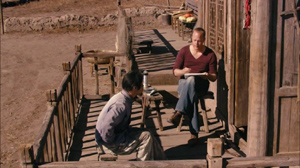
If Miike surprises by doing something normal, Zhu Wen’s Thomas Mao really does keep you guessing. It’s a pleasure to see a movie in which you can’t imagine what will come next.
At first, things seem to go by the numbers. To a remote Chinese farm comes the artist Thomas, to stay a short while and do some drawing. His wizened host Mao provides bed (after the geese are shooed out) and board (mostly corn on the cob). The trouble is that Thomas speaks no Chinese and Mao speaks no English. Every interchange is a pas de deux of misunderstanding. Thomas generously gives Mao some money. Mao refuses—not, as Thomas thinks, because he’s too proud but because Mao considers the amount insultingly small.
So we seem to have the small-scale cross-cultural comedy, making amusing points about people’s petty differences. Then the ghosts arrive.
At least, they might be ghosts. A phantom swordsman and swordswoman float around Mao’s farm and do battle, ultimately slashing off each other’s arms before disappearing, never to return.
There are aliens too, invading Mao’s cabin with pop-concert glow sticks. They’re totally unexpected, like the warriors, and their visit is even more transitory.
Eventually Thomas leaves, and the film starts over. The second part offers a sort of crazy-mirror image of what we’ve seen so far. Artist becomes model, model becomes artist, dog becomes Doggy. If you like the double-track story of Syndromes and a Century, you’ll probably like Thomas Mao, which is less rigorous but more funny. (The very title is part of the joke.) Zhu, who has reveled in comic byplay in Seafood and South of the Clouds, gives us that rare thing, a movie that is whimsical without being precious. You learn about contemporary Chinese painting in the bargain.

More whimsy, also not overbearing: When Liu Jiayin told me last spring that she was making a movie about a plastic fish, I didn’t know what to expect. The answer comes in the short film 607. Here the ballet of family hands seen in Liu’s Oxhide II becomes more playful. 607 is part of a promotional series of shorts by independent filmmakers, and it’s sponsored by a Beijing hotel, The Opposite House.
Mr. Fish, wielded by Liu’s father, swims around the tub, occasionally flirting with a mushroom provided by her mother. Eventually Mr. Fish is tempted by a hook (the curled finger of Liu herself). Will he fall for it? In all, you have to admire the coordination of three people shifting smoothly offscreen around the tub, each person’s hands sliding out of one part of the frame and popping in somewhere else—somewhere, I need hardly say, fairly unexpected.
PS 9 October: This entry has been corrected from its initial appearance. There I had written that Liu Jiayin’s 607 is one of three films she is making for the series commissioned by The Opposite House. Actually, the entire series consists of three films made by independent filmmakers. 607 is one of those and is complete in itself. Thanks to Shelly Kraicer for the correction.
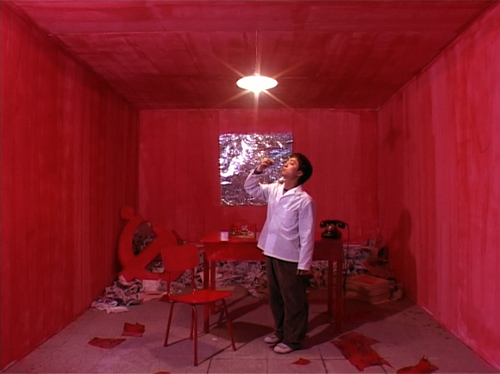
Rumination.
Posted in Directors: Bong Joon-ho, Directors: Jia Zhang-ke, Directors: Liu Jiayin, Festivals, Festivals: Vancouver, Film comments, National cinemas: China, National cinemas: Japan, National cinemas: South Korea | open printable version
| No Comments »
Tuesday | October 5, 2010
Of Love and Other Demons.
Kristin here:
There are dozens of American films playing at the Vancouver International Film Festival this year, but the vast majority of them are documentaries. Once again the Rest of the World (ROW) gets its turn. David has started by handling a group of Asian films (one of the festival’s specialities), and I’ve got films from three continents to describe.
Morgen (Romania; dir. Marian Crisan, 2010)
Morgen opens with the camera following the hero, Nelu, riding his motorcycle toward a border checkpoint. The border guards question him and discover that he’s been fishing and caught a large carp. One guard is inclined to let him pass, but the stricter one insists that he can’t take it across. We may think that this guard wants the fish for himself, but when Nelu finally empties his bucket into the gutter, the guards retire into their office and the fish is left to flap pathetically as Nelu rides across the border.
It’s a simple, obvious way to set up the absurdity and arbitrariness of border controls within the European Union, but it also sets up the character of the two guards, who will figure later when a more important border-crossing is attempted.
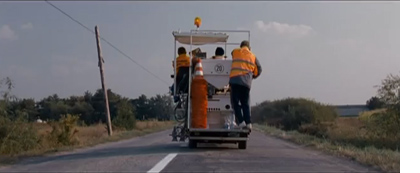
A security guard at a local grocery store, Nelu lives with her termagant wife in a modest farmhouse near the Hungarian border. During one of his regular fishing trips, he spots a forlorn Turkish refugee hiding from the border police. He takes the man home. Although the Turk’s dialogue isn’t subtitled, he mentions Germany often enough for Nelu and us to grasp where the man is heading. Not having a clue about how to help, Nelu hides the Turk in his cellar, and despite the wife’s objections, he gradually becomes a sort of handyman around the place. Nelu keeps telling him, “Morgen” (“tomorrow”) suggesting that he vaguely hopes to do something eventually.
Virtually every scene occupies a single take, some long, some not. But these aren’t the deliberately lugubrious shots of a Béla Tarr. In its quiet way, Morgen is a comedy, and an entertaining one. Nelu’s passivity presents the slowly growing friendship between him and the Turk without the film tipping over into sentimentality, and there is genuine suspense in the scenes of threatened encounters with the border police and guards. It’s a charming film, reminiscent of some of the Czech New Wave comedies of the 1960s.
12 Angry Lebanese: The Documentary (Lebanon; dir. Zeina Daccache, 2009)
The film’s subtitle is intended to differentiate it from a play of the same name that was produced within the largest prison in Lebanon, starring a group of prisoners. In the United States the director, Leina Daccache, studied drama as a method of prisoner habilitation. She managed to get funding to try the first ever use of this method in Lebanon, though there followed a year of negotiations before government officials allowed the experiment. The 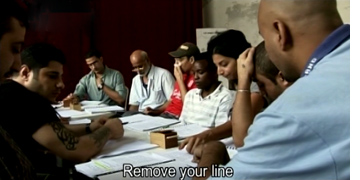 program was to include a loose adaptation of the American play 12 Angry Men, as well as some songs and monologues by the prisoners. Eight soldout performances were eventually put on, attended by government ministers and members of society. program was to include a loose adaptation of the American play 12 Angry Men, as well as some songs and monologues by the prisoners. Eight soldout performances were eventually put on, attended by government ministers and members of society.
The process of casting and rehearsals took fifteen months, and Dacchache documented the process with a cinematographer shooting digital video. There are atmospheric shots of the prison, scenes of the rehearsal and premiere performances, and interviews with the prisoners who play the lead roles. The resulting images are necessarily not of high photographic quality, but the intrinsic drama of the situation more than makes up for that.
Although 45 prisoners were involved in the performances, Daccache wisely concentrates on the central dozen, composed of several murderers, some drug dealers, and a rapist. Even in the early interviews, before rehearsals have progressed very far, all are remarkably articulate and thoughtful about their own lives and how they ended up in prison. (Presumably they were chosen because they could speak so revealingly.) By the end, they realize that they have learned all the things they were deprived of during their early years, most notably how to function as a group and work toward a goal beyond their own wants.
The film creates a moving and convincing image of the effects art can have in changing the lives of prisoners thought to be beyond rehabilitation. It’s a rare documentary that has an immediate positive effect on society. In this case, there had been a law providing for early release for prisoners on the books in Lebanon for several years. As Daccache revealed in a Q&A after the film, that law was never put into practice until after the successful run of the play.
Of Love and Other Demons (Costa Rica/Colombia; dir. Hilda Hidalgo, 2010)
Filmmaking on a sophisticated level continues to spread through Latin America. Hidalgo’s adaptation of Gabriel García Márquez’s novella seems to have been shot in Costa Rica, with financing and other technical work done in Colombia.
The story is relatively simple. The teenage daughter of a local nobleman in colonial Cartagena is bitten by a rabid dog. It’s not clear whether she has contracted the disease, but she is taken to a local nunnery and locked away in a cell for observation. Somehow the diagnosis is changed to demonic possession, mainly because the girl has been raised by her family’s black slaves and has been steeped in their native, highly non-Catholic beliefs. A young, philosophically minded priest is sent to exorcize her but ends up falling in love with her instead.
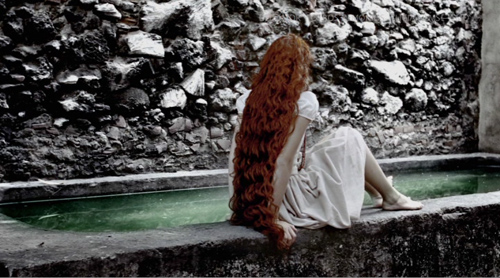
In contrast to the slapdash editing so common in contemporary Hollywood films, it’s a pleasure to see a film where every shot has been intelligently planned. The Variety review compares cinematographer Marcelo Camorino’s lighting to Caravaggio paintings, an apt parallel. The heroine’s implausibly dense, waist-length red curls are lovingly dwelt upon, as in the shot illustrated at the top of this entry. The sense of magical realism emerges most powerfully in a dazzling sequence in which the priests watch a solar eclipse. A moon far larger than it would normally appear passes across an equally huge sun, creating a fiery corona that hovers above the open sea (see below).
Microphone (Egypt; dir. Ahmad Abdalla, 2010)
Ahmad Abdalla, whose first feature Heliopolis we blogged about last year, is back with his second. Microphone is much more polished, reflecting a longer shooting time and perhaps a bigger budget. The same lead actor, Khaled Abol Naga, returns as Khaled, a young man returning to his native Alexandria after seven years in the United States. Finding that the girl he had hoped to marry has decided to go abroad to do her Ph.D., he sets out to help set up a studio in a warehouse. Gradually he gets drawn into the more popular goings-on in the working-class districts, notably rap music, skateboarding, and graffiti art. After a hypocritical government arts bureaucrat promises funding and then reneges, Khaled sets out to stage a concert in the open air, only to be confronted by Islamic and police opposition.
While Heliopolis simply followed a set of disparate characters around the upscale Cairo suburb, Microphone has a more ambitious structure, flashing back to stages in Khaled’s disillusioning reunion with his ex-girlfriend–flashbacks that are presented out of order within the ongoing scenes of his growing interest in street art. The result has the sophistication of a modern festival film.
The film presents a grim take on government repression and censorship. Abdalla, on hand to answer questions, told us that we had seen the full version, which he fully expects will be cut by the Egyptian authorities. Even 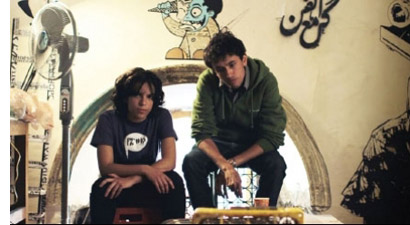 though he shows the young street artists in a sympathetic light throughout, Abdalla does not avoid the fact that their work is wholly positive. There is a motif of Khaled opening his shutters each morning to a view of an aging yellow stucco building across the way; one morning he opens again to find the façade covered with a giant graffiti image. though he shows the young street artists in a sympathetic light throughout, Abdalla does not avoid the fact that their work is wholly positive. There is a motif of Khaled opening his shutters each morning to a view of an aging yellow stucco building across the way; one morning he opens again to find the façade covered with a giant graffiti image.
Indeed, one audience member, a young man from Alexandria, objected to the portrayal of his beautiful home city as ugly, since the story is set mostly in poorer neighborhoods. Abdalla defended the approach, saying that the film is intended to portray a certain arena of life in the city realistically, with the incidents in the film being derived from stories recounted to him by the actual young artists who played themselves.
The film’s criticism of the Egyptian government may seem rather tame by western standards. Yet a telling change in the ending reveals how current are its concerns. There is a street vendor selling pop-music cassettes out of a cardboard box who returns at intervals as a motif, though he has little to do with the story. The film was to have had an upbeat ending involving the vendor. But in June, when the filming was still going on, the beating death of Khaled Said by two policemen outside an internet cafe in Alexandria took place. The filmmakers altered their ending, with police chasing the cassette vendor and starting to beat him. (The trial of the real-life policemen is ongoing and has every appearance of being a sham.)
The Man Who Will Come (Italy; dir. Giorgio Diritti, 2009)
This film dramatizes a set of massacres of villagers perpetrated by Nazi soldiers in the region around Bologna in 1944 in response to the people’s support of partisan troops. It’s a tale told through the eyes of Martina, a girl of about 9 who has been mute since her newborn brother died in her arms. (No points for guessing whether she regains speech by the end.) Since the main peasant family to which Martina belongs is fictional, there was no necessity to make her mute, and unfortunately the result is that she has very little personality. She is shown being bullied by some boys early on, which presumably is intended to make us sympathize more with her, though the choice of a pretty little girl as the point-of-view figure entails a pretty automatic sympathy on the audience’s part.
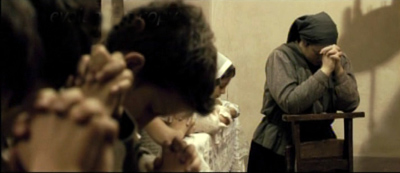
The film is largely episodic, with the life of the central peasant family and their neighbors being vividly conveyed as we see them at their tasks. At intervals, Nazis are seen near the village, and the partisans recruit young men and have some early successes. But since Martina understands little of what goes on around her, she has no particular goal, though eventually she gains one as the Germans begin the massacre and she is left to save another newborn brother. I found it difficult to keep track of the lengthy scene of the rounding up of the peasants and their executions in various venues. One group is taken to a chapel in a graveyard to be killed, another is killed by the church, and so on, but it is difficult to tell one group from another or to get a sense of how many peasants were slaughtered. (The original total was somewhere around 750 to 800.)
Overall the cinematography conveys the setting well, both the hilly, wooded landscapes and the ancient stone farmhouses. There’s a very effective scene where the townspeople take refuge in a church and Martina’s older sister runs back and forth from the bell-tower, reporting the fighting below, which we see only from far away, as she does. In fact, this sister is a more engaging character than Martina, and would have made a better point-of-view figure. Another gripping scene comes when she, seriously wounded in the massacre, is suddenly pulled out of the pile of bodies and given first aid by a Nazi officer. She’s mystified as to why he’s doing this, though we hear him tell another soldier that she reminds him of his wife. It may seem as if the insanity of war would be more effectively conveyed through a thoroughly naive character’s eyes, but at least in this case, somehow that doesn’t work.

Of Love and Other Demons.
Posted in Festivals: Vancouver, National cinemas: Italy, National cinemas: Middle East, National cinemas: South America | open printable version
| No Comments »
Sunday | October 3, 2010
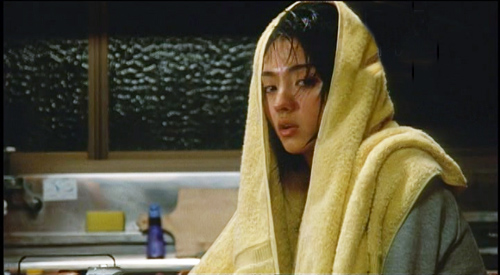
Sawako Decides.
DB here:
As has become our habit, we’re at the Vancouver International Film Festival, gulping down movies. The perennial Dragons and Tigers collection of recent Asian film is especially ripe this year, at over forty-three features and many shorts, and of course there are several other choices, across ten venues, competing for your eyeballs. Herewith, my first dispatch from this sunny, hospitable city. Kristin will follow up soon.
A girl, a boy, and many guns
She’s completely ordinary, “below-middle,” as she proclaims. Her contribution to a conversation is always a couple of steps behind. She spends her nights watching TV and guzzling beer. She has lost five jobs and been dumped by five boyfriends. Her main relaxation seems to be colonic irrigation. But when she’s fired and her father lies dying, she returns to her hometown to take over his clam-processing factory. She brings in tow her latest paramour, a twitchy ex-toy-designer who enjoys knitting.
Such is Sawako, who has the face of an anime princess and the mind of . . . well, that’s part of the problem. Psychologically, she’s the opposite of those fast-comeback youngsters spraying American indies with quirk. She mopes in her father’s factory, absently minds her boyfriend’s daughter, shrugs off the malice of her former teen friend, and ignores gossip about why she left town in the first place. Nothing can shake her obdurate passivity. She won’t fight. With beer as her only solace, Sawako seems not the stuff of drama at all.
But drama, tradition tells us, pivots on decisions (usually bad ones). Sawako Decides surrounds a woman resigned to misfortune with a range of eccentrics who do take action, sometimes recklessly. There are the older women who work in the processing plant, the faithless boyfriend with his powder-blue sweaters, the vindictive ex-friend, the alcoholic father who rips off his IV for a fight, even a college girl doing research on toxic clams. When Sawako finally chooses to do something, she’s acting, she says, for all the “below-middle” people—that is, nearly all of us. Associated throughout with body wastes, she turns the tide: Even the feces she spreads on the family garden yield a giant watermelon. The film ends with a trim long take in which Sawako finally blows her top and finds an agreeably aggressive use for her father’s bones. Ishii Yuya’s film shows how the blankest of characters can, if treated with wary respect, yield engaging cinema.
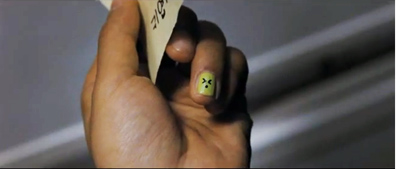
Won Bin is probably best known to Western audiences as the scatty, tormented son in Bong Joon-ho’s Mother, but he’s become a major Korean heartthrob. I know this because of the collective gasps and shrieks that greeted moments of The Man from Nowhere, a grisly action picture by Lee Jeong-Beom. Won plays a retired government agent running a pawnshop in a seedy neighborhood. He reenters the underworld to rescue a neighbor woman’s daughter, snatched by a drug gang for a little child labor and organ-stripping. He is a Bourne-style killing machine, and he is given plenty of chance for some rousing brawls and gunplay (though most of his fighting skills can be credited to editing and blur-o-vision camerawork). Mountainous, bug-eyed, and ominously silent bad guys round out the cast. Director Lee is also shrewd enough to feed the fanbase. There are some touching moments between the girl and the hitman; she even gives him a decorative fingernail while he sleeps. The film’s pin-up image shows Won, stripped to the waist at the mirror, clipping his hair, a bloodied groin-level bandage artfully completing the ensemble. (If you can’t wait, see the end of this entry.) A limited North American release comes later this month.
Excess, two varieties
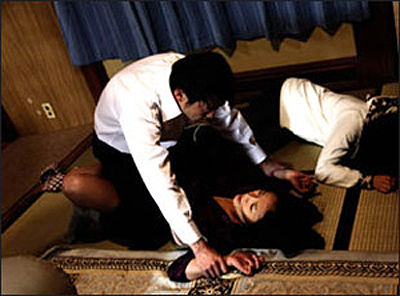
I’ve written briefly about Sono Sion’s perverse coming-of-age tale Love Exposure, and this year’s Vancouver fest brings us his latest, Cold Fish. Who would have thought that business rivalry between two tropical-fish vendors would lead to the carnage we see here? Meek Shamoto has a sexy wife and a disobedient teenage daughter. An aggressively friendly rival, Murata, owns a much bigger shop and offers to take the wayward Mitsuko under his wing. Soon Murata reveals that he plunges as voraciously into murder as he does into fish connoisseurship, and Shamato is caught up in the untidy business of human butchery.
A charnel-house of copulation and dismemberment, the film takes place in a vacuum; a police investigation comes virtually as an afterthought. Cold Fish is more linear and genre-bound than Love Exposure, but when the quiet march of Mahler’s first symphony signals the onset of dread you recall the wilder side of the earlier movie. Also carrying over is the blasphemous use of Christian iconography, associated here with slaughter and child abuse. The film is in the tradition of The Family Game and other dismantlings of Japanese domesticity. Once again, you can find as much lust and murder as you like just by looking into the nuclear family. In this case, the choice offered to the father is straightforward: be a wimp or be a brute. Sono aims to outrage, but once you know that you’re in for a bloodbath, you settle comfortably in for an engrossing exercise in splatter, Japanese-style.
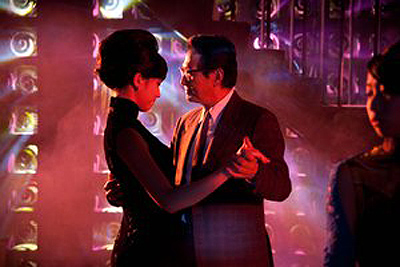
At the other extreme is The Drunkard, Freddy Wong’s adaptation of Liu Yichang’s well-regarded novel about a dissolute writer. Lau wants to be the Hemingway of Hong Kong, but his addiction to alcohol and his inability to love drive him into writing film scripts, pulp fiction, and eventually pornography. The fear of selling out your artistic ideals may not strike a chord in the age of Damien Hirst, but in the 1960s, the novel’s epoch, it held sway over literary culture. Lau’s struggle is presented as an oscillation between his collaboration on a literary magazine and his grubby business dealings with movie producers and publishers. In between, and constantly, he smokes and drinks. The women along his downward path include a seventeen-year-old temptress who has read Lolita, a sincere working woman who offers him lodging and sex, and an aged landlady who thinks he’s her son. His drunken refusal to sympathize with their needs brings sorrow to nearly all and death to a couple of them.
The Drunkard is shot in an unusual style. There are almost no long shots; the framing above is about as far back as the camera gets. Nearly everything happens in medium-shot and close-up. Wong was partly making a virtue of necessity, since streets and shops of the Hong Kong of the 1960s could not be reconstructed on the film’s budget. The positive result is an unrelenting concentration on Lau and repetitive bits of his behavior–gesturing with a cigarette, pouring whisky, or fading into a blackout. From scene to scene, we’re confined to his awareness, broken by fragmentary memories of wartime Japanese invasion. Only after his binges do we learn how viciously he acted when under the influence.
This tightly circumscribed world is enhanced by shots focusing on only a curtain edge or a streaked whisky glass, while people and surroundings drown in a blur. Shot on the Red camera, The Drunkard shows that high-definition digital is perfectly capable of giving foregrounds or backgrounds a hallucinatory softness. That softness, you could argue, is a correlative for the drunkard’s vision, locked on details and oblivious to the flux of human passions around him. In its effort to render the glowing warmth of alcohol, Wong and his cinematographer Henry Chung have given digital cinema a decisively subjective turn.
Two men and a sofa
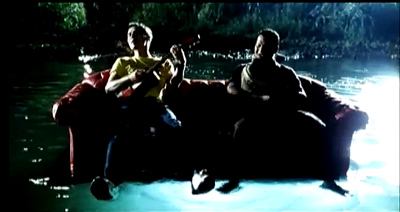
Ho Wi Ding’s Pinoy Sunday is a heartfelt, low-pressure comedy-drama that makes some telling points about cultural dislocation. Dado and Manuel are Filipino “guest workers” in Taiwan. Friends since high school, they work in a bike factory and live in the factory dormitory. In their dreams they imagine installing a lavish raspberry-bright sofa on the dorm roof where they could lounge, drink beer, and look at the stars. One day, visiting Pinoy on break, they see that very sofa abandoned on the street.
Emigrant Filipino workers fill the lower-rank jobs in many Asian countries, and I’ve seldom seen fiction films show the texture of their lives. Through Dado’s phone conversations with his family, the pain of loss comes through. He buys his daughter a Barbie for her birthday, even while he carries on an affair with an émigré woman (who herself has a husband and family back home). Manuel is on the make, but with winning naivete has a knack for picking the wrong women to idealize (hookers, policewomen). In a way, the sofa becomes the tangible emblem of not just material comfort but the men’s aspiration for a more stable life.
With something of the wistful satire of 1960s Eastern European films like Intimate Lighting or The Fireman’s Ball, Pinoy Sunday turns an anecdote into a mini-saga. (It was inspired by Polanski’s Two Men and a Wardrobe.) At the canonical turning point (circa 28:00), Manuel persuades Dado to carry the sofa back to their dorm before the gates close. The ensuing misadventures recall Laurel and Hardy, but with stronger sentiment.
Their journey reminds them they are outsiders. A TV reporter thinks they’re Malaysian. Trying to explain an accident to a cop puts them at a disadvantage. Their inability to speak Mandarin gives us a crash course in how gestures, English phrases, and situational logic are pieced together to communicate across cultures. At the height of the men’s frustration, there is a poignant musical interlude that evokes magic realism, but that moment is immediately undercut by sober reality. Yet our concern for these two resilient strivers is rewarded with a sort of happy ending.
Finally, the bear of this entry’s title is Alex Law’s Echoes of the Rainbow, the Hong Kong film that won the Crystal Bear at this year’s Berlin festival. I haven’t seen it yet but I hope eventually to pass you some words about it.

The Man from Nowhere.
Posted in Festivals: Vancouver, Film criticism, National cinemas: Hong Kong, National cinemas: Japan, National cinemas: South Korea, National cinemas: Taiwan | open printable version
| No Comments »
|