





Archive for the 'Film comments' Category
Another pebble in your shoe
DB here:
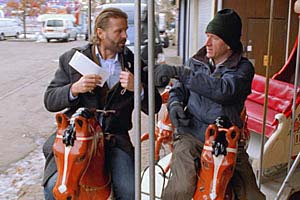
“Life is a Dogme film. It’s hard to hear, but the words are still important.” This is one of the many in-jokes peppering Lars von Trier’s The Boss of It All, his newest feature. I watched it while preparing an essay for the Danish Film Institute, which superbly promotes Danish cinema to the world. But I wasn’t ready for what I saw.
It’s a comedy, of course, with a classic bait-and-switch premise. For shadowy motives, a corporate lawyer entices an idle actor to pretend to be the superboss whom the IT staff has never met. Unfortunately, through emails to the staff, the lawyer has constructed a persona for the boss–in fact, several personae, a different one for every worker. Our actor must play many parts before finally, in a series of reversals, he gets to “find” the real character.
In tone, the film is as mixed as most von Trier works, hovering between sympathy for idealistic underdogs and a sour realization that they will always be victims. It reminded me somewhat of Kaurismaki and the Fassbinder of Fox and His Friends. But the film is a breezy piece of work; nothing really serious faces his innocent here. There’s a lively satire of the corporate world, mocking management catchphrases du jour (not outsourcing, we’re told, but offshoring) and touchy-feely hugging. The hostile incomprehension between Denmark and Iceland provides some good gags too. Von Trier also pokes fun at actors, perhaps invoking his well-publicized feuding with divas like Kidman and Björk. Our hero/loser Kristoffer is a sort of Method man, but he learns that he gets the best results through shameless sentiment.
Here the words are important–it’s a very talky movie–but so are the pictures. Shot in 16mm in available light, The Boss breaks with von Trier’s normal commitment to handheld camerawork. Except for some interpolated crane shots outside the office building, the camera never moves, not even panning. But the image is constantly being refreshed through incessant cutting (there are over 1500 shots). The film boasts more jump cuts than Breathless or Matchstick Men, and each one creates a bump. There’s very little sound overlap between shots–the ambient noise usually drops out for a fraction of a second–and there are often visual mismatches, so (as in The Idiots), nearly every cut feels like an ellipsis. A film, von Trier has said, should be as irritating as a pebble in your shoe, and his abrasive tempo gives his comedy an anxious edge.
Then there are the very peculiar framings. Here’s a string of three brief shots from the first scene, with continuous dialogue (in gappy duration). The lawyer is trying to persuade the actor to perform as the boss.
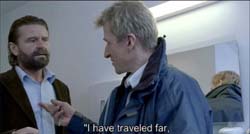
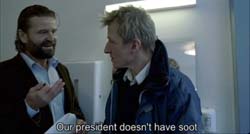
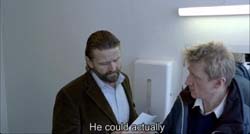
(Yes, these are three separate shots, not three stages of one wobbly shot.)
These cuts break the so-called 30-degree rule, which mandates that if you’re cutting to different angles on the same subject, your second angle should vary by at least 30 degrees from the first. In addition, the later off-center compositions seem gratuitous; why not just sustain the first shot, since the next two hardly vary from it? Sometimes you get results like this.
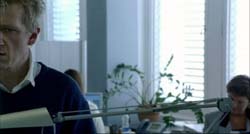

It turns out that there is method to the madness, although the method, granted, is a bit mad. You can read about Automavision here, if you want to know in advance why the movie looks this way. But if you want to be as startled as I was, refrain. Let’s just say that von Trier’s famous 100-camera technique of Dancer in the Dark has been repurposed in a pretty unexpected way. And don’t believe what he says about surrendering to chance; the cuts are often very careful.
Whether you do your homework in advance or not, you’ll probably enjoy The Boss of It All. After my criticisms of editing in The Departed (which made me seem to be raining on the Scorsese parade) and my comments about classical principles of coverage, I’m happy to report on a film which offers something new and strange. The vivacious Danish film culture makes a space for von Trier to set up creative obstructions, for both himself and his viewers.
Postscript: Since I wrote this, von Trier announced that he’s added more tricks to his bag. Turns out that The Boss of It All employs Lookey, a game that challenges the viewers to spot objects that don’t belong in a scene. “For the casual observer it’s just a glitch or mistake,” he says, “but for the initiated it’s a riddle to be solved.” The purpose is to keep viewers alert and active. Film’s great flaw, he claims, is that “it’s a one-way medium with a passive audience.” Lookey, however whimsical, fits well with the agitating effects of the cut and sound dropouts.
The first viewer in Denmark to identify all the Lookeys correctly wins a cash prize and a chance to be an extra in von Trier’s next film.
PPS: Thanks to Vicki Synott of the Danish Film Institute.
PPPS 28 December: I just discovered a frisky website devoted to Nordic filmmaking, where Mirja Julia Minjares has gathered some interesting quotes from von Trier and his sound recordist Ad Stoop. Von Trier says that the computer program also selects for sound gain and filter. Adds Stoop: “When a computer program chooses the settings for the sound and cinematography between each shot, every edit gets underlined in the finished film.”
PPPS 31 December: Check perceptual psychologist Tim Smith’s blog for more insights into von Trier’s games with continuity editing.
–dB
Unassigned reading
DB here:
Thanks to the digital engineering efforts of Andy Adams, of Flak magazine, some older research articles of mine are now archived on the site. See the list on the left, or click here. The pieces range from discussions of particular filmmakers (Feuillade, Preminger) and film techniques (e.g., jump cuts) to more general questions about film theory, history, and criticism. Also included is Lingua Franca‘s profile of me. I’ve added some supplementary comments to give a little context. Andy will be adding a couple more essays in the week to come.
This spring my Poetics of Cinema collects other previously published essays, all revised. That collection includes several new pieces as well.
Also, I’ve added two new book reports, one on James Mottram’s The Sundance Kids, the other on Joe Eszterhas’s Devil’s Guide to Hollywood.
A great gift for the film fan on your holiday list: The wonderful book by Teruyo Nogami, Waiting on the Weather: Making Movies with Akira Kurosawa, trans. Juliet Winters Carpenter. This is a trip back to a golden era of Japanese cinema.
Ms. Nogami started as a minor functionary at Toho, shifted to Daiei, and then worked as scriptgirl for Kurosawa. As sharp, funny, and moving as any Japanese film of the 1940s and 1950s, her book gives an engrossing account of the social interactions around moviemaking. You get a sense of the desperate energy of Japanese film production in the late 1940s, when Tokyoites scrabbled for food. Film stock was scarce–directors sometimes could afford to make only one take–and people worked around the clock. To keep going during all-night shoots, crew members injected themselves with philopon (aka speed).
Of course Kurosawa stands at stage center, treated reverently but also with keen observation. You’ll want to read about his relations with producers, composers, cameramen, and tigers. But there are other featured players too. As a schoolgirl Ms. Nogami corresponded with the important 1930s director Mansako Itami, and she took sisterly care of his son Juzo, who would grow up to direct Tampopo and A Taxing Woman.
In all, a document of moviemaking’s many dimensions–technical, financial, artistic, and personal. Donald Richie contributes a warm foreword, and we should thank Marty Gross of Marty Gross Films for initiating the translation.
Word by word
DB here:
This year two prominent fiction writers opened their workshops to us. Jane Smiley’s Thirteen Ways of Looking at the Novel, published by Knopf last spring, is a compendium of information and wisdom, offering thirteen substantial chapters on technique followed by lively essays on 101 novels. Written in the aftermath of 9/11, the book is a testament to the joys and consolations of literature.
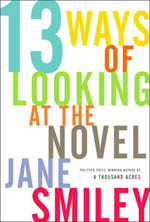
Smiley offers a feast of ideas and examples. She observes that in a novel, the protagonist tends to contrast his or her fate with those of others. She shows how a novel’s rhythm is created by alternating passages of action and reflection, with each shaping the other. She also remarks on the novel as a type of game:
The game quality of the novel gives it meaning and form, because all games begin, have a playing time, and end. It also gives the novel at least a rudimentary raison d’etre, since games are a recognized form of learning for young mammals. The author sets up the game and is required to signal to the reader early in the narrative what the rules are.
With her top-101 list, Smiley isn’t proposing a canon. Her inspiring essays are at once historical (moving from The Tale of Genji to Jennifer Egan’s Look at Me) and very pluralistic. On her list we find both Dickens and Wilkie Collins, Scott Fitzgerald and P. G. Wodehouse, Muriel Spark and Garrison Keillor.
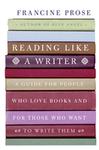
Now we have Francine Prose’s Reading Like a Writer: A Guide for People Who Love Books and for Those Who Want to Write Them (HarperCollins). This too is wonderful, but in a rather different way. Smiley’s book is a doorstop, Prose’s can be slipped into a carry-on. Although Prose discusses several novels, she seems most at home with the short story. Smiley is happy to generalize, exploring broad claims in a reassuring but rigorous way. Prose, a child of New Criticism and the practices of close reading, backs away from generalizations and relies on abundant quotation to develop her points. It’s a conservatory approach. We study the masterworks (high and low–you’ll find Chandler and John Le Carré here) and through delicate discrimination we learn to admire good writing and see how we might develop a supple style ourselves.
Jane Smiley believes that fiction rests on some basic precepts (not rules): craft premises, tacit contracts with readers, assumptions about how genres work. In one chapter she sweeps across theories of fiction from Aristotle to Henry James, harvesting the enduring ideas. Prose’s book is more tentative; she treats even craft precepts as loose guidelines, always subject to revision.
In her skin-prickling penultimate chapter, Prose recounts a series of craft tips that she gave her students. Motivate your characters’ action! Don’t give two of them similar names! Then she shows how reading Chekhov made her doubt each homily.
And this is what I’ve come to think about what I learned and what I taught and what I should have taught. Wait! I should have said to the class. Come back! I’ve made a mistake. Forget observation, consciousness, clear-sightedness. Forget about life. Read Chekhov, read the stories straight through. Admit that you understand nothing of life, nothing of what you see. Then go out and look at the world.
With her admiration for Chekhov, Babel, and Nabokov, Prose advances the case that exacting attention to style isn’t a flight into artifice but the best way of teasing out the nuances of human life.
Every writer should read her first few chapters. In “Words” she lays down the book’s premise: “It’s essential to slow down and read every word. . . Ask yourself what sort of information each word–each word choice–is conveying.” She warns against reading fiction in order to skim off themes or psychological insights, especially when “crucial revelations are in the spaces between words, in what has been left out.”
The next chapter, on sentences, is one of the best statements I’ve ever read about the craft of writing. A young writer, Prose reports, once told his agent that he wanted above all to write “really great sentences.” She raises the curtain on professional gossip: it turns out that writers love to talk about sentences. (How many writers of academic prose even think about their sentences, let alone discuss them with others?) She champions the lost skill of sentence diagramming, and I was happy to learn that she encourages a habit of mine, that of keeping close at hand books by writers who compose admirable sentences.
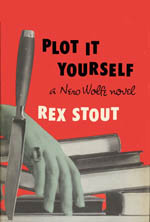 The following chapter was especially enlightening to me because I’m struggling to find more varied ways to paragraph my writing. Prose examines the killer moment in Rex Stout’s Plot It Yourself when Nero Wolfe explains that the pattern of a writer’s paragraphs is a stylistic fingerprint. She fastens on a passage I’ve always loved, in which the narrator, Archie Goodwin, enacts in print what his boss has proposed. Across a long paragraph, Archie spends “about half an hour studying paragraphing,” while recapping the routines of the Wolfe household. He ends:
The next sentence is to be, “But the table-load of paper, being in the office, was clearly up to me,” and I have to decide whether to put it here or start a new paragraph with it. You see how subtle it is. Paragraph it yourself.
I stood surveying the stacks of paper.
(Robbe-Grillet, eat your heart out.) Prose goes on to explore various ways in which Archie might have broken up his long stretch of description. For now and hereafter, she is my Goddess of the Paragraph Break. Or should I have made that last sentence a separate paragraph?
The rest of the book, covering detail, narration, and other techniques, is no less enlightening. Reading Like a Writer winds to a conclusion in which, after the encomium to Chekhov, Prose asks all writers to summon the courage to avoid easy tricks, to treat their work with integrity, and to follow language where it leads. Her last extract, revealingly, comes from verse. Her insistence on the words on the page, I came to see, amounts to treating prose as if it were poetry.
One moment of doubt, though. It’s generally realized that many writers are story people rather than style people. Dreiser and Stephen King have a penchant for awkward writing. Often their style records their struggles to find the right phrase. Yet once you’re hooked, you’re hooked and their stories carry you forward. Maybe Prose would argue that their books would be even better if they wrote better; or maybe the novel is a more forgiving genre than the short story. Anyhow, neither writer is Chekhov. Still, it’s indicative that unlike Smiley’s 13 Ways and virtually every other writing manual, Prose’s book offers no guidance on plot or structure. This is a book about style–its techniques and its ethics.
Why bring these considerations into this blog? For one thing, students of cinema should always be open to learning about form and style in other arts. Reflections on literary point of view can alert us to how filmmakers manage it. Prose suggests that point of view is subtler than “who speaks?” and “who sees?” Word choice and sentence rhythm can tip a scene from one character to another without any use of I said or she noticed. That set me thinking. Does cinema have something similar? In film, if we show one character in longer-held shots than others, does that help weight the scene to her? Or might we have her advance toward the camera when the others stay behind? Or could we modulate the sound levels to bring her voice into prominence? Reading about techniques in the other arts can sharpen our awareness of parallels or non-equivalences between other media and film.
Prose’s book is also part of a heartening trend in the humanities. The growing success of literary-appreciation books for a general audience over the last few years may signal the flagging of the sort of Grand Theory promoted by Structuralism, Post-Structuralism, and other movements. Smiley the pluralist flirts with some academic terminology, but Prose is uneasy with academic theory. When she went to graduate school
I soon found that my love for books was unshared by many of my classmates and professors. I found it hard to understand what they did love. . . . That was when literary academia split into warring camps of deconstructionists, Marxists, feminists, and so forth, all battling for the right to tell students that they were reading “texts” in which ideas and politics trumped what the writer had actually written.
On the whole, I think, Prose’s skepticism has been borne out. The fact that Harold Bloom, Stephen Greenblatt, and other eminences of High Theory are now writing books teaching general readers to, well, enjoy great literature shows that radical ideas have been dialed back quite a bit. The very title of Marjorie Garber’s Shakespeare After All seems, against all worries about canonization, to resurrect the idea of The Greatest Writer Who Ever Lived.
There are more practical reasons to consider books like Smiley’s and Prose’s in this forum. Many readers of the Internets are writers. They write school essays, journalistic pieces, professional papers, blogs, and all manner of things. Most of us are artisans of language, and we ought to welcome coaching from experts. I used to tell my graduate students that whatever they thought they were going to be–scholars, researchers, archivists, teachers–they would all be professional writers. We ought to be as mindful about the craft and duties of writing as we are about any other aspect of our calling.
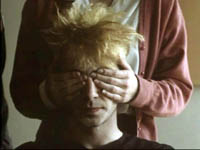 Finally, Prose indirectly reminds us of the importance of peering closely at the texture of movies. It’s not only strong stories and provocative themes that draw us to cinema. The moment-by-moment fluctuations of what we see and hear on the screen also shape our experience.
One important thing that we can learn by reading slowly is the seemingly obvious but oddly underappreciated fact that language is the medium we use in much the same way a composer uses notes, the way a painter uses paint. I realize it may seem obvious, but it’s surprising how easily we lose sight of the fact that words are the raw material out of which literature is crafted.
In the last sentence, substitute images and sounds for words, and cinema for literature, and you have an earnest reminder that we should look and listen closely to movies.
Despite all we know about film technique, the systematic study of film style is really just beginning. By reading literature as Prose recommends, we not only get more out of great books; we cultivate skills that can enrich our understanding of film.
Lewis Klahr X 3, X 4
DB here:
Last Saturday Lewis Klahr came to Madison, brought by the Starlight Cinema group of the University’s Student Union. He showed two sets of films: The Two Minutes to Zero Trilogy (2003-2004) and Daylight Moon (A Quartet) (2002-2004). He’s one of the most gifted collage animators in the American avant-garde, surely the most accomplished since Larry Jordan. Both filmmakers work in the Surrealist tradition, but Jordan seems more drawn to images from nineteenth-century illustration, while Klahr loves US pop culture. As a baby boomer who came of age in the 1970s, he recycles magazine ads, comic books, and book illustrations in lyrical and sometimes aggressive ways.
Tipped off by Tom Gunning, I first encountered Klahr’s work in The Pharoah’s Belt (1993), his most famous film. I also enjoyed seeing his film-within-a-film in Miguel Almereyda’s imaginative Hamlet (2000). At a recent Hong Kong International Film Festival I saw The Two Minutes to Zero Trilogy and decided to study it a bit. I contacted Klahr and he kindly sent me the film, along with Daylight Moon, and some lovely work by Janie Geiser, an accomplished filmmaker in her own right. You can get examples of their work on this DVD from Craig Baldwin (himself an extraordinary filmmaker).
Seeing the Trilogy again, I was even more impressed by it. Each of its three parts consists of images snipped out of old 77 Sunset Strip comic books, with each part implying a bank holdup and a chase, but each time the events are compressed more and more. The last episode runs only one minute. “A feature length narrative compressed 3 different times into 3 separate films of diminishing duration until the synoptic is synopsized,” as Klahr puts it.
Don’t try to find a plot. Each episode uses just enough cops-and-crooks iconography to tease us into trying to create a coherent narrative, but it frustrates that in several ways. The images refuse to settle down, slipping and snicking past your eye in an imitation of saccadic glances. The microscopically short snippets recall multitrack sampling. In the Madison Q and A, Klahr called it a “pan and scan aesthetic.”
Sometimes the cartoon panels jerking past the camera create a weird effect of motion. A man dodging into a car with a valise seems to be whizzing off, a woman seems–for only one frame–to wave a sheaf of bills.
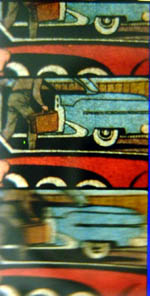
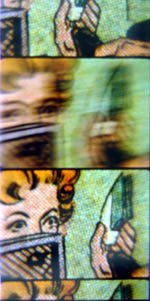
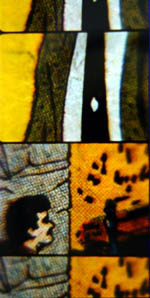
The cutting is rapid-fire as well. I’d thought that Klahr had edited in the camera, but he spliced everything. A certain maniacal precision becomes evident when you can actually look at the images on the strip and see the bold shot-changes, like the one crowning this post. The trilogy evokes the rush of a heist film without ever giving us more than glimpses of what the narrative might be. The sense of action hurtling toward chaos is cranked up by soundtracks using roaring guitar music from Rhys Chatham and Glenn Branca.
Daylight Moon (A Quartet) was far more relaxed. I saw it as a meditation on childhood and its sensitivities, fears, and moments of awe and mystery. (A touch of Joseph Cornell, maybe.) Valise is dominated by the vastness of our planet and the cosmos; Hard Green gives us comic-book imagery of military combat. Soft Ticket was a lyrical remembrance of baseball cards, and the finale, Daylight Moon blended imagery of kid culture and suburban utopias with the soundtrack of Night of the Hunter.
Klahr talked about the quartet as “the best film I’m ever likely to make,” largely because it achieved his aim of a “democracy of subjectivity.” He meant by this the poetic power of the juxtapositions he creates, which invite viewers to connect the material in unpredictable ways. Hollywood films, he remarked, try to get us all to experience the material in a single way, and that’s suitable for a mass audience. But collage films like his have a “signal to noise ratio” that allows viewers to tune in to something, drop out for a few moments, and then tune in again.
For each viewer, the high-information moments will be different, and if a viewer returns to the film, he or she will probably find new images to focus on. This time through the Quartet, I noticed that each of the first three films had a recurring male figure–a sea diver/ astronaut, a soldier, baseball players–until Daylight Moon ends with a man stretched out on a used car. This would seem to be a reverie about a boy’s childhood.
Klahr is a warm, unpretentious speaker and he engaged the audience in a lively dialogue. His work deserves to be more widely known. I can’t imagine watching the Trilogy on DVD; could digital sampling capture the REM effects of the blurring pans? Still, a release on that format would surely expand his circle of admirers.