




Archive for the 'Film technique: Staging' Category
Take it from a boomer: TV will break your heart
DB here:
Every so often someone will ask Kristin and me: “Why don’t you write about television?” This is usually followed by something like:
”You’re interested in narrative. The most exciting narrative experiments are going on in TV, not film.”
”You’re interested in visual experimentation. The most exciting developments in visuals are in TV.”
”TV is where the audience is.” Or “TV is where the culture is.”
”Film is borrowing a lot from TV, and producers and directors are crossing over.”
We might answer by saying we don’t watch any TV, but that would be a fib. Like everybody, we watch some TV. For us, it’s cable news commentary, The Simpsons, and Turner Classic Movies.
Truth be told, we have caught up with some programs on DVD. We watched the British and the US versions of The Office and enjoyed both (though the American version, no surprise, makes the characters more lovable). Kristin watched The Sopranos’ first season for a particular project. For similar purposes I watched and enjoyed Moonlighting and some Michael Mann TV material. Intrigued by the formal premise of 24, I dipped into the first season, but I found it visually so wretched I couldn’t continue. I got through four seasons of The Wire on DVD, largely because of the Pelecanos connection, but I found it over-hyped. It seemed to me a sturdy policeman’s-lot procedural, but rather fragmented and uninspiringly shot.
That’s it for the last three decades. No real-time monitoring of episodic TV (we haven’t seen Lost or Mad Men or the latest HBO sensations) and none of the reality shows or the music shows or even comedy like Colbert or Jon Stewart.
So we aren’t plugged in to the TV flow. Americans currently log over four and a half hours a day in front of the tube, so clearly we’re derelict in our duty. As Clay Shirky points out in Cognitive Surplus, TV viewing is Americans’ unpaid second job.
But why don’t I start following episodic TV? The answer is simple. I’ve been there. I was a TV kid before I was a film wonk. And I can assure you that watching TV leads to painful places—frustration, anger, sorrow. All you’re left with is nostalgia.
Commitment problems
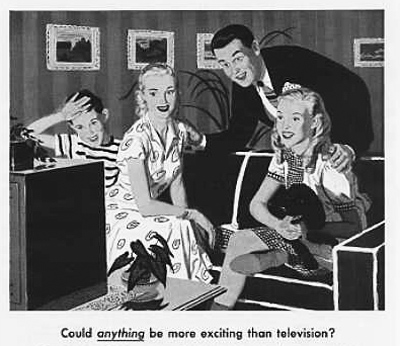
I see the difference between films and TV shows this way. A movie demands little of you, a TV series demands a lot. Film asks only for casual interest, TV demands commitment. To follow a show week after week, even on a DVR, is to invest a large part of your life. Going to a movie demands three or four hours (travel time included).
Whether a movie is good or bad, at least it’s over pretty soon. If a TV show hooks you, prepare for many long-term ups and downs—weak episodes, strong ones, mediocre ones. Favorite actors leave or die, and replacements are seldom as good as the originals. A new character may be charming or annoying. An intriguing hero may accumulate distracting sidekicks. Plots take weird turns, sometimes dillydallying for months. All this can drag on for years.
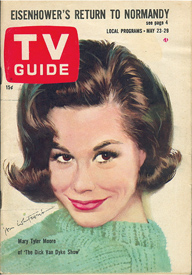
Of course TV-philes enjoy this slow samba. They point out, rightly, that living through the years along with the characters, watching them change in something like real time, brings them closer to us. Who doesn’t appreciate the way Mary Tyler Moore evolved into something like a feminist before America’s eyes? As early as 1952, the sagacious media critic Gilbert Seldes pointed out that intellectuals who thought that TV was plot-dependent were wrong.
It is natural that the actual plot of a single self-contained episode should be comparatively unimportant. . . . The very limitations of the style leads its creators to develop characters of considerable depth, to create dramatic conflict out of the interaction of people rather than out of an artificial juxtaposition of events. As television is a prime medium for transmitting character, this is all to the good (Writing for Television, pp. 115-116)
We get to know TV characters with an informal intimacy that is quite different from the way we relate to the somewhat outsize personalities that fill the movie screen. We learn TV characters’ pasts, their hobbies, their relations with kin, and all the other things that movies strip away unless they’re related to the plot’s through-line.
Having been lured by intriguing people more or less like us, you keep watching. Once you’re committed, however, there is trouble on the horizon. There are two possible outcomes. The series keeps up its quality and maintains your loyalty and offers you years of enjoyment. Then it is canceled. This is outrageous. You have lost some friends. Alternatively, the series declines in quality, and this makes you unhappy. You may drift away. Either way, your devotion has been spit upon.
It’s true that there is a third possibility. You might die before the series ends. How comforting is that?
With film you’re in and you’re out and you go on with your life. TV is like a long relationship that ends abruptly or wistfully. One way or another, TV will break your heart.
TV brat
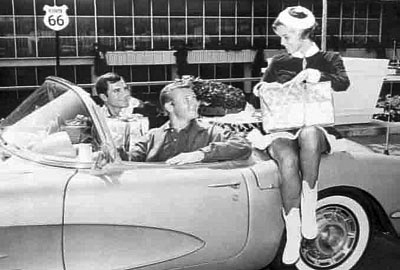
Trust me, I’ve been there. Unlike most film nerds, I wasn’t a heavy moviegoer as a child. Living on a farm, I could get to movies only rarely. But my parents bought a TV quite early. So I grew up, if that’s the right phrase, on the box.
Childhood was spent with Howdy Doody (1947-1960) and Captain Video (1949-1955) and Your Hit Parade (1950-1959) and Jack Benny (1950-1965) and Burns and Allen (1950-1958) and Groucho (You Bet Your Life, 1950-1961) and Dragnet (1951-1959) and Disneyland (1954-2008) and The Mickey Mouse Club (1955-1959). With adolescence came Alfred Hitchcock Presents (1955-1965) and Maverick (1957-1962) and Ernie Kovacs (in syndication) and Naked City (1958-1963) and Hennesey (1959-1962) and The Twilight Zone (1959-1964) and Route 66 (1960-1964) and The Defenders (1961-1965) and East Side, West Side (1963-1964).
Some of the last few titles I’ve mentioned evoke particularly fond feelings in me. At a crucial phase of my life, they presented models of what the adult world might be.
For one thing, adults had an easy eloquence. Some of these shows seem overwritten by today’s standards, but actually they brought to television a sensitivity to language that seems rare in popular media now. Bret Maverick had a smooth line of patter, and even racketeers on Naked City could find the words. Dragnet‘s dialogue is remembered as absurdly laconic, but actually it showed that very short speeches could carry a thrill. At the other extreme were the soliloquys in Route 66. One that sticks in my mind came from a daughter, torn between love and exasperation, saying how touched she was when her father called one of her simpleton boyfriends “uncomplicated.” (The line was modeled on something said by Faulkner, I think.) I don’t recall characters insulting one another as much as they do nowadays, and of course obscenity and body humor were yet to come. At that point, TV relied so much on language that it might be considered illustrated radio.
Second, these shows made heroes of adults who were reflective and idealistic. They mused on social problems and thought their positions through. The father-son lawyers of The Defenders often disagreed about the moral choices their clients had made, and as a result you saw the different ways in which legal cases shaped people’s lives and public policy. Even a cop show like Naked City was less about fights and chases than it was about the causes, and costs, of crime.
Third, adults were empathic. This was partly, I suppose, because I was drawn to liberal TV; but I think it’s striking that my favorite dramatic shows showed professionals committed not to billable hours but to helping other people.
El segundo pueblo
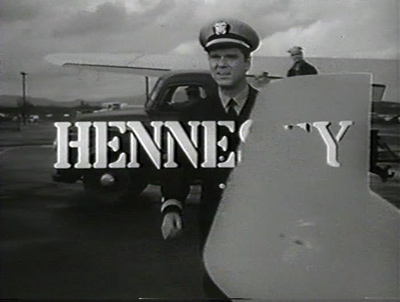
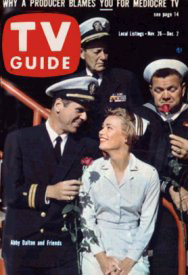
These qualities were epitomized in Hennesey. The continuing cast was small. Chick Hennesey (Jackie Cooper) is a navy doctor in his mid-thirties. His irascible superior Captain Shafer, is played by Roscoe Karns, bringer of dirty fun in 1930s and 1940s movies (“Shapely’s my name, shapely’s my game”). Nurse Martha Hale (Abby Dalton) serves as a romantic interest for Hennesey, and Max Bronski (Henry Kulky) is a dispensary assistant; both are vivid characters in their own right. A few others pop in occasionally, notably the rich eccentric dentist Harvey Spencer Blair III (played with eerie passivity by James Komack).
The series began as a situation comedy, but soon it became an early instance of the “dramedy”—the TV equivalent of sentimental comedy. In this classic genre, moderately grave problems cannot shake the essential concord of human relations. The tonal mixture makes a laugh track distracting; Hennesey‘s was eventually phased out.
The series was created and largely written by Don McGuire, who modeled his protagonist on a doctor he admired. Hennesey is l’homme moyen sensual, a man of no great ambitions or grand passions. He smokes cigarettes (Kent was a sponsor) but, surprisingly, doesn’t drink alcohol. He served in the army when very young (at Guadalcanal), went to UCLA medical school, and was drafted into the navy. Neither a career officer nor an ordinary doctor, he is more at home with enlisted men than the brass.
Hennesey isn’t a dramatic blank, but his virtues are quiet ones. He simply wants to help people get over the daily bumps in the road. He stammers when bullied by someone more aggressive, but sooner or later he quietly stands his ground. When he has a chance to do something decisive, he does it without fanfare. In the pilot episode, he has to override Shafer in order to extricate a man’s arm from a flywheel. But afterward he is likely to wonder whether he did the right thing. He often confesses his fears and weaknesses. Hennesey is a prototype, far in advance, of the caring, sharing male. He is, as Martha sometimes tells him, nice; but that sounds too soft. He is simply decent.
The plot often calls on him to confront people far more harsh and self-centered than he is. Often Captain Shafer, playing the narrative role of Arbitrary Lawgiver, assigns Henessey to unpleasant duties, like dealing with a lady psychologist who wants to find out why men join the navy. Often Henessey has to help men and women adjust to navy life, or to tell them that they are too unhealthy to continue. Sometimes he reminds arrogant doctors why they took up the calling. He also encounters civilians with problems that impinge on his own life. Going home to meet the doctor who inspired his career choice, he finds a bitter widower. In other episodes he simply observes someone else rising to the occasion. A bumbling helicopter pilot is a figure of fun until, behind the scenes, he risks his life to save a girl with appendicitis.
Everything about the series is modest: the level of the performances (only Shafer raises his voice), the accidents and digressions that deflect the plot, the cheap sets and recycled exterior shots, the jaunty hornpipe score that becomes an earworm on first hearing. But all these things enhance that TV-specific sense of a comfortable world with its familiar routines and unspoken bonds of teasing affection.
The show illustrates one of the virtues of TV of the time: talk. Characters emit single lines or even single words at a pace recalling that of the 1930s screwball comedies. Nurse Hale is the fastest, Shafer comes next, and Hennesey is left to play catch-up. In one episode, Shafer has just learned he’s going to be a grandfather, and he leaves the office euphoric. But Martha is a beat ahead.
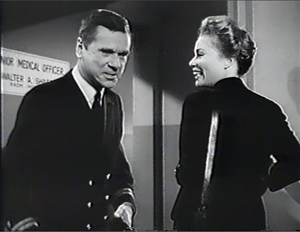
Hennesey: I betcha this has him in a good mood for weeks.
Martha: For what?
Hennesey: For days.
Martha: Do you want to bet that within thirty seconds he’ll be in a bad mood?
Hennesey: No, that’s ridiculous.
Martha: Is it?
Hennesey: Of course. What could possibly get him upset in—?
Shafer returns, frowning.
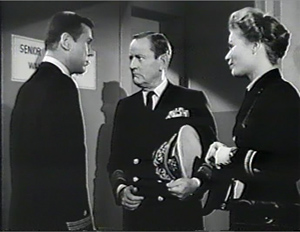
Shafer: I just thought of something.
Martha: His first grandchild will be born overseas.
Shafer: Right.
Martha (to Chick): Think you’re playing with kids, huh?
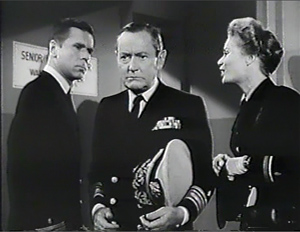
The exchange, including blocking, takes nineteen seconds. It’s conventional, I suppose, but its brisk conviction modeled for one thirteen-year-old the possibility that adults are alert to each moment and enjoy rapid-fire sparring with their friends.
Harvey Spencer Blair III has more highfalutin rhetoric. In a 1961 episode, he declares his plan to run for mayor of San Diego.
Harvey: My election will see the rise of little people to positions of consequence, the molding of our future cultures, the era of a new world. Join with me, my dear, in crossing the New Frontier.
Martha: Leave the petition with me, Dr. Kennedy.
Harvey: I revel in the comparison.
Here even the double takes are modest. Characters react with a frown or a tilted chin or a widening of the eyes or a slight shake of the head. There can be verbal double-takes as well, mixed in with overlapping lines in the His Girl Friday/ Moonlighting manner. At the start of a 1961 episode, Martha enters the infirmary. Henessey is at the desk and Max is filing folders.
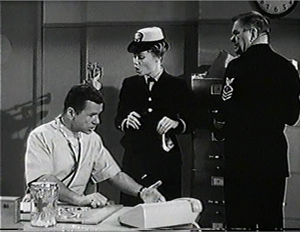
Without looking up, Chick says what he thinks Nurse Hale should say.
Hennesey: Morning, Max. Morning, doctor. Sorry I’m late.
Martha: I am not.
Hennesey (looking up): You’re not? It’s ten minutes after eight–
Martha (overlapping): I mean I’m not sorry. I have a very good excuse.
Hennesey: You had a run in your mascara?
Martha: I had to stop and talk to the senior nurse.
Max: Did you get it?
Martha: Yes.
Hennesey: Get what?
Max: Good, I’m glad.
Martha: Thank you, Max.
Hennesey: Get what?
Max: I bet it’ll be nice up there.
Martha: I hope so—
Hennesey (overlapping): Up where?
Max: If it isn’t too cold.
Hennesey: Oh, no, it can’t be too cold, it’s only cold up there in August—that is, if the winds from the equator don’t –Look, you two, don’t you think it’s only fair that if you discuss something in front of a third party, you might just—
Martha: A run in my mascara?
Nobody I knew talked like this, but why not talk like this? It would make life more lively. Backchat, I’ve learned over the years, can get you in trouble; life isn’t a TV show. But I still think that repartee, especially featuring stichomythia, is one of the pleasures of being a grownup. So too are the catchphrases we weave into our chitchat. The Hennesey tag I enjoyed was “El segundo pueblo,” uttered oracularly at a moment of crisis, and always translated with a different, incorrect meaning. My own life would feature motifs like “A meatloaf as big as the Ritz” (undergrad days), “Kitchen hot enough for you yet?” (grad school), and “If I’m gonna get shot at, I might as well get paid for it” (professorial years).
Being a film wonk, I can’t rewatch episodes without noting that those directed by McGuire have some flair. His staging fits the characters’ unassuming demeanor, providing a deft simplicity we don’t find in modern movies. This is doorknob cinema; scenes start when somebody enters a room. And people in the foreground respond to others coming in behind them.
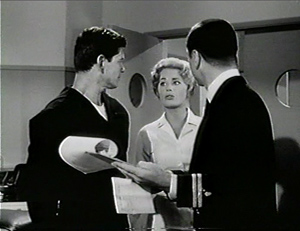
The faster the gab, the slower the cutting, but extended takes can refresh the image by moving actors around. In one scene, Harvey, still planning to run for mayor, is slated for a court-martial. He enters to get the news. His somewhat zombified gait contrasts with Hennesey’s peppy, arm-swinging stride, usually on exhibit during the opening credits. (I learned things about grown-up walking styles too.)
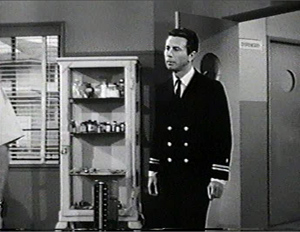
As the shot goes on, Harvey gets the news he’s headed for the brig. Shafer and Hennesey gloat, but in the foreground, Martha suspects that Harvey’s got an ace up his sleeve.
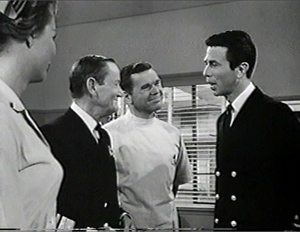
When Harvey says he can’t attend his hearing, Martha lifts her cup: “Here comes the voodoo.”
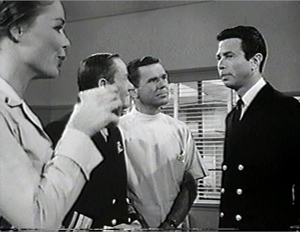
Harvey reminds his colleagues that he’s due to be discharged from the service before the hearing date. The ensemble responds by regrouping, with Martha and Shafer trading places in the foreground and Hennesey slinking off.
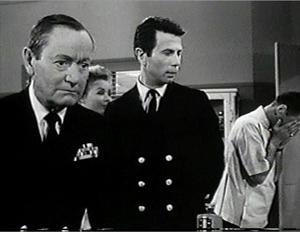
When everybody has assumed a new position, Harvey volunteers to re-up, causing Shafer to shudder.
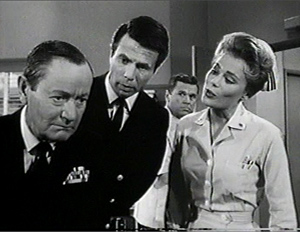
As Martha sits and Hennesey comes forward, Harvey produces some tickets for his campaign rally, at which Clifton Webb (yes, go figure) will be speaking. Interestingly, Jackie Cooper stays a bit out of sight, preparing for a later stage of the shot.
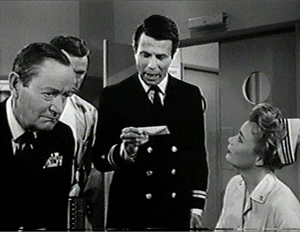
Harvey leaves, and Shafer’s attention turns to Hennesey as the person to be blamed.
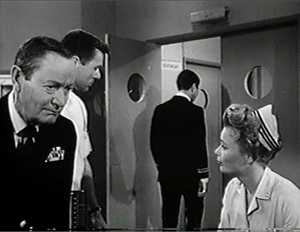
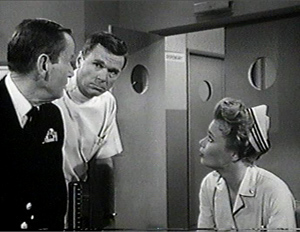
Soon we are seeing characters moving in depth again as Martha gives a typical head-shake in the foreground.
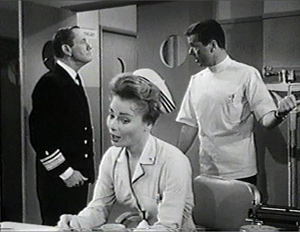
The shot exploits principles of 1940s Hollywood depth staging, as did many of the filmed programs of the period. (The Defenders is particularly rich in this regard.) Simple and sharp, McGuire’s scene is more skilful than anything I saw yesterday in The Expendables.
Chick and Martha got married in the last episode of the series, in May of 1962. I would never see these people again, except in re-runs and syndication. In fact, all my favorite programs were cancelled during my high-school years. I set out for college in summer 1965, disabused of my love for TV. Ahead lay cinema, which would never betray me.
Of course watching a TV series on DVD changes the dynamic of week-in, week-out absorption; but the rhythm of real-time viewing seems to me one of TV’s artistic resources. Besides, wading through a whole series on DVD is still a hell of a commitment.
Gilbert Seldes’ Writing for Television is an original and imaginative study of conventions that still hold sway. He’s especially astute on how the differences in conditions of reception (film, public; TV, domestic) shape creative choices. Another entry on this site discusses Seldes as a critic of modern media.
On the idea that we are especially susceptible to popular culture in our early teens, see our earlier entry here.
Extensive collections of some of my favorite shows, like Reginald Rose’s The Defenders and David Susskind’s East Side, West Side are available for study in our Wisconsin Center for Film and Theater Research. Nat Hiken, a Milwaukee boy, also generously left us a cache of Bilkos and Car 54s.
Hennesey, once rerun on cable channels, has evidently never been published on DVD. Gray-market discs offer a few fugitive episodes, recycled from VHS, kept alive by others with an affection for the program. The most complete information I’ve found on the series is in David C. Tucker’s Lost Laughs of ’50s and ’60s Television: Thirty Sitcoms that Faded Off the Screen (McFarland, 2010), pp. 47-53. A list of episodes and broadcast dates is here.
For more on one staging technique that McGuire uses, you can visit our post on The Cross. See also Jim Emerson’s outstanding analysis of composition and cutting in Mad Men at scanners; the sequence he studies is reminiscent of mine. The best guide to analyzing TV technique is Jeremy Butler’s landmark Television Style.
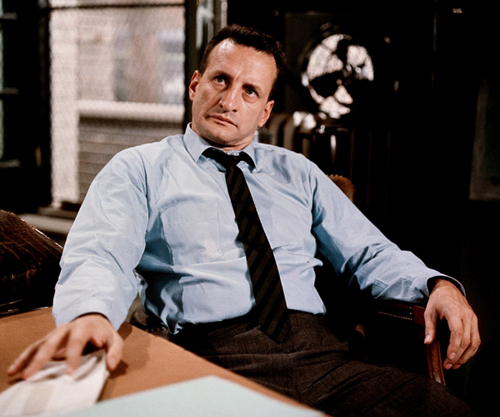
George C. Scott in East Side, West Side. Stephen Bowie’s Classic TV History site provides a detailed study of this series.
PS 10 September 2010: Believe it or not, I hadn’t read A. O. Scott’s praise of current TV before I wrote this, but his thoughts develop the sort of ideas I mention at the start of this entry.
PPS 10 September 2010, later: Jason Mittell completely understood this entry. If you think that I’m saying TV isn’t worth studying , please read Jason’s careful piece. (In fact, you could count my discussion of Hennesey as an argument for studying TV!)
PPPS 11 September 2010: In my roll-call of TV that Kristin and I watched, how could I have forgotten our devotion to Twin Peaks (1990-1991)? I think I neglected to mention it because we didn’t consider of a piece with ordinary TV. We wanted to follow David Lynch’s career, and we considered the show an extension of his movies. Besides, the series showed the symptoms I diagnosed I mentioned above: episodes fluctuated in quality, and although I liked the later part of the second season better than many people did, its finale was a letdown for me too. For Kristin’s thoughts on Twin Peaks as TV’s equivalent to “art cinema,” see her Storytelling in Film and Television.
PPPPS 5 May 2011: Jackie Cooper died yesterday. The Times obituary glancingly mentions Hennesey, but ignores its real achievements.
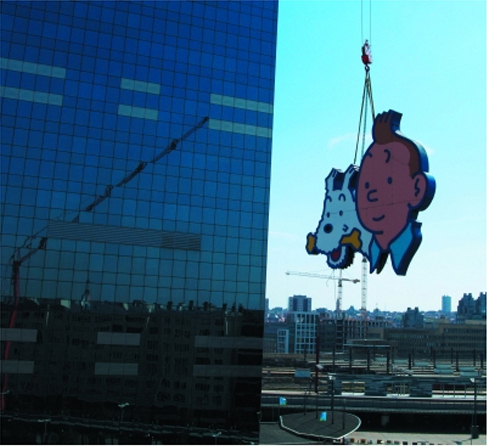
Tintinopolis
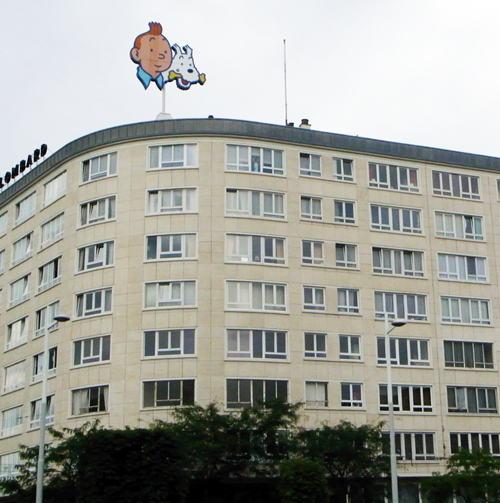
Photo by David Bordwell, July 2009. Tous droits réservés.
DB here:
He’s the world’s most famous fictional Belgian, miles ahead of Hercule Poirot. But I ignored him for about sixty years. Tintin wasn’t part of my childhood, and I didn’t get interested in his adventures until recently. Now, though, the scales have fallen from my eyes and I realize that Hergé is a great comics artist. And naturally I see him doing some things that shed light on cinema.
I came to the work obliquely. Since the 1980s Kristin and I have admired the Dutch cartoonist Joost Swarte. When we started to collect his books, lithographs, and CDs back in the 1980s, he was becoming known in the US through Art Spiegelman and Francois Mouly’s Raw. We were much taken with Swarte’s exact drawing style and mordant wit. I then got interested in the crisply drawn “clear line” tradition of French, Belgian, and Dutch cartoon artists stemming from Hergé—Chaland, Floc’h, Goffin, Ted Benoît, etc.—but I still didn’t pay much attention to the master himself.
This spring I gave a talk on La Ligne Claire to Kristin’s reading group, which explores fantasy (especially Tolkien), science fiction, comics, movies, and almost everything else. In preparing that, naturally I had to go back and read Hergé. Now I’m a believer. Some day I may polish that presentation and put it up as a web essay, but for now I just offer some notes, sojourning as I was recently in Tintin’s home town.
His own museum
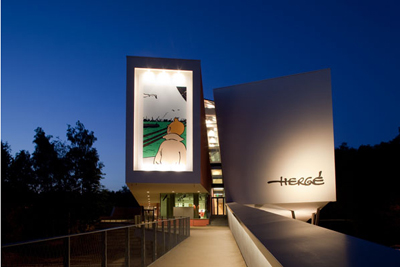
Photograph copyright Nicholas Borel; Christian de Portzamparc, architect.
Brussels has its own superb museum of comic art, the Belgian Comic Strip Centre in Rue des Sables. Last year, however, the Musée Hergé opened in Louvain-La-Neuve.
Louvain-La-Neuve is itself an unusual place: a town created more or less from scratch when the Catholic University of Louvain split off from the Dutch-speaking University of Leuven. Originally designed for students, the town now has a population of about 30,000, with many citizens commuting to jobs in Brussels. This planned city has been hailed as a model of urban design; parking and car traffic, for instance, are underground.
Go through the square to a wooded park and soon you’re in the Musée Hergé. It is one those buildings that aim to awe you. There are few right angles, and huge spaces are dominated by pyramids, cylinders, and other three-dimensional solids, all in muted colors and bearing the sorts of squiggles Herge might use for foliage.
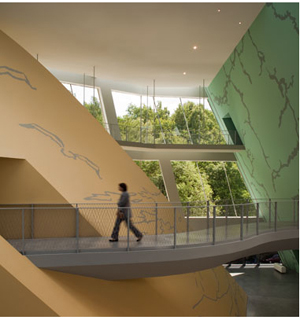
Photograph copyright Nicholas Borel; Christian de Portzamparc, architect.
Architect Christian de Portzamparc‘s statement of principles is here.
 The first floor consists of the lobby, rest rooms, a restaurant, and a space for temporary exhibitions. As luck would have it, a tribute to Joost Swarte’s 40-year career was on display, and it was jammed with material. I could easily have spent the whole day here, even though I’d seen much of the material before. Swarte was also the “scenographer” of the Musée, offering ideas on interior design and decoration. The witty museum logo, as well as details like the signage, seem to be Swarte’s creations.
According to the guidebook, 80 % of Herge’s working material survives. This mountain of sketches, layouts, inked pages, color pages, and the like gives the curators a huge amount to pick from. Although the exhibition halls don’t feel stuffed, you quickly realize that you are in for total immersion.
You start at the third floor, and the first room supplies a survey of Hergé’s career. The information on the walls is pretty skimpy; the details are offloaded onto the headset commentary, I suspect. Charles Trenet’s ditty “Boum!” is playing over and over in this room, presumably not as an homage to Toto le héros but as a broad gesture to the interwar period. There are some intriguing Hergé illustrations here, including a 1939 political cartoon showing a Belgian shaking his fist at German planes flying over Brussels and shouting, “Dirty Boches!” before running to hide in his basement.
Another room is devoted to Hergé’s commercial art–posters, magazine advertisements, and book covers (including one for Christ, King of Business, 1929). Also on display are some striking images from less-known Hergé comic series, such as Quick and Flupke, Tom and Millie, and especially Jo, Zette, and Jocko. From here you move to a room devoted to the characters. Each one (except Tintin) gets a vitrine full of imagery. The final room on the floor is devoted to the cinema. The displays trace many of the situations and characters that Hergé borrowed from films of the 1920s and the 1930s. There’s also a filmed biography of Hergé screening on a loop.
The second floor was what held my interest most intently. One room includes a huge display of research materials for each book–not only notes and photos, but artifacts too. There’s also a case showing early Tintin games, toys, apparel, and other merchandise. The next hall gets to the root of my interest, Hergé’s creative process. Several displays trace the progress of a single page from rough layout to final coloring and printing. He was quite explicit about his aesthetic: Color is applied uniformly, with no shading, which yields “une grande lisibilité.” As I’ll suggest below, story legibility is central.
In this display room as well you can see how Hergé designed pages for periodical publication in landscape mode, then redesigned them for the vertical book format. That entailed cutting out panels, drawing new ones, and even changing gags. The books would then sometimes be recast for later editions. All these multiple versions have kept Hergé scholars busy for decades.
At about age 40 Hergé began to take on collaborators, and he eventually created a team of scenarists, lettering specialists, inkers, painters, and the like. In the next display room, you can see a TV documentary touring the studio and interviewing staff. This room also includes some gorgeous black-and-white ink drawings of pages and one-off projects, like Christmas cards. Your tour of the Museé ends with a room devoted to Hergé’s fame, starting with the famous wishes sent by Alain Saint-Ogan, creator of the breakthrough French comic strip Zig et Puce. In here you find praise from Balthus, Philip Pullman, Andy Warhol, and Alain Resnais: “Belgium belongs to the realm of fantasy. I found this out through reading Tintin.”
All in all, an exhilarating place to visit. It is unabashedly a tribute to Hergé and makes no effort to invoke the controversies around the man. I could find no reference to his wartime career and the political controversies that followed, to his divorce, or to the spiritual quest of his later years. This is the modern art museum in wholly celebratory mode. Still, few exhibitions of comic art I’ve seen make such a persuasive case for the enduring quality of an artist’s achievement.
Cinema on the page
I have taken from the current cinema its devices of découpage: once a character becomes important, you show what he’s doing, you vary the shots, you show the same scene from far off and then quite close.
Hergé, 1939
I’m a man of order, you see, even in drawing. I draw orderly things so one can read what I am drawing.
Herge, 1975
All comic strips and books remind us of cinema in one way or another, and many researchers have analyzed the affinities. The panels can simulate cutting, or panning camera movements, or even the fixed frame in which actions unfold over time. (Blondie is a classic example.) Artists have provided unusual angles and dynamic compositions that have a filmic feel. And like films, comics are usually narratives, stories told in pictures, so we can study how different comics artists use point-of-view, plot structures, suspense, and the like. (I did this last year with a recent twist in the Archie series.)
Most commentators on Hergé mention that he was a film fan and drew many situations from movies of the 1920s and 1930s. Like Hollywood studio cinema, his tales put striking technique in the service of fluent storytelling. Pause to study the narrative and you’ll find a surprising richness to the imagery; start by looking at the pictures as pictures, and you’ll see how composition, color, and detail smoothly advance the action. Hergé was well aware that his polished imagery could stand scrutiny in its own right, but he saw it as serving a larger narrative dynamic. He noted (my emphasis added):
I don’t try only to tell a story, but rather I try above all to tell a story. There’s a slight difference.
We can get a sense of this approach by contrasting it with one of the best Clear Line followers. Jean-Claude Floc’h’s albums are retro studies of a cozy, more or less imaginary England of the 1920s through the 1950s. He has provided his main characters, Francis Albany and Olivia Sturgess, with fake biographies that tie them to real artistic circles of the period. A series of books set in wartime (Blitz, 1983; Underground, 1996; Black Out, 2010) presents gorgeous tableaux. Here are two panels from facing pages of Underground. Londoners are huddling during a Nazi bombing run.
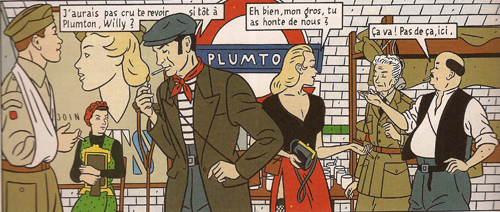
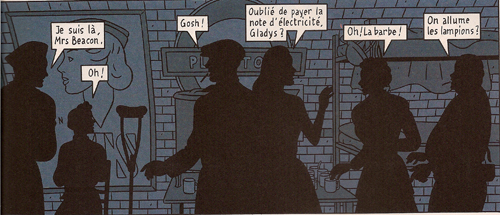
The images are designed to be compared in detail; we’re to note the slight changes in figures’ position. The story halts while you study the panels (and admire the artist’s finesse). This is technique calculated to dazzle.
Hergé’s pages warrant the same sort of scrutiny, but you aren’t invited to dwell on them through a flagrantly overdesigned layout. The echoes and rhymes in this passage of the final English-language version of The Secret of the Unicorn are at least as intricate as Floch’s, but they’re at the service of symmetrical gags nestled in a broader comic buildup. Thompson and Thomson have had their pockets picked in a street market.
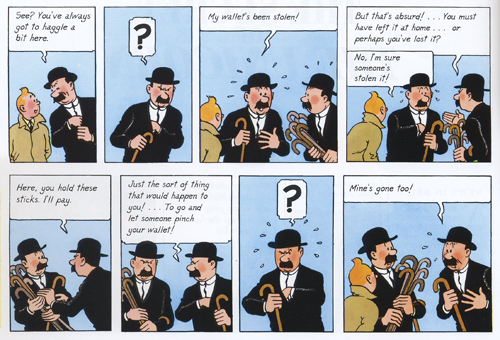
Hergé erases the background detail to allow us to concentrate on the graphic play of the black-suited figures (“spotting blacks,” as it’s called in the trade). The second panel reverses Thom(p)son’s attitude in the first, and both find a neat mate in the next-to-last panel. The third panel on top is rhymed with the last panel on the bottom. In between, the interplay of the two detectives is given in slightly varied compositions, with the extra walking sticks shifting around in their own patterns. The gag is a variant of the basic premise of Thompson and Thomson’s existence: they are mirror-images in all they do and say.
Given this play of variations, how does Hergé achieve narrative flow? One factor is the width of the panels, expanded or pinched according to the information in each and coordinated rhythmically across the page. Hergé also avoids gesture lines. Instead, one panel presents a point of motion as if captured by snapshot, and then the next panel provides the next phase of the movement. We might notice as well how the left-to-right propulsion of his drawings lays out narrative elements concisely. He declared this panel, from Red Rackham’s Treasure, one of two images that gave him most satisfaction:
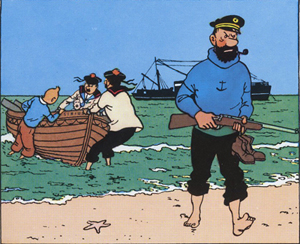
Solely through the drawing, which shows the captain striding onto the beach with naked feet while his companions haul their boat onto shore, the viewer-reader [spectateur lecteur] mentally reconstructs everything that has already happened: The Sirius was put at anchor, the rowboat was lowered, Tintin and his companions set out; they have rowed to arrive at the island, where the captain climbed out. . . Everything that preceded the action shown in the drawing is expressed by a single composition.
Here’s another subtle technique Hergé used to make his stories flow. Psychologists speak of the “priming” effect. You’ll notice something faster if it chimes with something you’ve recently encountered. The classic experiment uses a string of words. If you’re first shown the word yellow, you’ll identify the word banana faster than if the trigger word is red.
Priming is a basic filmmaking resource. What the screenwriter calls “planting”–the pistol on the mantelpiece in Act I–is a type of longer-range priming. On a smaller scale, one purpose of an establishing shot is to prime certain areas of a locale for future action. Here’s a simple example from Norman Taurog’s The Caddy (1953). Jerry Lewis is fleeing from a pair of German Shepherds and he takes refuge in a men’s changing room.
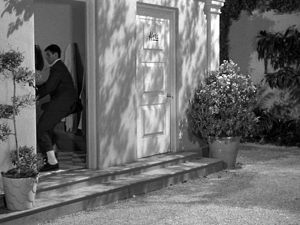
A new shot shows him closing the door, and it makes prominent the coat rack nearby. Eventually Jerry notices it and expresses happiness as only Jerry can.
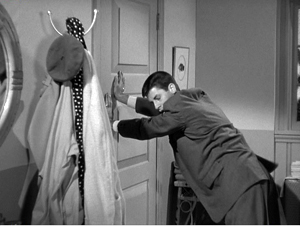
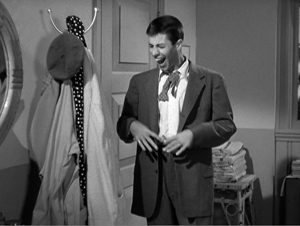
Using the robe and beret hanging there, he tries to disguise himself.
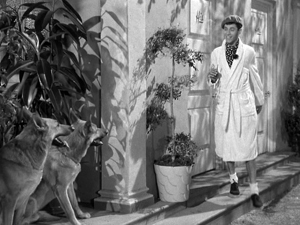
A close look at my first frame shows that the coat rack was (subliminally?) primed in that shot too; you can glimpse it when Jerry opens the door. This reminds us that the filmmaker can prime our response by including a little something at the end of one shot that ties it to the next. Both Spielberg and Johnnie To are skilful at this; see earlier blog entries (here and here) for examples.
It seems to me that Hergé makes use of fine-grained priming in the flow of his panels. Here’s an example from the final English-language version of Cigars of the Pharaoh. The “establishing shot” shows Tintin and Sarcophagus consulting Zloty. The composition is simple and balanced, with Tintin as the fulcrum. The window behind Zloty is unobtrusively primed.
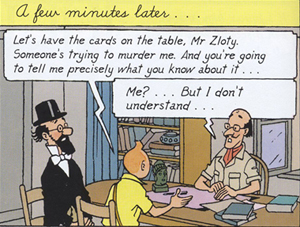
The next stretch of panels breaks this overall layout down into two sorts of shots: a profile view and an over-the-shoulder view of Zloty.
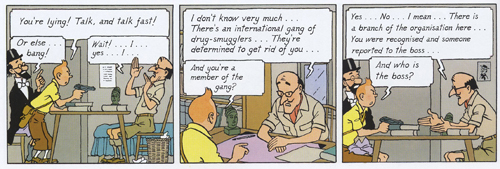
The first and the third panels are variants, with the framing getting closer as we proceed. Hergé often propels his story through these tighter framings, as if to ratchet up the tension in a filmic way. The more compressed array of figures at the end of the series also allows for more spacious speech balloons, always a major consideration in the Tintin saga. Hergé didn’t reiterate the window in every framing; only the middle panel re-primes it through our angled view of Zloty.
Now the framing will get even tighter on Tintin and Zloty, losing Sarcophagus altogether, and the window will become more salient, even though it’s still a minor element of each design.
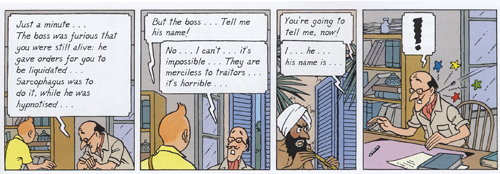
The massive balloon at the top of the first frame in this series obliges Hergé to push his figures quite low, but he compensates by letting them lean on the bottom edge as if it were the desktop. (Hergé likewise often makes his characters stand directly on the frameline.) The first panel retains the window frame. The second, another over-the-shoulder shot but even tighter than the first, introduces the shutters in a prominent position behind Zloty. These shutters prime the third frame. They now anchor a crucial action: the Fakir is lurking outside those shutters.
The final panel provides the payoff. The open window frame that seemed at first just a realistic detail becomes necessary to understanding the action. It could have been established in a wider shot, but in keeping with his urge for economy Hergé has primed it in the most compact way possible–as a peripheral element, in the background or on the frame edge. (Compare Taurog’s thrusting the coat rack under our noses.) You have to wonder if such economy of expression will be on display in the Spielberg-Jackson Tintin movie project.
I know, I know: David, it’s just a window. Or: David, it’s just a comic strip. But as film students we ought to be interested in how images shape our experience, and we can learn from any craftsmanship as precise and engaging as Hergé’s.
For more on the Clear Line style, see the series of articles at Paul Gravett’s excellent site.
The official Tintin website is available in an English version here. Since photography is not permitted in the Musée, for illustrative purposes I have drawn on the official images on the building’s website, with copyright and credit as noted in the captions. Bart Beaty, expert on Eurocomics, provides a carefully considered report on his trip through the galleries. The Musée’s catalogue is a trilingual survey of major items on display, although it neglects to illustrate changes in layouts across different editions.
On the aesthetics of comics and cinema, see Manuel Kolp, Le Langage cinématographique en bande dessinée (Brussels, 1992). Principles of page composition, including spotting blacks, are explained in Gary Spencer Millidge, Comic Book Design: The Essential Guide to Designing Great Comics and Graphic Novels.
The best general introductions to Hergé’s artistry seem to me to be Benoît Peeters’ Tintin and the World of Hergé and Michael Farr’s Tintin: The Complete Companion. Both offer occasional comparisons of different editions of the books. See as well Philippe Goddin’s multi-volume set of primary materials. Goddin supplies a shorter sampling of the artist’s creative process in his charming but now rare Comment naît une bande dessinée: Par-dessus l’épaule d’Hergé. For an example of in-depth inquiry into the various changes that a tale underwent from one edition to another, see Étienne Pollet, Dossier Tintin: L’Isle noir: Les Tribulations d’une aventure.
My first and fourth Hergé quotations come from Bob Garcia’s Hergé et le 7ème art, pp. 6 and 9. My second quotation is taken from the English edition of the Musée Hergé guidebook (Moulinsart, 2009), p. 48; I don’t find it to be available for purchase online. My third quotation comes from Numa Sadoul’s Entretiens avec Hergé: Tintin et moi, p. 46. According to Harry Thompson in another good introduction, Tintin: Hergé and His Creation, the young Hergé wanted to be a film director (p. 26).
A very extensive web resource on Floc’h is here. As for Archie’s wedding: It did turn out to be one of those parallel-universe stories. It has developed over seven issues since last September in a “mini-series.” Abrams will be publishing a special collector’s edition, according to the press release, “for the Archie fan in all of us.”
This is probably as good a place as any to mention that Intellect Press has just launched a new journal, Studies in Comics. Details, as well as downloadable essays from the first issue, are here.
PS 24 January 2011: This essay was named one of the best pieces of online comics criticism of 2010 in an exercise conducted by The Hooded Utilitarian of The Comics Journal. What an honor! Thanks to the judges, and congratulations to the other writers who earned places on the list.
Les dessins, textes et symboles extraits de l’oeuvre de Hergé cités dans ce essai sont la propriété exclusive de © Moulinsart S. A. ou © Hergé ou © Casterman et sont montrés à titre de référence et d’exemple.
Photo, uncredited, from this site.
Capellani ritrovato
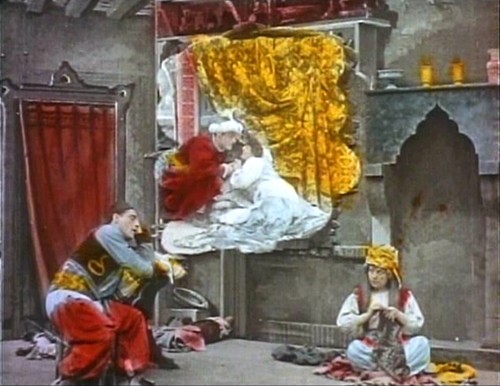
Aladin ou la lampe merveilleuse.
Kristin here–
[Note, July 11, 2011. The release of a considerable number of Capellani films on DVD since the 2010 festival has allowed me to add some frames to my examples below. The frames from L’Arlésienne, L’Épouvante, and Pauvre mère are new, and the one from Cendrillon has been replaced by a better copy. For more on the DVD, see the entry on the second half of the retrospective.]
Back in the 1980s and early 1990s, researchers into silent cinema became used to the discovery of little-known auteurs. The 1910s proved an exceptionally rich source of directors beyond the familiar names of Griffith, Ince, Chaplin, Feuillade, Lubitsch, Stiller, and Sjöström.
In 1986 Le Giornate del Cinema Muto’s epic retrospective of pre-1919 Scandinavian cinema revealed the Swedish master Georg af Klercker. In 1989, a similarly ambitious presentation of pre-Revolutionary Russian films brought the work of Evgeni Bauer to light. In 1990, the “Before Caligari” year added Franz Hofer to the list of obscure directors at last receiving their due. After that quick series of revelations, there has been a dearth of such significant revelations until, some would argue, now.
This year Bologna’s Il Cinema Ritrovato presented 24 films directed by Albert Capellani (1874-1931), previously known mainly to specialists for two films, his magisterial adaptations of Hugo in the four-part serial Les Misérables (1912) and of Zola in Germinal (1913). The retrospective has been 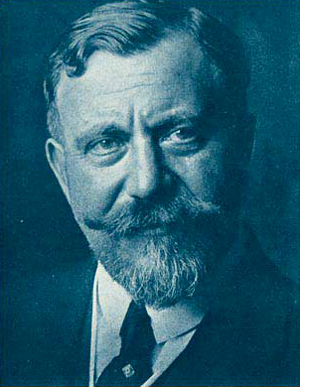 arranged by Mariann Lewinsky, who, as in previous years, has also been responsible for this year’s “Cento anni fa” program, covering the output of 1910. (The “Cento anni fa” series began in 2003, with Tom Gunning as programmer, and Mariann took over that duty in 2004.)
A gradual rediscovery
When Georges Sadoul wrote his multi-volume Histoire général du cinéma, the second part (1948) mentioned Capellani a few times. With the lack of available prints of the films, however, he was limited to treating the director primarily as the head of S.C.A.G.L., the prestige production unit launched by Pathé in 1908. Richard Abel’s The Ciné Goes to Town: French Cinema 1896-1914 (1994) devotes considerably more space to Capellani. Dick was able to view and analyze seven of the shorts and four features but was hampered by the incompleteness of some of these and the lack of such key films as L’Arlésienne (1908). As Mariann points out in her program notes, Capellani’s significance has been commented on by several scholars, including our colleagues Ben Brewster and Lea Jacobs. (Ben’s detailed analysis of the acting in Germinal is here, including a citation to a 1993 article on the film by Michel Marie).
Mariann, however, has recently been instrumental in bringing Capellani’s films to broader attention. The decision to mount retrospectives of his work has spurred archives to restore several which had been unavailable or lost, and more prints will presumably be ready for next year.
Capellani has actually been creeping up on us in Bologna for some time now. In 2006, Mariann’s programs from 100 years ago had reached 1906–the year when Capellani’s career really got started, though at least one of his films appeared in 1905. We saw only one from 1906, La Fille du sonneur. I can’t say that I remember anything about it. In the 1907 program, Les Deux soeurs, Le Pied de mouton, and Amour d’esclave. Again, I probably would have to say that I don’t recall these films, except that I vaguely recognized Le Pied de mouton, a fairy tale about a young man who receives a magic object in the form of a large sheep’s foot, when it was shown again this year.
By 2008, however, a pattern had started to emerge, and Mariann showed seven Capellani films, with six of them forming one program devoted solely to the director’s work, “Albert Capellani and the Politics of Quality”: La Vestale, Mortelle idylle, Corso tragique, Samson, L’Homme aux gants blancs, and Marie Stuart. The seventh, Don Juan, appeared in the “Men of 1908” program.In visiting archives and choosing films Mariann often saw prints without credits and from unknown directors, so the pattern only gradually became clear. In the 2008 catalogue she reflected on her realization that Capellani was showing up regularly in her choices for the annual centennial celebrations: “When organising the 1907 programme, however, in the light of Amour d’esclave, a gorgeous mise-en-scène of classical antiquity, I asked myself for the first time, ‘Who made this sophisticated film?'”
She speculated that the relative neglect of Capellani perhaps came from the Surrealists’ campaign against highbrow filmmaking during the 1910s and 1920s:
From his very first film on–the memorable Le chemineau of 1905, based on an episode from Victor Hugo’s Les Misérables–Albert Capellani transports the contents and qualities of bourgeois culture to the cinema. He films Zola, Hugo and Daudet–his Arlésienne of 1908 has unfortunately been lost. His many fairy tale films (scène des contes), biblical and historical scenes reveal him as a great art director, who also adopted the latest developments in modern dance and worked with its stars Stacia Napierkowska and Mistinguiette. Highly versatile, he had an unerring sense of the best approach to a given genre.
Fortunately, L’Arlésienne has subsequently been discovered by Lobster Films, just in time to be presented this year.
The 2009 program contained only two Capellani films, but one was the extraordinary Zola adaptation L’Assommoir. This had been known only from fragments until a complete copy was found in Belgium. It displays an unusual degree of realism that fits the naturalist subject matter and also contains complex and deft staging that moves numerous characters around a scene in a way that shifts the spectator’s attention among them exactly as the flow of the narrative requires. The other, La Mort du Duc d’Enghien, was shown again this year. It’s a rare case of an historical drama of the period that manages to arouse a genuine sympathy for its main character, a young nobleman unjustly arrested and executed upon Napoleon Bonaparte’s orders. More on it later. The 2009 catalogue announced that in the following year, Capellani would graduate from the annual “Cento anni fa” programs to his own retrospective.
This year’s films
This first full-fledged Capellani retrospective gave a generous though not complete overview of his surviving films from early 1906 to 1914—a few bearing 2010 restoration dates. Capellani also worked in the United States from 1915 to 1922, and the program included The Red Lantern, a 1919 feature starring Nazimova. This, Mariann’s notes assure us, is “a taster for next year’s festival,” which will include further restorations from the French period, as well as more features from his American career. (It would be good to see the other Capellani films shown in previous years repeated, now that we have a sense of his work more generally.)
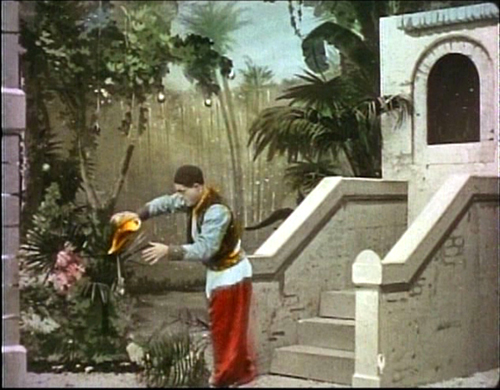
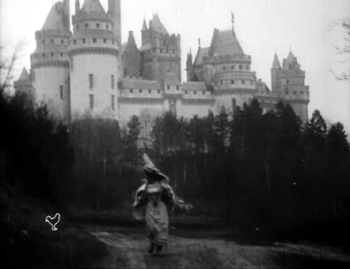
Ideally our examples here should include frames from the films shown at this year’s festival, but none of them is out on DVD. The Brewster article linked above has a generous selection of well-reproduced frames from a 35mm print of Germinal. As far as I know, the only Capellani film available on DVD is Aladin ou la lampe merveilleuse, on the third volume of Kino International’s “The Movies Begin” set. I’m sure it was included there not because it was a Capellani but because it survives in beautiful condition and is an epic with elaborate hand-coloring. I’ve included frames at the top and bottom of this entry, despite the fact that it has not been shown at Bologna. The smaller frames illustrating a few of films shown at Il Cinema Ritrovato come from the Gaumont Pathé Archives website (registration required). This site is the best online source of information on the director’s films, including complete video versions in a few cases. These are, however, quite small screens, and they display the double branding of a prominent timer and a bug of a Pathé rooster superimposed over much of the frame.
Capellani had worked in the theater as a director and actor until Pathé recruited him in 1905. In a sense, he became a specialist in literary adaptations, especially after his appointment in 1908 as artistic director of S.C.A.G.L. Yet the films being shown this year include pure melodrama (such as Pauvre mère, “Poor mother,” 1906), crime-suspense films (L’Épouvante, “The Terror,” 1911), classic fairy-tales (Cendrillon, 1907), and historical/biblical costume pictures (Samson, 1908).
With his theatrical background, it is not surprising that Capellani was able to cast many old colleagues in his films, notably Henry Krauss, who played Quasimodo in Notre-Dame de Paris (1911) and Jean Valjean in Les Misérables (1912). Wherever his actors came from, however, Capellani was a master at directing performances. In many cases the acting makes characters who would seem completely conventional figures in most films of the day into people with whom the audience can empathize.
The staging in Capellani’s shots is inevitably impeccable. The progression of the story is clear even in shots with numerous characters on camera. More of his stage experience coming out, one might say, but he also adapts his technique to the visual pyramid of space tapering toward the camera’s lens.
L’Évadé des Tuileries (1910), for example, deals with the Count du Champcenetz, the governor of the Tuileries during the French Revolution, who initially tries to alert the royal family to their impending arrest and subsequently flees for his life from the revolutionary forces that invade the palace. In the most spectacular shot, he rushes in, exhausted and wounded, to speak to the king as the members of the royal family gradually enter and guards surround them. Champcenetz collapses and slides partway under a chair at the foreground right as the revolutionaries burst into the room. The business of the ensuing struggle, the departure of the combatants with the royals under arrest, and a short burst of looting leaves a still scene with the dead and wounded on the floor. Suddenly an arm moves at the far lower right corner of the frame, and we become aware that Champcenetz has survived.
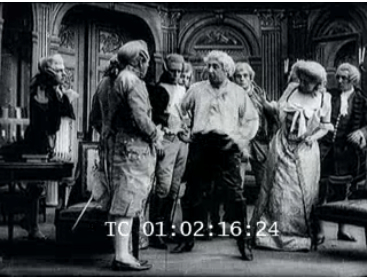
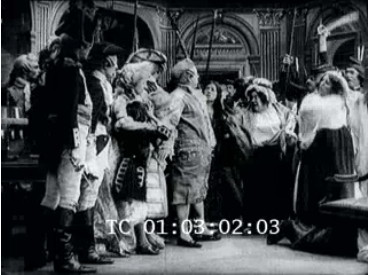
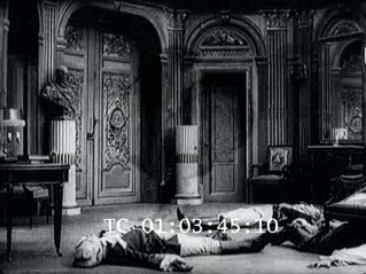
David has praised the sustained tableau staging in depth of the 1910s, in the films of Feuillade, Sjöström, Hofer, and others, but here is Capellani doing it all in 1910—and this is not the first of his films to display such control of the complex arrangement of actors in space.
None of this is to suggest that Capellani’s films are “stagey.” He is quite capable of a cinematic flourish for purposes of dramatic effectiveness. L’Arlésienne, shot largely on location in the old town of Arles, includes a shot of the young couple atop a tower that looks over the cityscape. The camera begins on the spire, panning right until the couple appear in medium shot, with the town beyond them and the parapet. They wander out right, and the camera pans around the parapet, only catching up with the couple when they are roughly 180 degrees opposite to where the camera started:
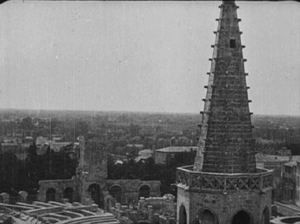
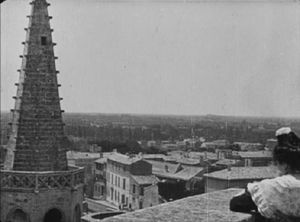
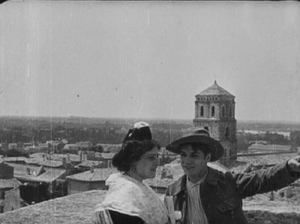
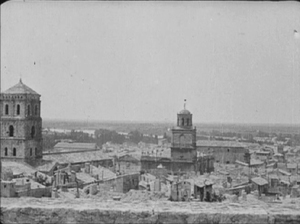
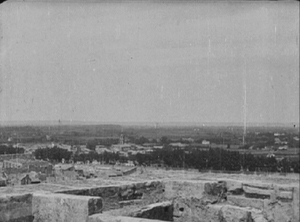
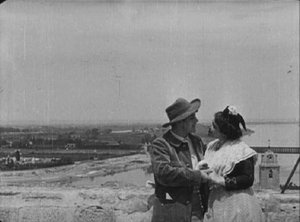
It is hard to believe that in London L’Arlésienne played on the same program as L’assassinat du Duc de Guise, which, sophisticated as it is in some ways, seems seems downright old-fashioned when contrasted with Capellani’s film.
Even flashier is L’Épouvante, which seems at first a simple story of a young woman in danger as she retires for the night, unaware that a burglar had stolen her jewelry just before she came in and is now hiding under the bed. She lights a cigarette and carelessly tosses the match on the floor. The camera tracks slowly back from the bed to bring the burglar into view; he registers fear that the match is still alight and might set the rug on fire. He reaches to snuff it out, and a sudden cut places us at a high angle above the heroine as she looks down and sees the hand appearing from beneath her bed. A return to the long shot displays her reaction:
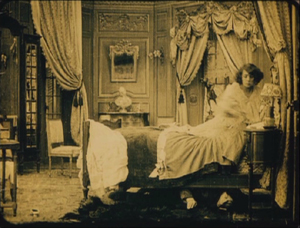
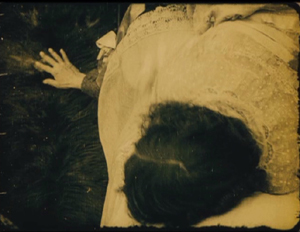
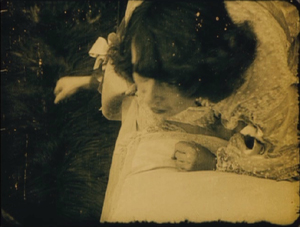
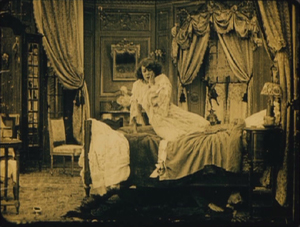
Up to this point our sympathy has been entirely with the heroine. But once she escapes the room and locks the burglar in, his struggle to escape before the police find him takes up much of the remaining action and gradually gains him our sympathy as well. Trapped multiple stories up, he climbs to the roof, only to have to retreat as the pursuers rush up and search there. Moving downward, the burglar ends up hanging by an ominously bending gutter.
Only the heroine is left in her flat to discover his plight, and she lowers some drapes for him to climb up. In a touchingly awkward scene, the man is relieved but unable to express his gratitude except by returning the stolen jewelry and silently exiting, while she makes no attempt to stop him. In a way, L’Épouvante reminded us of Suspense, Lois Weber and Phillips Smalley’s remarkable 1913 film of a woman besieged in her house by a burglar, but the unexpected shift of emotional dynamics between the two characters in Capelanni’s film makes it equally memorable.
Capellani’s pictorial sense in real locations has been widely remarked upon. Even in La Mariée du château maudit (1910), a relatively slight tale of spooky doings in a deserted castle where a wedding party plays hide-and-seek, becomes impressive in part because of its use of an extensive set of actual ruins. There’s also a remarkable moment after the bride accidentally becomes locked in a room with a skeleton dressed in a bridal gown. She reads an old book telling of the young woman’s fate, and two successive bits of the story appear as matte shots on the right and left leaves of the open book. (Working at Pathé, Capellani could use impressive special effects, as the dream image in the Aladin frame at the top demonstrates.)
The sets are masterful as well. I was particularly struck by Jean Valjean’s desk in the second episode of Les Misérables (1912). It creates an effect of forced perspective that is like German Expressionist eight years ahead of its time. Valjean has escaped from prison and become a mayor and successful small-factory owner. Javert, formerly a guard at the prison and now a local police officer, suspects Valjean of being the fugitive. Now he comes to Valjean’s office to introduce himself.
Valjean sits at the left behind an enormous desk which dominates the left and center of the screen; its size is exaggerated by rows and stacks of thick volumes ranged across its top. About a third of the screen is empty at the right, where Javert enters at the rear and walks only partway forward. The effect is to make Javert appear smaller than he really is, with the low camera height that Pathé films were using by this point exaggerating the effect; during part of the scene he is also partially blocked by the desk. The suggestion is that he has no ability to follow up his suspicions of such a powerful man.
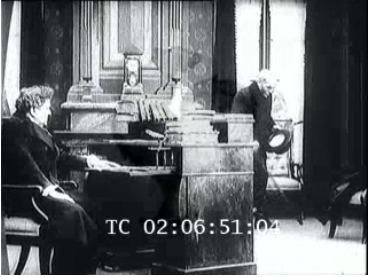
In a subsequent scene, when Valjean brings the ailing worker Fantine to his office, the desk has been moved away from the camera, which frames the scene from further to the right. The result is a far more open space at the right, while Valjean brings forward a chair for Fantine that puts her in front of the desk. Unlike Javert, she is not dwarfed by the desk, which, once Valjean comes to lean over her, is barely visible. Instead, the right half of the screen is left unoccupied so that a flashback can fill it.
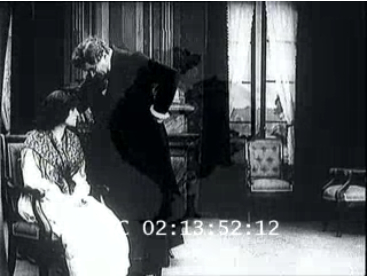
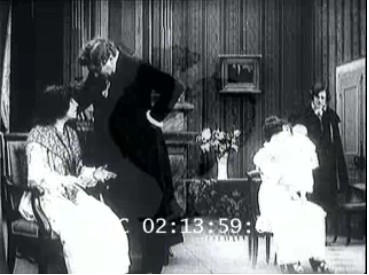
In the scene like the one with Javert, a German Expressionist film would have exaggerated the size of the desk even further and perhaps tilted the floor up at the rear, but the effect is clear and dramatic enough as it is. Again, it is not an effect one would expect to find in a film of the early 1910s. There is also a contrast between the massive desk and the relatively small, insubstantial table that Javert uses as a desk in the setting of the police headquarters
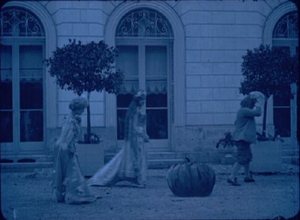
Even the most conventional films receive what I began to recognize as Capellani touches, often to bring a moment of realism into a fantasy or melodramatic setting. In Cendrillon, the gardener who carries in a huge pumpkin to be turned into the heroine’s magic coach exits wiping the sweat from his head with a handkerchief (below left). The little girl who falls out of a window to her death in Pauvre mère leaves a large, dramatic splotch of blood on the sidewalk when her lifeless body is lifted—a realistically gory touch of a sort which I don’t recall seeing in any other film of this era (below right). When the hero finds the magic lamp in Aladin ou la lampe merveilleuse, he blows dust off it and turns it over to shake out further dirt (see bottom).
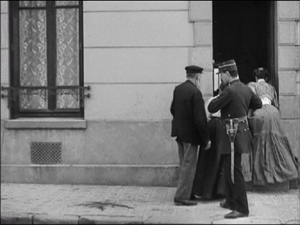
Another sort of touch appears in La Mort du Duc D’Enghien, a carefully executed motif of a sort one doesn’t often see in films of this type. The hero is arrested while at a hunting lodge, and throughout he wears a distinctive hat that’s probably part of a hunting outfit. He throws it defiantly to the floor during the courtroom scene in which he is unjustly condemned; he throws it down again in his cell, this time to indicate despair and exhaustion; in the final execution scene, he tosses it aside as part of his brave resignation, facing the firing squad with open arms and without a blindfold. These moments aren’t stressed, and one could understand the plot perfectly well without noticing the repetition. Still, the motif helps characterize D’Enghien quickly in this relatively short film and indicates the care with which Capellani was crafting even his one-reelers.
Mariann was somewhat apologetic about La Glu, a 1913 feature, since it centers around a femme fatale who victimizes three men in the course of the narrative. The title is the heroine’s nickname, and it means what it sounds like, “glue,” and particularly sticky substances like bird-lime that are used to ensnare. But the audience thoroughly enjoyed this distinctly absurd but entertaining and fast-paced tale of a heartless, mercenary woman, played with relish by Mistinguett, and the men foolish enough to fall for her. After all, there are plenty of depictions of love-’em-and-leave-’em men from this period, so why not turn the tables? At least one flagrant coincidence brings all of them to the south of France, where the heroine goes for a vacation, and Capellani contrasts the early scenes of high-society Paris with the stark seascapes in and around a fishing village. Though another literary adaptation (from a novel and play by Jean Richepin), this film certainly stands out among the pre-war features and demonstrates once more Capellani’s versatile ability with a range of genres.
After all these treats, the last French feature on offer, Le Chevalier de Maison-Rouge (1914), proved a slight let-down. Capellani had a penchant for substituting letters and other texts for intertitles, but this film pushes the device to the point where sometimes it seemed as if every other shot was an insert. The plot, dealing with a scheme to rescue the imprisoned Marie Antoinette, was also frustratingly complicated and not presented with the admirable clarity that characterizes most of the other films. As I’ve mentioned, Capellani was often able to generate an empathy with the characters which is rare for films of this period, but as a result of the constant plot twists, the Chevalier and his endangered mistress remain rather remote figures. There are some effective moments, though. One exterior view of the protagonist’s home places a door at the upper center, approached by a symmetrical pair of staircases running to the right and left and forming a pyramid shape. A foreground pond elaborates the space still further, so that when a crowd tries to break in, the staging utilizes the frame vertically and horizontally, with intricate movements of individuals to avoid the water.
Ahead of his time–up to a point
As I remarked in an entry on last year’s festival, L’assommoir struck me as looking like it had been made in 1912 or 1913 rather than 1909. Now it becomes clear that many of Capellani’s films give this sense of trying things that other filmmakers would begin doing routinely a few years later. In some cases, like L’Arlésienne, it’s a focus on acting of a sort that we associate with Griffith’s films like The Mothering Heart or The Painted Lady. In others, it’s the motifs or the subtle changes of framing or the eye for landscapes. Although the editing is not usually flashy, Capellani is good at keeping spatial relationships clear, as the series of shots depicting Valjean’s escape from prison in the first part of Les misérables demonstrates. As Mariann wrote, he seemed able to adapt to any genre. I’m not a particular fan of the historical films so common during this period, but Capellani manages to humanize most of his.
It was only with Le Chevalier de Maison-Rouge that the sense of Capellani being ahead of most of the directors of his time largely disappeared, though it seems premature to judge from a single 1914 film. Perhaps during the immediate pre-war era, and especially the creatively fecund year of 1913, the exploration of the cinema by an increasing number of masters created a spurt that he did not participate in. And perhaps more films from 1913 and 1914 will appear in next year’s retrospective and give us a better sense of how his career developed in that crucial period. It will also be interesting to trace his assimilation of the developing classical Hollywood norms once he moved to the U.S. By 1919 and The Red Lantern, he clearly had absorbed the norms thoroughly, and his style had become indistinguishable from that of his American colleagues.
Added July 13: Roland-François Lack has kindly written to point out that another Capellani film exists on DVD. (Thanks, Roland-François!) His 1908 version of the French tale Peau d’âne was included as a supplement on the 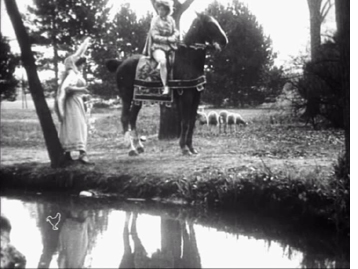 collector’s edition of Jacques Demy’s film of the same name. It is also included in the “Intégrale Jacques Demy” 12-disc set. These DVDs are Region 2 (Europe) and won’t work on other region-coded players.
The source of the print isn’t clear on the disc. (It’s another one that hasn’t been shown at Bologna.) Probably Pathé’s own archive, since there’s a little rooster-shaped bug superimposed at the lower left in every shot.
It’s a fairly contrasty print with replaced intertitles in French only. It also seems to be running at 24 fps or something close to it. The action zips right along, which is a pity. There’s a lot of carefully executed pantomime-style acting. It’s impossible to catch all the gestures, especially since there are often three or four actors going at it at the same time. It would actually be a good film for teaching about the acting styles of this period if one could just slow it down.
I wouldn’t have spotted this as a Capellani film if I hadn’t known its source when I watched it. Still, it has some of the traits we’ve recently come to associate with him. The meeting between the heroine and Prince Charming takes place in a carefully chosen setting with a reflecting pond in the foreground. It looks like the film was shot on a hazy day, but it looks as though the camera may be set up to shoot with the sunlight at the characters’ backs.
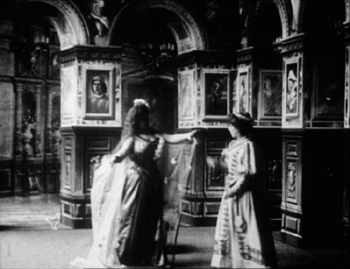
The film also has the director’s typical elaborate interior sets juxtaposed with a dramatic use of real exteriors. The frame at the left below shows the fairy appearing for the first time to the princess. It’s not easy to see, but the busy interior includes a deep, diagonal space with several arches decorated with portraits that are painted, frames and all on the square pillars. Once the heroine disguises herself and flees to avoid her suitors, Capellani goes on location, using an impressive château and streets that look like they are in the same vicinity.
I hope that some of the more realistic films will soon appear on DVD. Lobster in particular could make their newly restored L’Arlésienne available.
John Ford, silent man
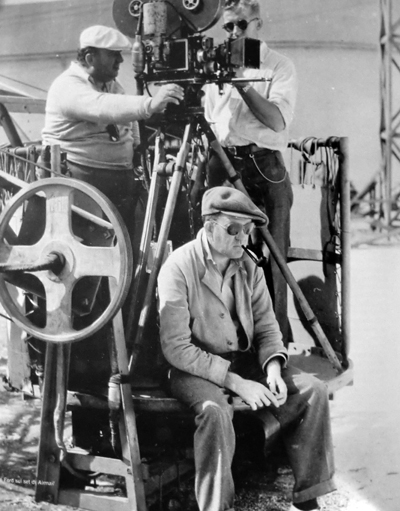
John Ford on the set of Air Mail (1932).
DB here:
This is the busiest installment of Cinema Ritrovato I can recall. We scarcely have time to sleep, let alone blog. The coordinators Peter von Bagh, Gian Luca Farinelli, and Guy Borlée have outdone themselves in offering something for everybody, from early films to postwar French and Italian rarities up through a tribute to Stanley Donen and special screenings of The Leopard and Metropolis. Our attention has been riveted by the 1910 programs and an extensive collection of films directed by Alberto Capellani, a little-known master of silent film.
One headliner is the early Ford series: all his surviving silents, plus a selection of rarely-seen talkies. The first one screened, The Black Watch (1929), concentrates on intrigue in the Khyber Pass during World War I. Captain King is assigned to India while the rest of his Scots regiment is sent to Europe. In India, King masterminds the defeat of the forces of Yasmani, a woman who has been taken as sort of a goddess by her followers. The central section, involving Yasmani’s passion for King and his betrayal of her, seems to me sketchy and rushed; Ford’s real interest, not surprisingly, is in the rites of comradeship among the Black Watch. Twenty-two of the film’s 91 minutes are taken up with the opening dinner celebrating the regiment, conducted while King gets his assignment. Since his mission is secret, he abandons his comrades and suffers their opprobrium. A bookended sequence at the close shows him returning to the Watch as, in the trenches of war, they hold another dinner, complete with ruffles and flourishes.
Some of the central portion was directed by Lumsden Hare, but it too has some striking moments, perhaps most memorably the display of Yasmani’s powers when she conjures up an eerie vision of the European battlefield in a glowing crystal ball. The war sequences have the dank Expressionist look that Murnau brought to Fox and that Ford exploited in Four Sons (1928). There are as well touching train-station farewells between brothers and between father and daughter, all of which seem very Fordian. Overall, Ford finds ways to avoid the multiple-camera shooting common to early talkies, often using offscreen dialogue during reaction shots.
Also fairly free of multicamera work was The Brat (1931). Like many talkies derived from a creaky Broadway play, it entices us with a “cinematic” curtain-opener. Cops (including the young Ward Bond) hustle perps into night court, all captured in a flurry of high and low angles, bursts of deep space, and swift tracking shots. Afterwards things slow down, enlivened by some social satire (the pretentious novelist writes with a quill pen), a few sight gags (an artist’s muscled model who discovers he’s been rendered in a faux-Cubist image) and an all-in grappling fight between a society dame and a girl from the other side of the tracks. According to Ford, the fight got its impact from the fact that the actresses couldn’t stand each other.
The first silent Fords were introduced by Joe McBride. “When the real West ended,” Joe remarked, “the cinematic West began.” Born soon after the closing of the frontier, Ford was fascinated by cowboys and Native Americans. Early filmmakers were to a surprising extent celebrating the stoic Indians uprooted and forced to give up their way of life, and this resonated with Ford. The elegiac quality we find in The Man Who Shot Liberty Valance (1962) and other late films, Joe suggested, was already there in the genre. Ford’s own first Westerns, thanks partly to the presence of Harry Carey, carry an air of resignation to history. Even the fragmentary sequences surviving from The Secret Man (1917), in which Harry must sacrifice his freedom to save a little girl, have a severe melancholy.
Hell Bent (1920) has long been famed for its flashy, unrepeatable shot: A carriage pulled by horses tumbles into a ravine; the camera tilts down to follow the crash; and then the horses, freed at the top, come hurtling back into the frame to pass the wreckage. Otherwise the film is consistently agreeable, suffused with Fordian camaraderie among drunks and respect between hero and villain. This last element is starkly dramatized when Harry and his adversary, having wounded each other in a gun duel, must crawl through the desert together.
On my first viewing, I didn’t see in Hell Bent the inventiveness and grace notes I admire so much in Ford’s first feature, Straight Shooting (1917). As we’ve mentioned before, this film shows a mastery of the classical Hollywood style that emerged in the late 1910s. It bears comparison with William S. Hart films of the period, high points of filmmaking craft. Late in the plot Ford give us a shootout with ever-tighter framings that could have come out of Leone.
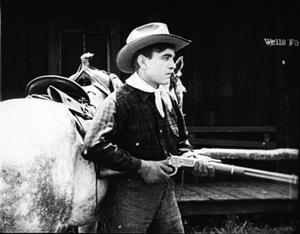
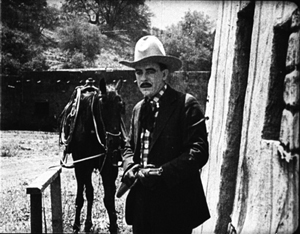
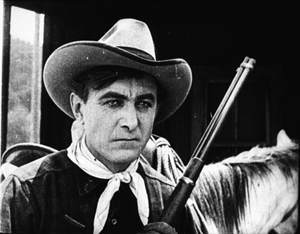
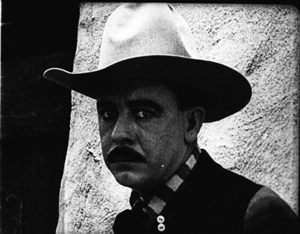
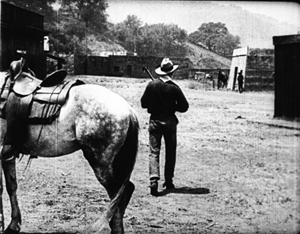
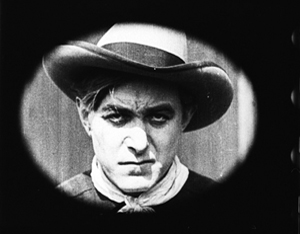
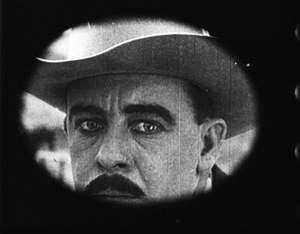
Whether Ford invented this particular piece of cinematic rhetoric we can’t say; too many silent films are lost. But coming from a 23-year-old filmmaker in his first feature, this remains a remarkably assured use of the continuity editing system for 1917.
Ford’s debt to Griffith has often been noted, and in this movie it turns up in unexpected ways. At one point Joan tenderly puts away the plate her dead brother had used, as if to preserve it. Later, Ford recalls the gesture when the cabin is under siege and bullets blow apart other plates on the sideboard. But Ford has already quietly suggested an association between brother Ted and Cheyenne Harry; as Joan kisses the plate before putting it away, Ford cuts to Harry outside, and then back to Joan slipping the plate into a drawer. Using the then-current technique of a “ruminative cut”, the editing suggests that Joan may also be thinking of Harry, and he of her. The idea of Harry replacing Ted is made explicit at the end when Sims plaintively asks Harry, “You be my son.”
The Griffith influence is particularly acute in Straight Shooting’s climax, when the farmers are under siege in the Sims cabin. Horsemen gallop around the cabin as hired gunmen pepper it with bullets. Meanwhile, Cheyenne Harry has persuaded Black-Eyed Pete’s gang of outlaws to rescue the settlers, and Ford gives us a rousing passage of rapid crosscutting. It’s a canonical last-minute rescue, straight out of the climax of The Birth of a Nation (191t5).
Or more particularly, I think, out of The Battle at Elderbush Gulch (1914). Griffith commonly staged interior scenes with doors at the left and right of the frame, letting actors play laterally. The strategy can be considered somewhat theatrical, in that we never see the “fourth wall” that would in reality enclose the characters.
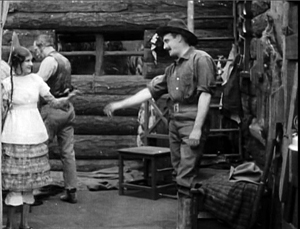
But this leads to problems when you want to show your characters surrounded. In Elderbush Gulch, the settlers are besieged by encircling Indians. At one point, Griffith cuts from the exterior of the cabin to the interior, and to convey the sense of enclosure he has one of the settlers firing “through” the fourth wall, as if over the heads of the audience!
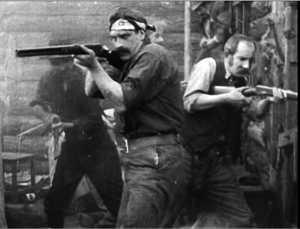
This is an awkward compromise, but at least give Griffith credit for grasping that his dollhouse playing area doesn’t fully render a realistic space. In Straight Shooting Ford provides a more three-dimensional rendering of interiors. Even though most scene in the Sims cabin lacks Griffith’s side walls, the set yields layers of depth, and the famous door in the back of the set opens on to the porch and the farm outside.
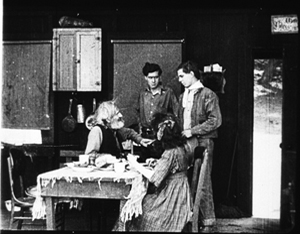
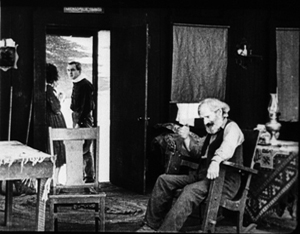
During the gunmen’s siege, we get a strong sense of enclosing space by virtue of the cuts of men firing from different angles. In addition, the cabin interior displays a little more angular depth.
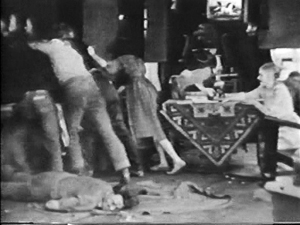
But even Ford can’t escape compromises. We never see the space “behind us” in the Sims’ cabin, and as the farmers take up positions at windows, Ford shows us old Sims readying to fire by turning toward the camera and, like Griffith’s settler, aiming through the fourth wall.
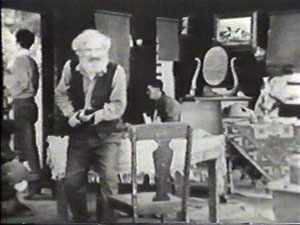
The two shots of Sims in this posture go by fast, and they’re less noticeable because the siege hasn’t quite begun. Still, the anomaly indicates that in this setting Hollywood technique still doesn’t give the sense of a wraparound space that we get in the exterior scenes, like the shootout. A few years after Straight Shooting, American directors would master the ability to build up a four-walled interior through careful cutting. Those techniques would then be exploited for dramatic effect, as in Lubitsch’s Lady Windermere’s Fan (1925).
More to come, but now I must rush off to a morning of early film! If you’re hungry for more in the meantime, visit our category Festivals: Cinema Ritrovato for highlights of earlier years.