



Archive for the 'National cinemas: Hong Kong' Category
Things to like about looking
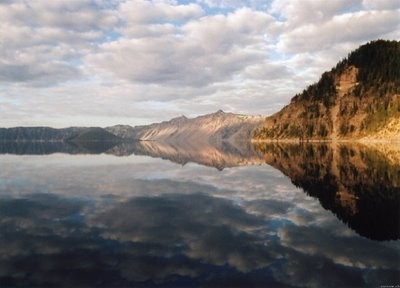
13 Lakes.
“What I like about looking is how many ways there are to see the same thing.”
Sadie Benning
DB here. Today no extended essay, just some jottings.
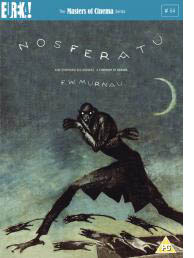 Some day I really must do an extended tribute to the Eureka/ Masters of Cinema DVD line. To call it the UK Criterion is partly right, given the painstaking transfers and the ample supplementary material. But Eureka ventures into some very fresh territory. A company that puts out the terminally peculiar Funeral Parade of Roses (Toshio Matsumoto, 1969) as well as a double-disc set of Mizoguchi’s Sansho the Bailiff and Gion Bayashi deserves points for audacity.
A recent batch of Eureka releases:
*Two cult animation items by René Laloux, Gandahar and Les maitres du temps. Fans of Fantastic Planet and the bande dessinée artist Moebius will snap these up, as much for the large booklets as for the discs.
*Then there’s Nosferatu. You say we’ve already got enough? Nope. First, we can never have too many of this, one of the greatest of silent films. Second, this version looks scarily definitive: a two-DVD set with the Murnau-Stifung restoration and the original score, plus a documentary, plus a book including some primary material along with essays by Enno Patalas, Gil Perez, Thomas Elsaesser, and Craig Keller.
*Sticking with Murnau (who directed, some say, in a white lab coat), Eureka offers a double-disc set of Tabu, also from the Murnau-Stiftung and with previously unseen scenes and title cards.
*Finally, there’s Peter Watkins’ Edvard Munch in its long version, with a booklet including a Watkins “self-interview.”
Unbelievably, many more great movies are on the way. Check the catalogue and preview lineup here.
 Also from overseas, the Austrian Filmmuseum adds a new title to its Synema book series, alongside Alexander Horwath’s remarkable dossier on Sternberg’s Case of Lena Smith (discussed in an earlier entry here) and many other books on experimental cinema. It’s the first book devoted to James Benning.
I have a personal interest. I met Jim when I came to Madison in 1973. He was working on his MFA in film and art, and he was one of four teaching assistants assigned to me. There was Doug Gomery, already an impressive film historian, soon to go on to fame for his work on the US film industry. There was Brian Rose, one of the most alert cinephiles I ever met, and one of the funniest. There was Frank Scheide, already an expert on Chaplin, Keaton, and their peers. And there was Jim, a master mathematician (helpful for computing grade curves) and the only filmmaker in the bunch. Jim and Frank, both serene, had a calming influence on the rather hyper Rose, Gomery, and Bordwell. It was a great team, my Dirty 1/3 Dozen, and I remember our collective grading sessions fondly.
Jim had already made Time and a Half, but his most famous works, starting with 81/2 x 11 (1974), were yet to come. He left Madison and went on to teach filmmaking at several places, settling finally at Cal Arts. I kept in occasional touch with him and his work. He visited our Wisconsin Film Festival with his remarkable, politically charged Four Corners, El Valley Central, and Los. I’ve seen him more frequently in the last few years because turn up at the same film festivals—me as an observer, him showing gorgeous and provocative films like 13 Lakes, 10 Skies, and One Way Boogie Woogie/ 27 Years Later.
So the book, edited by Claudia Slanar and Barbara Pichler, is very welcome. It just arrived, so I haven’t had a chance to read it through, but I signal it to all those interested in a filmmaker who has been enthralling and surprising us for thirty-five years. Apart from a career chronology and a complete filmography, it features essays by Julie Ault, Sharon Lockhart, Volker Pantenburg, Dick Hebdige, Amanda Yates, Scott MacDonald, Allan Sekula, Michael Pisaro, Nils Plath, and of course Sadie Benning, a mean hand with Pixelvision. Lockhart supplies lustrous shots of some Wisconsin beer bottles in Jim’s collection.
 Speaking of books, not beer, the Korean Film Council has just published a series of trim books on major directors, both classic and contemporary. Each volume includes a detailed filmography and a lengthy interview. Some volumes are through-written by a single author, others consist of analyses and appreciations by various hands, including major Korean critics and Asian cinema expert Chris Berry.
The directors honored are Kim Dong-on, Im Kwon-taek, Lee Chang-dong, Kim Ki-young, Park Chan-wook, and Hong Sang-soo. This last volume, edited by Huh Moonyung, includes an homage by Claire Denis and a small essay by me, “Beyond Asian Minimalism: Hong Sang-soo’s Geometry Lesson.”
Books in the series may be ordered here.
Speaking, again, of books. . . The paper edition of Phillip Lopate‘s American Movie Critics: An Anthology from the Silents until Now (The Library of America) has just come out. I found reading the first edition addictive, like eating peanuts and M & Ms. Now we need a second volume including Frank Woods (a critic close to Griffith), Welford Beaton, and other less-known early writers.
In the meantime, the new edition has grown to include an essay on Fincher’s fine Zodiac by Nathan Lee and internet pieces from Stephanie Zacharek (Salon.com) and your obedient servant. I’ve never imagined an essay of mine in a collection that includes my teenage idols Mencken, Macdonald, Sontag, and Sarris, so this volume amounts to a swell early Christmas present. Thanks to Mr. Lopate and Geoffrey O’Brien for all their help.
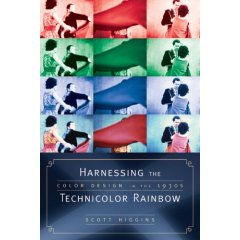
Speaking, yet again, of books. . . A plug is in order for Scott Higgins’ meticulous, engagingly written Harnessing the Technicolor Rainbow: Color Design in the 1930s, just out from Texas. I sat on Scott’s dissertation committee, and I was impressed by his imaginative research methods (e.g., using Pantone swatches as an objective measure of color hues in movies) and his sensitive attention to the way the movies look. Nobody before Scott has analyzed color in film so carefully. Scott is also attentive to production practices, so filmmakers interested in the history of technology should find a lot to chew on here. Several pages of original Technicolor frames support Scott’s case in graceful detail. No beer bottles, however.
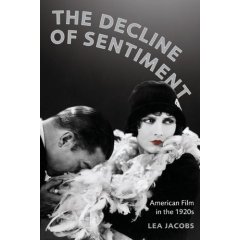
More books from Wisconsin scholars: The above-mentioned Doug Gomery has a new book due out early next year, A History of Broadcasting in the United States. Lea Jacobs’ The Decline of Sentiment: American Film in the 1920s should follow soon. I’ve read the latter already, but both are without doubt worthy of your attention. If you like your American film history at once informationally solid and intellectually daring, you will like these items. Neither Doug nor Lea is a fan of conventional wisdom.
Finally, for fans of Hong Kong cinema: Johnnie To and Wai Ka-fai‘s Mad Detective (I filed a note on it from Vancouver) has been a hit in Hong Kong, beating Beowulf. An analog Lau Ching-wan can thrash a digital Ray Winstone any day of the week. Milkyway Image’s boundlessly energetic Shan Ding has set up a Facebook page as a place to chat about movies and, one hopes, to keep us apprised of developments in Mr T’s upcoming remake of Melville’s Cercle Rouge.
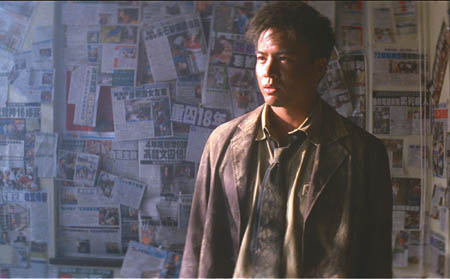
Mad Detective.
PS: Just learned about an informative interview with Jim Benning here, with more ravishing shots from 13 Lakes. This entry also includes several other links to web discussions of Jim’s films.
Scribble, scribble, scribble
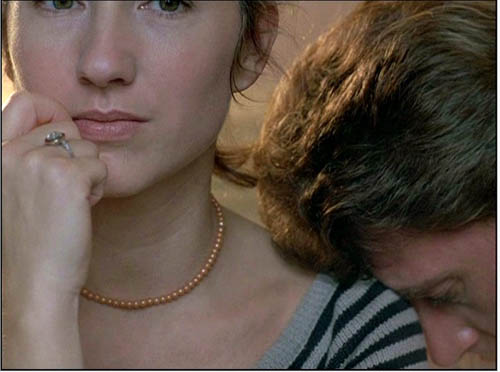
Detective (Godard, 1985).
Another damned, thick, square book! Always scribble, scribble, scribble, eh, Mr. Gibbon?
William Henry, Duke of Gloucester, 1781.
David here:
Kristin kept the blogfires burning while I traveled last week and did UW duties this one. I had a great time at the University of Georgia in Athens (but didn’t see Stipe) and at Emory in Atlanta (but didn’t see Scarlett). At both places I met sharp, energetic students and faculty. I have a couple of blog entries backlogged for posting, but now recent items relating to publications get the pole position.
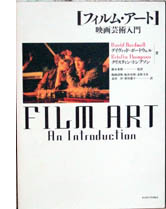 First, a Japanese translation of our Film Art: An Introduction has just appeared. It’s a very handsome version of the seventh edition, rendered by Fujiki Hideaki and Kitamura Hiroshi. We’re grateful to them and to Nagoya University Press for publishing it.
Second, the University of California Press is having a big sale on many outstanding media titles, from Richard Abel’s books on French silent cinema and André Bazin’s classics of film theory to Michele Hilmes’ study of NBC television and Mike Barrier’s new Disney biography, The Animated Man. To get the discount you must sign up for an e-newsletter, but it’s not intrusive.
Among the books of mine on sale, the biggest bargain is the hardcover edition of Figures Traced in Light (2005), originally priced at $65, now going for $7.95 plus postage. (No, apparently I don’t get the full-price royalties.) You can find this item here. There are also paperback copies of Figures (going for $12.95) and of The Way Hollywood Tells It ($15.95). If you’re inclined, hurry: the sale ends on 31 October.
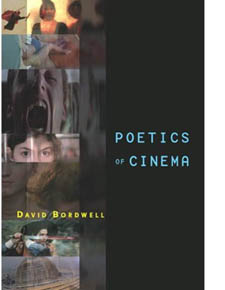 The biggest news, though, is that I just got my author’s copies of Poetics of Cinema, published last week. For a while Amazon was telling some people who pre-ordered it that copies won’t be available until 27 December, but now, despite what it says here, the book seems ready to ship.
Bad news first. Poetics of Cinema is priced at $45 in paperback, with no sellers I know offering it at discount. Go ahead, say it: Very expensive. If you haven’t published a book, you may not know that authors have no say in the pricing of their work. Publishers would never set a price or price ceiling in a contract, and calculations about pricing are based on many factors, including what comparable books sell for. A high cost isn’t my preference, of course; every writer wants to reach as many readers as possible. But unless you blog or self-publish your work, the publisher sets the price.
There are some good reasons for the cost. Running to 500 fairly dense pages and containing over 500 photographs, Poetics of Cinema was a complicated book to produce. I peddled it to other publishers, but they ruled it out as too whopping an investment for them. So Routledge has priced it along lines of comparable books, reckoning in the size of the likely audience (I hope, more than 118.3 readers). I have to thank Bill Germano, then Publishing Director at Routledge, for taking a chance on this project.
From age fifteen or so I’ve been a compulsive writer. Scribble, scribble, scribble. I’ve been at work on one book or another for over thirty years. I’ve got several projects in mind for my next effort, but I’ve held back committing. Is there any point in publishing more books, at least as books?
I mean this as a serious question. Would it have made any difference to me or my readers if Poetics of Cinema appeared as pdfs, available at a price considerably less than $45? Wouldn’t I find more readers? What about variable pricing? If Radiohead can do it, why can’t I? Somebody in film studies should try putting a digital book for sale online; maybe I will. But for a few years at least, this last baggy monster will be available only in dead-tree format.
Poetics: Some puzzles
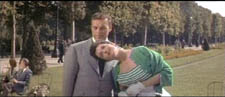
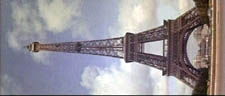
Gentlemen Marry Brunettes (Richard Sale, 1955).
If you’ve read this far, you may be interested in what the book is about. Most basically, it’s predicated on the belief that we make progress in research by asking questions. Some questions are too deep to be answered—call them mysteries—but others can be answered with a fair degree of precision and reliability. We can turn mysteries into puzzles and puzzles into plausible answers.
Here’s a fairly common sort of composition in Hollywood cinema of the 1940s. This shot from The Killers (1946) displays the sort of steep depth I’ve talked about at various points on this blog and in my other books.
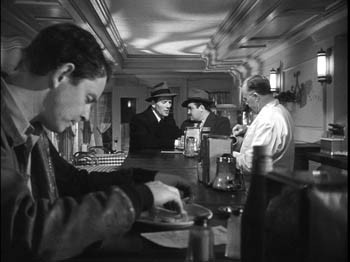
But now here’s an equally tense confrontation at a counter, from Bad Day at Black Rock (1955), made in early CinemaScope.
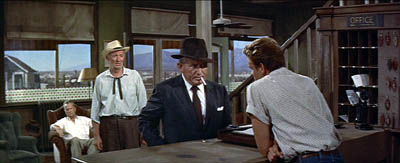
It doesn’t look much like the 1940s shot. The characters stand far from us, and the figure in the foreground doesn’t loom over the background. The shot is more open, the composition more porous. And unlike The Killers, Bad Day doesn’t contain close-ups of the actors in any scenes.
So questions come to mind. Did John Sturges have to stage the scene in Bad Day this way? Did other filmmakers resort to the same choice? What factors created pressures toward this more spacious format? Could more resourceful filmmakers have done something different? And given that such shots are rare today, what changes made it possible for filmmakers in later years to create the tight anamorphic widescreen close-ups we have now (as here in Cellular)?
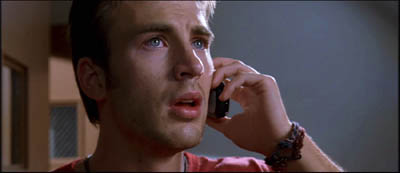
Despite all that has been written about CinemaScope and other early widescreen processes, no one has explored, shot by shot, what staging options were used by filmmakers. A chapter in Poetics of Cinema called “CinemaScope: The Modern Miracle You See Without Glasses” tries to show how filmmakers used the new format to tell their stories. This led them, I propose, to experiment with some staging strategies that, surprisingly, had precedents as far back as the 1910s.
Take another instance. We’re all familiar with recent films that present alternative futures, like Run Lola Run. A story line runs along and then is interrupted, and we switch to the same characters living a different storyline in a parallel universe. The emergence of such “forking path” movies arouses my curiosity. How do they work? How do they make their alternative-reality stories intelligible to the audience? How is it that we’re able to understand them? (After all, the notion of an infinite number of alternative universes to ours is pretty hard to get your head around.) Are such stories a brand-new innovation, or do they have precedents? (Clue: Remember A Christmas Carol?) Why do we see a cluster of these emerging in recent filmmaking?
I tackle these questions in another essay, called “Film Futures.” There I look at several such movies and try to spell out the tacit rules that filmmakers follow and that audiences pick up on. While this story format probably doesn’t constitute a genre, it does obey certain conventions, and I try to chart those. Some films also make some clever innovations in the format, which I also try to trace. The essay as well suggests how the conventions are handled differently in mass-market films like Sliding Doors and in art films like Kieślowski’s Blind Chance.
These two essays, along with the others in the book, try to explain and illustrate an approach to film studies I call film poetics. At bottom, this is an effort to explain why films are designed the way they are: how filmmakers have made certain choices in order to shape our response to their films. How do movies work? How do movies work on us?
Poetics: The project
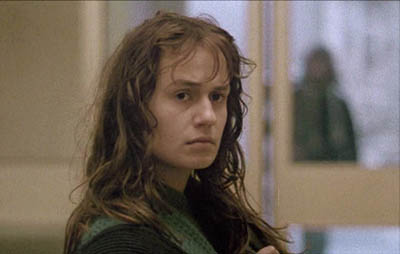
Vagabond (Varda, 1985).
As a kind of reverse engineering, film poetics looks at both structure and texture. I argue that we ought to study how films are constructed architecturally, as revealed for instance in plot structure or narration. Poetics also concentrates on stylistic patterning, the way filmmakers organize the techniques available to the medium. Poetics traditionally deals as well with thematics, the subjects and ideas that are mobilized by filmmakers and reworked by large-scale form and cinematic style.
Put it this way: I want to know how filmmakers have confronted problems set by others, or created problems for themselves to solve. I want to know how they draw on the past to borrow or modify or reject creative strategies. I want to know filmmakers’ secrets, including the ones they don’t know they know. And I want to know how all this creative activity is shaped to the uptake of spectators in different times and places.
Some of what I’ve written on this blog could illustrate how the poetics-driven perspective works in particular cases. The book offers more such instances, probed in more detail than is possible here. Using a comparative method, I also trace out some general principles of film form and style as they have developed over history.
The book consists of fifteen essays. Some have been published before; those have been revised for this collection. Other essays are newly written. After a somewhat polemical introduction, the first part concentrates on some theoretical problems. The anchoring essay offers a general introduction to the idea of a film poetics, with several examples. (An earlier version is on pdfs here.) In the same essay, I float a model of how film viewers respond to various aspects of films. I distinguish activities of perception, comprehension, and appropriation, and I suggest that a cognitive perspective sheds light on them.
Part I also contains an essay considering how cinematic conventions work. A poetics-based approach will spend a lot of time on norms, traditions, and received routines, for these are often the basis of filmmakers’ creative choices. This essay argues that some conventions are local and require a lot of cultural knowledge, while others are cross-cultural, compelling us to study why certain cinematic strategies seem to crop up across the world.
The second part of Poetics of Cinema considers narrative, one of the most common ways in which films are organized to affect viewers. I wrote a new essay to launch this section, a wide-ranging study called “Three Dimensions of Film Narrative.” The three dimensions I consider are narration, plot structure, and the narrative world. The essay considers how each of these shapes our understanding of a film’s story. This essay ends with a discussion called “Narrators, Implied Authors, and Other Superfluities.”
Some more tightly-focused pieces follow. One is devoted to forking-path plots. Another concentrates on an odd question: What role does forgetting play in our watching a film? Cognitive theory can offer some answers, and I take Mildred Pierce as an example. There’s an update of an essay that has been something of a golden oldie in film courses, “The Art Cinema as a Mode of Film Practice.” In a supplement to that piece I suggest some new avenues of inquiry and draw on more examples, notably Varda’s Vagabond (Sans toit ni loi).
The longest piece in Part II is devoted to what I call network narratives. Prototypes of this would be Grand Hotel, Short Cuts, Crash, and Babel. This essay tries to show how a poetics of cinema shed light on this format, currently a very popular one. When I started looking at these movies, I was surprised to discover how many filmmaking traditions work in this vein; I append a filmography with nearly 250 items, and today I could update it with several more. (1) I consider how this option has developed distinctive strategies of narration, plotting, and worldmaking. I also survey some common themes running across network tales, such as the role of chance and fate. The essay finishes with more in-depth analyses of four films: Altman’s Nashville, Iosseliani’s Favoris de la lune, Anderson’s Magnolia, and Jean-Claude Guiget’s Les Passagers.
Poetics: More problems
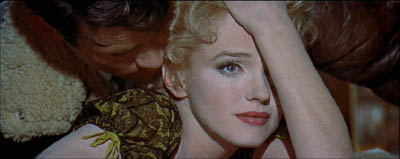
Bus Stop (Logan, 1955).
Part III moves from questions of narrative to questions of film style, no stranger to this blog. The opening essay is a tribute to Andrew Sarris that appraises his role in making readers of my generation style-conscious. It’s the most personal piece in the book. There follows a study of Robert Reinert, a director in the German silent cinema who might have become much better known if his quite demented Nerven and Opium had been as widely seen as Caligari. The essay “Who Blinked First?” considers how our reaction to films is affected by the ways in which actors use their eyes, including how and when they blink. Big deal, huh? Actually, yes.
The monster essay in this section is the CinemaScope piece, of which I’ve given versions in lecture form over the last couple of years. I argue that some directors responded to the new widescreen technology by adapting certain norms of staging and shooting to the new format, while other filmmakers moved in more adventurous directions. The piece uses the model of problem/solution as a way to understand stylistic continuity and change, a framework I’ve floated in On the History of Film Style as well.
The last four studies in Part III are devoted to style in Asian cinema. There are two essays on Japanese film of the 1920s and 1930s, both expanded somewhat from their original versions. There I argue that we can see Japanese directors as building upon, as well as adventurously departing from, stylistic norms shared by most filmmaking countries of the period. This brace of essays fills out some ideas that I fielded in Ozu and the Poetics of Cinema, and they should appeal to that growing body of viewers who have developed a passion for Naruse Mikio and Uchida Tomio. It’s gratifying that several of the films I discuss, which I had to study in archives, are now circulating in touring programs.
Poetics of Cinema concludes with two studies of Hong Kong film, one surveying the stylistic tactics by which that very lively tradition excites its audience, the other analyzing the unique innovations of King Hu. The articles are companion pieces to Planet Hong Kong.
Poetics: The mysteries
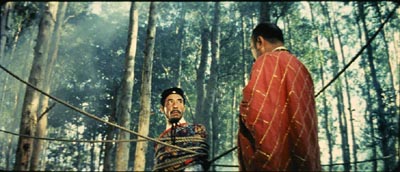
A Touch of Zen (King Hu, 1970).
As an approach to answering questions about cinema, poetics blends history, criticism, and theory. It requires that we do research into the artistic history of film, looking at styles, genres, narrative modes, and other traditions. It asks for close analysis and interpretation of films. At the same time, it asks broader questions about what principles govern narrative, stylistic patterning, and the like. I’d say it obliges a historian to concentrate on aesthetics; it makes criticism more historical and theoretical; it ties theory to concrete historical conditions and the fine-grain workings of individual films.
Kenneth Burke used to say that you could get a sense of a book by looking at its first and last sentences. My book’s first essay opens this way:
Sometimes our routines seem transparent, and we forget that they have a history.
I think that this captures my concern to look closely at familiar things in film and try to make their principles a little more evident. Yet in trying to make filmmakers’ choices explicit and tracing out the principles undergirding how we make sense of movies, I’m sometimes criticized for simply stating common sense. Poetics can look bland alongside the skywriting swoops of most academic film theory. But skywriting is blurry and dissolves while you look at it. By contrast, clearly setting out some basics of filmic construction and comprehension offers a firmer place to start answering questions about how movies work and work on us.
Poetics tries to produce concrete, approximately true claims about cinema. Most film theory operates as an application, borrowing big theories of culture, identity, nationhood, and the like and then mapping them onto films. The results are usually thin. It seems to me that most film theory today is not carefully thought through or persuasively argued. For examples, see my essay in Post-Theory, the last chapter of Figures, and my comments here and here on this site.
In trying to establish reliable knowledge about cinema, we won’t answer every question and we will make false steps, but we can make progress. Film poetics is one way we film enthusiasts can join that tradition of rational and empirical inquiry which remains our most dependable path to knowledge. My introduction, though peppered with some pokes at Big Theory, has the serious purpose of making a plea for film scholars to join that tradition.
The final line of the book concludes the essay on King Hu:
The mainstream [Hong Kong] style has given us many beautiful and stirring films, but Hu’s eccentric explorations evoke something that other directors’ works seldom arouse: a sense that extraordinary physical achievement, if caught through precisely adjusted imperfections, becomes marvelous.
To get the full point you need to read the essay, but what should come through here is my concern to highlight filmmakers’ originality when I find it, and to locate it by means of a comparative method. In addition, I hope that what comes through is an appreciation of the sheer exhilaration we feel when a filmmaker has made the right, bold choice. A poetics-based approach probably can’t fully explain this feeling—it may fall under the heading of mysteries rather than puzzles—but at least it can reveal how some forces contribute to it.
My summary, and the size of the book, may leave the impression that I think that I’ve answered these questions fully. Of course I don’t. I try only to make some progress, realizing that offering answers is also an invitation to disagree, to refine the questions and tackle new ones. Nor do I think that these are the only questions that matter. We’re just starting to understand how films work and work on us, and there are a great many areas we haven’t charted. (Performance, to take a big one.) We have to start somewhere, though. I’d hope that by posing some questions and proposing some answers, Poetics of Cinema offers fruitful points of departure.
(1) Some candidates are 25 Fireman Street (1973, Hungary, István Szabó), Feast of Love (2007, US, Robert Benton), Continental—A Film without Guns (2007, Canada/ Stephane Lafleur), The Edge of Heaven (2007, Germany/ Turkey, Fatih Akin), Unfinished Stories (2007, Iran, Pourya Azarbayjani), God Man Dog (2007, Taiwan, Singing Chen [Chen Hsin-hsuan]), A Century’s End (2000, Korea, Song Neung-han), and Why Did I Get Married? (2007, US Tyler Perry).
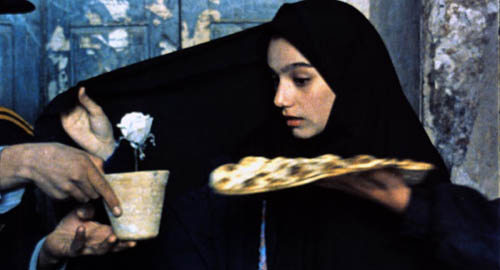
A Moment of Innocence (Mohsen Makhmalbaf, 1996).
Updates: Len Lye, Frodo Franchise, blockbusters, and news from/about Hong Kong
Kristin here—
More on Len Lye
After my recent post on Len Lye, I heard from both Roger Horrocks, Lye’s biographer, and Tyler Cann, Curator of the Len Lye Collecton of the Govett-Brewster Art Gallery in New Plymouth, New Zealand. (Neither with corrections, I am happy to say!) They have filled me in on some activities that should make Lye’s film work more accessible.
First, a DVD of Lye’s films is being prepared. Unfortunately factors like the process of assembling the best surviving prints means that the finished product will not be available in the near future.
Second, the near future will bring a touring program of Lye’s films to North America. Called “Free Radical: The Films of Len Lye,” it has been organized by The New Zealand Film Archive, the Len Lye Foundation, and Anthology Film Archives. (The name was inspired by Lye’s scratched-on-film animated short, Free Radicals, 1958.) Here are the venues and dates:
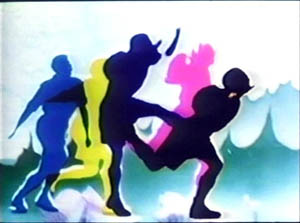 Oct 12 Anthology Film Archives, New York
Oct 18 NASCAD (Nova Scotia College of Art and Design) Halifax, Nova Scotia
Oct 23 Pacific Film Archive, Berkeley
Oct. 28 Film Forum, Los Angeles
Oct 30th CALARTS, Los Angeles
Nov 2nd University of Notre Dame, Indiana
Nov. 7th George Eastman House, Rochester
Nov. 26th Harvard Film Archive, Cambridge
Dec 8th Chicago Filmmakers, Chicago
Dec. 15th International House, Philadelphia
Roger tells me that he intends to write a book on Lye’s theory and practice of what he called “the art of motion.” This reminds me that I forgot to mention that there is a collection of Lye’s writings, Figures of Motion: Len Lye Selected Writings, co-published in 1984 by Auckland University Press and Oxford University Press. It was co-edited by Roger and Wystan Curnow and is, alas, long out of print. Another thing to look for in your local library.
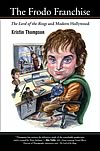
The Frodo Franchise
I am happy to report that The Frodo Franchise is now in the process of being rolled out. The University of California Press has been shipping copies for weeks, and it should soon appear on bookstore shelves—and may have already in some places. The copy we pre-ordered from Amazon back in April arrived on July 30.
I have bowed to the inevitable and am in the process of constructing a separate website, “Frodo Franchise,” to deal with matters relating to the book and the films. (That is, Meg, our web czarina, is constructing it.) I don’t want information about the book, comments on the Hobbit film situation, and similar items to overbalance our blog, which they threaten to do. I’ll post a notice when the site is up and running.
In the meantime, Pieter Collins of the Tolkien Library, an excellent reference and news site dedicated to the novels, has interviewed me about my book. You can read the result here. Henry Jenkins has done the same, through his site, Confessions of an Aca-Fan, is more oriented toward popular media and fandom. The interview is in three parts here, here, and here.
Hollywood Blockbusters Doing Pretty Well
On February 28 I posted an entry, “World rejects Hollywood blockbusters?” There I argued against claims in an article by Nathan Gardels, editor of NPQ and Global Viewpoint, and Michael Medavoy, CEO of Phoenix Pictures and producer of, among many others, Miss Potter. They claimed that there were many signs that Hollywood’s big-budget films are being rejected at the box office: “Audience trends for American blockbusters are beginning to show a decline as well, both at home and abroad.”
Since then, of course, Hollywood blockbusters have been cleaning up at home and abroad. We’re all familiar by now with the series of huge international openings, with many blockbusters being released day and date in most major markets. As one example, take Harry Potter and the Order of the Phoenix, which so far has grossed $774,070,000 worldwide. The US and Canada claimed only about one-third ($264 million) of that total (Box Office Mojo, August 4). Overseas, Phoenix has scored $510 million, for 65.9% of its global haul. The Three Threes, Shrek, Pirates, and Spider-man, all cleaned up internationally, as did Transformers. (The fourth Three film, The Bourne Ultimatum, looks set to do the same.) The Simpsons Movie has recently begun its climb to box-office glory.
Leonard Klady, an excellent writer on the international film industry, summed up the situation for 2007 in the 22 June print edition of Screen International: “Worldwide predictions that 2007 would break recent box-office records look to be well founded. The international box office generated $4.5bn in the first four months of 2007. Combined with revenues from the domestic North American marketplace, the global gross for the period was $7.2bn. International theatrical [i.e., markets outside the U.S. and Canada] accounted for 61.6% of the worldwide box office on gross figures that exceeded domestic ticket sales by 60.6%. Based on current viewing trends, global box office could finish the year at a record-breaking $24.6bn.”
Klady points out that much of the rise comes from the factor I discussed in my earlier entry: the expansion of the international market. According to him, “The international market has become increasingly significant in the past decade.” A decade ago, foreign income averaged 45% of Hollywood films’ takings. By 2006 it was around two-thirds.
These facts also bear on Neil Gabler’s February article, “The movie magic is gone,” where he lamented the purported decline in theatrical films’ importance. That there was such a decline, he claimed, was evidenced by the fact that box-office revenues are down, both domestically and abroad. I refuted Gabler’s claims at some length in this March 11 post, and the successful summer that Hollywood is now enjoying adds further evidence to show that his argument was based on false assumptions.
DB here–
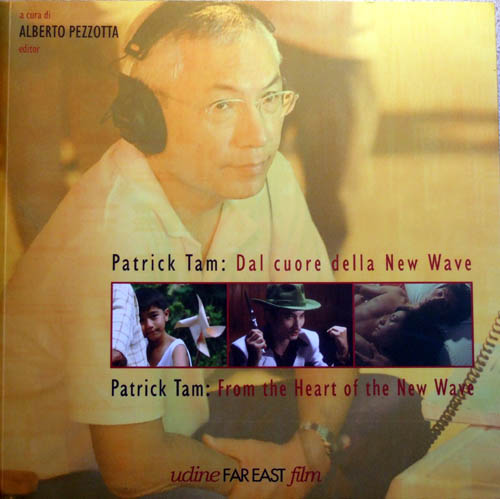
The Udine Far East Film Festival had a tremendous program this year, and just the YouTube promo made you want to book a ticket. But I couldn’t go! Still, the organizers kindly sent me their excellent catalogue Nickelodeon and the real topper, the festival’s thick volume dedicated to Patrick Tam Kar-ming. Editor Alberto Pezzotta, indefatigable researcher into Hong Kong film, organized a vast retrospective of Tam’s key New Wave films, such as Nomad and The Sword, as well as his less-known television work. The book includes critical essays, a detailed filmography, and a long, informative interview. Tam brought a cosmopolitan sensibility to Hong Kong film, thanks to his sensitivity to European directors like Godard and Antonioni. His latest film, the widely acclaimed After This, Our Exile, signals a new phase in his career.
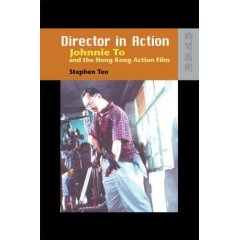 When I was writing Planet Hong Kong between 1997 and 1999, I was often frustrated by a lack of solid information and in-depth critical writing. Tony Rayns’ superb essays and the annual catalogues published by the Hong Kong International Film Festival were about all I could rely on. That situation has improved in recent years, with many well-researched books on Hong Kong film appearing. Outstanding here is Stephen Teo, who has given us two books this year alone: King Hu’s A Touch of Zen and the just-out Director in Action: Johnnie To and the Hong Kong Action Film. This efflorescence of writing comes just when local cinema is in its deepest slump. You won’t find me quoting Hegel often, but in this instance it does seem that the owl of Minerva is flying at dusk.
Two Chinese men of the cinema
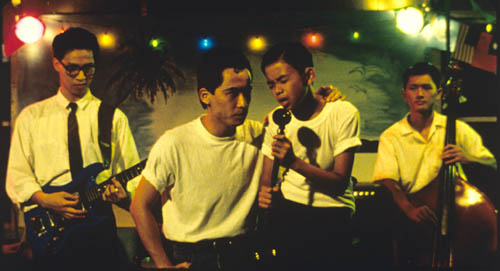
A Brighter Summer Day.
DB here:
This summer two major figures in Chinese filmmaking died. One was Edward Yang (Yang Dechang), one of Taiwan’s finest directors, who died on 29 June. But before I pay tribute to him, I want to acknowledge another figure who had a great impact on Asian cinema.
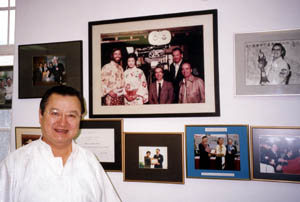
Charles Wang died on 6 July. Along with his brother Fred, Dr. Wang ran Salon Films, the major supplier of film equipment for Hong Kong and a principal one for East Asia and the Pacific Rim. Charles graduated with a degree in chemistry before inheriting the business from his father. As Hong Kong filmmaking grew in sophistication, Salon grew along with it. Most Hong Kong films bear the firm’s brand in their end credits.
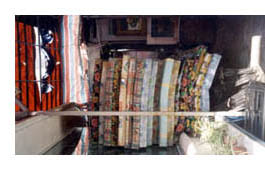 Since 1969 Salon has provided top-flight cameras, lenses, lighting gear and other technical support for both local and visiting productions, such as Mission: Impossible III‘s Shanghai shoot. An early triumph was winning the Panavision franchise for the region. The company even supplies trampolines and landing cushions for martial acrobatics, as this glimpse inside a Salon van shows.
When I interviewed Dr. Wang in 2003 he kindly gave me information about the company and the development of film technology in Hong Kong. He showed me his many awards and talked enthusiastically about Salon’s new efforts to assist mainland moviemaking. In recent years, Salon was investing in films such as Zhang Yimou’s Hero. Like most Hong Kong film people, he was very accessible and generous; he even gave me a lift back to my hotel. Charles Wang was a major force in the Hong Kong industry and will certainly be missed.
Laconic cuts and long takes
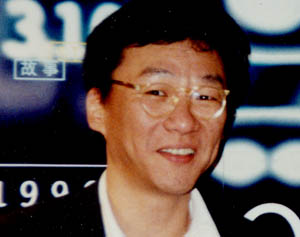
I met Edward Yang twice. First, at a Hong Kong Film Festival reception, we chatted about his film Mahjong (1996), which had screened. I got to know him a little better in fall of 1997, when we were both invited to the Kyoto Film Festival. We ate and watched films together, and we shared baby-boomer nostalgia; it turns out that he and I (and Hou Hsiao-hsien) were all born in the same year.
I found him friendly, thoughtful, and open to appreciating all film traditions. He spoke of enjoying Japanese swordplay movies in his youth, and he admired American films for their gripping stories. Still, his preference for ellipsis and understatement came through. When we met Kitano Takeshi for dinner, Edward praised a crisp transition in Sonatine: to show the gang going from Tokyo to Okinawa, Kitano simply gives us a quick pan of the sky accompanied by the sound of a jet plane.
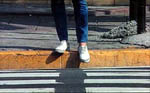
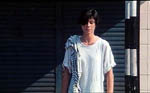
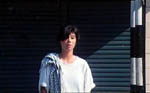
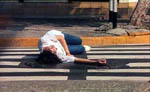
Yang was an accomplished cartoonist, and I thought that this background partly explained his early style, on display in the short film Desires (1982) and in the features That Day, on the Beach (1983), Taipei Story (1985), and The Terrorizers (1986). In these films Yang often breaks his scenes into simple but striking fragments. After the police shootout in The Terrorizers—one of the most enigmatic and elliptical opening sequences in modern cinema—the Eurasian girl staggers out to the street. Yang gives us her collapse in quite abstract, percussive images. Her foot hits the pavement. Cut. She takes a step and falls out of frame; the camera holds on the empty frame. Cut. She’s lying on the crosswalk. I imagine these as forceful, laconic comic-book panels.
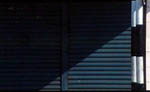
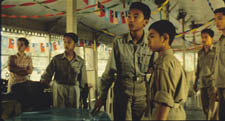
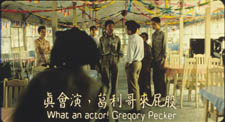
With A Brighter Summer Day (1991), my favorite of his works, Yang tells another gap-filled story but treats the scenes in long, distant, often decentered takes reminiscent of Hou. Now his frames are more dense with figures and furniture, and layers of action extend quite far back. In Figures Traced in Light, I devote a little—too little—analysis to one admirably staged passage. Another of my favorite scenes in A Brighter Summer Day shows the hero Xiao S’ir developing a romantic attachment to Ming, the girlfriend of the absent gang leader Honey. They sit in a brightly decorated café.
Suddenly Ming darts out of the shot, leaving Xiao S’ir and the other boys staring. From their point of view we see that Honey, dressed in a sailor suit, has returned and Ming has gone to meet him.
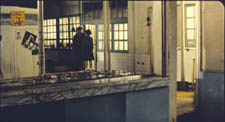
Yang cuts back to the boys as Honey’s gang starts to threaten Xiao S’ir. Abruptly, Ming runs into the shot, past the boys, down the long central aisle, and out of the café. (In a 35mm print you can see her pausing and lingering outdoors.)
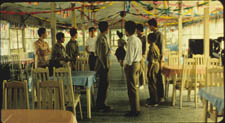
The group closes around Xiao S’ir; only Honey’s entry breaks the tension. He leads the boy into the depth of the shot, the camera following them.
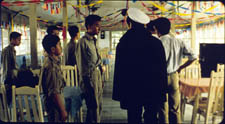
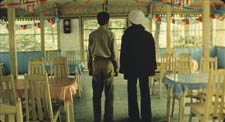
Honey warns Xiao S’ir off, and our hero goes outside, mimicking the path Ming had followed.
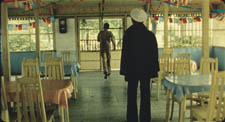
As Honey turns his attention to his gang and an upcoming skirmish with their rivals, he moves back down the aisle, the camera backing up. Once his business is done, Honey drifts back to the rear door.
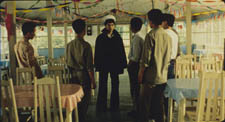
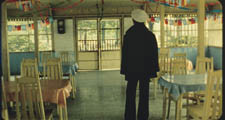
Honey pauses far from us, at the window. Yang cuts to show what he sees: Xiao S’ir, in flagrant violation of the warning, talking to Ming outside.
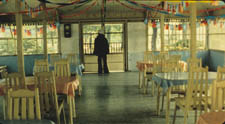
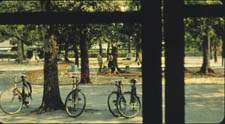
First we got Xiao S’ir’s point of view on Honey and Ming; now, in a reversal, we get Honey’s point of view on Ming and Xiao S’ir. In scenes like this, Yang merges his developing skills in long-take staging with cuts that develop not only the action but story parallels. Very distant framings, characters moving to the rear of the shot and turning their backs: Yang “dedramatizes” the scene. Further, by shifting point of view, he leaves us guessing about story information: What led to Ming’s running away from Honey? What are Xiao S’ir and Ming talking about now? Yang created a laconic visual approach that, I’d argue, invests fairly standard dramatic situations with a tantalizing uncertainty.
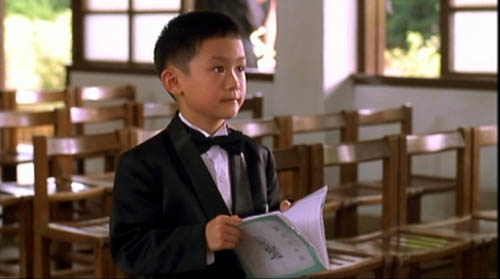
Yang’s best-known film is, of course, Yi Yi (2000), and it won him the wide appreciation that he had long deserved. It’s a warm and gentle work, less innovative than his earlier efforts but utterly typical of his vision of lives pervaded by melancholy routine and abrupt disappointment. People often remarked that the adolescent hero of A Brighter Summer Day resembled Edward himself. Perhaps too in Yi Yi Yang’s enigmatic pictorialism is echoed in the idea of a little boy who makes photographs of people’s heads seen from the rear. Like the director, the boy (named Yang-yang) displays a reticence that respects the mysteries of people’s private lives.
We already have a very useful guide to Yang’s work in one chapter of Emilie Yueh-Yu Yeh and Darrell William Davis’ book, Taiwan Film Directors. And Criterion’s Curtis Tsui has done a wonderful edition of Yi Yi, as Brian Hu shows here. We must hope that Criterion, Eureka, or another gilt-edged DVD publisher will soon bring us Yang’s other works in the pristine editions they deserve.
A Brighter Summer Day (1991)
In 1998, when we screened A Brighter Summer Day at our Cinémathèque, I wrote a program note. I reproduce it, lightly revised, as a quick pointer to one of the great films of the 1990s.
With Taipei Story (1985) and The Terrorizers (1986) Edward Yang established himself as one of the two leaders of the Taiwanese New Wave generation. At first it seemed that he and Hou Hsiao-hsien had agreed to a division of labor in their subjects and styles. Hou tended to concentrate on life in the countryside, or on rural characters transplanted, bewilderingly, to the modern city. Hou was also deeply interested in the history of Taiwan; his most acclaimed film, City of Sadness (1989), is a panoramic survey of Taiwanese society immediately after World War II. Hou’s tranquil style favored a contemplative mood and muted emotion.
Yang, by contrast, tended to focus on the lives of well-to-do urbanites in a contemporary setting, Taiwanese yuppies plagued by anomie and the desperation of love and work. His elliptical editing technique, reminiscent of Resnais, fractured time and space, while his compositions had a painterly starkness. The Terrorizers shuttles kaleidoscopically among characters at its beginning; their relations only gradually settle into intelligible patterns. Whereas Hou tended toward nuance and quiet drama, Yang was unafraid of shocking, inexplicable bursts of bloodshed.
Now it seems evident that this impression of a division of labor was somewhat schematic. Hou’s range of interests has widened, with new emphasis on the violent world of urban crime (Goodbye South Goodbye, 1996), and he has come to rely on quite disorienting transitions between past and present (Good Men, Good Women, 1995). Likewise, with A Brighter Summer Day Yang turned to history and cultivated a more sober style of filming, with lengthier shots and a fixed or barely moving camera. This approach throws down a challenge to the razzle-dazzle of contemporary popular cinema—from Hollywood, Hong Kong, and even the American “independents”—and invites us to scrutinize, moment by moment, the details of action unfolding on the screen.
Three years in the making, A Brighter Summer Day was a triumph of independent production. At a period when the Taiwanese film industry was virtually dead, Yang found money (mostly Japanese) to mount a project of remarkable ambition. Over half the cast and crew had never worked on a film before. At first released in a three-hour version, the film was re-released in a four-hour director’s cut, and this has become the standard version.
The historical event examined in A Brighter Summer Day took place in Taipei in the 1960s, when an adolescent boy about Yang’s age stabbed a young woman. At epic length Yang creates a web of circumstances around the event. He shows the interplay of traditional culture—filial duty, education as an ideal of social advancement—with popular culture, especially the rock n’ roll songs that recur throughout. Yang has said that Americans might not realize the shattering force of rock in other cultures: “These songs made us think of freedom.”
The film has over eighty speaking parts, most filled by nonactors, and it intertwines several characters’ destinies. On first viewing, the film can be somewhat bewildering to a non-Taiwanese audience, so a plot sketch may help. (Skip to the next paragraph if you don’t want to know the action in advance.) At the center is fourteen-year-old Xiao Si’r. He tries to be a dutiful student, but with his friends Cat and Airplane, he lives on the fringes of the Little Park gang of teenage thugs. When Xiao Si’r reports seeing a gang member with another boy’s girlfriend, he triggers a power struggle in the gang. As his friends fall by the wayside and rival gangs fight for control of local turf, Xiao S’ir becomes involved with Ming, a girl who’s attached to Honey, exiled leader of the Little Park gang. A major climax occurs during a gang rumble at a rock n’ roll concert. Interwoven with the juvenile intrigues are political matters; the police pursue and question Xiao S’ir’s father about his Communist friends. Xiao S’ir becomes friendly with Ma, a general’s son, before they start to compete for Ming’s favor. The rivalries build to a tense schoolroom confrontation and a tragic finale in the park. In the final scene and over the credits, a radio transmission broadcasts the names of the students who have passed their school entrance exams.
The plot is even more intricate than my bare-bones summary can indicate; I haven’t discussed the boys’ adventures in a film studio or Cat’s singing career or the slender line of action involving Xiao S’ir’s sister. The breadth of action is extraordinary, and a sense of the contradictory pulls of daily life emerges steadily. No less demanding is Yang’s style—scenes played in darkness, few close-ups, with medium-shots and long-shots keeping us at a distance from the characters. But the result is a dispassionate look at teenaged passions, a deromanticized treatment of young people growing up in a repressive milieu. A Brighter Summer Day (the English title comes from Elvis Presley’s “Are You Lonesome Tonight?”) is an elegy to the ideals and mistakes of youth, an analysis of the vanities of the male ego, and a view of a generation painfully facing the limitations of tradition, the constraints of political oppression, and the demands of the modern world.
Yi Yi.