




Archive for the 'Film comments' Category
Hou Hsiao-hsien: A new video lecture!
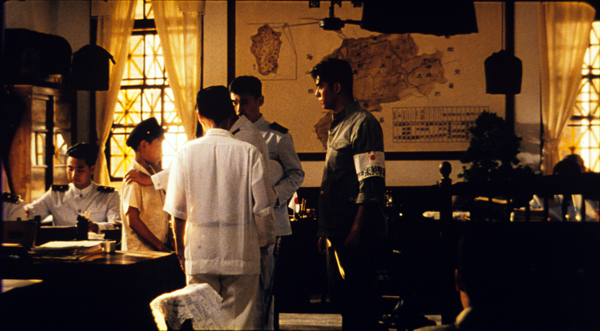
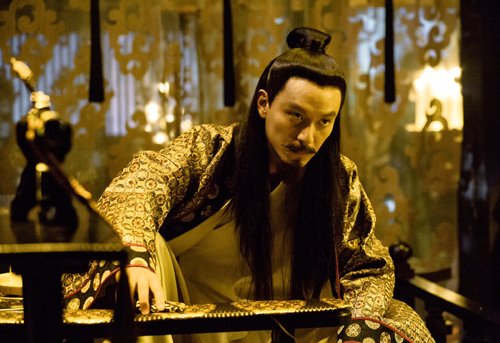
The Puppetmaster (Hou Hsiao-hsien, 1993).
DB here:
The Hou Hsiao-hsien seminar held in Antwerp at the end of May was an event I was sorry to miss. The title announced a focus on Hou’s style of “just-noticeable differences,” a phrase I used to describe his rich and nuanced staging. Coordinator Tom Paulus assembled a stellar lineup of scholars:
Cristina Álvarez López, critic and researcher, co-founder and co-editor of Transit and frequent contributor to mubi.
Adrian Martin, wide-ranging critic and scholar, whose recent book, Mise en scène and Film Style, made him a natural choice for this gathering.
Bérénice Reynaud, expert on Chinese cinema and author of the first book on Hou in English, a fine monograph on City of Sadness.
Richard Suchenski, coordinator of the major Hou retrospective now touring the world and editor of a vast anthology (discussed in an earlier post).
James Udden, author of the first career monograph on Hou in English (discussed hereabouts) and reporter for us on The Assassin (here and here).
A bout of bronchitis kept me home. Chris Fujiwara, author of books on Preminger, Jerry Lewis, and Jacques Tourneur, kindly filled in for me.
But I had prepared a talk, dammit, and I chafed at the prospect of junking it.
The talk was called “The Drawer, Two Women, and the Little Toy Fan.” It centered on aspects of Hou’s 1980s and 1990s work that seemed to me to have influenced works by other filmmakers in the region. The talk ended with some speculations on developments in Hou’s own films over the last fifteen years.
Remembering that all redemption comes from the Web, I decided to put the thing up on our Vimeo channel. While fiddling with it, I realized that it was pretty narrowly addressed to Hou specialists. So I expanded it by offering more context and background, and gave it the unsexy title of “Hou Hsiao-hsien: Constraints, traditions, and trends.”
The lecture is available here on my Vimeo channel.
It can serve as an introduction to some ideas about Hou I floated in Figures Traced in Light. I’ve added comments on Hou films after Flowers of Shanghai, and I consider other filmmakers (Kore-eda, Tsai Ming-liang, Edward Yang) as well. It has pretty pictures, many drawn from 35mm prints.
I regret to report, though, that my voice-over narration, the first I recorded at home rather in a studio, is a bit ragged. And, sorry to say, the talk runs nearly seventy minutes. I take consolation in Adorno’s reply to someone who complained that The Authoritarian Personality was too long: “We didn’t have time to make it short.”
Thanks to Tom Paulus of the University of Antwerp and the Photogénie blog for sponsoring the seminar. Thanks as well to Bart Versteirt and Lisa Colpaert of the Vlaamse Dienst voor Filmcultuur vzw and to Nicola Mazzanti of the Cinematek. And of course I owe big thanks to Erik Gunneson of our department of Communication Arts who, as ever, helped me record and post the video lecture.
See our previous entry for more information about events related to Hou’s visit to Belgium. Our site has other material on Hou here and especially here and here.
Here’s a good place to acknowledge what Abé Markus Nornes and Emilie Yueh-yu Yeh have done in making available their pioneering work on City of Sadness. Long ago they put up a fascinating website on the film, which they have now updated on several platforms. Staging Memories, the free interactive iBook for Mac and iPad, can be downloaded from the Apple Bookstore. You can buy a paperback edition from Michigan Publishing here, and the PDF version of that can be viewed for free here.
In the talk I mention how Hou’s work has affinities for the “tableau” style developed in the 1910s. This isn’t a question of direct influence, but an instance of convergence: Similar early choices in a process (long take, long shot, fixed camera) led to similar options and opportunities further down the line. (A case of path dependence in film style?) You can find more on the tableau style in On the History of Film Style, Figures Traced in Light, and some entries on this site, particularly this one and these. The tableau style is also discussed in another video lecture, “How Motion Pictures Became the Movies.”
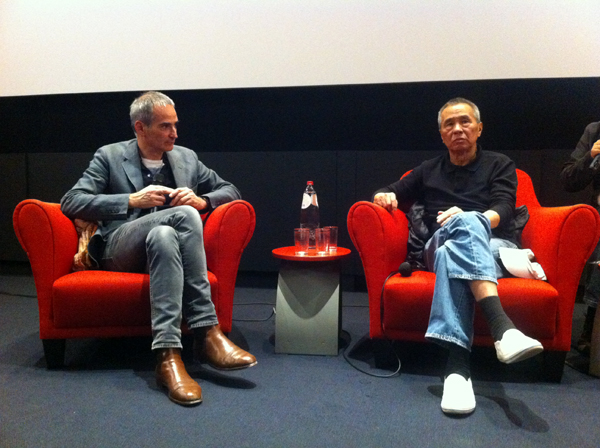
Olivier Assayas and Hou Hsiao-hsien at the Master Class held at the Royal Film Archive of Belgium. Photo courtesy Nick Nguyen.
THE ASSASSIN: Personal reflections from James Udden
The Assassin (Nie Yin Niang; Hou Hsiao-hsien, 2015).
DB here:
Last week there was a big Hou Hsiao-hsien event in Belgium. A seminar hosted by Tom Paulus of the University of Antwerp and the Photogénie blog featured many speakers along with Hou and his collaborator Chu Tien-Wen. (I was scheduled to go but was felled by bronchitis and couldn’t travel.) That event was followed on Wednesday by a master class with Hou, Chu, and Olivier Assayas at the Royal Film Archive of Belgium. Under the auspices of curator Nicola Mazzanti, the Cinematek, as it’s known, has embarked on restoring Hou’s oeuvre and is currently playing a retrospective. (The accompanying catalogue is here.) Wednesday evening was capped by a gala screening of The Assassin.
One of the seminar participants, Jim Udden, is no stranger to this site. His was the first book in English on Hou’s career (No Man an Island) and he contributed an on-set visit to this site when Hou was shooting The Assassin. Over the years he has built up a strong personal relation with Hou and Chu. Here are his initial impressions after the Brussels screening.
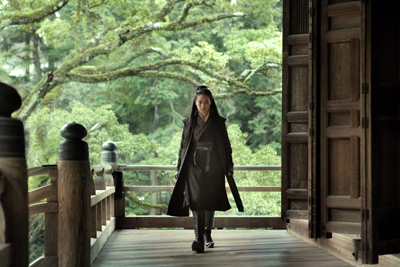
Films by Hou Hsiao-hsien are usually to be experienced first, and understood only much later, and often after some effort. This premise applies with special force to The Assassin.
It is about the most direct experience of a film I’ve ever had. I didn’t understand very much of the plot, or even the language. The subtitles were only in French, and the Chinese was – while recognizably Mandarin – so classical in nature, so foreign in syntax and rhythm compared to vernacular Chinese today that even native Mandarin speakers are going to need a subtitled translation. Even then, those who could read the French subtitles admitted that much of this eluded their comprehension.
Yet I was curiously grateful for the linguistic barriers. I found myself resisting looking down at the subtitles for fear of missing the sheer surfeit of details. I was confronted by a string of arresting image/sound couplets that would make even a dedicated sensibilist blush. For those who seek the comforts of linear narratives, The Assassin, comprised of images and shots so ravishing, so exquisitely wrought, so overwhelming in their layered details, will smack of empty formalism. But if you’re open to the deftly poetic, or rather to defiant poetic obliqueness, and if you’re willing to follow cinema beyond the confines of narrative, you will encounter a film unlike any others–including other Hou films.
The Assassin is not Flowers of Shanghai, the other Hou film replete with almost unfathomable beauty. The new work marks a return to the glorious landscapes of Hou’s earlier films, taken mostly on locations in mainland China. These landscapes are melded seamlessly with interior shots, erasing the divide between indoors and outdoors. The two large sets built in Taiwan that I saw back in December of 2012, when the team commenced shooting in Taipei, were not closed off from the outdoors. They were open-aired sets with only grates and panels acting as walls. This arrangement allowed maximum flexibility, so that the same two buildings could stand in for dozens of interior locations in the finished film.
Only watching the film last Thursday did I detect a deeper purpose beyond the already demanding task of capturing historical details of the Tang Dynasty. That purpose becomes evident in a scene midway through the film where Nie Yingnaing is attempting to assassinate her cousin. Long takes are shot through diaphanous veils with a shallow depth of field that makes for an unpredictable and undulating texture. Evidently Hou and company filmed this scene only when a gentle wind could waft through those semi-opaque veils. When the veils were in front of the camera, they revealed flickering candles stirred by unseen breezes. Yet gentle winds at times opened up the veils and the image would appear with a new clarity. The interior shots are in effect landscapes themselves, albeit human ones. They doubtless owe a great deal to the remarkable assistance of Huang Wen-ying, Hou’s production designer.
There were two opposing traditions in classical Chinese painting. The court painters favored urban settings and rendered human action in vibrant colors. Alternatively, the scholarly painters employed subdued colors or monochrome schemes to render lonely hermits engaging in Taoist retreats to Nature. Hou, working with Huang Wen-ying and Mark Lee, defies both of these.
True, the exterior shots reveal craggy rocks, and the mists and the human forms are dwarfed by nature. And yes, Hou said he had an interest in landscapes only after he visited China and realized these landscapes were actually “realistic.” Still, just as the interiors look nothing like court paintings of the past, these exteriors are utterly unique. No Chinese landscape painting–no actual Chinese landscape for that matter–has a palette quite like these. In Hou’s earlier films the landscapes, while beautiful, were all undeniably real. But these are almost hyperreal. Do places in China actually look like this? If the tourism board on the mainland is hoping this film will boost visits to these stunning locales, this could very well backfire. Seeing these places in person could not match how they appear in these frames.
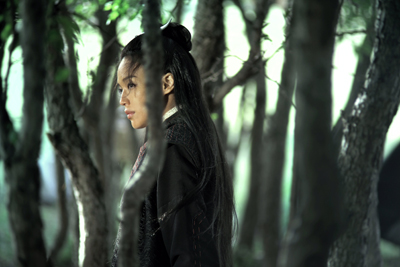
It is hard to know whether The Assassin is indeed a swordplay film (wuxia pian), that most venerated of Chinese genres. Aside from the brief instances of the Nie Yingniang, the female protagonist, jumping down from challenging but not impossible heights, and aside from one incident involving a sorcerer, this is indeed a film “grounded in the earth” as Hou himself described in the Master Class. If this is a historical film, this is most decidedly not the nationalist bluster of recent big-budgeted historical films coming out of Mainland China. This film does not flaunt flying errant knights, or celebrate the bombast of past Chinese historical glories. This is the grandeur of sheer, subtle, seemingly boundless beauty. It has to be seen, it has to be watched, it has to be experienced. It does not necessarily have to be understood.
In the end, The Assassin is a film by Hou Hsiao-hsien, and yet it is unlike any film he has made before. It has the signature long takes, yet he seemingly has reinvented them. The fight scenes do have a great deal of editing, yet they remain oblique through both staging and montage, and strangely beautiful.
This is the same Hou I encountered back in 1989, my first year in Taiwan. Long before I decided to become a film scholar, I was an unsuspecting viewer about to see a film called City of Sadness by a director I had never heard of before. A film I did not understand, but which I experienced at a very deep level. It is a film that changed my life. A film that was a beginning of a journey, even if I did not know it at the time. That journey continues with these words, written by a scholar who cannot really analyze what he has just experienced. He can only, slowly, emerge from an intense cinematic rapture.
We hope to post more about the Antwerp event and Hou’s career over the next week or so. In the meantime, here is Hou at a press conference discussing his plans for his next film.
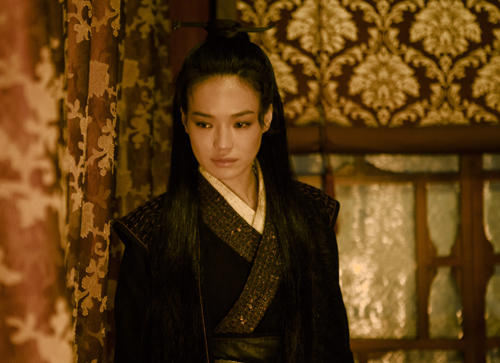
The Assassin (2015).
Richard Corliss: Fulltime Critic
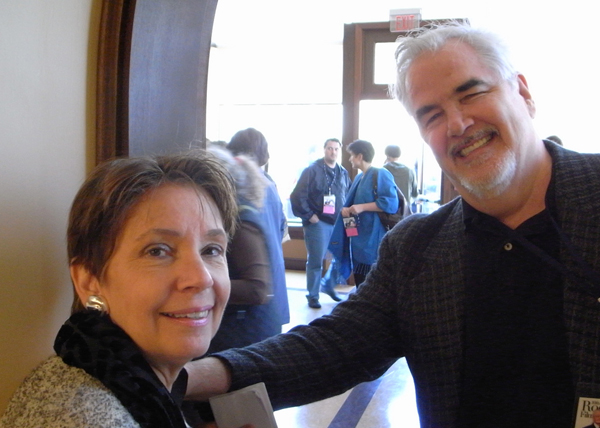
Mary and Richard Corliss, Ebertfest 2008.
DB here:
Parker Tyler called James Agee America’s biggest movie fan, implying that he was a lesser critic for loving movies. But Agee, who was often cast into despair by the films he met week by week, was actually in love with Cinema. From each release he sought glimpses of what he imagined movies could be, and so seldom were.
Tyler’s phrase might better apply to Richard Corliss, but in a deeply complimentary sense. Like his friend and occasional jousting partner Roger Ebert, Richard didn’t judge a film by whether it measured up to some ideal yardstick of the medium. He welcomed the movies—at Time, some 2500, between 1980 and now—as they came. He let his wide tastes, good sense, vast memory and knowledge, and breakneck gift for language decide what they counted for.
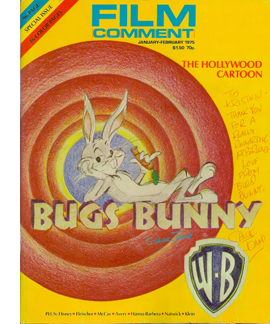 With Richard’s death we lose not only an effervescent critic. Under his stewardship of Film Comment (1970-1990) he helped found modern American film culture. Richard T. Jameson has eloquently recalled the Corliss era, when a magazine that had been committed to documentary and censorship debates became the paradigm of new ways of thinking about American and European film. Like Movie in England, it championed auteurism, and so it attracted great critics like Andrew Sarris, Robin Wood, and Raymond Durgnat. Yet Richard’s wide-ranging curiosity made Film Comment more pluralistic than its UK counterpart. It published reference-quality issues on animation, cinematographers, and set designers. In the days before the Net and specialized film books, cinephiles treasured these plump special numbers. The magazine ran historical and retrospective essays as well; refreshingly, not every piece was pegged to current releases. Richard gave us a new model of film magazines: richly designed, provocative (Durgnat especially), and sending the signal that everything cinematic could be studied.
When he went over to Time in 1980, that square magazine suddenly looked younger. With Richard joining art critic Robert Hughes, it became a source of lively and penetrating arts journalism. Both turned Timespeak into something fresh. Hughes pulled it toward the eloquent bluntness of the Anglo essay tradition, while Richard transformed the forced puns and slant metaphors into something sprightly. Sarris may have been his mentor, but the rat-tat-tat pileup of clauses (semicolons optional), the self-correcting afterthoughts (as if a nuance had just occurred to the writer), and a concentration on actors all seem to me indebted to Kael. On Edward Scissorhands:
Depp, who wears the hyperalert, slightly wounded expression of someone who has just been slapped out of a deep sleep, brings a wondrous dignity and discipline to Edward. Wiest does a delightful turn on the plucky, loving mothers from old sitcoms. The whole movie, in fact, time-travels between today and the ’50s, when every suburban house could be a quiet riot of coordinated pastels. But the film exists out of time — out of the present cramped time, certainly — in the any-year of a child’s imagination. That child could be the little girl to whom the grandmotherly Ryder tells Edward’s story nearly a lifetime after it took place. Or it could be Burton, a wise child and a wily inventor, who has created one of the brightest, bittersweetest fables of this or any-year.
Richard gloried in the emotional and visceral energy of popular cinema. He defended both porn and zany comedy. On the Big Loud Action Movie he could channel Teenboy patois:
Toward the start of Fast Five — fifth and best in the series that began with The Fast and the Furious in 2001 — Brian (Paul Walker) is in a freight train and Dom (Vin Diesel) is steering a 1966 Corvette Grand Sport alongside it. At the last possible moment before the train goes through a bridge over a river, Brian jumps from the train and lands on the Corvette, which Dom then drives off a, like, million-foot cliff. As the car plummets down the ravine, our guys jump out and land safely in the water.
That “a, like, million-foot cliff” is alone worth the price of the issue. For such reasons, I think that Richard might be the most imitated critic of recent decades. Every reviewer at your town’s weekly hip throwaway wants to write like this.
They mostly can’t. In an essay on Fulltime Killer, Richard compared Johnnie To’s cinematic output to A. J. Liebling’s boast: “I can write better than anybody who can write faster, and I can write faster than anybody who can write better.” It pretty much applied to Richard himself. He wrote about film, books, TV, travel, sports. Of the Bulk Producers we always ask, “When does s/he sleep?” With Richard we have to ask: “When did he pause?”
The Richard I followed most closely was on display in long formats. His book Talking Pictures: Screenwriters in the American Cinema (1974) made a stir that’s hard to appreciate now. Good student of Sarris that he was, Richard was an auteurist. He once tried to persuade me that Russ Meyer was at least as good as Minnelli. Yet his book called us to arms in a different cause.
The most difficult and vital part of a director’s job is to build and sustain the mood indicated in a screenwriter’s script—a function that has been virtually ignored while citics concerned with “visual style” trot off in search of the themes a director is more liable to have filched from his writers. …
When it comes to the mood men, the metteurs-en-scène, auteur critics start tap-dancing away from the subject. George Cukor is a genuine auteur; Michael Curtiz is a happy hack; Mitchell Leisen is actually despised by some critics for “ruining” films like Midnight and Arise My Love. Yet what Leisen and the writers of Hands Across the Table did to make that film the most amiable of thirties screwball comedies is a prime example of sympathetic collaboration. As with so many delightful comedies, it is the writers who create the characters and establish a mood in the first half of the picture, and the director who develops both in the second half. The story line of Hands Across the table isn’t flimsy; it’s downright diaphanous. . . .
Openly imitating Sarris’ catalogue The American Cinema, Richard’s book created an artistic genealogy of screenwriters, picking out the Author-Auteurs, the Stylists, and so on and then ranking them.. But where Sarris is synoptic, Corliss is dissective. Working at full stretch, he gives pages of close attention to particular films. His analyses of The Power and the Glory, The Lady Eve, and The Marrying Kind (“wavering between third-person omniscient and first-person myopic”) carry great intellectual heft, while Sarrisian potshots fly by. Reputations get deflated (Jules Furthman) or elevated (Sidney Buchman).
 The other Richard book I hold close is his BFI monograph on Lolita, a sustained critical tightrope act. Trembling between whimsy, serious examination, and a Nabokovian delight in shameless cleverness (puns again), Richard gives us Kubrick’s film as filtered through Pale Fire. There’s a bespoke opening poem (shades of Shade) which is then glossed line by line in as digressive a manner as poor Kinbote pursues in the novel. Nabokov as Hitchcock, echoes of Goulding’s Teen Rebel, Shelley Winters maneuvering her cigarette holder “as a Balinese dancer would her cymbals”: every paragraph scatters pieces of candy.
Finally, something I return to often: Richard’s 1990 essay attacking (no politer word will do) TV movie reviewers. “All Thumbs: Or, Is There a Future for Film Criticism?” castigates the tribe’s superficiality, their canned brevity, their reliance on clips, and above all their encouraging people to believe in quick judgments. Stars, numbers, grades, and thumbs are too easy. Richard bites Time’s corporate hand, complaining about snack-sized opinions in People and Entertainment Weekly. Against this trend he speaks for longer-form writing, pointing out that Sarris, Kael, and others had their impact because they could surpass the word limits mandated for most reviewers. It takes time to develop ideas that are subtle. Obvious, maybe, but tell that to the young blogger who insisted to me that a review ought to take no more than 100 words.
Roger Ebert was a target of Richard’s piece, and he replied in a courteous counterblast. Yet the men were fast friends. Richard did friendship superbly, with an effusive generosity. Just out of college, I submitted a couple of articles to the new Film Comment, and to my astonishment Richard accepted them. As I turned more academic, I stopped offering pieces to the magazine, but Richard–who could easily have become a film professor himself–didn’t hold it against me. When I came to New York a few years later for a job interview that proved disastrous, Richard and Mary were the only friendly faces I encountered, and lunch at their apartment, larded with gossip, was the high point of that visit.
In later years I encountered Mary, mostly during our visits to MoMA, more than Richard. But every now and then I’d get another burst of gratuitous kindness. He reviewed my Planet Hong Kong in a funny online piece about how Hong Kong film takes the stuffiness out of anybody.
Even a relatively staid critic such as structuralist guru David Bordwell seems to be typing in his shorts, with a beer on his desk.
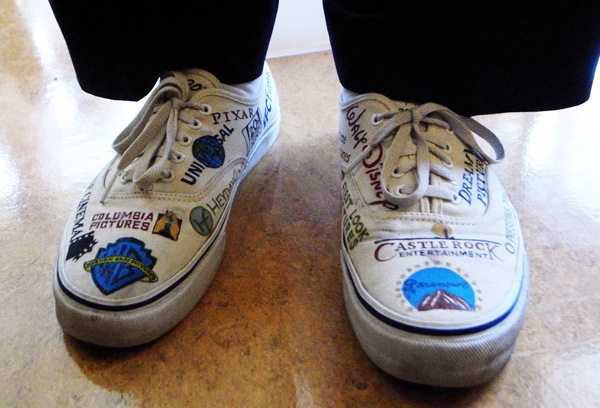
The last time I saw Richard was with Mary at Ebertfest in 2008. We had a diner breakfast, and Richard did a dead-on imitation of John McCain. I still see that smile—part devilish wise-guy, part nerdy enthusiasm, all glowing good humor. He was wearing goofy trainers bearing the logos of the Majors. They looked damn fine. We had a good day.
In an interview with David Thomson Richard recalls his life and the early Film Comment era. See also Matt Zoller Seitz’s sensitive appreciation, especially on Corliss’s mastery of the “long reported piece”–another point of contact with Agee.
A legendary film returns from the realm of the lost
Kristin here-
Nearly two years ago, when Flicker Alley released its wonderful collection of French films made by the Russian-emigré production company Albatros in the 1920s, I wrote, “Now, if Flicker Alley will manage to release its long-rumored project, Albatros’s 1923 serial, La Maison du mystère, starring Mosjoukine, we will all be doubly grateful.” That release arrived yesterday.
For decades, La Maison du mystère remained one of the fabled lost films of the silent era. It was an enormous popular success upon its release in 1923, and critics praised it as well. Even Louis Delluc, who highmindedly promoted cinema as a realistic, restrained art, grudgingly said of it, “La Maison du mystère is a serial. They are a necessity. So be it. This one is intelligent, sober, frank, genuinely human.”
Watching the film today, “sober” seems an odd term. Despite its many arty moments, the film presents a conventionally melodramatic story, with Mosjoukine playing a struggling factory owner betrayed by a villainous “friend” who is secretly in love with his wife. He is falsely accused of murder, presumed dead after an escape from hard labor, and operates under various disguises. Blackmail, flashy escapes, a suicide pact, and flagrant coincidences all play roles. Yet in contrast to the fantastical ones of Louis Feuillade from the 1910s, the ones we are most familiar with today, Le Maison du mystère paid more attention to characterization and moved at a less breakneck pace. (Feuillade had moved into this sort of dialogue-centered melodrama himself in the 1920s, as in Les Deux Gamines, 1921, but these films are rarely watched today.)
With Alexandre Volkoff directing the script he and Mosjoukine adapted from a popular novel, filming began in the summer of 1921. At the beginning of 1922, Mosjoukine contracted typhoid fever and was out of commission for six months. Shooting was completed in the summer of 1922, and the film was released in ten weekly episodes starting in March of 1923. Ultimately, like so many silent films, it disappeared.
Severely abridged feature-length versions existed in some places. An 18-reel print discovered in the Iranian archive was destroyed in a fire before it could be sent to France for restoration. Luckily, the original negative turned up at the Cinémathèque française, having been donated in the collection of Alexandre Kamenka, the producer who took over Joseph Ermolieff’s company in 1922 and turned it into Films Albatros. After restoration, the film was shown at Il Cinema Ritrovato in 2002–well before we began our annual visits to that festival in Bologna. It was presented again at the Museum of Modern Art in 2003.
The Flicker Alley release runs 383 minutes and seems to be essentially complete, although the intertitles apparently are replacements. Unlike so many restorations derived from worn release prints, this one is visually gorgeous. It’s mostly in black and white, though it has appropriate tinting for fire and night scenes. Neil Brand provides an excellent piano score.
The old and the new
Like so many of the major French films of the 1920s, especially the Impressionist ones, La Maison du mystére combines a sentimental, old-fashioned story with unconventional stylistic devices: unusual pictorial motifs, beautiful cinematography and design, and imaginative staging. It is probably this visual interest that led to the film’s original acceptance by reviewers and to its enthusiastic reception by modern historians and silent-film buffs.
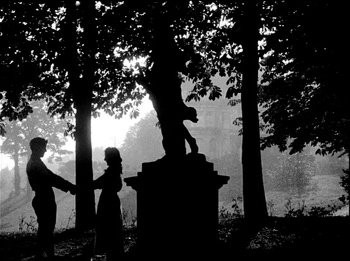
One visual motif that begins early on is silhouettes. The opening involves Mosjoukine’s character, Julien, still a bumptious, naive young man, courting Régine, the daughter of a wealthy couple who live near his chateau (the “maison” of the title). Despite his shyness, they manage to become engaged and walk joyfully through the woods together.
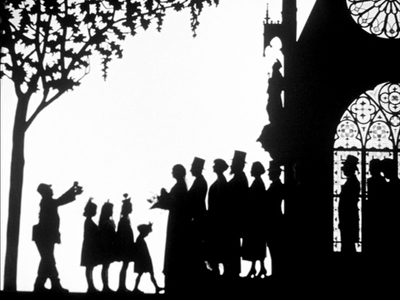
The entire wedding scene is then compressed into a series of shots done against bright white backgrounds render the actors and settings in near-black silhouettes (above). The result looks like a live-action version of a Lotte Reiniger cut-out animated film.
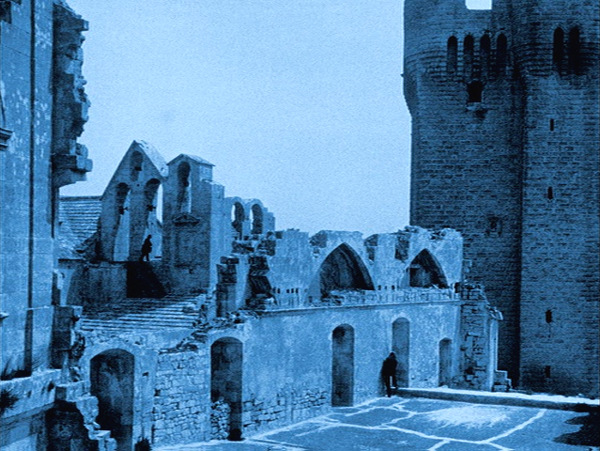
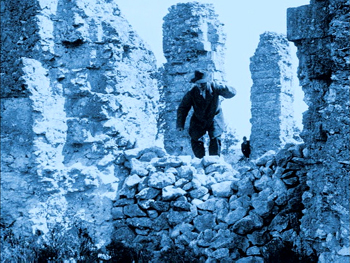
As I discussed in my entry on the Albatros DVDs, the settings in the studio’s films tended to be impressive as well. Here much of the interest is created by actual locales. David speculated that the whole film was conceived around the ruined fortress or castle where several scenes take place. That’s not likely, but the filmmakers used the ruins well. Rudeberg, a woodcutter whose penchant for amateur photography leads him to photograph the murder of which Julien is falsely accused and convicted, hides the prints in this castle. Rather than turning them over to the authorities, he is using them to blackmail the real murderer, the factory manager Corradin. Corradin twice follows him to the castle, leading to dramatic compositions of the two men in different parts of the frame. In the image at the top, Corradin slinks along the row of arched doorways at the bottom, while Rudeberg is visible moving through a higher archway at left center.
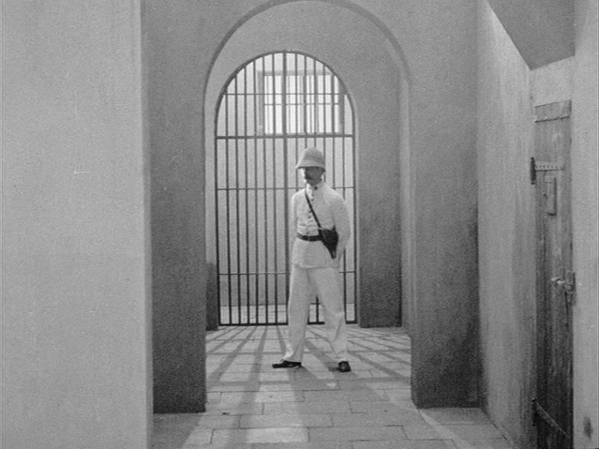
Alexander Lochakoff, the main designer for Ermolieff and then Albatros, was somewhat restricted by the story. He needed to provide realistic interiors for an antique-filled chateau rather than the modern apartments in which some of the other Albatros films take place. Still, he managed some characteristic designs, such as the prison corridor at the bottom of this entry, a location seen only in one brief shot.
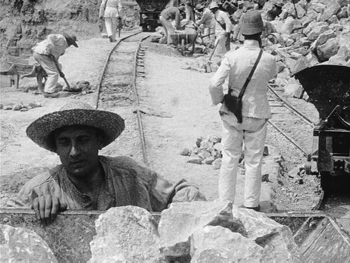
There are some brilliant moments of staging in depth. After Julien is sentenced to twenty years of hard labor, his new situation is introduced via a tracking shot with the camera atop a cartload of stone which he is pushing. Gradually the laborers breaking stone and the guards overseeing them are revealed (below left). In another shot in the ruins where Corradin is tailing Rudeberg, he is glimpsed in the background (below right).
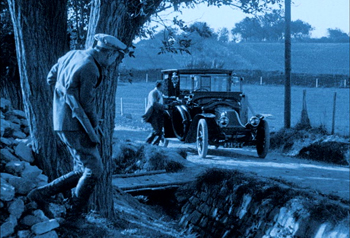
In a scene late in the film, Julien plans to flee with Régine and their daughter Christiane. He is dressed as their chauffeur, but Corradin shows up and spots the car. Julien hides and watches him from behind a tree in the foreground.
We then see the two women approaching, framed through the back window of the car and watched by Corradin, in the foreground. He ducks down and pretends to fiddle with the car’s engine to prevent their realizing who he is as they draw near.
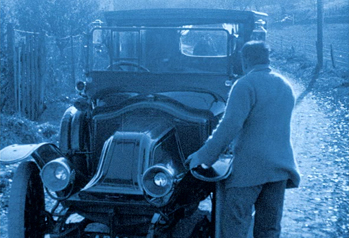
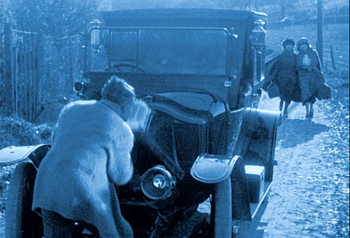
I could go on illustrating such stylistic flourishes, but I leave it to you to find them for yourself. There’s a very early example of a montage sequence to compress the passing of World War I into a series of titles, from 1914 to 1919, superimposed over stock footage of combat, and a marvelously choreographed high-angle scene in a forest as a troop of policemen pop out of nowhere to surround and arrest Julien.
All serials need stunts
Much of the film consists of conversations and confrontations among the characters, a trait which no doubt led critics to contrast the more action-oriented serials of recent years. Still, there are two sequences where derring-do takes over. After the police arrest Julien, he makes an escape via a rope down the tower and wall of his chateau, a feat accomplished in a single take tilting down to follow his progress.
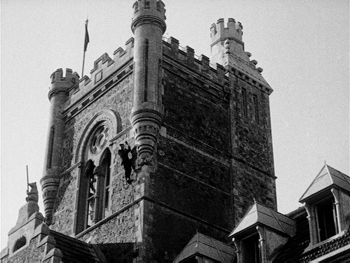
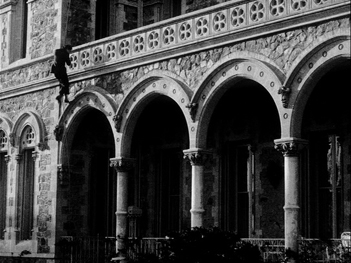
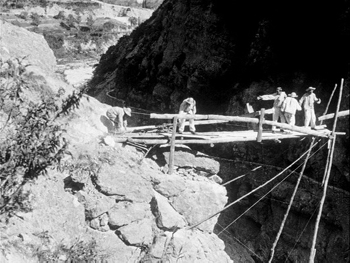
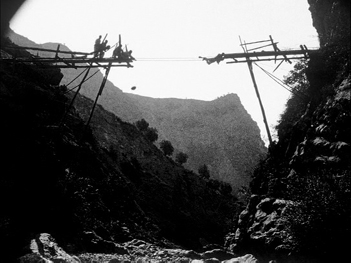
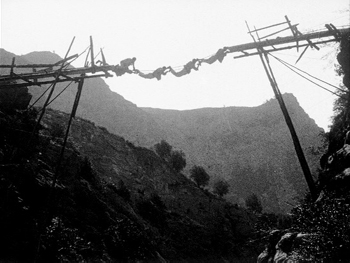
Later, in an episode entitled “The Human Bridge,” Julien and four of his fellow prisoners escape from their guards while working on a railroad track. This lengthy sequence involves first the commandeering of a passing train and then a chase over an area of rocky crags. At once point the escapees find the rickety remains of a tall bridge above a river gorge and fling ropes across. The four other prisoners then lie end to end, clinging to the ropes, forming a bridge to allow Julien, who has been wounded during their flight, to cross over. One extreme long shot of the scene shows two of the men’s hats falling off, demonstrating as they drift down to the bottom that there is no trick photography involved. It is certainly as impressive as any of the stunts in Feuillade’s films.
Touches of Impressionism
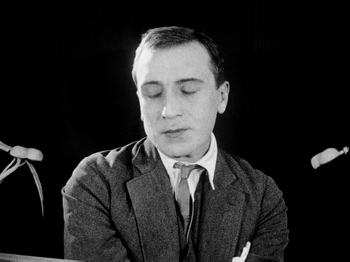
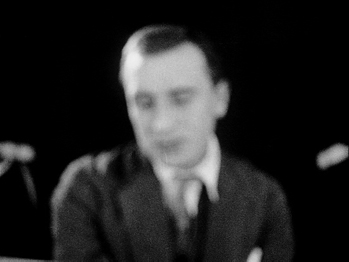
La Maison du mystère certainly cannot be characterized as an Impressionist film. Yet the movement was beginning to expand in 1921, and there are some moments of subjectivity that draw upon its newly minted conventions. As his trial is drawing to an end, Julien closes his eyes, and the shot goes out of focus. We see a series of quickshots of his surroundings and his family as he seemingly recalls the events of the trial as a montage scene. Finally the same framing of Julien shows him coming into focus.
This is a fairly straightforward Impressionist device, but a more daring suggestion of a subjective state occurs much later. Julien’s daughter Christiane and Rudeberg’s son Pascal have fallen in love, and they vow that if they cannot marry each other, they will both commit suicide. When the villainous Corradin forces Christiane to agree to marry him, Pascal sets out to drown himself. His distraught state of mind is conveyed in a single shot as he walks toward the mill pond and hesitates. As he moves into the shot, he is framed in a standard medium close-up. As he hesitates, however, he moves unusually close to the camera and then backs partway out of the frame, as if afraid to continue. Finally he turns and stares into the camera, moving forward out of focus until his dark-shadowed eyes fill the frame. The implication is that he determines to go on with his plan.
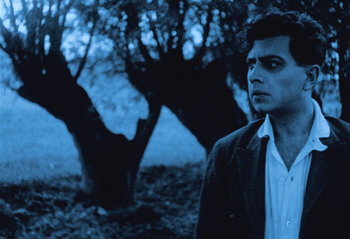
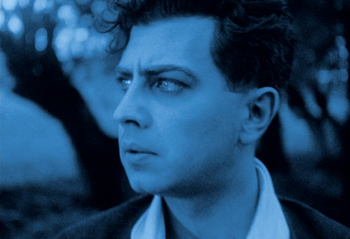
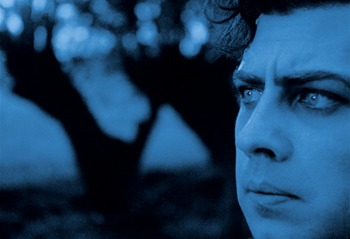
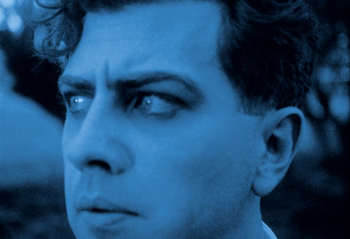
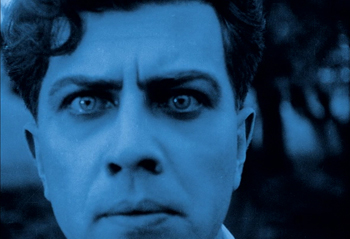
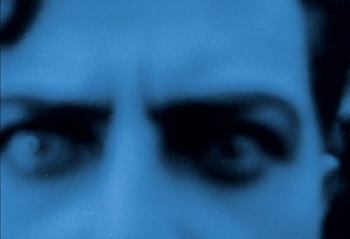
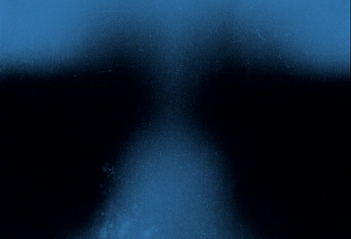
(Fans of Evgeni Bauer will recognize Vladimir Strizhevski, the son in the director’s final film, The Revolutionary.)
Star turn
Apart from the imaginative staging, cinematography, and design, La Maison du mystère is full of fine performances. It provides a vehicle for a virtuoso performance by Mosjoukine. He is part Douglas Fairbanks, part Lon Chaney as he leaps energetically about in the early parts of the film and then dons various disguises during his long period as a fugitive. He briefly poses as a clown in a small circus and later returns to work incognito in his own factory as a wounded war veteran with a limp and eye-patch.
Mosjoukine’s fellow actors refuse to be overshadowed by the star, with Hélène Darly as Régine managing somehow to age from a young lady to a mature mother without any apparent change of makeup. Nicolas Koline, best known as Tritan Fleuri in Napoléon vu par Abel Gance, brings something of his usual comic persona to Rudeberg, while also conveying the character’s guilt over choosing to use his photographs for blackmail purposes rather than to reveal Julien’s innocence. Charles Vanel, who had been acting in films since 1910 and would become a major star in the sound era, conveys Corradin’s villainy perhaps too well, making one wonder why any of the other characters ever trusted him.
Flicker Alley, along with the Cinémathèque française, David Shepard, and Lobster Films, have filled in a major gap in film history, and we are indeed doubly grateful.
The quotation from Louis Delluc and information on the production of the film come from the essay, “The Art Film as Serial” by Lenny Borger with David Robinson, included as a booklet in the DVD set.
Impressionist films have been included in some of our “best films” of ninety years ago series. See 1921, 1922, 1923, and 1924.