





Archive for the 'Asian cinema' Category
How to make a good genre movie, and/or do something different
David from Vancouver:
Why doesn’t Hollywood just outsource its genres to Asia? Keep making The Da Vinci Code and Capote, the presold blockbusters and the prestige indies, but leave the rest to people who know what they’re doing. Give the urban action movie to Johnnie To, Kitano Takeshi, and others who haven’t forgotten the furious intensity of White Heat or the ominous solemnity of The Godfather. Let the Koreans and the Japanese take over romantic comedy and the weepies. And as for horror–well, Hollywood’s remake machine acknowledges that more or less everybody does horror better than America.
Maybe people are finally getting it. The most celebrated director in the US has to get his career back on track with The Departed, the first Hollywood remake of a Hong Kong film (Infernal Affairs). Although Scorsese evidently claims he never saw the original (must be the only film he hasn’t seen), the point is clear. With the exception of smarty-pants B films (Torque, Running Scared, Crank), which are all good dirty fun, Hollywood genres have been severely blandified. Asian filmmakers, from India to Malaysia, have understood our genres better than we have, and they have given them a new visceral force and emotional edge.
Two cases in point from yesterday’s Vancouver Film Festival. Nishikawa Miwa’s Sway centers on two brothers, both involved in a mysterious death in a picturesque gorge. But how did it happen, and what effect will it have on the men? The film moves suspensefully from investigation to confession to trial and punishment, but at every step each character’s motives are questioned. Superbly plotted, Sway creates an unforgettable character in the apparently cheerful gas-station attendant Minoru, a man who harbors unexpected depths of anger and self-abasement. No American movie would have dared to give him such a rich array of contradictory traits, and right up to the last shot we are left to question what he did, and what he will do next. Classic Hollywood directors understood that genres could be tools for probing personality (Ford in My Darling Clementine, Hawks in Only Angels Have Wings, Hitchcock in practically anything). Nishikawa’s thriller is on that path as well.
Or take Bong Joon-ho’s The Host, the monster movie that has jammed eager audiences into three screenings in Vancouver. It is, as Tony Rayns mentioned in his introduction to yesterday’s matinee, one of the most popular movies in the world right now. It achieves its strength from its sheer mastery of genre storytelling. Dysfunctional family–> monster attacks–> family fights back: No surprise at this level of plotting, but Bong displays his sure knowledge of classical construction throughout. We get a trim four-part structure, and everything that will pay off at the climax is carefully planted in the opening scenes. Pointed criticism of American indifference to people overseas and sly pokes at Korean bureacracy are smoothly integrated into the action.
Bong makes clever use of props as motifs (watch out for those beer cans), and characters are at once funny and sympathetic. The alternation of humor, even gross bits, and shock is finely timed. On top of all these pleasures we get a remarkable monster, endowed with an athletic grace and fluency far from the lumbering Godzilla. Most important, Bong dares to make us grieve. Without giving too much away: contrast his film’s climax with the end of Spielberg’s (admittedly, pretty good) War of the Worlds, in which even those whining children are allowed to survive. The Host deserves all the praise it’s earned, and it marks another landmark in Korean cinema.
It’s an odd experience to watch Sway and The Host with hundreds of people sitting in breathless attention–no cellphone buzzes, no chatter, just the power of compelling storytelling. Just as spellbinding, though in a different register, was Ho Yuhang’s Rain Dogs. A coming-of-age story about a young man’s difficult relations with his family in rural Malaysia, it was exquisitely filmed, in a sort of Bresson-meets-Hou style. Lyrical landscapes and details of village life are punctuated by bursts of violence, and Ho’s elliptical approach to storytelling (delaying information about what is actually going on in people’s minds) is no less engrossing than genre work. We get a psychology-based uncertainty akin to that in Sway, but without the mystery plot to pull us through.
Rain Dogs joins an international tradition, that of Satayajit Ray and the Neorealists and “art cinema” more generally, but it’s been rethought in very local terms. In all, it’s another, equally valid, approach to storytelling. Interestingly, Ho (admirer of The Asphalt Jungle, Jim Thompson, and Robert Aldrich) says that his next project will be a crime movie. Maybe Scorsese will remake it.
Korean monsters, Miami hard guys, and looping Tokyo
More from Vancouver from DB:
Bong Joon-ho, one of the most talented Korean directors working now, has in a few years proven himself adept in many genres. His first feature was the charming comedy Barking Dogs Never Bite (2000), and he followed that with one of the best recent cop movies I know, Memories of Murder (2003). Now The Host has broken Korean box-office records and won tremendous praise at Cannes last spring.
Naturally, there’s been a buildup of interest for the three screenings of The Host scheduled during the festival. The opening one is sold out, and the others are nearly full too. This morning there was a Forum discussion with Bong, moderated by Tony Rayns, and it proved to be a very interesting conversation.
Bong had wanted to make a monster movie ever since his childhood, when he looked out his window at the Han river and imagined a creature like the Loch Ness monster rising out of it. Eventually he was able to summon up the money to do so. The budget for The Host ran to about $11 million US, nearly half of which was used on special effects. (Bong points out that the ordinary Korean film is budgeted at about what he spent on fx.) He contracted the CGI out to several firms, including Peter Jackson’s Weta Digital and The Orphanage, a San Francisco company.
To save money Bong cut several monster shots, instead simply suggesting the creature’s presence through other means. He was inspired by Spielberg’s handling of Bruce the shark in Jaws: faced with Bruce’s constant mechanical failures, Spielberg used point-of-view shots and Williams’ score to signal when the shark was nearby.
Will there be a Host 2? Bong says that if there is, he wouldn’t be directing it. He envisions the possibility of something like the Alien series, where different directors turn each installment in different directions.
Tony Rayns set up the context for the discussion with his usual aplomb, and the audience coaxed Bong into wider comments. One listener asked what makes Korean audiences so eager to support their local movies. Tony pointed out that Korea has the most cosmopolitan and film-loving population in Asia, and Bong talked of the expansion of the market, with The Host going out on more than 600 screens. Also, Tony added, Korean movies tend to be very good.
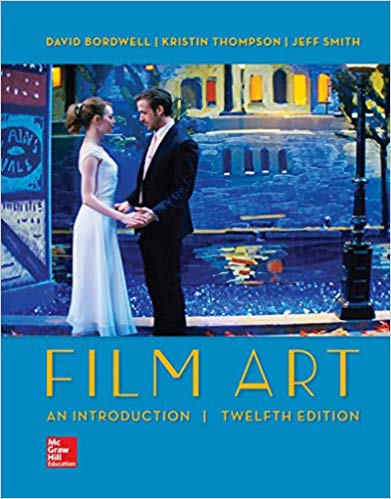
I can’t refrain from a personal note. Bong greeted me warmly, and he reminded me that we met in Hong Kong in 1995, when his breakout short, Incoherence, screened at that festival. At that time he told me that he had read the (pirate) Korean translation of Film Art: An Introduction. I was happy that our book might have contributed a little toward his film career, and he cheerfully autographed my Vancouver catalogue with a little tribute to the textbook. Sometimes I forget that film researchers can affect filmmakers.
I was pleasantly reminded again at tonight’s reception. There I met Reg Harkema, an Ontario director, who became obsessed with Film Art‘s discussion of La Chinoise and nondiegetic inserts….so much so that Monkey Warfare, his film in this festival, is full of them! (Have to catch that.) And Ho Yuhang, director of the Malaysian movie Rain Dogs, knew Film Art but was more interested in my Ozu book. His autograph in my catalogue reads, “My friend, that f*cker, bought the only Ozu book left in the store. Damn!” Yuhang is also a big fan of film noir and he’s now scripting a crime movie.
Apart from hobnobbing with directors, I saw the disturbing docu Rampage, about black family life in one of Miami’s most poverty-plagued neighborhoods. All the young men, including one serving in Iraq, want to be rappers, and the most talented of all is only 14. But can he and his brothers survive gang warfare? I thought that the editing and sound were a little too aggressive, even somewhat sensationalistic, but as the film goes along it raises very tough issues concerning filmmakers’ ethical responsibilities. The question of whether the presence of a film crew changes the situation it’s filming is brought to the surface with really unsettling results.
I ended the day with pure fun. Tokyo Loop is a string of animated shorts, in varying styles, all aiming to comment on life in Japan’s metropolis. I’ve long thought that animated filmmakers don’t get enough credit, because we forget that they have to acquire an enormous understanding of how creatures and objects move. I was reminded of this again in seeing Tokyo Strut, a record of human and animal movement conveyed solely by dots of light, and the very funny Dog & Bone. Other filmmakers record movement, but animators have to know how to create it.
Finally, a greeting to Marlene Yuen and Ted Tozer, who despite my best efforts to hide my operating tactics, spotted me counting shots in screenings at Vancouver last year. Ted, if this interests you, check the CineMetrics website on the first page of this site.
A film festival for all seasons
David here:
Screening over 300 films across 16 days, the Vancouver International Film Festival is a banquet for movie lovers. I’m here for about half of the event.
Gorgeous weather, a lovely city (mountains + water = hard to beat), and cheerful, hospitable people have already made this a lot of fun. Arriving in the afternoon, and fortified by a quick Japanese meal (soba; more on this later), I went off to several hours of moviegoing and socializing.
The festival is particularly strong in Asian cinema, programmed by the indefatigible Tony Rayns; the festival also gives the “Dragons and Tigers” prize to young Asian filmmakers. It was while serving on that jury last year that I came to fall in love with this festival. There are over 40 Asian programs this time, including Ann Hui’s My Postmodern Aunt (starring Chow Yun-fat), Tsai Ming-liang’s I Don’t Want to Sleep Alone, and Hirokazu Kore-eda’s Hana (his last film was the very touching Nobody Knows). A special treat is Bong Joon-ho’s The Host, already a cult monster movie that has Hollywood studios fighting for the remake rights.
Vancouver is also very strong in Canadian cinema, as well as documentary, experimental, and international work. Like all great festivals, it’s actually several festivals in one: No way you could see everything you want to see. It was so exciting last year that I determined to return and try to see even more new films.
Festivals are important to us film lovers, because you want to keep up with creative work being done all over the world. Living in the US makes it hard, because so many wonderful films–sometimes masterpieces–don’t get released theatrically. Marketing a film in a country as large as the US requires massive amounts of money, and many interesting films just won’t attract a big enough audience to pay back costs. Also, I’m afraid that some Americans are narrowing their tastes in movies, so that they won’t give a “foreign film” or a “little movie” a chance. Festivals exist to do just that.
So I’m happy to report that my first day yielded real riches. Yokohama Mary is a documentary about a mysterious bag lady who walks the streets, sleeps in the corridor of an office building, eats at Burger King, and paints her face a blinding white. Urban legends have grown up about her. Was she a celebrated prostitute? A woman grieving for her lover? She has become an icon of the city, inspiring novels, books of photographs, and a play. But now she’s disappeared. The filmmakers assemble a rich array of documents, including surveillance-camera footage, and they interview people in the neighborhood to try to understand how she lived and why she vanished. Mary’s life is a capsule history of the seedy side of postwar Japan, and the film is at once gripping and poignant, with a wonderful ending in which the filmmakers find out her fate.
Walking on the Wild Side is a picture of contemporary China that couldn’t be more unflattering. Three young day laborers drink, molest schoolgirls, and generally raise hell before they set out on a path of petty crime. These are the most unlikable protagonists I’ve seen in a long time, but the movie, shot on low-def video, is fascinating in taking us behind China’s economic miracle.
Back to Japan for my final movie of the day, the thoroughly peculiar Tachigui: The Amazing Lives of the Fast-Food Grifters. Directed by Oishii Mamoru, best known for his animated Ghost in the Shell, it invents its own urban legend, that of spectral figures who haunt fast-food restaurants. Oishii traces the history of postwar Japan through the changes from soba shops to burger joints, visited by a series of ghostly figures out of mythology and pop culture. The animation, mixed with documentary footage and still photos, is unlike anything I’ve seen before, at once photo-realistic and curiously flat, with soft edges and abrupt, spasmodic action. Again: No way you’ll see this at the Multiplex.
Today promises to be no less exciting. It starts with a panel discussion with Bong Joon-ho about The Host and includes, I hope, a Brazilian film, Kore-ed’s Hana, and more Asian shorts. Will post again soon.
For more about the festival, and the films I’ve mentioned, check here: www.viff.org



